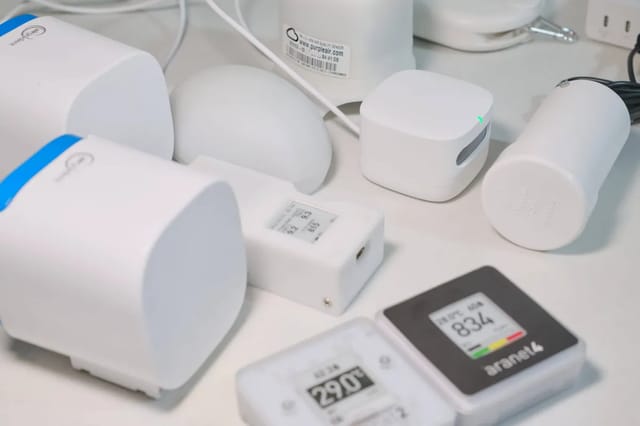
Best Air Quality Monitors Under $50: Budget Picks That Actually Work (2026)
Best air quality monitors under $50 in 2026. Budget picks that provide real, useful PM2.5 and VOC data without breaking the bank.

Table of Contents
- Our Top Picks at a Glance
- What to Expect at This Price Point
- Real Sensors vs. Estimated Readings
- What You Give Up
- Detailed Reviews
- 1. SwitchBot CO2 Detector: Best Budget CO2 Monitor
- 2. Temtop M2000: Most Parameters for the Money
- 3. Amazon Smart Air Quality Monitor: Best Smart Home Integration
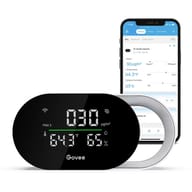
- 4. GoveeLife Smart Air Quality Monitor: Best Budget WiFi Option
- Budget Air Quality Monitor Buying Guide
- Which Parameter Matters Most?
- When to Upgrade
- Saving Money on Air Quality Monitors
TL;DR
The best budget air quality monitor is the SwitchBot CO2 Detector at around $60, delivering accurate NDIR CO2 readings with Matter smart home support at a price that regularly drops below $50 on sale. The Temtop M2000 offers the most parameters (CO2, PM2.5, formaldehyde) for the money at $60 with a rechargeable battery. For Alexa users, the Amazon Smart Air Quality Monitor at $70 provides PM2.5, VOC, and CO monitoring with native smart home integration.
Full Comparison
| # | Product | Best For | Rating | Price | |
|---|---|---|---|---|---|
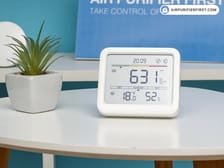
| 1 | SwitchBot CO2 Detector Top Pick SwitchBot | Best Budget CO2 Monitor | 4.3 | $ | Check Price |
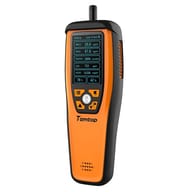
| 2 | Temtop M2000 Temtop | Most Parameters for the Money | 4 | $ | Check Price |
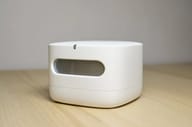
| 3 | Amazon Smart Air Quality Monitor Amazon | Best Smart Home Integration | 4.2 | $ | Check Price |
| 4 | GoveeLife Smart Air Quality Monitor GoveeLife | Best Budget WiFi Option | 4.1 | $ | Check Price |
Affiliate Disclosure: CleanAirCritic earns commissions from qualifying purchases through affiliate links on this page. This does not influence our rankings or reviews. All opinions are our own. Learn more
You do not need to spend $200–300 to start monitoring your indoor air quality. Budget monitors between $50 and $80 can deliver genuinely useful data — accurate enough to tell you when to open a window, run a fan, or turn on your air purifier. The trick is knowing which cheap monitors use real sensors and which rely on unreliable estimates.
We tested the most popular air quality monitors in the under-$100 budget tier, focusing on sensors that actually deliver on their claims. A note on pricing: the monitors on this list range from $60 to $80 at full retail. Several regularly drop below $50 during Amazon sales events, Prime Day, and holiday promotions. We include them because they represent the most affordable monitors worth recommending.
Our Top Picks at a Glance
| Monitor | Best For | Parameters | Connectivity | Price |
|---|---|---|---|---|
| SwitchBot CO2 Detector | Best Budget CO2 | CO2 (NDIR), temp, humidity | WiFi (Matter) | ~$60 |
| Temtop M2000 | Most Parameters | CO2, PM2.5, HCHO, temp, humidity | None | ~$60 |
| Amazon Smart AQ Monitor | Best Smart Home | PM2.5, VOC, CO, temp, humidity | WiFi (Alexa) | ~$70 |
| GoveeLife Smart AQ Monitor | Best Budget WiFi | CO2*, PM2.5, tVOC, temp, humidity | WiFi | ~$80 |
*GoveeLife uses estimated CO2, not NDIR.
What to Expect at This Price Point
Real Sensors vs. Estimated Readings
The biggest quality differentiator in budget monitors is sensor type:
- NDIR CO2 sensors (SwitchBot, Temtop) directly measure CO2 by infrared absorption. These are genuinely accurate, typically within ±50 ppm.
- Estimated CO2 (eCO2) (GoveeLife) calculates CO2 from VOC sensor readings using an algorithm. This can be off by hundreds of ppm and should not be trusted for ventilation decisions.
- Laser PM2.5 sensors (Temtop, Amazon, GoveeLife) use a laser scattering chamber. At this price, they are directionally accurate — they reliably show when PM2.5 is rising or falling — but readings may differ from reference instruments by 10–30%.
What You Give Up
Compared to premium monitors like the Airthings View Plus:
- Fewer parameters. No budget monitor measures radon. Most measure 3–5 parameters vs. 7 on premium devices.
- Less precise sensors. Good enough for decisions, not for data analysis.
- Simpler displays. No touchscreens or historical graphs on the device itself.
- Limited connectivity. Some have WiFi, others have none. No budget monitor matches the cloud dashboard experience of Airthings or Qingping.
What you do not give up: the ability to know when your air quality is poor and needs attention. That core function works fine at this price.
Detailed Reviews
1. SwitchBot CO2 Detector: Best Budget CO2 Monitor
The SwitchBot CO2 Detector is the standout value on this list. At $60 (frequently under $50 on sale), it delivers a genuine NDIR CO2 sensor — the same sensor technology used in the $200 Aranet4 HOME. You get accurate CO2 readings with Matter smart home support at a fraction of premium pricing.
Why it is our top budget pick: The NDIR sensor is the differentiator. Most monitors under $80 estimate CO2 from VOC readings, which is unreliable. The SwitchBot measures CO2 directly and accurately, typically within ±50 ppm. Matter compatibility means it works with Apple Home, Google Home, and Amazon Alexa without vendor lock-in. The LED display shows CO2, temperature, and humidity with configurable alert thresholds.
Smart home value: Within the SwitchBot ecosystem, high CO2 can trigger a window actuator, smart plug, or fan automatically. Matter support extends this automation capability to other platforms. For $60, you get a functional smart air quality sensor.
Downsides: CO2, temperature, and humidity only — no PM2.5 or VOC measurement. The display is basic compared to the Qingping's touchscreen. Some advanced SwitchBot features require the SwitchBot Hub accessory (sold separately). If you need PM2.5 monitoring, the Temtop M2000 or Amazon monitor is a better fit.
2. Temtop M2000: Most Parameters for the Money
The Temtop M2000 monitors CO2, PM2.5, formaldehyde (HCHO), temperature, and humidity — five parameters at $60 with a built-in rechargeable battery. No other monitor at this price offers this breadth of measurement.
Why it works: The color LCD displays all five readings simultaneously, and the rechargeable battery means you can carry it from room to room without a power cable. This makes the M2000 uniquely useful for spot-checking different spaces — measure your bedroom overnight, your kitchen during cooking, then your home office during work hours.
Formaldehyde detection: A unique feature at any price under $100. Formaldehyde (HCHO) off-gasses from pressed wood furniture, laminate flooring, and building materials. If you have moved into a new home, renovated, or bought new furniture, elevated formaldehyde is common and worth monitoring. The M2000 flags concerning levels so you can increase ventilation.
Portability: The rechargeable battery makes the M2000 the most portable monitor on this list. It is also useful for spot-checks at work, in hotel rooms, or at daycare facilities.
Downsides: No WiFi, no app, no data history — you see real-time readings and nothing else. The CO2 sensor, while using an infrared method, is noticeably less precise than the SwitchBot's NDIR sensor (±100 ppm vs. ±50 ppm). No smart home integration. The display, while functional, is not the sharpest.
3. Amazon Smart Air Quality Monitor: Best Smart Home Integration
The Amazon Smart Air Quality Monitor is the easiest way to add air quality awareness to an Alexa household. At $70, it provides PM2.5, VOC, carbon monoxide, temperature, and humidity readings with native Alexa integration — no app pairing or configuration required.
Why it works: If you already own Echo devices, this monitor slots directly into your existing setup. Ask "Alexa, what's the air quality?" to get current readings. Set Alexa routines to automatically trigger air purifiers, fans, or announcements based on air quality thresholds. The CO (carbon monoxide) sensor adds a safety layer that no other monitor on this list provides.
Routine examples: "When PM2.5 exceeds 25, turn on the smart plug in the bedroom" (air purifier). "When VOC is high, announce on Kitchen Echo: ventilate the kitchen." These automations are set up in the Alexa app with no coding required.
Downsides: No standalone display — you must use the Alexa app or voice commands to check readings. Does not measure CO2, which is the most actionable parameter for ventilation decisions. Accuracy is adequate for triggering automations but not for precise air quality analysis. Completely locked into the Amazon ecosystem — no Matter, no HomeKit, no third-party integrations.
4. GoveeLife Smart Air Quality Monitor: Best Budget WiFi Option
The GoveeLife Smart Air Quality Monitor provides WiFi connectivity with push notifications for $80. It measures PM2.5, CO2 (estimated), tVOC, temperature, and humidity with the Govee Home app for remote monitoring and historical data.
Why it works: WiFi with app-based monitoring and push notifications at $80 is genuinely useful. You get alerted on your phone when air quality drops, and you can check readings remotely. The LED display shows current readings on the device itself, and within the Govee ecosystem, readings can trigger other Govee smart devices.
The eCO2 caveat: The CO2 reading is estimated from the VOC sensor, not measured with an NDIR sensor. This means CO2 readings are unreliable for ventilation decisions. If accurate CO2 monitoring matters to you, spend $60 on the SwitchBot instead. The GoveeLife is better suited for people who primarily care about PM2.5 and VOC levels.
Downsides: Estimated CO2 is the main weakness. Limited third-party smart home integration (Govee ecosystem primarily). Sensor accuracy is adequate but not competitive with monitors at the $120+ price point. If budget allows, the Qingping Air Monitor Gen 2 at $120 is a significantly better multi-parameter monitor.
Budget Air Quality Monitor Buying Guide
Which Parameter Matters Most?
If you can only buy one budget monitor, choose based on your primary concern:
| Concern | Priority Parameter | Best Budget Pick |
|---|---|---|
| Stuffy bedrooms, brain fog | CO2 | SwitchBot CO2 Detector ($60) |
| Cooking smoke, allergies | PM2.5 | Amazon Smart AQ Monitor ($70) |
| New furniture, renovation | Formaldehyde | Temtop M2000 ($60) |
| Smart home automation | Multi-parameter + WiFi | GoveeLife Smart AQ Monitor ($80) |
When to Upgrade
Budget monitors are a great starting point. Consider upgrading to a premium indoor air quality monitor when:
- You want accurate CO2 AND PM2.5 in one device (the Qingping Air Monitor Gen 2 at $120 is the logical step up)
- You need radon monitoring (only the Airthings View Plus at $300 includes radon in a multi-parameter device)
- You want reference-grade CO2 accuracy for research or health management (the Aranet4 HOME at $200)
- Your budget monitor's estimated readings have led to confusing or contradictory data
Saving Money on Air Quality Monitors
- Watch for sales. The SwitchBot CO2 Detector and Temtop M2000 frequently drop to $40–50 during Amazon Prime Day, Black Friday, and holiday sales.
- Start with one room. Buy a single monitor for your bedroom first. If the data is useful, add a second unit for your office or kitchen later.
- Use your air purifier's sensor. Many modern air purifiers have built-in PM2.5 sensors with app readouts. If you already own one, you may only need a CO2 monitor to complement it.
- Skip subscription features. Some monitors offer premium cloud features for a monthly fee. At the budget tier, the free features are sufficient. Do not pay for subscriptions on a $60 device.
Last updated: March 2026. Prices and availability are subject to change.