
Best Air Purifiers for Allergies (2026)
The 7 best air purifiers for allergies in 2026, ranked by dust and pollen CADR. Our top True HEPA picks for pollen, dust mites, pet dander, and mold relief.

Table of Contents
- Our Top Picks at a Glance
- CADR-per-Dollar: How We Rank Value
- What to Look For in an Air Purifier for Allergies
- True HEPA vs. HEPA-Type Filters
- CADR Ratings for Dust and Pollen
- Auto Mode with Air Quality Sensor
- Noise Level for Bedroom Use
- Filter Replacement Cost
- The 7 Best Air Purifiers for Allergies, Reviewed
- 1. Levoit Core 400S: Best Overall for Allergies
- 2. IQAir HealthPro Plus XE: Premium, Doctor-Recommended
- 3. Medify MA-25: Medical-Grade HEPA, Compact
- 4. Coway Airmega AP-1512HH: Best Value
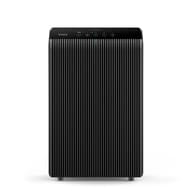
- 5. Winix 5510: True HEPA + PlasmaWave for Pollen Season
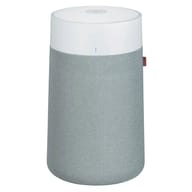
- 6. Blueair Blue Pure 411a Max: Budget Pick
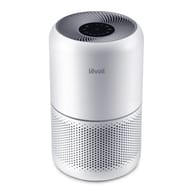
- 7. Levoit Core 300: Best Seller, Compact Rooms
- Allergy-Specific Buying Guide
- Understanding HEPA Grades
- Room Sizing
- Allergen-Specific Features
- Running Costs
TL;DR
At Clean Air Critic, the best air purifier for allergies is the Levoit Core 400S, offering strong dust and pollen CADR ratings, an H13 True HEPA filter, smart auto mode with air quality sensors, and whisper-quiet 24 dB sleep mode, all at a mid-range price. For severe allergies, the IQAir HealthPro Plus XE provides medical-grade HyperHEPA filtration recommended by allergists. For pollen and chemical irritants, the Winix 5510 adds PlasmaWave and WiFi at around $180, while the Blueair Blue Pure 411a Max delivers budget True HEPA relief for around $140.
Full Comparison
| # | Product | Best For | Rating | Price | |
|---|---|---|---|---|---|
| 1 | Levoit Core 400S Top Pick Levoit | Best Overall for Allergies | 4.9 | $$ | Check Price |
| 2 | IQAir HealthPro Plus XE IQAir | Premium / Doctor-Recommended | 4.8 | $$$$ | Check Price |
| 3 | Medify MA-25 Medify | Medical-Grade Compact | 4.7 | $$ | Check Price |
| 4 | Coway Airmega AP-1512HH Coway | Best Value | 4.7 | $$ | Check Price |
| 5 | Winix 5510 Winix | Best for Pollen + VOCs (Smart) | 4.6 | $$ | Check Price |
| 6 | Blueair Blue Pure 411a Max Blueair | Budget Pick | 4.4 | $ | Check Price |
| 7 | Levoit Core 300 Levoit | Best Seller, Compact | 4.3 | $ | Check Price |
Affiliate Disclosure: CleanAirCritic earns commissions from qualifying purchases through affiliate links on this page. This does not influence our rankings or reviews. All opinions are our own. Learn more
If you have allergies, the air inside your home is likely making them worse. Dust mites thrive in bedding and upholstery. Pet dander lingers for months after an animal leaves a room. Mold spores circulate through HVAC systems. (For a deeper look at how each of these triggers works, see our guide to common allergens and air purifiers.) And every spring, pollen infiltrates through open doors, windows, and even on your clothing. (If allergy season is approaching, our allergy season prep guide covers timing, placement, and room-by-room strategy.)
The most effective defense is a True HEPA air purifier that captures 99.97% of airborne particles at 0.3 microns, the exact size range that includes the allergens triggering your symptoms. But not all HEPA purifiers perform equally for allergies. The key differentiators are CADR ratings for dust and pollen, pre-filter quality, auto mode with air quality sensors, and noise levels low enough for overnight bedroom use.
We evaluated the top-selling purifiers specifically for allergy performance, prioritizing CADR dust/pollen ratings, True HEPA certification, sensor accuracy, and real-world usability during allergy season. Here are the best options for 2026.
Our Top Picks at a Glance
| Purifier | Best For | CADR (Dust/Pollen) | Room Coverage | Price Range |
|---|---|---|---|---|
| Levoit Core 400S | Best Overall for Allergies | 259/240 CFM | Up to 403 sq ft | $$ |
| IQAir HealthPro Plus XE | Premium / Doctor-Recommended | 300+ CFM | Up to 1,125 sq ft | $$$$ |
| Medify MA-25 | Medical-Grade Compact | 123/123 CFM | Up to 500 sq ft | $$ |
| Coway Airmega AP-1512HH | Best Value | 246/240 CFM | Up to 361 sq ft | $$ |
| Winix 5510 | Best for Pollen + VOCs (Smart) | 252/246 CFM | Up to 372 sq ft | $$ |
| Blueair Blue Pure 411a Max | Budget Pick | 141/141 CFM | Up to 219 sq ft | $ |
| Levoit Core 300 | Best Seller, Compact | 140/145 CFM | Up to 219 sq ft | $ |
CADR-per-Dollar: How We Rank Value
Manufacturer coverage claims are easy to inflate, so at Clean Air Critic we cut through them with one number: dust CADR per dollar, the AHAM-rated dust Clean Air Delivery Rate divided by current street price. It answers the question that matters for allergy sufferers on a budget: how much clean-air throughput does each dollar actually buy? We ran it across all seven picks using each unit's rated dust CADR and its typical September 2026 price.
| Purifier | Dust CADR | Price | CADR per $ |
|---|---|---|---|
| Coway Airmega AP-1512HH | 246 | ~$170 | 1.45 |
| Winix 5510 | 252 | ~$180 | 1.40 |
| Levoit Core 300 | 140 | ~$100 | 1.40 |
| Levoit Core 400S | 259 | ~$190 | 1.36 |
| Blueair Blue Pure 411a Max | 141 | ~$139 | 1.01 |
| Medify MA-25 | 123 | ~$150 | 0.82 |
| IQAir HealthPro Plus XE | 300 | ~$1,199 | 0.25 |
The takeaway: the Coway AP-1512HH delivers the most clean-air throughput per dollar of any unit here, which is why it holds our Best Value pick. The Winix 5510 and Levoit Core 300 follow closely. The Medify MA-25 and the IQAir sit at the bottom on raw value, because you are paying for compactness (Medify) or medical-grade HyperHEPA plus whole-home coverage (IQAir), not throughput. Value is not the only factor: severe allergy sufferers may rightly pick the IQAir for its sub-micron filtration, and buyers who want the smallest possible footprint accept the Medify's premium. But if your goal is simply the most allergen removal for your money, start at the top of this table.
This is also the fastest way to see why we did not swap in Coway's newer Airmega Mighty2 (AP-1512N). At 242 dust CADR and $269.99, it scores 0.90 CADR per dollar, which would put it last among the mainstream picks here, below the Blueair. You pay about $100 more for the same throughput.
What to Look For in an Air Purifier for Allergies
True HEPA vs. HEPA-Type Filters
This distinction matters more than any other spec. True HEPA (also labeled H13) filters are certified to capture 99.97% of particles at 0.3 microns, the hardest particle size to trap and the benchmark for allergen removal. HEPA-type or HEPA-style filters look similar but may only capture 85–90% of particles, often at a larger threshold like 2 microns. That gap means millions of allergen particles pass through.
Always confirm the filter is True HEPA or H13 grade. If the listing says "HEPA-type," "HEPA-like," or "99% filtration" without specifying the 0.3-micron standard, it is not True HEPA.
CADR Ratings for Dust and Pollen
The Clean Air Delivery Rate (CADR) measures cubic feet of clean air delivered per minute for specific pollutant types. For allergies, focus on the dust CADR (particles 0.5–3 microns, covering dust mite debris and mold spores) and pollen CADR (particles 5–11 microns, covering pollen and larger dander).
Rule of thumb: Your dust CADR should be at least two-thirds of your room's square footage. A 300 sq ft bedroom needs a purifier with a dust CADR of at least 200.
Auto Mode with Air Quality Sensor
During peak allergy season, airborne particle counts fluctuate throughout the day, spiking when you open a door, fold laundry, or when your HVAC kicks on. A purifier with a built-in PM2.5 or particle sensor and auto mode adjusts fan speed in real time, ramping up when it detects a burst of allergens and throttling down when the air is clean. This is more effective and energy-efficient than running on a fixed speed.
Noise Level for Bedroom Use
Most allergy sufferers benefit most from running a purifier overnight in the bedroom, where you spend 7–9 hours breathing the same air surrounded by dust mite habitats (mattress, pillows, bedding). A purifier that is too loud disrupts sleep, defeating the purpose. Look for models under 30 dB on their lowest setting, roughly the volume of a whisper.
Filter Replacement Cost
The purchase price is only part of the equation. HEPA filters need replacing every 6–12 months (more often during high pollen seasons). Some brands charge $20 for replacements; others charge $100+. Factor annual filter cost into your budget before buying.
The 7 Best Air Purifiers for Allergies, Reviewed
1. Levoit Core 400S: Best Overall for Allergies
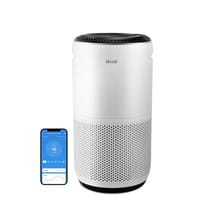
The Levoit Core 400S hits the sweet spot between performance, price, and smart features for allergy sufferers. With a dust CADR of 259 CFM and pollen CADR of 240 CFM, it cycles the air in a 400 sq ft room approximately five times per hour, the rate allergists recommend for meaningful symptom relief.
Why it works for allergies: The three-stage filtration starts with a washable pre-filter that captures hair and large dust, an H13 True HEPA filter for fine allergens (dust mite debris, pollen, mold spores, pet dander at 0.3 microns), and an activated carbon layer for odors. The laser-based PM2.5 sensor is responsive and accurate, detecting particle spikes within seconds and adjusting auto mode accordingly.
Smart features: Wi-Fi connectivity through the VeSync app lets you schedule the purifier to ramp up before you arrive home or during peak pollen hours (typically 5 AM–10 AM). You can check real-time air quality readings from your phone and set custom auto-mode sensitivity.
Noise: 24 dB on sleep mode, virtually silent. The display fully dims in sleep mode so it will not light up your bedroom. On turbo, it reaches 52 dB, which is noticeable but comparable to a normal conversation.
Downsides: The activated carbon layer is thin, so this is not the best choice if you also need strong odor removal. Filter replacements cost $30–40 every 6–8 months. Comparing this with the Winix below? See our Levoit Core 400S vs Winix 5500-2 head-to-head.
2. IQAir HealthPro Plus XE: Premium, Doctor-Recommended
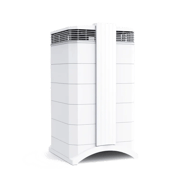
The IQAir HealthPro Plus XE is the most frequently recommended air purifier by allergists and immunologists. It is one of the few purifiers to meet both the stringent Swiss certification standards and earn AAFA certification in the U.S. If budget is not a constraint and you want the best allergen removal available, this is it.
Why it works for allergies: The HyperHEPA filter captures particles down to 0.003 microns, 100 times smaller than standard HEPA. This catches ultrafine allergens that other purifiers miss, including nanoparticles from combustion, the smallest mold spore fragments, and sub-micron pet allergen particles. The four-stage system processes air through a pre-filter, V5-Cell gas filter (5 lbs of granular activated carbon), and the HyperHEPA final stage.
Medical credibility: IQAir purifiers are used in hospitals, clinics, and clean rooms worldwide. The HealthPro Plus XE is specifically certified by AAFA for asthma and allergy sufferers. Multiple clinical studies have used IQAir units as the intervention device, lending real evidence to its effectiveness.
Performance: Covers up to 1,125 sq ft, enough for most open-plan living areas. The six-speed fan provides granular control. While IQAir historically opts out of AHAM CADR testing, independent measurements show performance consistent with 300+ CFM across all particle sizes.
Noise: 25 dB on speed 1 (whisper quiet), up to 59 dB on speed 6. The fan motor is Swiss-engineered and runs smoothly without vibration or rattling.
Downsides: At roughly $1,199, the price puts it out of reach for many buyers. Filter replacements are expensive ($70–$200 depending on stage), though each lasts 1–2 years. Smart control is limited to IQAir's AirVisual app, with no Alexa or Google Assistant support. The design is functional rather than attractive. It weighs 35 lbs and is not easy to move between rooms.
3. Medify MA-25: Medical-Grade HEPA, Compact
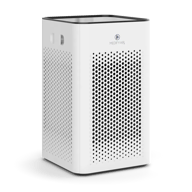
The Medify MA-25 packs H13 medical-grade HEPA filtration into a compact unit that fits on a nightstand. Its dual air intake pulls air from both sides simultaneously, delivering 123 CFM dust CADR in a surprisingly small footprint. Medify rates it for rooms up to 500 sq ft, but that figure assumes a low air-change rate. For the 4 to 5 air changes per hour allergists recommend, plan on roughly 180 to 200 sq ft of genuine coverage, so treat this as a bedroom or home-office unit rather than a living-room workhorse.
Why it works for allergies: The H13 HEPA filter captures 99.95% of particles down to 0.1 microns, which is finer than standard True HEPA. This matters for the smallest allergen fragments, including broken-down dust mite feces, ultrafine mold spores, and cat allergen (Fel d 1) particles that stay airborne for hours. The dual-intake design means faster air turnover per cycle.
Design: At just 15 inches tall, the MA-25 is one of the most compact mid-performance purifiers available. It fits comfortably on a desk or nightstand. The touchscreen panel is clean and intuitive, with a timer (up to 8 hours) and three fan speeds.
Noise: 26 dB on low, quiet enough for bedroom use. On high, it reaches 51 dB. The fan tone is a consistent white noise without the high-pitched whine some cheaper models produce.
Downsides: No smart features, app, or air quality sensor. You set the speed manually and leave it. No auto mode means you cannot benefit from adaptive fan speed during particle spikes. Filter replacements are affordable at $25–35 but are needed every 3–4 months during heavy allergy seasons.
4. Coway Airmega AP-1512HH: Best Value
The Coway AP-1512HH has been a consistent top pick across review publications for years, and for good reason. It delivers True HEPA performance with a built-in air quality sensor at a mid-range price that undercuts most competitors with similar specs.
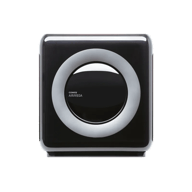
Why it works for allergies: The four-stage filtration system includes a washable pre-filter (captures hair and large particles, extending HEPA life), an odor filter, a True HEPA filter (99.97% at 0.3 microns), and Coway's Vital Ion function. The air quality sensor with color-coded indicator ring (blue = clean, purple = moderate, red = poor) provides instant visual feedback.
Smart features: Auto mode uses the built-in sensor to adjust fan speed automatically. Eco mode turns the fan off entirely when air quality has been consistently clean for 30 minutes, then restarts when particles are detected. The timer function runs in 1, 4, or 8-hour increments.
Build quality: The AP-1512HH feels solid despite its moderate price. The filter housing is well-sealed, and the unit has been AAFA (Asthma and Allergy Foundation of America) certified, one of the few purifiers to carry this designation.
Noise: 24 dB on low, 53 dB on high. Eco mode is completely silent when the fan is off.
Downsides: Room coverage at 361 sq ft is adequate for bedrooms and mid-sized rooms but will not handle large living areas. No Wi-Fi or app connectivity; the sensor and auto mode work entirely onboard. The ionizer (Vital Ion) can be turned off if you prefer purely mechanical filtration. The closely related Coway Airmega 200M shares the same filtration core in an updated design; see our Coway Airmega 200M review for a detailed comparison. Wondering how it compares to the Blueair Blue Pure 211+? See our Blueair 211+ vs Coway AP-1512HH comparison.
What about the Airmega Mighty2 (AP-1512N)? Coway markets the Mighty2 as the next generation of this unit, but for allergy buyers it is a sideways move. Its CADR (242 dust, 240 smoke, 249 pollen) is within a few CFM of the AP-1512HH's 246/233/240, and Coway does not list the Mighty2 as AAFA Asthma & Allergy Friendly certified; it cites IEST-certified HEPA media instead. That certification is a real part of why the AP-1512HH holds this slot, so the newer model is a downgrade on the one credential allergy sufferers should care about. The Mighty2 does run quieter on low (19 dB versus 24 dB) and consolidates filtration into one $69.99 Max2 cartridge instead of a $64.99 two-filter set. If the quieter low speed is worth $100 to you, buy the Mighty2. Otherwise stay with the AP-1512HH. Prices checked September 2026.
5. Winix 5510: True HEPA + PlasmaWave for Pollen Season
The Winix 5510 is a strong pick for allergy sufferers who also deal with seasonal odors and chemical sensitivities. It combines True HEPA, an activated carbon filter, and PlasmaWave technology, and it adds WiFi and app control through the Winix Smart App. At around $180, it sits a step above the cheapest True HEPA units but covers a wider range of irritants.
Why it works for allergies: True HEPA captures 99.97% of allergen particles at 0.3 microns. The pollen CADR of 246 CFM is among the highest on this list, making it particularly strong during spring allergy season. PlasmaWave technology breaks down VOCs, allergen-triggering chemicals, and odors at the molecular level without producing harmful ozone (CARB certified). This is useful for people whose allergies are worsened by chemical irritants.
Smart features: WiFi connectivity through the Winix Smart App lets you set schedules, switch modes, and check air quality from your phone. The smart sensor detects particles and adjusts fan speed in auto mode, and an ambient light sensor dims the indicator lights in dark rooms, a small detail that helps in bedrooms. There is no physical remote, so the app handles remote control.
Filters and cost: The four-stage system pairs a washable pre-filter with True HEPA, activated carbon, and PlasmaWave. The carbon is part of the replaceable Winix Filter Q, not washable, so plan for about $80 per year in filter costs. That is more than the discontinued 5500-2 it replaces, so factor it into your budget. The washable pre-filter does help extend the life of the main filter.
Noise: About 35 dB on sleep mode, quiet enough for most sleepers. At top speed it climbs to around 67 dB, which is clearly audible and best used during the day for quick cleanups after vacuuming or opening windows.
Downsides: Filter costs run higher than the cheapest units in this guide, roughly $80 a year for the Filter Q. The plastic build quality is noticeable; it works well but does not feel premium. There is no physical remote, though the app covers remote control. PlasmaWave can be turned off if you prefer, but it does add value for allergy sufferers with chemical sensitivities. For a full breakdown of filtration, noise, and long-term costs, read our Winix 5500-2 review. If you are choosing between the Winix and the Coway, our Winix 5500-2 vs Coway AP-1512HH comparison covers the key differences.
6. Blueair Blue Pure 411a Max: Budget Pick
At around $140, the Blueair Blue Pure 411a Max is the most affordable True HEPA purifier worth recommending for allergy sufferers. It will not cover a large room or deliver the same CADR as pricier models, but for a small bedroom or home office, it punches above its weight.
Why it works for allergies: Blueair's HEPASilent technology combines mechanical and electrostatic filtration, capturing 99.97% of particles at 0.1 microns with less airflow resistance than pure mechanical HEPA. This means lower fan speeds (and less noise) for equivalent particle capture. The combination particle + carbon filter handles both allergens and light odors.
Design: The fabric pre-filter wraps around the base and comes in multiple colors. It is washable, which saves money and extends main filter life. The unit is compact (17 inches tall) and weighs just 3.4 lbs, making it easy to move from room to room as needed.
Noise: 18 dB on low, one of the quietest purifiers available. On high it reaches 46 dB, still moderate. The consistent airflow sound is pleasant white noise for sleeping.
Performance: 141 CFM CADR for dust and pollen covers rooms up to 219 sq ft effectively. For a single-person bedroom, this is adequate. For larger rooms, it will run continuously without fully clearing airborne allergens.
Downsides: Unlike the older 411, the 411a Max adds an auto mode and a five-color air quality indicator that ramps the fan when it detects a particle spike, a genuine upgrade for allergy season. It still has no WiFi or app, however, so you control it with two onboard buttons rather than your phone (the app-connected version is the 411i Max). Limited room coverage means it is not suitable as a primary whole-room purifier. The carbon filter is thin and handles only light odors. Not ideal for households with heavy allergen loads (multiple pets, carpeted rooms). Choosing between this and the Levoit Core 300S? See our Levoit Core 300S vs Blueair Blue Pure 411 comparison.
7. Levoit Core 300: Best Seller, Compact Rooms
The Levoit Core 300 is the best-selling air purifier on Amazon for a reason: it delivers solid True HEPA performance in a compact, affordable package. For bedrooms under 220 sq ft, it provides effective allergy relief at a price point that makes owning multiple units practical.
Why it works for allergies: H13 True HEPA filter captures 99.97% of particles at 0.3 microns. Levoit offers multiple specialty filter options for the Core 300, including a "Pet Allergy" replacement filter with a thicker activated carbon layer and an antimicrobial coating. The standard three-stage system (pre-filter, HEPA, carbon) handles pollen, dust mites, mold spores, and dander effectively in small rooms.
Design: At just 8.5 inches in diameter and 14.2 inches tall, the Core 300 is one of the smallest true HEPA purifiers available. 360-degree air intake draws air from all directions, so placement against a wall is less of a concern than with front-intake models.
Noise: 24 dB on sleep mode, virtually inaudible. The display turns off completely in sleep mode. On high, 50 dB is comparable to light rainfall.
Multi-room strategy: At around $80 each, buying two or three Core 300 units to place in different rooms is often more effective and cheaper than a single large purifier for allergy coverage throughout a home.
Downsides: No smart features or app (that is the Core 300S, which costs more). No air quality sensor or auto mode. CADR at 140/145 CFM limits it to small rooms. The carbon layer is minimal, so do not rely on it for odor removal. If you need more coverage, see our Levoit Core 300 vs Core 400S comparison to decide whether the upgrade is worth it for your space.
Allergy-Specific Buying Guide
Understanding HEPA Grades
Not all HEPA filters are created equal. The grading system matters for allergy sufferers:
- H10–H12: Captures 85–99.5% of particles at 0.3 microns. Often labeled "HEPA-type." Not sufficient for serious allergy relief.
- H13 (True HEPA): Captures 99.97% at 0.3 microns. The standard for consumer air purifiers. Adequate for the vast majority of allergy sufferers.
- H14 (Medical-grade): Captures 99.995% at 0.3 microns. Used in hospitals and clean rooms. Only the IQAir HyperHEPA exceeds this in the consumer market.
For most people with seasonal or pet allergies, H13 True HEPA is the right target. H14 is worth the premium only for severe allergies, immunocompromised individuals, or asthma patients whose symptoms are not controlled by H13 filtration.
Room Sizing
Undersizing is the most common mistake. Use this approach:
- Measure your room's square footage (length x width).
- Match it to the purifier's stated coverage, but check the fine print. Many manufacturers calculate coverage at 2 air changes per hour (ACH). Allergists recommend 4–5 ACH for allergy relief.
- To get 5 ACH, choose a purifier rated for a room 1.5–2x your actual room size, or run the unit on a higher speed setting.
Example: For a 200 sq ft bedroom at 5 ACH, you want a purifier rated for 300–400 sq ft.
Allergen-Specific Features
Different allergies benefit from different purifier characteristics:
- Pollen (seasonal allergies): Prioritize high pollen CADR and auto mode with sensors. Pollen particles are large (10–100 microns) and easy for HEPA to capture, but they enter in bursts (opening doors, windows). Auto mode catches these spikes.
- Dust mites: Focus on bedroom placement and overnight operation. Dust mite allergens peak when bedding is disturbed. Run the purifier on high for 30 minutes before bed, then switch to sleep mode. If dust is your primary concern, see our best air purifiers for dust guide for models optimized specifically for dust removal.
- Pet dander: Look for purifiers with strong pre-filters. Pet hair clogs HEPA filters quickly, increasing replacement frequency. A washable pre-filter (Coway, Winix) saves money over time.
- Mold spores: HEPA is effective for capturing mold spores (2–20 microns). If your mold issue is also producing musty odors, add activated carbon filtration. For purifiers specifically tested against mold, see our best air purifiers for mold guide. Address the moisture source as well, since a purifier catches spores but does not solve a mold problem.
Running Costs
Budget for annual filter replacements alongside the purchase price:
| Purifier | Filter Cost | Replacement Frequency | Annual Cost |
|---|---|---|---|
| Levoit Core 400S | $30–40 | Every 6–8 months | $45–80 |
| Medify MA-25 | $25–35 | Every 3–6 months | $50–140 |
| Coway AP-1512HH | $40–50 | Every 12 months | $40–50 |
| Winix 5510 | ~$80 (Filter Q) | Every 12 months | ~$80 |
| IQAir HealthPro Plus XE | $70–200 (per stage) | Every 12–24 months | $100–200 |
| Blueair Blue Pure 411a Max | $20–30 | Every 6 months | $40–60 |
| Levoit Core 300 | $20–30 | Every 6–8 months | $30–60 |
The Coway AP-1512HH and Levoit Core 300 offer the lowest annual operating costs. The Blueair Blue Pure 411a Max has cheap filters but needs them more frequently, and the Winix 5510 runs about $80 a year for its Filter Q.
Last updated: September 2026. Prices and availability are subject to change. We update this guide each spring before peak allergy season and whenever significant new products launch.
Frequently Asked Questions
Do air purifiers actually help with seasonal allergies?
How often should I change HEPA filters if I have allergies?
Is a HEPA air purifier or an ionizer better for allergies?
Where should I place an air purifier for the best allergy relief?
Can one air purifier handle my whole house?
Is the Coway Airmega Mighty2 (AP-1512N) better than the AP-1512HH for allergies?
Should I run my air purifier 24/7 during allergy season?
You Might Also Like
Best Air Purifier for COPD (2026): 7 Ozone-Free Picks
The 7 best air purifiers for COPD in 2026, screened for zero ozone and costed for 24/7 use. Ozone-free HEPA picks from $56 to $290 a year to run.

Best Air Purifier for a Gas Stove (2026): 7 Carbon Picks
The 7 best air purifiers for gas stove pollution in 2026, ranked by carbon capacity. What they fix, what they cannot fix, and honest NO2 reduction numbers.
Best Air Purifier & Humidifier Combo (2026)
The best air purifier and humidifier combos in 2026. We rate the top HEPA+humidifier units and explain when a pairing of two separate devices beats any all-in-one.
Best Air Purifiers for Nail Salons (2026)
The best air purifiers for nail salons in 2026. We compare heavy-carbon units and source-capture options to clear acrylic fumes, MMA monomer, and VOCs at the nail table.