
Best Air Purifier for COPD (2026): 7 Ozone-Free Picks
The 7 best air purifiers for COPD in 2026, screened for zero ozone and costed for 24/7 use. Ozone-free HEPA picks from $56 to $290 a year to run.

Table of Contents
- Our Top Picks at a Glance
- What It Costs to Run Each of These 24 Hours a Day
- The Ozone Audit: What Each Unit Adds Beyond the Filter
- Best Air Purifiers for COPD, Reviewed
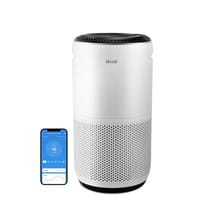
- 1. Levoit Core 400S: Best Overall for COPD
- 2. Levoit Core 600S: Best for Large Rooms
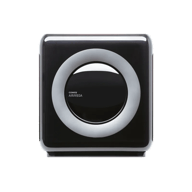
- 3. Coway Airmega 400: Best Quiet Open-Plan Pick
- 4. Levoit Core 300S: Cheapest to Run 24/7
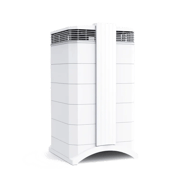
- 5. IQAir HealthPro Plus XE: Best Premium and Gas-Phase Pick
- 6. Coway Airmega AP-1512HH: Best Value, With One Setting Change
- 7. Medify MA-40: Best for Daytime Living Areas
- Why COPD Changes the Buying Criteria
- How to Choose an Air Purifier for COPD
- What an Air Purifier Will Not Do
TL;DR
At Clean Air Critic, the best air purifier for COPD is the Levoit Core 400S. It is purely mechanical with no ionizer or UV stage, so it emits no ozone at all, it runs at 24 dB in sleep mode, and our cost model puts continuous 24/7 operation at about $80 a year including filters. That last number matters more than it looks: the CLEAN AIR trial found the COPD benefit of a HEPA cleaner scaled with how consistently people ran it. For a large room or open plan, the Levoit Core 600S is the cheapest pick per unit of airflow over five years at $1.84 per CFM. If cost is no object and you want gas-phase filtration as well, the IQAir HealthPro Plus XE is the strongest unit here.
Full Comparison
| # | Product | Best For | Rating | Price | |
|---|---|---|---|---|---|
| 1 | Levoit Core 400S Top Pick Levoit | Best Overall for COPD | 4.6 | $$ | Check Price |
| 2 | Levoit Core 600S Levoit | Best for Large Rooms | 4.7 | $$ | Check Price |
| 3 | Coway Airmega 400 Coway | Best Quiet Open-Plan Pick | 4.6 | $$$ | Check Price |
| 4 | Levoit Core 300S Levoit | Cheapest to Run 24/7 | 4.5 | $ | Check Price |
| 5 | IQAir HealthPro Plus XE IQAir | Best Premium / Gas-Phase | 4.8 | $$$$ | Check Price |
| 6 | Coway Airmega AP-1512HH Coway | Best Value (Switch the Ion Off) | 4.5 | $$ | Check Price |
| 7 | Medify MA-40 Medify | Best for Daytime Living Areas | 4.4 | $$$ | Check Price |
Affiliate Disclosure: CleanAirCritic earns commissions from qualifying purchases through affiliate links on this page. This does not influence our rankings or reviews. All opinions are our own. Learn more
Most air purifier buying guides rank on CADR and price. For COPD, those are the wrong first questions.
The first question is ozone, because a meaningful share of popular purifiers add an ionizer, a plasma stage, or a UV-C lamp that produces trace ozone as a byproduct, and ozone is a respiratory irritant. The second question is whether you will actually leave the thing running, because the clinical evidence that air cleaners help COPD comes with a large asterisk about adherence. The third is what continuous operation costs you per year, because that is the number that decides whether the unit stays on in month seven.
We screened for those three things first and let CADR break the ties. Here are the seven that survived.
Our Top Picks at a Glance
| Purifier | Best For | CADR (Dust) | Coverage | Noise (Low) | Price | Ozone Risk |
|---|---|---|---|---|---|---|
| Levoit Core 400S | Best Overall | 260 CFM | 403 sq ft | 24 dB | ~$190 | None |
| Levoit Core 600S | Large Rooms | 410 CFM | 635 sq ft | 26 dB | ~$260 | None |
| Coway Airmega 400 | Quiet Open Plan | 328 CFM | 1,560 sq ft | 22 dB | ~$349 | None |
| Levoit Core 300S | Cheapest to Run | 141 CFM | 219 sq ft | 22 dB | ~$150 | None |
| IQAir HealthPro Plus XE | Premium | 300 CFM* | 1,125 sq ft | 29 dB | ~$1,199 | None |
| Coway AP-1512HH | Best Value | 246 CFM | 361 sq ft | 24 dB | ~$170 | Trace, switchable |
| Medify MA-40 | Daytime Living Areas | 380 CFM | 840 sq ft | 46 dB | ~$280 | None with ion off |
Prices checked 13 September 2026 against manufacturer listings and cross-referenced with retailer street pricing. * IQAir does not publish an AHAM-verified CADR for the HealthPro Plus XE. The 300 CFM figure is its maximum rated airflow, so treat that row as an estimate rather than a like-for-like comparison.
What It Costs to Run Each of These 24 Hours a Day
This is the table we could not find anywhere else, and it is the one that should drive your decision.
The CLEAN AIR trial's benefit was concentrated among participants with higher adherence, meaning the people who left the unit running. So the specification that matters is not what the purifier costs on the shelf, it is what it costs to leave on for a year, and then for five.
We modeled continuous operation at a medium fan speed, estimated at 50% of each unit's rated maximum wattage, at the US average residential electricity rate of 18.3 cents per kWh (EIA, September 2026). Filter costs are the manufacturer's annual replacement cost for the full filter set.
| Purifier | Rated Max Watts | Electricity/Year | Filters/Year | Total/Year | 5-Year Total Cost | 5-Yr Cost per CFM |
|---|---|---|---|---|---|---|
| Levoit Core 300S | 26 W | $21 | $35 | $56 | $430 | $3.05 |
| Levoit Core 400S | 44 W | $35 | $45 | $80 | $590 | $2.27 |
| Levoit Core 600S | 49 W | $39 | $60 | $99 | $755 | $1.84 |
| Coway AP-1512HH | 77 W | $61 | $50 | $111 | $725 | $2.95 |
| Medify MA-40 | 54 W | $43 | $70 | $113 | $845 | $2.22 |
| Coway Airmega 400 | 66 W | $52 | $100 | $152 | $1,109 | $3.38 |
| IQAir HealthPro Plus XE | 215 W | $170 | $120 | $290 | $2,649 | $8.83 |
Three findings fall out of this that the spec sheets hide.
Filters, not electricity, are the bigger recurring cost on most of these. On five of the seven units the annual filter bill exceeds the annual power bill. People shopping for a "cheap to run" purifier tend to compare wattage, which is the smaller half of the number.
The Core 600S is the value champion once you account for running it. It is not the cheapest unit to buy and it is not the cheapest to run, but at $1.84 per CFM of clean-air delivery over five years it is comfortably the most airflow per dollar on this list. The Core 300S looks cheap at $56 a year until you notice it is moving a third of the air, which puts its cost per CFM at $3.05, higher than units that cost twice as much annually.
The IQAir costs nearly five times as much per CFM as the Core 600S over five years. Its 215 W draw is the single largest line item in this table, at $170 a year in electricity alone. The HealthPro Plus XE earns its place on this list for its gas-phase filtration and its build, not for its particle economics. If your reason for buying is fine particles, the money is better spent elsewhere.
If you are choosing between two units and cannot decide, the five-year total is a more honest comparison than the sticker price, and the gap is usually larger than you expect. Our air purifier running costs guide walks through the same math for other models.
The Ozone Audit: What Each Unit Adds Beyond the Filter
Ozone is the reason this list looks different from our general best air purifiers for asthma roundup. A HEPA filter is a passive mechanical barrier and produces nothing. Anything a manufacturer bolts on beyond that, an ionizer, a plasma cluster, a UV-C lamp, introduces a pathway that a plain filter does not have.
| Purifier | Added Non-Mechanical Stage | Ozone Byproduct | Can You Switch It Off? | Our COPD Verdict |
|---|---|---|---|---|
| Levoit Core 300S / 400S / 600S | None | None | Not applicable | Use exactly as shipped |
| Coway Airmega 400 | None | None | Not applicable | Use exactly as shipped |
| IQAir HealthPro Plus XE | None | None | Not applicable | Use exactly as shipped |
| Medify MA-40 | Optional ionizer | Medify reports zero measurable | Yes, front panel | Buy it, leave the ion off |
| Coway AP-1512HH | Vital Ion | Trace, within CARB limits | Yes, dedicated control | Buy it, leave the ion off |
| Winix 5500-2 / 5510 | PlasmaWave | Trace, CARB certified | Yes, button | Excluded from this list |
| GermGuardian AC4825 | UV-C lamp | Trace | Yes, separate switch | Excluded from this list |
The two excluded units are genuinely good purifiers, and we recommend both elsewhere on this site. We left them off a COPD list because their non-mechanical stage is part of how they are marketed and how most owners run them, and because the default state on the Winix is PlasmaWave on. For a general household that is a reasonable tradeoff. For a household where someone has moderate COPD, buying a unit whose headline feature you are supposed to disable is the wrong starting point.
The Coway AP-1512HH is a borderline case and we kept it. Vital Ion is a genuinely separate control on that unit, the purifier filters normally with it off, and the AP-1512HH is otherwise one of the best value propositions in the category. Just switch the ion off on day one and leave it off.
If you want the underlying technology comparison, our guide to HEPA vs ionic vs UV air purifiers covers what each stage actually does.
Best Air Purifiers for COPD, Reviewed
1. Levoit Core 400S: Best Overall for COPD
Best for: Bedrooms and living rooms up to 400 sq ft, where you want the unit running every night.
The Core 400S wins this list on the three things that matter for COPD rather than on raw performance. It is purely mechanical, with an H13 True HEPA filter and an activated carbon layer and nothing else, so there is no ozone question at any fan speed. It runs at 24 dB in sleep mode, quiet enough that most people leave it on overnight. And at roughly $80 a year to run continuously it is cheap enough that nobody switches it off to save money.
The 260 CFM dust CADR gives you a little over 4 air changes per hour in a 350 sq ft bedroom, which is comfortably in the range we recommend. The laser PM2.5 sensor and auto mode are genuinely useful here, because they let the unit sit quiet most of the night and ramp only when something changes.
The VeSync app is occasionally flaky, and there is no washable pre-filter, so pet hair goes straight onto the HEPA media and shortens its life. Neither is a dealbreaker.
2. Levoit Core 600S: Best for Large Rooms
Best for: Rooms over 400 sq ft, open-plan spaces, and anyone optimizing for cost per unit of airflow.
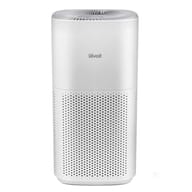
Same mechanical design, same absence of any ionizing stage, considerably more air. The 410 CFM CADR covers 635 sq ft and, as the cost table shows, it delivers the cheapest clean air per dollar over five years of any unit here at $1.84 per CFM.
At 26 dB on low it is marginally louder than the 400S but still fine for a bedroom. The footprint is the real tradeoff: it is a noticeably larger cylinder and it needs clearance on all sides.
If your bedroom is under 350 sq ft, the 400S is the better buy and the 600S is overkill. Above that, this is the pick.
3. Coway Airmega 400: Best Quiet Open-Plan Pick
Best for: Open-plan homes where the kitchen, dining, and living areas share one air volume.
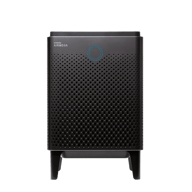
The Airmega 400 pulls air through Max2 filters on both sides of the unit, which is why it manages 328 CFM while sitting at 22 dB on its lowest speed. That is the quietest low-speed figure on this list, and in an open plan where the unit runs in the same space you live in all day, it is worth paying for.
There is no ionizer and no UV stage. The air quality indicator ring gives you a genuine real-time read, and eco mode stops the fan entirely when the air has been clean for a while.
Two caveats. It needs two Max2 filter sets per replacement, which is why its $100 annual filter bill is the second highest here and its five-year cost per CFM is the worst of the non-IQAir picks at $3.38. And this is the non-smart model. The app-connected Airmega 400S is a separate unit at around $650.
4. Levoit Core 300S: Cheapest to Run 24/7
Best for: Small bedrooms under 220 sq ft, and second units for a spare room.
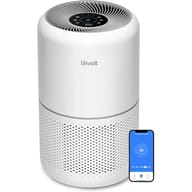
At 26 W rated maximum this is by a wide margin the lowest-draw unit here, and at about $56 a year all-in it is the cheapest purifier to leave running that we can recommend for COPD. It is mechanical H13 HEPA with no added stage, and at 22 dB it is tied for the quietest on the list.
The honest limitation is airflow. 141 CFM covers 219 sq ft at 2 air changes per hour, which is thin for a respiratory application. In a genuinely small bedroom it is fine. In anything larger you are buying a low annual bill for air that is not actually being turned over enough times, which is why its cost per CFM is worse than units that cost more per year.
There is no onboard air quality sensor either, so auto mode relies on app scheduling rather than live readings.
5. IQAir HealthPro Plus XE: Best Premium and Gas-Phase Pick
Best for: Homes with a gas appliance, a nearby roadway, or chemical sensitivity alongside COPD.
Nothing else on this list carries 5 lbs of granular activated carbon and alumina. If your COPD sits alongside a gas-phase exposure, a gas stove, a busy road, solvent work in an attached garage, this is the only unit here that genuinely addresses it rather than just masking odor. The HyperHEPA media is also rated well below the 0.3 micron HEPA standard.
The build quality and the 10-year warranty are in a different class from everything else in this roundup.
The case against it is the cost table. $290 a year to run continuously, $2,649 over five years, and $8.83 per CFM. It is a legitimately excellent machine that is a poor value if fine particles are your only concern. Buy it for the gas filtration or the longevity, not for the HEPA.
6. Coway Airmega AP-1512HH: Best Value, With One Setting Change
Best for: Bedrooms up to 360 sq ft on a tighter budget.
The AP-1512HH has been a consumer-publication favorite for years, and at around $170 with a $50 annual filter bill it is the cheapest genuinely capable unit here. 246 CFM, 24 dB on low, a real air quality indicator, and an eco mode that shuts the fan off when the air is clean.
The COPD-specific instruction is simple: the Vital Ion stage is a separate control, and you should switch it off and leave it off. Coway states the ozone output is within CARB limits, but there is no filtration benefit you lose by disabling it, so there is no reason to run it. The purifier's HEPA and deodorization stages work exactly the same either way.
Its 77 W draw is high for its output, which is why its annual running cost of $111 is higher than the more powerful Core 600S.
7. Medify MA-40: Best for Daytime Living Areas
Best for: Daytime use in a large living room or den, not a bedroom.
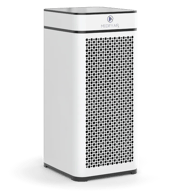
The MA-40 delivers 380 CFM across 840 sq ft from a compact tower, using dual intake and H13 media rated to 0.1 microns. Medify reports zero measurable ozone from its optional ionizer, and the ionizer has a straightforward off switch. Build quality is good and the glass touch panel with child lock is a nice touch in a house with grandchildren.
The reason it is last is noise. 46 dB is its minimum, roughly twice the sound pressure of the 22 dB units on this list, and that is a real problem for an application where the whole point is leaving it running. In a living room during the day you will not care. In a bedroom at night you will switch it off, and then it is doing nothing.
Buy it as a second unit for a large daytime space. Do not buy it as your only unit.
Why COPD Changes the Buying Criteria
A general air purifier recommendation optimizes for clean air per dollar. A COPD recommendation has to optimize for clean air per dollar that you will actually keep paying for, which is a different problem.
The CLEAN AIR study is the reason. Hansel and colleagues at Johns Hopkins randomized former smokers with moderate to severe COPD to either an active portable HEPA cleaner or a visually identical sham unit, and followed them for six months. In the per-protocol analysis the active-filter group did better on respiratory quality of life, moderate exacerbation risk, breathlessness and cough scores, and walking distance. The effect was not dramatic, but it was real, and it was concentrated in participants who ran the unit consistently and spent more time indoors.
That result reframes the whole purchase. A 400 CFM unit that you switch off at 10pm because it hums is worse than a 140 CFM unit that runs all night. Noise and running cost are not comfort features in this context, they are the mechanism by which the clinical benefit either happens or does not.
It also explains our ozone screen. In a population with reduced pulmonary reserve, an irritant exposure that a healthy adult would shrug off is a worse trade, and the thing being traded away is an ionizer feature with no demonstrated benefit over the filter sitting right behind it.
How to Choose an Air Purifier for COPD
Size it to one room, not the house. Take the room where you spend the most consecutive hours, usually the bedroom, and pick a unit whose CADR gives you at least 4 air changes per hour there. Multiply the room's square footage by the ceiling height, divide by 60, then multiply by 4 to get the CADR you need in CFM. A 300 sq ft bedroom with 8-foot ceilings needs about 160 CFM. Our guide to CADR explains the number in full.
Check the low-speed noise figure, not the average. Manufacturers quote a range. The number that determines whether you leave the unit on is the bottom of that range. Under 25 dB is the target.
Confirm the ozone position in writing. If a product page describes an ionizer, a plasma stage, an "active" mode, or UV-C, find out whether it has a genuine independent off switch before you buy. If the manual is vague, assume it does not.
Price the year, not the box. Add the annual filter cost to the electricity estimate before comparing models. The table above shows the gap between two units can invert once you do.
Plan the filter changes. Have someone else change them if possible, or wear an N95 and do it outdoors. This is a small, brief exposure but it is entirely avoidable.
What an Air Purifier Will Not Do
We would rather say this plainly than let a buying guide imply otherwise.
An air purifier does not treat COPD, does not improve lung function measured by spirometry, and does not replace inhalers, pulmonary rehabilitation, oxygen therapy, or smoking cessation. The CLEAN AIR result was an improvement in symptoms and exacerbation risk layered on top of existing care, not instead of it.
It also does nothing about the largest indoor exposure for many people with COPD, which is ongoing smoking in the home. A purifier removes particles already in the air. It cannot keep up with a continuous source, and the trial that found benefit was conducted in former smokers for exactly that reason.
And it does not address gases unless you have bought serious gas-phase media. If your concern is a gas range or an attached garage, filtration is a partial measure and ventilation is the primary one.
Talk to your pulmonologist before changing anything about how you manage your condition. What an air purifier can reasonably do is lower the fine-particle load in the room where you spend most of your time, which the evidence suggests is worth doing.
Frequently Asked Questions
What is the best air purifier for COPD?
Can air purifiers help with COPD?
Are ionizers and UV air purifiers safe for COPD?
How much does it cost to run an air purifier 24/7 for COPD?
How quiet does an air purifier need to be for a COPD bedroom?
Do I need a carbon filter for COPD, or is HEPA enough?
Where should I put an air purifier if I have COPD?
How often should I change filters if I have COPD?
You Might Also Like

Best Air Purifier for a Gas Stove (2026): 7 Carbon Picks
The 7 best air purifiers for gas stove pollution in 2026, ranked by carbon capacity. What they fix, what they cannot fix, and honest NO2 reduction numbers.
Best Air Purifier & Humidifier Combo (2026)
The best air purifier and humidifier combos in 2026. We rate the top HEPA+humidifier units and explain when a pairing of two separate devices beats any all-in-one.
Best Air Purifiers for Nail Salons (2026)
The best air purifiers for nail salons in 2026. We compare heavy-carbon units and source-capture options to clear acrylic fumes, MMA monomer, and VOCs at the nail table.
Best Air Purifier with UV-C Light (2026)
The best air purifiers with UV-C light in 2026. We rate the top ozone-free HEPA + UV-C units and explain honestly where UV-C actually helps and where it doesn't.