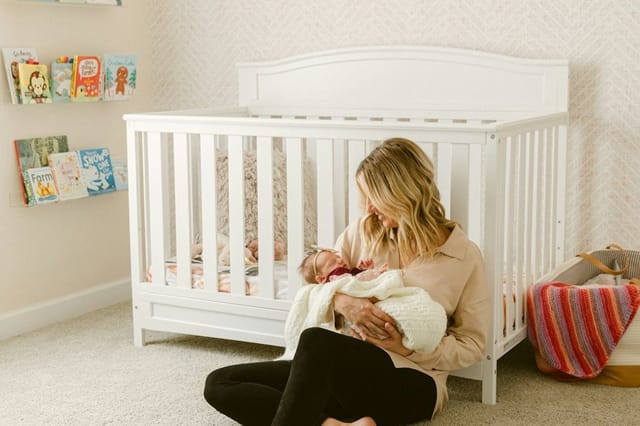
Best Air Purifiers for Baby Rooms: Safe & Quiet (2026)
We tested the safest, quietest air purifiers for nurseries and baby rooms. These ozone-free HEPA models protect your newborn's lungs without disrupting sleep.

Table of Contents
- Our Top Picks at a Glance
- What Makes a Nursery Air Purifier Different
- Safety First: No Ozone, No Ionizers
- Noise: Under 25 dB for Naptime
- Cord Safety and Stability
- Display Lights
- Detailed Reviews
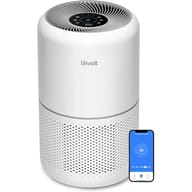
- 1. Levoit Core 200S: Best Overall for Nurseries
- 2. Levoit Sprout: Best Nursery-Specific Design
- 3. Coway Airmega 200M: Best Filtration for Larger Nurseries
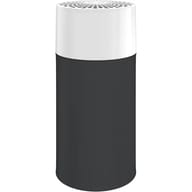
- 4. Blueair Blue Pure 411: Quietest Option
- 5. Levoit Core 300S: Best Smart Features for Parents
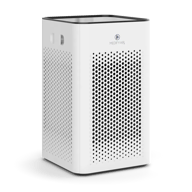
- 6. Medify MA-25: Medical-Grade with Child Lock
- Nursery Air Purifier Buying Guide
- Filtration Type: HEPA Only for Babies
- Room Size for Nurseries
- Features That Matter for Parents
- What About Humidifier-Purifier Combos?
- Running Costs Compared
- Nursery Placement Tips
- The Bottom Line
TL;DR
The best air purifier for a baby room is the Levoit Core 200S: it is ultra-quiet at 24 dB, ozone-free, compact enough for a nursery shelf, and costs under $90. For parents who want nursery-specific features like white noise and a blue-light-free night light, the Levoit Sprout is purpose-built for the job at $180. For larger nurseries or playrooms, the Coway Airmega 200M delivers the strongest filtration at just 24.4 dB.
Full Comparison
| # | Product | Best For | Rating | Price | |
|---|---|---|---|---|---|
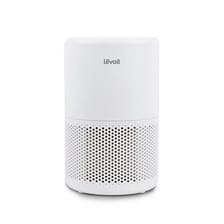
| 1 | Levoit Core 200S Top Pick Levoit | Best Overall for Nurseries | 4.8 | $ | Check Price |
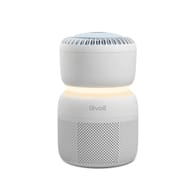
| 2 | Levoit Sprout Levoit | Best Nursery-Specific Design | 4.7 | $$ | Check Price |
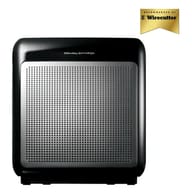
| 3 | Coway Airmega 200M Coway | Best Filtration for Larger Nurseries | 4.7 | $$ | Check Price |
| 4 | Blueair Blue Pure 411 Blueair | Quietest Option | 4.6 | $ | Check Price |
| 5 | Levoit Core 300S Levoit | Best Smart Features for Parents | 4.6 | $$ | Check Price |
| 6 | Medify MA-25 Medify | Medical-Grade with Child Lock | 4.5 | $$ | Check Price |
Affiliate Disclosure: CleanAirCritic earns commissions from qualifying purchases through affiliate links on this page. This does not influence our rankings or reviews. All opinions are our own. Learn more
Babies breathe fast. Newborns take 40-60 breaths per minute, roughly double the adult rate. Pound for pound, that means they inhale far more airborne particles than you do. Their lungs are still developing, their immune systems are immature, and they spend 14-17 hours a day in the same room breathing the same air.
That room often contains more pollutants than you would expect. New nursery furniture off-gasses VOCs (formaldehyde, toluene). Fresh paint releases volatile compounds for weeks. Dust mites colonize crib mattresses. Pet dander drifts in from other rooms. And if you live near a busy road or in a wildfire-prone area, PM2.5 infiltrates even with windows closed.
A HEPA air purifier is the most direct way to reduce your baby's exposure to these particles. But not every air purifier belongs in a nursery. You need one that is genuinely quiet (babies are light sleepers), completely ozone-free (no ionizers, no UV-C), and safe to have in a room with a curious toddler. We evaluated six models against those specific criteria.
Our Top Picks at a Glance
| Purifier | Best For | Noise (Low) | Room Coverage | Price Range |
|---|---|---|---|---|
| Levoit Core 200S | Best Overall for Nurseries | 24 dB | Up to 183 sq ft | $ |
| Levoit Sprout | Nursery-Specific Design | ~25 dB | Up to 100 sq ft | $$ |
| Coway Airmega 200M | Larger Nurseries | 24.4 dB | Up to 361 sq ft | $$ |
| Blueair Blue Pure 411 | Quietest Option | 17 dB | Up to 190 sq ft | $ |
| Levoit Core 300S | Smart Features for Parents | 24 dB | Up to 219 sq ft | $$ |
| Medify MA-25 | Medical-Grade + Child Lock | 26 dB | Up to 500 sq ft | $$ |
What Makes a Nursery Air Purifier Different
Not all bedroom purifiers are nursery-ready. Here is what to prioritize when the air purifier is running next to a crib instead of a king bed.
Safety First: No Ozone, No Ionizers
This is the non-negotiable rule for nurseries. The EPA has stated clearly that ozone can damage lungs even at low concentrations, and infants are disproportionately affected because of their higher breathing rate and developing respiratory tissue.
Some popular air purifiers include ionizer functions, PlasmaWave technology, or UV-C sterilization. While manufacturers often claim these are "ozone-safe" or produce ozone within regulatory limits, we take a zero-tolerance approach for nurseries. Every purifier on this list uses purely mechanical HEPA filtration with no ozone-generating technology of any kind.
Noise: Under 25 dB for Naptime
Babies nap 3-5 times per day in the first year. A purifier that sounds fine when you are awake becomes noticeable when you are tiptoeing past the nursery hoping the baby stays asleep. We prioritize models that operate below 25 dB on their lowest setting, effectively inaudible in a quiet room.
That said, some parents find that the gentle white noise from a purifier on low actually helps their baby sleep. If your baby responds well to white noise, a slightly higher noise level (25-30 dB) can be a feature rather than a flaw.
Cord Safety and Stability
Once your baby starts crawling (around 6-9 months), everything in the nursery is a potential hazard. Look for purifiers with a wide, stable base that will not tip if bumped. Run the power cord along the baseboard and secure it with cord covers or cable clips. Never place a purifier on a shelf where a toddler could pull it down by the cord.
Display Lights
Bright LEDs disrupt infant sleep just as they disrupt yours. The best nursery purifiers either turn off all display lights completely or offer a dedicated nursery/sleep mode that goes fully dark. Avoid models with always-on indicator LEDs that cannot be disabled.
Detailed Reviews
1. Levoit Core 200S: Best Overall for Nurseries
The Levoit Core 200S is the best all-around nursery air purifier because it nails every criterion that matters: quiet, ozone-free, compact, affordable, and smart enough to check from outside the room.
Why it works for nurseries: The H13 True HEPA filter captures 99.97% of particles at 0.3 microns, including dust mite allergens, pollen, mold spores, and pet dander. There is no ionizer, UV-C, or any ozone-generating component. It is purely mechanical filtration, exactly what you want next to a crib.
Noise: 24 dB on sleep mode, which is softer than a whisper. Most parents report they cannot hear it running unless the room is completely silent and they are standing within a few feet of the unit.
Smart features for parents: Wi-Fi connectivity through the VeSync app lets you check the purifier's status, change speeds, and set schedules from your phone without opening the nursery door. Set it to run on medium during the day while the baby is in another room, then automatically switch to sleep mode at naptime. The display turns off completely in sleep mode, leaving the room fully dark.
Night light: The Core 200S includes a soft ambient night light with two brightness settings, handy for midnight feedings and diaper changes without flipping on the overhead light.
Size and placement: At just 8.1 x 8.1 x 12.6 inches and 6.6 lbs, it fits on a dresser or the floor beside the crib. The cylindrical shape and low center of gravity make it stable and hard to knock over.
Running costs: $25/year for replacement filters, roughly $3/year in electricity at 15 watts. This is one of the cheapest nursery purifiers to own long-term.
Downsides: Coverage tops out at 183 sq ft, which is fine for a standard nursery but insufficient for a large playroom. No built-in air quality sensor; the auto mode adjusts based on ambient light rather than particle detection. CADR at 118 CFM is modest.
2. Levoit Sprout: Best Nursery-Specific Design
The Levoit Sprout is the only air purifier on this list designed specifically for nurseries. It combines HEPA filtration with built-in white noise, a blue-light-free night light, and real-time air quality monitoring, all in a nursery-friendly design.
Why it works for nurseries: The 3-stage filtration system captures 99.97% of particles at 0.3 microns and 99.9% at 0.1 microns. The activated carbon layer helps neutralize VOCs from new furniture, paint, and cleaning products, a real concern in freshly decorated nurseries.
White noise and night light: The Sprout includes five soothing sound options, including white noise and a gentle lullaby. The night light is specifically designed to emit no blue light, which is important because blue light wavelengths suppress melatonin production and can disrupt infant circadian rhythm development. These are features parents would otherwise buy as separate devices.
Air quality monitoring: A built-in laser dust sensor monitors PM2.5 in real time. In Auto Mode, the fan adjusts speed based on actual particle readings. You can view air quality data in the VeSync app without entering the room.
Size and coverage: The Sprout is designed for smaller spaces. Based on its CADR ratings (dust: 153 CFM, smoke: 85 CFM, pollen: 109 CFM), it performs best in rooms around 80-150 sq ft, typical nursery size. The AHAM-verified coverage rating may be higher, but we recommend sizing for optimal air changes per hour.
Price consideration: At around $180, the Sprout costs more than a Core 200S ($70-90). You are paying for the integrated white noise machine, night light, and nursery-specific design. If you already own a white noise machine, the Core 200S is a better value.
Downsides: More expensive than comparable purifiers without the nursery features. Limited real-world reviews compared to the established Core series. Replacement filters are proprietary to the Sprout and may be harder to find than Core series filters.
3. Coway Airmega 200M: Best Filtration for Larger Nurseries
The Coway Airmega 200M delivers the strongest raw filtration performance on this list while keeping noise levels nursery-appropriate. If your nursery doubles as a playroom or if you have a larger-than-average room, this is the pick.
Why it works for nurseries: The 4-stage filtration system (washable pre-filter, deodorization filter, True HEPA, vital ionizer) provides the most thorough particle capture here. The ionizer can be turned off with a single button press, and we recommend doing so for nursery use. With the ionizer disabled, the Airmega 200M is a purely mechanical HEPA purifier with zero ozone output.
Filtration power: CADR ratings of 246 (dust), 233 (smoke), and 240 (pollen) are roughly double the Levoit Core 200S. This translates to faster air turnover and more air changes per hour in a given room, which matters when you want to clear the air quickly after painting, cleaning, or bringing the dog through.
Eco mode: When the air quality sensor reads consistently clean air for 30 minutes, the fan stops entirely. Zero noise. It restarts automatically when particles are detected. For a nursery that stays clean most of the time, this means the purifier is silent for long stretches.
Air quality indicator: The color ring shows real-time air quality at a glance. You can dim it for sleep, but checking the color as you pass the nursery door gives you quick reassurance that the air is clean.
Noise: 24.4 dB on the lowest speed. Virtually identical to the Levoit Core models. Eco mode brings it to true silence.
Downsides: No Wi-Fi or app connectivity, so you have to physically enter the room to adjust settings. The unit is larger than the Levoit models (9.6 x 16.8 x 18.3 inches, 12.3 lbs), so it needs floor placement. Remember to turn off the ionizer for nursery use. Annual filter cost of $50 is higher than the Levoit options.
4. Blueair Blue Pure 411: Quietest Option
At 17 dB on its lowest setting, the Blueair Blue Pure 411 is quieter than normal breathing. If your baby is an extremely light sleeper and any sound at all is a problem, nothing else comes close.
Why it works for nurseries: HEPASilent technology combines mechanical and electrostatic filtration to achieve 99.97% particle capture at 0.1 microns. Because it needs less fan power than purely mechanical HEPA, it achieves impressive filtration at whisper-level noise. No ionizer, no UV-C, no ozone. The electrostatic charge is applied inside the sealed filter, not released into the room.
Simplicity: One button. Press for low, press again for medium, again for high. No display to light up the nursery, no beeps, no alert tones. There is literally nothing to glow in the dark. For parents who want a purifier that disappears into the background, this is it.
Design: At 3.8 lbs and 7.9 x 7.9 x 16.7 inches, the Blue Pure 411 is the lightest and most portable option here. The washable fabric pre-filter comes in multiple colors, and you can swap it to match nursery decor. It is easy to move between the nursery and the living room as needed.
Noise: 17 dB on low is genuinely inaudible. You will not know it is running. Even on high (46 dB), it is one of the quieter purifiers available.
Downsides: No smart features, app, timer, or night light. No air quality sensor. 190 sq ft coverage is adequate for most nurseries but not for large rooms. CADR at 120 CFM is on the lower end. The simplicity that makes it great for some parents means others will miss scheduling and remote control.
5. Levoit Core 300S: Best Smart Features for Parents
The Levoit Core 300S is the best choice for parents who want full app control, scheduling, and a complete sleep mode. If you already use the VeSync app for other smart home devices, this integrates seamlessly.
Why it works for nurseries: H13 True HEPA captures 99.97% of particles at 0.3 microns. No ionizer or ozone. Sleep mode locks the fan at its lowest speed, turns off the display completely (zero light in the room), and disables auto-mode so the fan will not suddenly ramp up and wake the baby at 2 AM.
Smart scheduling: Set the purifier to run on high while the baby is eating in the kitchen, then auto-switch to sleep mode 10 minutes before naptime. The app lets you create daily schedules, so this happens automatically. You can also check air quality readings from your phone without cracking the nursery door.
Alexa and Google integration: "Alexa, set the nursery purifier to sleep mode" is genuinely useful when your hands are full of baby.
Performance: CADR at 141 CFM and 219 sq ft coverage is a step up from the Core 200S. If your nursery is on the larger side (over 150 sq ft), this is the better Levoit choice.
Noise: 24 dB in sleep mode, matching the Core 200S. The fan tone is smooth and consistent with no high-pitched whine.
Downsides: At $150, it costs roughly double the Core 200S. If your nursery is under 150 sq ft and you do not need app control, the savings on the 200S are hard to ignore. No built-in night light (unlike the Core 200S). The carbon filter is thin, adequate for nursery odors but not for heavy VOC off-gassing from new furniture.
6. Medify MA-25: Medical-Grade with Child Lock
The Medify MA-25 offers the finest filtration on this list with H13 medical-grade HEPA that captures 99.95% of particles down to 0.1 microns. If your baby has respiratory concerns or you want the most thorough particle capture available, this is a strong contender.
Why it works for nurseries: The H13 HEPA filter provides finer filtration than standard True HEPA. The dual air intake design draws from both sides, cleaning air efficiently without excessive fan noise. The glass touchscreen panel includes a child lock feature that prevents little fingers from changing settings, a thoughtful detail for nursery use.
Timer: Set it to run on high for an hour to clear the nursery air, then automatically switch to the lowest speed for sleeping. The 8-hour timer aligns well with overnight sleep windows.
Coverage: Rated for up to 500 sq ft, far more than any nursery needs. This over-sizing means you can run it on the lowest (quietest) speed and still achieve excellent air changes per hour in a 100-150 sq ft nursery.
Child lock: A single long-press activates the child lock, disabling all touch controls. This prevents a toddler from changing the fan speed or turning the unit off by pressing buttons.
Noise: 26 dB on low is still very quiet, though slightly more audible than the Levoit or Blueair options. The fan produces a consistent low-frequency hum that many babies find soothing.
Downsides: No Wi-Fi, app, or smart features. The display dims but does not fully turn off, leaving a faint glow that may bother some parents in a very dark nursery. Filter replacements are needed every 3-4 months at $55/year, the highest ongoing cost on this list. No built-in night light or white noise.
Nursery Air Purifier Buying Guide
Filtration Type: HEPA Only for Babies
For nurseries, we recommend exclusively HEPA-based purifiers with no supplementary technologies. Here is why:
- True HEPA / H13 HEPA captures 99.97% of particles at 0.3 microns. This handles dust mites, pollen, mold spores, pet dander, and fine particulate matter. It is the gold standard for nursery use.
- Ionizers (including PlasmaWave and similar technologies) generate trace ozone. While amounts are typically within regulatory limits, we see no reason to introduce any ozone into a nursery when pure HEPA works perfectly.
- UV-C produces ozone as a byproduct and provides minimal benefit in a residential purifier where air passes the UV lamp too quickly for meaningful germicidal effect.
- Activated carbon is safe and helpful for VOC absorption. A thin carbon layer paired with HEPA is fine for nurseries. For more on the differences, see our carbon filter vs HEPA explainer.
Room Size for Nurseries
Most nurseries range from 80-150 sq ft. Here is how to match:
- 80-120 sq ft nursery: Levoit Core 200S (183 sq ft rated), Blueair Blue Pure 411 (190 sq ft rated), Levoit Sprout
- 120-200 sq ft nursery/playroom: Levoit Core 300S (219 sq ft rated), Medify MA-25 (500 sq ft rated)
- 200+ sq ft combined nursery/playroom: Coway Airmega 200M (361 sq ft rated)
Choosing a purifier with coverage somewhat above your room size is actually ideal for nurseries. It means the unit can run on its lowest speed while still achieving 2+ air changes per hour. Lower speed = quieter operation = less chance of waking the baby.
Features That Matter for Parents
App control: Checking on the purifier and adjusting settings from your phone, without opening the nursery door, is a genuine quality-of-life improvement. The Levoit Core 200S, Core 300S, and Sprout all support this.
Full display off: A dimmed display is not the same as an off display. In a pitch-dark nursery, even a dim LED is noticeable. The Levoit models turn off completely. The Medify dims but does not go fully dark.
Night light: A soft, non-blue night light is useful for late-night feedings and diaper changes. The Core 200S and Sprout both include one.
Timer/scheduling: Scheduling the purifier to run on high while the baby is out of the room, then drop to sleep mode at nap time, maximizes filtration while minimizing noise during sleep. App-enabled models handle this automatically.
What About Humidifier-Purifier Combos?
We recommend keeping humidifiers and air purifiers as separate devices. Combo units compromise on both functions, and the moisture from a humidifier can encourage mold growth on the purifier's HEPA filter, reducing its effectiveness. Use a separate cool-mist humidifier if your pediatrician recommends one for dry air.
Running Costs Compared
| Purifier | Purchase Price | Annual Filter Cost | Annual Energy Cost | 3-Year Total |
|---|---|---|---|---|
| Levoit Core 200S | ~$80 | $25 | ~$3 | ~$164 |
| Levoit Sprout | ~$180 | ~$35 | ~$5 | ~$300 |
| Blueair Blue Pure 411 | ~$120 | $30 | ~$2 | ~$216 |
| Levoit Core 300S | ~$150 | $35 | ~$5 | ~$270 |
| Coway Airmega 200M | ~$160 | $50 | ~$13 | ~$349 |
| Medify MA-25 | ~$150 | $55 | ~$7 | ~$336 |
The Levoit Core 200S is the clear winner on total cost of ownership. The Blueair Blue Pure 411 is a close second. The Coway and Medify have higher ongoing costs due to more frequent or expensive filter replacements.
Nursery Placement Tips
- Distance from crib: At least 3 feet. You want clean air circulating through the room, not a direct blast of air on your baby's face.
- Floor or low shelf: A stable, low position reduces tipping risk and keeps the unit away from curious hands in the crib.
- Cord management: Run the cord along the baseboard, secured with adhesive cord clips. Never leave a loose cord where a crawling baby can reach it.
- Away from curtains and blankets: Keep the intake unobstructed. Fabric draped over the intake reduces airflow and strains the motor.
- Near the door (optional): Placing the purifier near the nursery door helps capture particles that drift in when the door opens.
The Bottom Line
For most parents, the Levoit Core 200S is the right nursery air purifier. It is quiet, safe, affordable, smart-enabled, and sized correctly for a typical nursery. At under $90, it is also the least expensive option to buy and run.
If you want a dedicated nursery device with white noise and a night light built in, the Levoit Sprout consolidates three devices into one. If your nursery is larger or doubles as a playroom, the Coway Airmega 200M provides the strongest filtration. And if silence is your absolute top priority, the Blueair Blue Pure 411 at 17 dB is genuinely inaudible.
Whatever you choose, the most important thing is that the purifier uses only HEPA filtration, runs quietly enough that you actually leave it on, and is positioned safely in the room. Your baby's lungs will thank you.
For more on choosing the right air purifier for any room, see our complete buying guide. If you are also looking at options for your own bedroom, we have a dedicated guide for that too.
Last updated: March 2026. Prices and availability are subject to change. We update this guide whenever significant new nursery-focused models launch.