Best Air Purifiers for Basements (2026)
6 best air purifiers for basements in 2026. We cover mold spores, musty odors, and humidity concerns with CADR ratings, carbon filters, and sizing advice.

Table of Contents
- Our Top Picks at a Glance
- Detailed Reviews
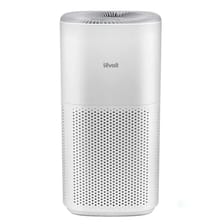
- 1. Levoit Core 600S: Best Overall for Basements
- 2. Coway Airmega 400: Best for Large Basements
- 3. Blueair Blue Pure 211+: Best Mid-Range for Basements
- 4. Winix 5500-2: Best Value for Basements
- 5. Levoit Core 400S: Best Smart Option for Mid-Size Basements
- 6. GermGuardian AC4825: Budget Pick with UV-C
- Why Basements Need Special Air Purifier Considerations
- Limited Ventilation Means Higher CADR
- Humidity Amplifies Every Problem
- Mold Spores Require True HEPA
- Musty Odors Need Carbon, Not Just HEPA
- Annual Cost Comparison
- Basement Air Purifier Placement Tips
- The Bottom Line
TL;DR
The best air purifier for a basement is the Levoit Core 600S. Its 410 CFM CADR and H13 True HEPA filter handle large basement spaces up to 635 sq ft, while a 3-lb activated carbon layer tackles musty odors and mold VOCs. For oversized basements, the Coway Airmega 400 covers up to 1,560 sq ft with dual-intake HEPA filtration. Budget buyers should grab the Winix 5500-2, which delivers 243 CFM dust CADR with a washable carbon filter that keeps long-term costs low.
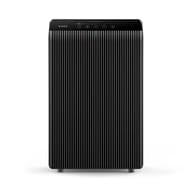
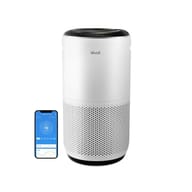
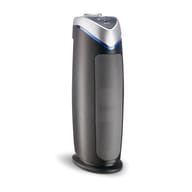
Full Comparison
| # | Product | Best For | Rating | Price | |
|---|---|---|---|---|---|
| 1 | Levoit Core 600S Top Pick Levoit | Best Overall for Basements | 4.7 | $$ | Check Price |
| 2 | Coway Airmega 400 Coway | Best for Large Basements | 4.6 | $$$ | Check Price |
| 3 | Blueair Blue Pure 211+ Blueair | Best Mid-Range | 4.7 | $$ | Check Price |
| 4 | Winix 5500-2 Winix | Best Value | 4.6 | $$ | Check Price |
| 5 | Levoit Core 400S Levoit | Best Smart Option for Mid-Size Basements | 4.8 | $$ | Check Price |
| 6 | GermGuardian AC4825 GermGuardian | Budget Pick with UV-C | 4.3 | $ | Check Price |
Affiliate Disclosure: CleanAirCritic earns commissions from qualifying purchases through affiliate links on this page. This does not influence our rankings or reviews. All opinions are our own. Learn more
Basements have an air quality problem that no other room in your house shares. Below-grade walls trap moisture, limited ventilation lets particles accumulate, and the combination creates a breeding ground for mold spores, musty odors, and airborne allergens that drift up into the rest of your home through stairways and HVAC ducts.
The musty smell you associate with basements is not just "old house" character. It comes from microbial volatile organic compounds (mVOCs) released by active mold and mildew growth. And even if you cannot see mold, airborne spore counts in a typical basement run two to five times higher than above-ground rooms. A True HEPA air purifier with a substantial activated carbon filter captures those spores and absorbs the odors, making your basement a space you actually want to use.
The catch: basements need more purification power than a bedroom or living room of the same size. Limited airflow means you need higher CADR and more air changes per hour to keep particle counts low. We evaluated six purifiers specifically for basement conditions, focusing on mold spore filtration, musty odor removal, coverage area, and long-term filter costs.
If mold is your primary concern, our dedicated guide to the best air purifiers for mold goes deeper on that topic. And if you are trying to decide between an air purifier and a dehumidifier, we break down air purifier vs. dehumidifier in a separate piece.
Our Top Picks at a Glance
| Purifier | Best For | Dust CADR | Room Coverage | Noise (Low) | Price |
|---|---|---|---|---|---|
| Levoit Core 600S | Best Overall | 410 CFM | 635 sq ft | 26 dB | ~$300 |
| Coway Airmega 400 | Large Basements | 328 CFM | 1,560 sq ft | 22 dB | ~$650 |
| Blueair Blue Pure 211+ | Mid-Range | 350 CFM | 550 sq ft | 31 dB | ~$250 |
| Winix 5500-2 | Best Value | 243 CFM | 360 sq ft | 28 dB | ~$180 |
| Levoit Core 400S | Smart Mid-Size | 260 CFM | 403 sq ft | 24 dB | ~$190 |
| GermGuardian AC4825 | Budget with UV-C | 125 CFM | 188 sq ft | 40 dB | ~$90 |
Detailed Reviews
1. Levoit Core 600S: Best Overall for Basements
The Levoit Core 600S is our top pick for basements because it delivers the CADR that below-grade spaces demand. At 410 CFM, it cycles the air in a 500 sq ft basement roughly five times per hour, enough to outpace the mold spores and musty particles that accumulate in poorly ventilated spaces.
Basement performance: The three-stage H13 True HEPA filter captures 99.97% of particles at 0.3 microns, putting every mold spore (2 to 20 microns) well within its range. The activated carbon layer weighs in at approximately 3 lbs of granular carbon, a meaningful amount that absorbs musty mVOCs for months rather than weeks. In a damp basement, that carbon weight matters because thin carbon sheets saturate quickly and stop working.
Smart features for basement use: The built-in PM2.5 laser sensor tracks particle levels in real time through the VeSync app. This is especially useful in basements where you cannot always tell by sight or smell whether air quality is improving. Auto mode adjusts fan speed based on particle readings, ramping up when spore counts rise (after rain, during humid days) and dropping back down when levels stabilize.
Noise: QuietKEAP technology keeps noise to 26 dB on the lowest setting, quiet enough for a basement home theater or bedroom. On turbo, it reaches 55 dB, noticeable but fine for daytime use.
Filter costs: Replacement filters run $45 to $60 every 6 to 9 months. In a basement with higher particulate loads, expect to replace closer to the 6-month mark. The investment is worth it for a filter that actually handles basement-level contamination.
Who this is for: Anyone with a medium to large basement (400 to 650 sq ft) dealing with musty odors, visible or suspected mold, or general stuffiness. This is the workhorse pick that covers most basement situations.
2. Coway Airmega 400: Best for Large Basements
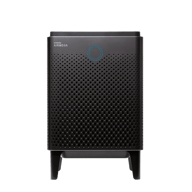
If your basement is the full footprint of your house (1,000+ sq ft), most air purifiers simply cannot keep up. The Coway Airmega 400 covers up to 1,560 sq ft with dual air intakes and a 328 CFM dust CADR that handles large, open below-grade spaces.
Basement performance: The Airmega 400 pulls air from two sides simultaneously through its Max2 filter system, each side containing a True HEPA filter and activated carbon layer. This dual-intake design means faster air processing across a wider area, which matters in basements where air does not circulate naturally. The 328 CFM dust CADR delivers roughly 3 air changes per hour in a 1,000 sq ft basement, solid for a single unit in a large space.
Smart features: The real-time air quality indicator uses a colored ring (blue, green, yellow, red) so you can see air quality at a glance from across the room. Auto mode adjusts fan speed based on particle detection, and Eco mode pauses the fan entirely when air stays clean for 30 minutes, then restarts when particles rise. In a basement that is sealed most of the day, Eco mode can save significant energy.
Build quality: At 24.7 lbs with a solid, squared construction, the Airmega 400 sits firmly and handles the occasional bump from foot traffic in a multipurpose basement. The Max2 filters are rated for 12 months under normal conditions; in a damp basement, plan on replacing at 9 to 10 months.
Noise: 22 dB on the lowest speed is nearly inaudible. Even on the highest setting, 52 dB is manageable for background operation.
Who this is for: Homeowners with large, open basements over 600 sq ft. If your basement serves as a family room, home gym, or workshop, this is the only model on our list with the coverage to handle it without needing a second unit.
3. Blueair Blue Pure 211+: Best Mid-Range for Basements
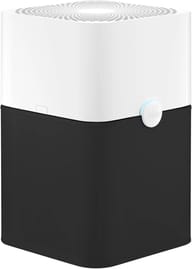
The Blueair Blue Pure 211+ hits a sweet spot of high CADR, reasonable price, and reliable performance that makes it an excellent basement purifier for spaces up to 550 sq ft.
Basement performance: Blueair's HEPASilent technology combines electrostatic charging with mechanical filtration. Incoming particles get an electrical charge before hitting the filter, which makes them stick more effectively while allowing greater airflow. The result is a 350 CFM dust CADR on lower energy consumption than a conventional HEPA system pushing the same volume. For basements, that efficiency translates to rapid air cycling (4+ air changes per hour in a 500 sq ft space) without a massive energy bill.
Odor handling: The combination particle and carbon filter does double duty on mold spores and musty smells. The carbon layer is not as substantial as the Levoit Core 600S, but it handles moderate musty odors well. If your basement has a severe smell problem, you may need to replace the filter more frequently (every 4 to 5 months instead of the rated 6).
Simplicity: One button, three speeds, no app. For a basement that you want to set and forget, this simplicity is a feature. Set it to medium, leave it running, and the high CADR handles the rest. The washable fabric pre-filter wraps around the base, catching large dust and debris before the main filter.
Noise: 31 dB on low is slightly louder than the Levoit and Coway models. On high, 56 dB is noticeable. For a basement workshop or laundry area where ambient noise is already present, this is perfectly fine.
Who this is for: Basement owners who want strong CADR performance at a mid-range price and prefer simple, no-fuss operation. Works well for finished basements, laundry rooms, and hobby spaces up to 550 sq ft.
4. Winix 5500-2: Best Value for Basements
The Winix 5500-2 delivers the lowest long-term operating cost on this list, thanks to its washable AOC (Advanced Odor Control) carbon filter. In a basement where you need to run a purifier continuously for months, those savings add up.
Basement performance: The four-stage filtration system starts with a washable pre-filter, followed by the washable AOC carbon filter, True HEPA, and PlasmaWave technology. The 243 CFM dust CADR handles basements up to 360 sq ft with roughly 4 air changes per hour. For basements larger than that, you will want to step up to the Blueair or Levoit.
The carbon advantage: Most purifiers require you to replace activated carbon filters every 3 to 6 months. The Winix AOC carbon filter is washable and reusable, so the only recurring cost is the annual HEPA replacement ($35 to $45). In a basement running a purifier year-round, that saves $40 to $60 per year compared to models with disposable carbon.
PlasmaWave for basement VOCs: PlasmaWave generates hydroxyl radicals that break down chemical compounds at the molecular level. This adds a supplementary layer of VOC reduction beyond what the carbon filter provides. For basements with musty smells, off-gassing from stored furniture, or paint and adhesive odors, PlasmaWave handles compounds that carbon alone might miss. It is CARB certified and produces no harmful ozone.
Smart sensor: The built-in particle sensor and auto mode adjust fan speed based on real-time air quality. The light sensor dims the display at night if you use the basement as a sleeping area.
Noise: 28 dB on sleep mode is quiet enough for overnight use. On turbo, 56 dB is best reserved for when you are not in the room.
Who this is for: Budget-conscious homeowners who need continuous basement purification without high ongoing filter costs. Ideal for basements under 400 sq ft, especially those with moderate musty odors.
5. Levoit Core 400S: Best Smart Option for Mid-Size Basements
If your basement is more of a cozy rec room (200 to 400 sq ft) and you want smart controls to monitor and manage air quality remotely, the Levoit Core 400S is an excellent fit. Its 260 CFM CADR and real-time PM2.5 sensor bring intelligent air management to a smaller below-grade space.
Basement performance: The H13 True HEPA three-stage system captures mold spores, dust, and fine particulate down to 0.3 microns. At 260 CFM, the Core 400S cycles the air in a 300 sq ft basement about five times per hour, fast enough to keep up with mold spore generation. The activated carbon layer handles moderate musty odors, though for severe odor problems the larger Core 600S is the better investment.
Smart monitoring: The VeSync app provides real-time PM2.5 readings, air quality history graphs, and filter life tracking. For a basement, this remote monitoring is valuable because you can check air quality from upstairs without going down to look at the unit. You can also schedule the purifier to run on high for an hour before you use the basement, so the air is already clean when you head down.
Auto mode: The laser sensor detects particle spikes (after rainstorms, during high humidity days, or when you disturb stored items) and automatically ramps up fan speed. When levels drop, it dials back to save energy. This hands-off operation suits basements that are used intermittently.
Noise: 24 dB on sleep mode is virtually silent. This is the quietest option for a basement bedroom, home theater, or music room.
Who this is for: Owners of smaller finished basements who want smart controls and real-time air quality data. Also a good second unit to pair with the Coway Airmega 400 in a very large or multi-room basement layout.
6. GermGuardian AC4825: Budget Pick with UV-C
When the budget is tight, the GermGuardian AC4825 provides True HEPA and UV-C germicidal light for under $100. It is not a powerhouse, but for small basement areas (laundry corners, storage rooms, basement bathrooms), it captures mold spores and uses UV-C to prevent them from reproducing on the filter.
Basement performance: The 125 CFM CADR covers rooms up to 188 sq ft. That is small for a full basement, but well-suited for a sectioned-off area. The True HEPA filter captures 99.97% of particles at 0.3 microns, including mold spores. The charcoal filter handles light odors, though it does not have the carbon capacity of the larger models for heavy musty smells.
UV-C light: This is the standout feature for basement use. UV-C light damages the DNA of captured biological particles (mold spores, bacteria), preventing them from reproducing on the filter surface. In humid basement conditions where trapped spores might otherwise grow on a damp filter, UV-C provides an extra layer of protection. The UV-C bulb needs replacement annually (~$15).
Limitations: No auto mode, no smart features, no PM2.5 sensor. Fan speed is manual with three settings. The charcoal filter is not substantial enough for severe musty odors. This is a supplementary unit for a specific zone, not a whole-basement solution.
Noise: On low, it runs at about 40 dB, the loudest low-speed on this list. Not ideal for a quiet basement bedroom but fine for laundry areas and storage spaces.
Who this is for: Homeowners on a tight budget who need basic mold spore and particle filtration for a small basement area. Also a smart add-on unit for a specific problem zone (near a sump pump, in a basement bathroom, or by a window well that lets in moisture).
Why Basements Need Special Air Purifier Considerations
Basements are not just another room. They present unique air quality challenges that affect which purifier you should buy and how you should run it.
Limited Ventilation Means Higher CADR
Above-ground rooms benefit from natural ventilation through windows, doors, and air exchange with the outdoors. Basements have little to none. Without fresh air diluting the indoor pollutants, your purifier has to do all the work. This is why we recommend sizing your basement purifier at 1.5 to 2 times what you would use for an above-ground room. A 400 sq ft living room might be fine with a 200 CFM purifier. A 400 sq ft basement needs at least 300 CFM.
Humidity Amplifies Every Problem
Basement humidity frequently runs above 60%, the threshold where mold actively grows. High humidity makes dust particles heavier and stickier, causes musty VOC production to increase, and can even shorten filter life by introducing moisture into the filter media. This is why pairing an air purifier with a dehumidifier gives the best results. Keep humidity below 50%, and the air purifier's job becomes dramatically easier. For more on this pairing strategy, see our guide on air purifier vs. dehumidifier.
Mold Spores Require True HEPA
Mold spores range from 2 to 20 microns. True HEPA (H13) filters capture 99.97% of particles at 0.3 microns, so spores are well within their capability. Never accept "HEPA-type" or "HEPA-style" filters for basement use. The filtration gap between True HEPA and its imitators means thousands more mold spores passing through per hour. Our HEPA filter guide explains the differences in detail.
Musty Odors Need Carbon, Not Just HEPA
HEPA filters capture particles. Musty basement odors are gaseous (mVOCs), which pass right through a HEPA filter. You need activated carbon to adsorb these compounds. The amount of carbon matters: thin carbon sheets in budget purifiers saturate in two to four weeks in a damp basement. Look for purifiers with at least 1 lb of granular activated carbon for basement use. The Levoit Core 600S and Coway Airmega 400 both meet this threshold.
Annual Cost Comparison
Running a basement purifier year-round adds up. Here is what each model costs to keep running:
| Purifier | HEPA Filter Cost | Carbon Filter | Replacement Interval | Est. Annual Cost |
|---|---|---|---|---|
| GermGuardian AC4825 | $25-35 | Included | 6-8 months | $40-60 + $15 UV bulb |
| Winix 5500-2 | $35-45 | Washable | 12 months | $35-45 |
| Levoit Core 400S | $30-40 | Included | 6-8 months | $45-65 |
| Blueair Blue Pure 211+ | $40-55 | Included | 6 months | $55-80 |
| Levoit Core 600S | $45-60 | Included | 6-9 months | $60-90 |
| Coway Airmega 400 | $60-80 | Included | 12 months | $60-80 |
The Winix 5500-2 wins on annual cost thanks to the washable carbon filter. The Coway Airmega 400, despite its high upfront price, has reasonable ongoing costs because its filters last a full year.
Basement Air Purifier Placement Tips
Where you put the purifier matters as much as which one you buy.
Place it near the problem. If one corner of the basement is mustier than the rest (near a foundation crack, sump pump, or window well), position the purifier within 6 to 10 feet of that area. The purifier will draw in the most contaminated air first.
Elevate it off the floor. Basement floors can be cold, damp, or occasionally wet. Place the purifier on a small table, shelf, or platform to keep it above moisture and improve air intake. Most units pull air from the bottom or sides, so floor-level placement in a damp basement can introduce moisture directly into the filter.
Keep 12 inches of clearance. Do not push the purifier against a wall or wedge it between furniture. It needs room on all sides to pull in air efficiently. Restricted airflow reduces effective CADR regardless of the unit's rating. For more placement advice, read our guide on where to place an air purifier.
Consider two units for L-shaped or divided basements. Air purifiers clean the air in their immediate zone. If your basement has separate rooms or turns a corner, one unit at the far end will not effectively clean the other side. Two smaller units (like a pair of Levoit Core 400S models) will outperform one large unit placed in the wrong spot.
The Bottom Line
For most basements, the Levoit Core 600S is the best overall choice. Its 410 CFM CADR handles spaces up to 635 sq ft, the 3-lb carbon layer absorbs musty odors effectively, and smart PM2.5 monitoring lets you track air quality from upstairs. If your basement is larger than 600 sq ft, the Coway Airmega 400 is the only model here with the coverage to handle it in a single unit. For the tightest budget, the Winix 5500-2 delivers solid filtration with the lowest ongoing costs thanks to its washable carbon filter.
Whatever you choose, remember that an air purifier addresses the symptoms (airborne spores and odors) while a dehumidifier addresses the cause (excess moisture). Using both together is the most effective strategy for making a basement clean, comfortable, and safe to spend time in.
For related reading, check our guides on best air purifiers for mold, best whole-house air purifiers, and do air purifiers really work.
Last updated: April 2026. Prices and availability are subject to change. We update this guide seasonally and whenever significant new models launch.
Frequently Asked Questions
Do air purifiers work in basements?
What size air purifier do I need for a basement?
Should I use an air purifier or dehumidifier in my basement?
Can an air purifier remove musty basement smell?
How many air changes per hour does a basement need?
Will an air purifier help with basement mold?
Where should I place an air purifier in a basement?
You Might Also Like
Best Air Purifiers Under $500 (2026): 8 Top Picks for Every Room
The 8 best air purifiers under $500 ranked by CADR, noise, and value. Large-room coverage, smart features, and proven HEPA filtration without the premium price.
Best Air Purifiers for New Homes & New Construction (2026)
6 best air purifiers for new construction and off-gassing in 2026. Activated carbon picks for formaldehyde, paint fumes, and VOCs from new flooring and furniture.

Best Air Purifiers for Wildfire Smoke (2026)
6 best air purifiers for wildfire smoke in 2026, ranked by smoke CADR and activated carbon capacity. Top pick: Levoit Core 600S (410 CFM, ~$240).

Best Air Purifiers (2026): Top 8 Picks Tested
The 8 best air purifiers of 2026 for every budget and room size. Ranked by CADR, noise, filter cost, and real-world performance.