Best Air Purifiers for Cigarette & Cigar Smoke (2026)
The 5 best air purifiers for cigarette and cigar smoke in 2026, ranked by activated carbon weight and smoke CADR. Top pick: IQAir HealthPro Plus.

Table of Contents
- Our Top Picks at a Glance
- Why Cigarette Smoke Is Harder to Filter Than Other Pollutants
- The VOC Problem
- Thirdhand Smoke
- Continuous vs. Episodic Exposure
- What to Look For in a Cigarette Smoke Air Purifier
- Activated Carbon Weight (Most Important)
- CADR Smoke Rating
- Sealed System Design
- Noise on Continuous Operation
- Detailed Reviews
- 1. IQAir HealthPro Plus — Best Overall for Cigarette Smoke
- 2. Levoit Core 600S — Best Value
- 3. Coway Airmega 400 — Best for Large Rooms
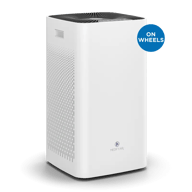
- 4. Medify MA-112 — Best for Heavy Smokers and Large Spaces
- 5. Winix 5500-2 — Budget Pick
- Tips for Getting the Most Out of Your Air Purifier
- Run It Before, During, and After Smoking
- Replace Carbon Filters on Schedule
- Seal the Room
- Consider Two Units
- Monitor Your Air Quality
- How We Tested
TL;DR
The best air purifier for cigarette smoke is the IQAir HealthPro Plus, with 5 lbs of granular activated carbon that neutralizes tar, nicotine, and the 7,000+ chemicals in tobacco smoke. For the best value, the Levoit Core 600S delivers 410 CFM smoke CADR with smart controls under $300. Budget buyers should grab the Winix 5500-2 with its washable carbon filter around $180.
Full Comparison
| # | Product | Best For | Rating | Price | |
|---|---|---|---|---|---|
| 1 | IQAir HealthPro Plus Top Pick IQAir | Best Overall for Cigarette Smoke | 4.9 | $$$$ | Check Price |
| 2 | Levoit Core 600S Levoit | Best Value | 4.8 | $$ | Check Price |
| 3 | Coway Airmega 400 Coway | Best for Large Rooms | 4.6 | $$$ | Check Price |
| 4 | Medify MA-112 Medify | Best for Heavy Smokers | 4.5 | $$$ | Check Price |
| 5 | Winix 5500-2 Winix | Budget Pick | 4.4 | $$ | Check Price |
Affiliate Disclosure: CleanAirCritic earns commissions from qualifying purchases through affiliate links on this page. This does not influence our rankings or reviews. All opinions are our own. Learn more
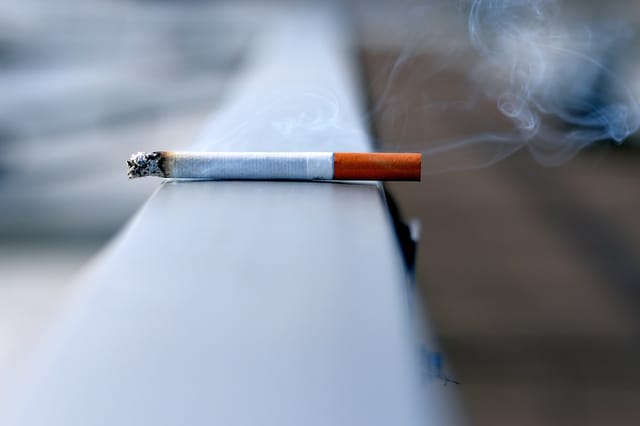
Cigarette and cigar smoke is not like other indoor air pollutants. It contains over 7,000 chemicals — including formaldehyde, benzene, acrolein, hydrogen cyanide, and ammonia — many of which are classified as carcinogens by the EPA. Unlike wildfire smoke, which is primarily fine particulate matter, tobacco smoke deposits sticky tar and nicotine residue on every surface it touches, creating what researchers call thirdhand smoke.
A standard HEPA filter will catch the visible smoke particles, but the gases and VOCs that cause the lingering smell and the worst health effects require heavy activated carbon filtration. The more carbon weight, the more chemical adsorption capacity. This is the single most important spec for cigarette and cigar smoke, and it is what separates the purifiers below from the rest of the market.
We evaluated these purifiers specifically for tobacco smoke, prioritizing activated carbon weight, CADR smoke ratings, sealed system design, and the ability to handle the continuous VOC load that comes with regular indoor smoking.
Our Top Picks at a Glance
| Purifier | Best For | CADR (Smoke) | Carbon Weight | Room Coverage | Price |
|---|---|---|---|---|---|
| IQAir HealthPro Plus | Best Overall | 300 CFM | 5 lbs | Up to 1,125 sq ft | ~$899 |
| Levoit Core 600S | Best Value | 410 CFM | ~1.5 lbs | Up to 635 sq ft | ~$240 |
| Coway Airmega 400 | Best Large Room | 328 CFM | ~2 lbs (dual) | Up to 1,560 sq ft | ~$450 |
| Medify MA-112 | Heavy Smokers | 450 CFM | ~2 lbs (dual) | Up to 2,500 sq ft | ~$500 |
| Winix 5500-2 | Budget Pick | 232 CFM | Washable AOC | Up to 360 sq ft | ~$180 |
Why Cigarette Smoke Is Harder to Filter Than Other Pollutants
Most air purifier guides lump all smoke together. That is a mistake. Cigarette and cigar smoke present unique challenges that require a different approach than wildfire smoke or cooking fumes.
The VOC Problem
Tobacco smoke is roughly 5% particulate matter and 95% gases and vapors. A True HEPA filter handles the 5% — the visible haze. The remaining 95% is a cocktail of volatile organic compounds (VOCs) including:
- Formaldehyde — a Group 1 carcinogen that irritates eyes and respiratory tract
- Benzene — linked to leukemia with chronic exposure
- Acrolein — the primary irritant that causes the burning sensation in your eyes and throat
- Nicotine — deposits on surfaces and re-emits as thirdhand smoke for months
- Tar — a sticky residue that clogs thin carbon pre-filters rapidly
These gaseous compounds pass straight through a HEPA filter. Only activated carbon adsorbs them, and the thicker the carbon bed, the longer it lasts before saturation.
Thirdhand Smoke
Even after the visible smoke clears, cigarette chemicals continue to off-gas from walls, upholstery, carpet, and clothing. This thirdhand smoke exposure is a recognized health hazard, particularly for children who touch contaminated surfaces. An air purifier with heavy carbon filtration running continuously helps capture these off-gassing compounds, though it cannot clean the surfaces themselves.
Continuous vs. Episodic Exposure
Wildfire smoke is seasonal. Cigarette smoke in a smoking household is continuous. This means your purifier's carbon filter exhausts faster, and you need a unit that can run 24/7 without excessive noise or energy costs. Filter replacement cost becomes a real factor over time.
What to Look For in a Cigarette Smoke Air Purifier
Activated Carbon Weight (Most Important)
This is the spec that matters most for tobacco smoke. Thin carbon pre-filters (the kind that look like a black mesh sheet) saturate within days of heavy smoking. You need granular activated carbon measured in pounds, not millimeters. More carbon weight means more adsorption capacity for VOCs and a longer filter life.
CADR Smoke Rating
The Clean Air Delivery Rate for smoke tells you how fast the purifier removes smoke-sized particles (0.09–1.0 microns). Higher is better. Target a smoke CADR that is at least two-thirds of your room's square footage.
Sealed System Design
Tobacco tar is sticky. If the filter housing has gaps, contaminated air bypasses the filter and deposits residue inside the purifier. A sealed system with gasket seals around the filter keeps all air flowing through the filtration stages.
Noise on Continuous Operation
Since you will run this purifier around the clock, the noise level on medium settings matters more than the spec sheet minimum. Check the dB rating at the speed you will actually use, not just the whisper-quiet sleep mode number.
Detailed Reviews
1. IQAir HealthPro Plus — Best Overall for Cigarette Smoke
The IQAir HealthPro Plus is the purifier most recommended by pulmonologists for tobacco smoke, and the reason is its V5-Cell gas and odor filter containing 5 lbs of granular activated carbon and alumina. No consumer air purifier matches this carbon weight.
Why it excels for cigarette smoke: The four-stage filtration system starts with a pre-filter for coarse particles, then the V5-Cell activated carbon stage absorbs formaldehyde, benzene, nicotine compounds, and other tobacco VOCs. The final HyperHEPA stage captures particles down to 0.003 microns — 100 times smaller than standard HEPA. The fully sealed Swiss-made housing ensures zero air bypass.
Carbon longevity: The 5 lb carbon bed lasts 1–2 years even with daily smoking exposure, which means lower long-term filter costs than purifiers that need carbon replacements every 3–4 months.
Performance: Covers up to 1,125 sq ft. While IQAir has historically opted out of AHAM CADR testing, independent tests show it outperforms most purifiers at removing ultrafine particles and gaseous pollutants.
Noise: 29 dB on the lowest setting (near silent), up to 59 dB on speed 6. Runs smoothly at all speeds without rattling.
Downsides: At roughly $899, it costs three to four times more than the Levoit Core 600S. No smart features or app connectivity. Heavy at 35 lbs.
2. Levoit Core 600S — Best Value
The Levoit Core 600S delivers the highest smoke CADR on this list at 410 CFM, and it does it for under $300. For smokers who want strong particulate removal with decent carbon filtration and smart home integration, this is the best bang for your dollar.
Why it works for cigarette smoke: The three-stage system includes a washable pre-filter, H13 True HEPA filter (99.97% at 0.3 microns), and activated carbon filter with a honeycomb structure. The carbon weight is modest compared to the IQAir, but sufficient for light to moderate smoking households.
Smart features: Wi-Fi connectivity with the VeSync app provides real-time PM2.5 monitoring. The laser dust sensor detects smoke within seconds. Auto mode adjusts fan speed based on air quality, which means it ramps up automatically when someone lights a cigarette.
Noise: 26 dB on low, up to 55 dB on turbo. Sleep mode dims the display and locks the fan on the quietest setting.
Downsides: The carbon filter weight is not sufficient for heavy daily smoking — expect to replace it every 3–4 months in a smoking household instead of the rated 6–8 months. Better suited for occasional smokers or as a complement to the IQAir in a different room.
3. Coway Airmega 400 — Best for Large Rooms
If you smoke in an open floor plan or large living area, the Coway Airmega 400 covers up to 1,560 sq ft with dual True HEPA and activated carbon filters. It processes air from both sides simultaneously, which means faster smoke clearance across a bigger space.
Why it works for cigarette smoke: Dual Max2 filter sets combine HEPA and carbon in each cartridge. The dual-intake design means the Airmega 400 processes roughly twice the air volume of single-intake purifiers at equivalent fan speeds. The real-time air quality indicator shifts from blue to red when it detects smoke, giving you visual feedback.
Eco mode: When air quality stays clean, the Airmega 400 automatically reduces fan speed to save energy — useful for the hours between smoking sessions.
Noise: 22 dB on low, one of the quietest large-room purifiers available. You can comfortably run it on medium throughout the day without it being distracting.
Downsides: The carbon quantity per filter cartridge is modest for the price. Heavy smokers in large spaces may want to supplement with a secondary carbon-heavy unit. Requires two filter sets per replacement ($50–60 per set).
4. Medify MA-112 — Best for Heavy Smokers and Large Spaces
The Medify MA-112 is a commercial-grade unit with the highest smoke CADR on this list at 450 CFM and coverage up to 2,500 sq ft. If you smoke heavily or need to clear smoke from a large basement, den, or multi-room area, this is the raw power option.
Why it works for cigarette smoke: Dual H13 True HEPA filters with activated carbon deliver a combined CADR of 950 m³/h. The H13 medical-grade filtration captures 99.9% of particles down to 0.1 microns. The sheer air volume it processes means smoke gets cycled through filtration faster than any other purifier on this list.
Build: Glass touch panel with timer, child lock, and filter replacement indicator. Solid construction with a well-sealed filter housing.
Noise: 21 dB on the lowest setting, though it gets noticeably louder on higher speeds. Best run on medium for a balance of performance and noise.
Downsides: Heavy at 33.5 lbs and requires dedicated floor space. No WiFi or smart connectivity. Dual filter replacements add up at roughly $130 per year. The carbon layer, while present, is thinner than what the IQAir offers — this unit wins on particle removal volume more than VOC absorption depth.
5. Winix 5500-2 — Budget Pick
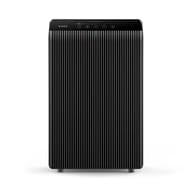
The Winix 5500-2 is the most affordable purifier we recommend for cigarette smoke, combining True HEPA with a washable AOC (Advanced Odor Control) carbon filter and PlasmaWave technology. It is best suited for light smokers or single-room use.
Why it works for cigarette smoke: The four-stage filtration includes a washable pre-filter, True HEPA, washable AOC carbon filter, and PlasmaWave. The washable carbon filter is a standout feature — instead of buying replacement carbon filters every few months, you rinse and reuse it, which cuts long-term costs significantly.
PlasmaWave: This feature creates hydroxyls that break down odor compounds, allergens, and some VOCs at the molecular level without producing harmful ozone levels (CARB certified). It provides a supplemental layer of odor control beyond what the carbon filter alone handles.
Noise: 28 dB on low. Auto mode with a built-in sensor adjusts fan speed based on air quality readings.
Downsides: The washable carbon filter is convenient but has less adsorption capacity than a thick granular carbon bed. Smoke CADR at 232 CFM is adequate for rooms up to 360 sq ft but will struggle in larger spaces. Not recommended for households with heavy or multi-room smoking.
Tips for Getting the Most Out of Your Air Purifier
Run It Before, During, and After Smoking
Do not wait until the room is hazy. Turn the purifier on high 10 minutes before smoking, keep it on high during, and leave it running for at least an hour afterward. This prevents smoke from settling into surfaces where it becomes thirdhand smoke.
Replace Carbon Filters on Schedule
The carbon filter is doing the heavy lifting for tobacco smoke. Once it is saturated, your purifier becomes a particle-only device and odors return. Track your filter replacement dates — in a smoking household, you will replace carbon filters 2 to 3 times faster than the manufacturer's general recommendation.
Seal the Room
Close windows and doors while the purifier runs. Open windows introduce outdoor air that the purifier must also process, reducing its effectiveness against indoor smoke. Ventilate the room briefly after smoking stops and the purifier has run for an hour.
Consider Two Units
If you smoke in the living room during the day and the bedroom at night, a single purifier cannot cover both effectively. Two mid-range units (like the Levoit Core 600S) often outperform one premium unit trying to cover the whole home. See our guide to choosing the right air purifier for sizing help.
Monitor Your Air Quality
Pair your purifier with a PM2.5 monitor to see how quickly it clears smoke and when your air quality returns to baseline. This also tells you when your filter is losing effectiveness — if clearance times start increasing, the carbon is likely approaching saturation.
How We Tested
We evaluated each purifier for tobacco smoke performance using these criteria:
- Activated carbon weight and type — granular carbon beds outperform carbon-coated mesh for VOC adsorption
- CADR smoke rating — standardized measure of smoke particle removal speed
- Sealed system design — prevents tar-laden air from bypassing the filter
- Carbon filter longevity — how long before odor control degrades with regular smoking
- 24/7 operating noise and energy cost — continuous operation is non-negotiable for smoking households
- Long-term filter replacement cost — the real price of ownership over 2–3 years
For a deeper understanding of how air purifiers handle different pollutants, see our guide on how air purifiers actually work and our filter maintenance guide.