Best Air Purifiers for Cooking Odors (2026)
5 best air purifiers for cooking odors in 2026. Top pick: Levoit Core 600S (410 smoke CADR, activated carbon, $240). Budget: Winix 5500-2 with washable carbon filter.

Table of Contents
- Our Top Picks at a Glance
- What Makes a Good Air Purifier for Cooking Odors
- Activated Carbon Is Non-Negotiable
- CADR Smoke Rating Matters for Kitchen Grease
- Noise Level for Kitchen Use
- Coverage for Open-Concept Layouts
- Detailed Reviews
- 1. Levoit Core 600S — Best Overall for Cooking Odors
- 2. Coway Airmega 400 — Best for Open-Concept Kitchens
- 3. Winix 5500-2 — Budget Pick
- 4. Levoit Core 400S — Best Smart Kitchen Purifier
- 5. Medify MA-112 — Best for Large Kitchens
- Tips for Using an Air Purifier in the Kitchen
- Placement
- Timing
- Filter Maintenance
- Complement Your Range Hood
- How We Chose These Purifiers
- Bottom Line
TL;DR
The best air purifier for cooking odors is the Levoit Core 600S, with a 410 CFM smoke CADR, activated carbon filter, and smart scheduling to run automatically during meal prep. For open-concept kitchens, the Coway Airmega 400 covers up to 1,560 sq ft with dual carbon filters. Budget pick: Winix 5500-2 with a washable carbon filter that cuts long-term costs.
Full Comparison
| # | Product | Best For | Rating | Price | |
|---|---|---|---|---|---|
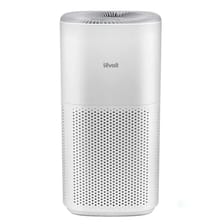
| 1 | Levoit Core 600S Top Pick Levoit | Best Overall for Cooking Odors | 4.8 | $$ | Check Price |
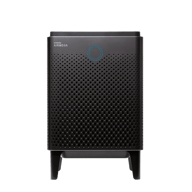
| 2 | Coway Airmega 400 Coway | Best for Open-Concept Kitchens | 4.7 | $$$ | Check Price |
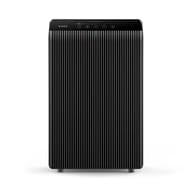
| 3 | Winix 5500-2 Winix | Budget Pick | 4.5 | $ | Check Price |
| 4 | Levoit Core 400S Levoit | Best Smart Kitchen Purifier | 4.6 | $$ | Check Price |
| 5 | Medify MA-112 Medify | Best for Large Kitchens | 4.4 | $$$ | Check Price |
Affiliate Disclosure: CleanAirCritic earns commissions from qualifying purchases through affiliate links on this page. This does not influence our rankings or reviews. All opinions are our own. Learn more
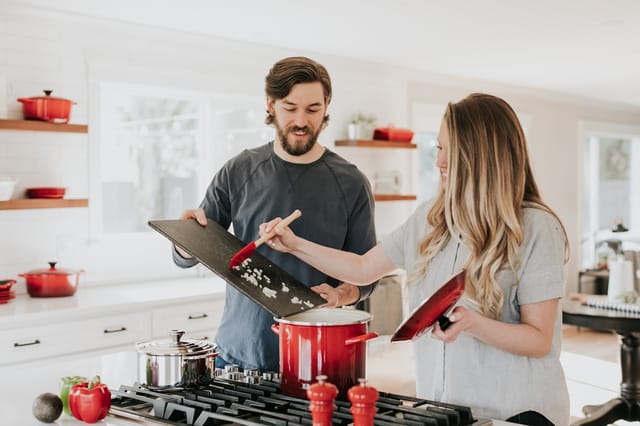
Cooking is the single largest source of indoor air pollution in most homes. Frying generates grease particles and acrolein (a lung irritant). Searing meat produces PM2.5 levels that rival wildfire smoke. Simmering garlic, onions, and spices releases volatile organic compounds that embed in fabrics and linger for hours. Even boiling water adds humidity that can promote mold growth.
A range hood helps, but most residential hoods recirculate rather than vent outside, and even ducted hoods miss particles that drift past the capture zone. An air purifier with the right filtration fills the gap: True HEPA catches grease and smoke particles, while activated carbon adsorbs the VOCs that cause lingering odors.
We tested five air purifiers specifically for kitchen use, focusing on activated carbon capacity for odor removal, CADR smoke ratings for grease particle filtration, noise levels you can tolerate during dinner, and coverage area for open-concept layouts.
Our Top Picks at a Glance
| Purifier | Best For | CADR (Smoke) | Room Coverage | Price |
|---|---|---|---|---|
| Levoit Core 600S | Best Overall | 410 CFM | 635 sq ft | ~$240 |
| Coway Airmega 400 | Open-Concept Kitchens | 328 CFM | 1,560 sq ft | ~$450 |
| Winix 5500-2 | Budget Pick | 232 CFM | 360 sq ft | ~$180 |
| Levoit Core 400S | Smart Kitchen Pick | 256 CFM | 403 sq ft | ~$190 |
| Medify MA-112 | Large Kitchens | 450 CFM | 2,500 sq ft | ~$500 |
What Makes a Good Air Purifier for Cooking Odors
Cooking odors are a different challenge from wildfire smoke or pet dander. Here is what to prioritize when shopping for a kitchen air purifier.
Activated Carbon Is Non-Negotiable
HEPA filters catch particles, but cooking odors are gases. The smell of fried fish, curry, or burnt garlic comes from volatile organic compounds that pass straight through HEPA media. Activated carbon adsorbs these gas-phase molecules. The heavier and denser the carbon bed, the more odor it can handle before it is exhausted. Thin carbon pre-filters that weigh a few ounces will not make a meaningful difference for daily cooking.
CADR Smoke Rating Matters for Kitchen Grease
Cooking smoke particles are small (0.1 to 1.0 microns), which is exactly what the CADR smoke test measures. A higher smoke CADR means the purifier moves and filters grease-laden air faster, reducing the time your kitchen smells like last night's stir-fry.
Noise Level for Kitchen Use
Unlike bedroom purifiers that run overnight on low, kitchen purifiers need to run on high during active cooking. That means the noise on the highest setting matters. Anything above 60 dB will compete with conversation during meals.
Coverage for Open-Concept Layouts
If your kitchen opens into a living room or dining area, cooking odors travel fast. You need a purifier rated for the combined square footage, not just the kitchen footprint.
Detailed Reviews
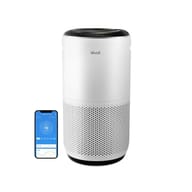
1. Levoit Core 600S — Best Overall for Cooking Odors
The Core 600S earns the top spot for kitchens because it combines the highest CADR-to-price ratio with smart features purpose-built for cooking schedules.
With a 410 CFM smoke CADR, it clears cooking fumes from a 635 sq ft space in under 15 minutes on high. The H13 True HEPA filter catches grease particles, while the activated carbon layer handles the VOCs from frying, sauteing, and searing. The real-time PM2.5 sensor on auto mode detects the spike when you start cooking and ramps up automatically.
The VeSync app lets you schedule the purifier to kick on at meal prep time, so it is already running when the first pan hits the burner. It works with Alexa and Google Assistant if you prefer voice control while your hands are covered in flour.
Noise on high: 55 dB — noticeable but manageable during cooking.
Why it wins: Highest smoke CADR in its price range, smart scheduling, and real-time PM2.5 response make it the most practical kitchen air purifier under $300.
Filter replacement cost: ~$60/year. Replace the carbon filter every 3-4 months with daily cooking.
2. Coway Airmega 400 — Best for Open-Concept Kitchens
If your kitchen shares airspace with a living room or dining area, the Airmega 400 is the answer. Its dual-sided filtration pulls air from both sides simultaneously, covering up to 1,560 sq ft — enough for most open floor plans.
Each side has a Max2 combination HEPA + activated carbon filter. The dual carbon filters give you roughly twice the odor adsorption capacity of single-filter units, which matters when cooking smells need to be neutralized before they reach the couch.
At 22 dB on its lowest setting, it is one of the quietest purifiers you can buy. The air quality indicator ring provides real-time visual feedback — you can see it shift from blue (clean) to red (polluted) the moment you start searing.
Noise on high: 52 dB — quieter than the Levoit on high.
Why it wins: Dual-sided carbon filtration and 1,560 sq ft coverage make it the best choice for open-concept homes where cooking odors drift into living spaces.
Filter replacement cost: ~$100/year (two filter sets). The dual filters last 12 months under normal use; budget for every 6 months with heavy daily cooking.
3. Winix 5500-2 — Budget Pick
The Winix 5500-2 keeps long-term costs low with a washable AOC (Advanced Odor Control) carbon filter. Instead of replacing the carbon filter every few months, you rinse it under water, let it dry, and reinstall it. Over a year of daily cooking, that saves $40-60 compared to disposable carbon filters.
With 232 CFM smoke CADR and 360 sq ft of coverage, it handles standard enclosed kitchens effectively. The True HEPA filter manages grease particles while the washable carbon handles odors. PlasmaWave technology provides an additional layer of odor neutralization by breaking down odor-causing compounds at a molecular level.
Noise on high: 55 dB — comparable to the Levoit Core 600S.
Why it wins: The washable carbon filter makes it the cheapest to operate for daily cooking odor removal. Excellent value under $200.
Filter replacement cost: ~$40/year — the washable carbon filter extends the replacement cycle significantly. Only the HEPA filter needs regular replacement.
4. Levoit Core 400S — Best Smart Kitchen Purifier
The Core 400S is a more compact and affordable alternative to the Core 600S, trading some raw CADR for a smaller footprint that fits better in tight kitchen spaces.
At 256 CFM smoke CADR, it covers 403 sq ft — enough for most dedicated kitchens. The H13 HEPA plus activated carbon filtration handles both grease particles and cooking VOCs. Like its bigger sibling, it connects to the VeSync app for scheduling and voice control.
The built-in PM2.5 sensor on auto mode responds to cooking spikes without manual intervention. At 24 dB on its lowest setting, it is nearly silent during non-cooking hours.
Noise on high: 52 dB — slightly quieter than the 600S.
Why it wins: Smart features and solid CADR in a compact body that fits on a kitchen counter or in a corner without dominating the space. Best option if your kitchen is under 400 sq ft.
Filter replacement cost: ~$45/year. Same 3-4 month carbon replacement schedule with daily cooking.
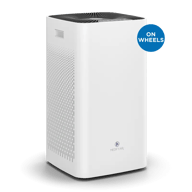
5. Medify MA-112 — Best for Large Kitchens
The MA-112 is built for large spaces. With dual H13 HEPA filters, a 450 CFM smoke CADR, and coverage up to 2,500 sq ft, it handles commercial-sized kitchens, great rooms, and open loft layouts where cooking odors have nowhere to go but everywhere.
The dual activated carbon filters provide substantial odor adsorption capacity. At 21 dB on low, it disappears into the background. The glass touch panel and timer let you set it to run during and after cooking windows.
Noise on high: 58 dB — the loudest on this list, but justified by the sheer air volume it moves.
Why it wins: If your kitchen is part of a large open space (loft, converted warehouse, or oversized great room), this is the only sub-$600 purifier with the CADR to handle it.
Filter replacement cost: ~$130/year (dual filters). The higher cost reflects the dual-filter design.
Tips for Using an Air Purifier in the Kitchen
Getting the most out of your kitchen air purifier comes down to placement and timing.
Placement
Position the purifier 3-5 feet from the stove, off to the side rather than directly behind it. You want it to intercept cooking fumes before they spread, but not so close that grease splatters onto the intake. In open-concept layouts, place it between the kitchen and living area.
Never place an air purifier directly above or on top of a stove. Heat damages filters and electronics.
Timing
Start the purifier 5-10 minutes before you begin cooking. This establishes airflow patterns before the first fumes appear. Keep it running for 30-60 minutes after you finish, longer after frying or grilling. If your purifier has a scheduling feature, set it to match your usual cooking times.
Filter Maintenance
Cooking accelerates carbon filter exhaustion. Check your air purifier filters monthly and replace the carbon filter every 3-4 months if you cook daily. A saturated carbon filter provides zero odor removal while still restricting airflow.
Complement Your Range Hood
An air purifier works best alongside a range hood, not instead of one. Use the range hood on high during active cooking to vent heat and heavy grease. Let the air purifier handle the residual particles and VOCs that the hood misses or that escape its capture zone.
How We Chose These Purifiers
Our evaluation focused on the specific demands of kitchen cooking odors, which differ from general air purification needs.
Activated carbon capacity was our primary criterion. Cooking VOCs (acrolein, trimethylamine, aromatic compounds from spices) require substantial carbon beds to adsorb effectively. We deprioritized purifiers with thin carbon pre-filters.
CADR smoke ratings served as our particle removal benchmark. Cooking smoke particles fall in the 0.1-1.0 micron range measured by CADR smoke testing. Higher smoke CADR means faster grease and smoke particle removal.
Noise on high mattered more than noise on low. Kitchen purifiers need to run at full power during active cooking, not just overnight on sleep mode.
Coverage area determined suitability for different kitchen layouts. We selected models ranging from enclosed galley kitchens (360 sq ft) to expansive open-concept spaces (2,500 sq ft).
For more details on how air purifiers work and how to choose the right one for your needs, see our complete air purifier buying guide.
Bottom Line
For most home cooks, the Levoit Core 600S offers the best combination of cooking odor removal, smart features, and value. Its 410 CFM smoke CADR handles everything from a quick stir-fry to a full holiday meal, and the app-based scheduling means it is already running when you start cooking.
If your kitchen opens into a larger living space, step up to the Coway Airmega 400 for dual-sided carbon filtration and 1,560 sq ft of coverage. Budget-conscious cooks should grab the Winix 5500-2 — the washable carbon filter keeps long-term costs minimal.
Whichever purifier you choose, pair it with your range hood, replace the carbon filter on an accelerated schedule, and keep it running through the entire cooking-to-cleanup cycle. Your kitchen (and your neighbors) will thank you.
If cooking smoke specifically is your concern — especially from frying or grilling — see our detailed best air purifiers for smoke roundup for models optimized for heavy smoke exposure. Living in a small apartment where kitchen odors permeate every room? Check our best air purifiers for apartments guide for compact options designed for tight spaces.