Best Air Purifiers for Dust: 7 Models We Recommend (2026)
7 best air purifiers for dust removal in 2026, ranked by CADR ratings, filter type, and room coverage. True HEPA picks for any room.

Table of Contents
- Our Top Picks at a Glance
- Detailed Reviews
- 1. Levoit Core 400S: Best Overall for Dust
- 2. Blueair Blue Pure 211+: Best for Large Dusty Rooms
- 3. Coway Airmega AP-1512HH: Best Mid-Range for Dust
- 4. Winix 5500-2: Best Value (Lowest Long-Term Cost)
- 5. Coway Airmega 200M: Budget Pick
- 6. Levoit Core 300S: Best for Small Rooms and Bedrooms
- 7. IQAir HealthPro Plus: Premium Pick for Severe Dust Problems
- How to Choose an Air Purifier for Dust
- Match Dust CADR to Your Room Size
- True HEPA Is Non-Negotiable
- Pre-Filters Save Money in Dusty Homes
- Auto Mode vs. Manual for Dust Control
- Noise Matters for 24/7 Operation
- Annual Filter Cost Comparison
- Tips for Reducing Dust Alongside Your Air Purifier
- The Bottom Line
TL;DR
The best air purifier for dust is the Levoit Core 400S, with a dust CADR of 260 CFM, H13 True HEPA filtration, a real-time PM2.5 sensor, and smart auto mode that ramps up when dust levels spike. For large dusty rooms, the Blueair Blue Pure 211+ delivers 350 CFM dust CADR covering up to 550 sq ft. Budget buyers should look at the Coway Airmega 200M, which matches pricier models on dust CADR at just $160.
Full Comparison
| # | Product | Best For | Rating | Price | |
|---|---|---|---|---|---|
| 1 | Levoit Core 400S Top Pick Levoit | Best Overall for Dust | 4.8 | $$ | Check Price |
| 2 | Blueair Blue Pure 211+ Blueair | Best for Large Dusty Rooms | 4.7 | $$ | Check Price |
| 3 | Coway Airmega AP-1512HH Coway | Best Mid-Range for Dust | 4.7 | $$ | Check Price |
| 4 | Winix 5500-2 Winix | Best Value (Lowest Filter Costs) | 4.6 | $$ | Check Price |
| 5 | Coway Airmega 200M Coway | Budget Pick | 4.7 | $$ | Check Price |
| 6 | Levoit Core 300S Levoit | Best for Small Rooms and Bedrooms | 4.5 | $$ | Check Price |
| 7 | IQAir HealthPro Plus IQAir | Premium Pick for Severe Dust Problems | 4.9 | $$$$ | Check Price |
Affiliate Disclosure: CleanAirCritic earns commissions from qualifying purchases through affiliate links on this page. This does not influence our rankings or reviews. All opinions are our own. Learn more
Dust never stops. You vacuum the living room, wipe down the shelves, and by the next morning there is a fresh layer settling on every surface. That is because most household dust is generated continuously from skin cells, fabric fibers, pet dander, pollen tracked indoors, and microscopic particles circulating through your HVAC system. Cleaning removes what has already settled, but a True HEPA air purifier captures dust particles while they are still airborne, before they land on your furniture, your floors, and your lungs.
The key spec for dust removal is the dust CADR (Clean Air Delivery Rate), which measures how many cubic feet of dust-free air the purifier delivers per minute. A higher dust CADR means faster air turnover and less dust settling throughout the day. We evaluated seven purifiers based on dust CADR, HEPA filter grade, room coverage, noise levels, and long-term filter costs to find the best options for every room size and budget.
If you also deal with allergy symptoms from dust exposure, our guide to the best air purifiers for allergies covers that angle in depth.
Our Top Picks at a Glance
| Purifier | Best For | Dust CADR | Room Coverage | Noise (Low) | Price |
|---|---|---|---|---|---|
| Levoit Core 400S | Best Overall | 260 CFM | 403 sq ft | 24 dB | ~$190 |
| Blueair Blue Pure 211+ | Large Rooms | 350 CFM | 550 sq ft | 31 dB | ~$250 |
| Coway AP-1512HH | Mid-Range | 246 CFM | 361 sq ft | 24 dB | ~$160 |
| Winix 5500-2 | Best Value | 243 CFM | 360 sq ft | 28 dB | ~$180 |
| Coway Airmega 200M | Budget Pick | 246 CFM | 361 sq ft | 24 dB | ~$160 |
| Levoit Core 300S | Small Rooms | 141 CFM | 219 sq ft | 22 dB | ~$150 |
| IQAir HealthPro Plus | Premium / Severe Dust | 300 CFM | 1,125 sq ft | 29 dB | ~$899 |
Detailed Reviews
1. Levoit Core 400S: Best Overall for Dust
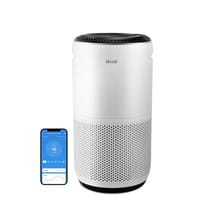
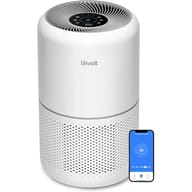
The Levoit Core 400S earns our top spot for dust removal because it combines a strong 260 CFM dust CADR with a real-time laser PM2.5 sensor that responds to dust spikes within seconds. When you vacuum, shake out bedding, or open a window on a windy day, the auto mode detects the particle burst and ramps up the fan immediately.
Dust performance: The three-stage H13 True HEPA filtration system captures 99.97% of particles at 0.3 microns, which covers the fine dust that stays suspended in air for hours. The 260 CFM dust CADR cycles the air in a 400 sq ft room roughly five times per hour, the rate needed for noticeable dust reduction. Within 30 minutes of turning on, you can see the PM2.5 readings drop on the VeSync app.
Smart features that matter for dust: The Wi-Fi connectivity is not just a convenience feature here. The VeSync app shows real-time PM2.5 readings, so you can actually see when dust levels spike and how quickly the purifier brings them down. You can schedule the purifier to run on high before you get home from work, so the air is already clean when you walk in.
Noise: At 24 dB on sleep mode, the Core 400S is virtually silent. You will not hear it running in a bedroom. On turbo mode it reaches 52 dB, which is noticeable but not disruptive. Auto mode typically keeps the fan on low-to-medium speeds once initial dust is cleared.
Filter costs: Replacement filters run $30 to $40 every 6 to 8 months. In a particularly dusty home, you may need to replace sooner. The pre-filter is not washable, which is the one downside compared to the Coway and Winix models.
Who this is for: Anyone who wants the best balance of dust removal performance, smart auto mode, quiet operation, and reasonable price. Ideal for living rooms, bedrooms, and home offices up to 400 sq ft.
2. Blueair Blue Pure 211+: Best for Large Dusty Rooms
If your dust problem involves a large open-plan living area, the Blueair Blue Pure 211+ is the clear choice. Its 350 CFM dust CADR is the highest on this list by a significant margin, covering rooms up to 550 sq ft with fast air turnover.
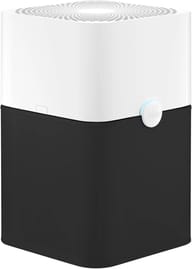
Dust performance: Blueair's HEPASilent technology combines mechanical filtration with electrostatic charging. Incoming particles receive an electrical charge, which makes them stick to the filter media more effectively and with less airflow resistance. The result is a 350 CFM dust CADR that runs on just 30 to 60 watts, far less energy than a conventional HEPA system would need to move that much air.
Simplicity: The Blue Pure 211+ has a single button with three speed settings. No app, no sensor, no auto mode. For dust in a large room, this simplicity is actually fine. You set it to medium, leave it running, and the high CADR does the work. If you prefer auto mode with dust detection, the Levoit Core 400S above is the better fit.
Design: The washable fabric pre-filter wraps around the base and comes in multiple colors. It traps hair, large dust, and visible debris before the main filter, extending HEPA filter life. You can remove it and wash it monthly to keep the system running efficiently.
Noise: At 31 dB on low, the Blue Pure 211+ is slightly louder than the quietest models on this list. On high, it reaches 56 dB. The fan produces a steady, even airflow sound without the high-pitched whine that cheaper motors create.
Who this is for: People with large, dusty rooms (400+ sq ft), open-concept living areas, or older homes with poor air sealing that lets outdoor dust infiltrate. Also a strong pick if you want maximum dust removal and do not care about smart features.
3. Coway Airmega AP-1512HH: Best Mid-Range for Dust
The Coway AP-1512HH has been one of the most consistently recommended air purifiers across independent review publications for years. For dust specifically, its combination of 246 CFM dust CADR, built-in air quality sensor, eco mode, and low filter costs makes it a strong mid-range pick.
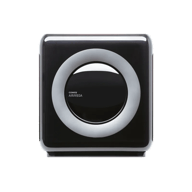
Dust performance: The four-stage system starts with a washable pre-filter that catches large dust, hair, and fibers. This keeps the True HEPA filter focused on fine particles and extends its usable life. The True HEPA stage captures 99.97% of particles at 0.3 microns. The air quality sensor with color-coded ring (blue for clean, red for dirty) gives you instant visual feedback on dust levels.
Eco mode for dust: When the sensor detects consistently clean air for 30 minutes, eco mode shuts off the fan entirely. When particles rise again, it restarts automatically. In a moderately dusty room, the purifier cycles between active and eco mode throughout the day, saving energy without sacrificing air quality.
Filter costs: Annual HEPA replacement runs $40 to $50. The washable pre-filter means no additional cost there. Over three years, the Coway AP-1512HH is one of the cheapest purifiers to own in this class.
Noise: 24 dB on low is whisper-quiet. Eco mode is completely silent when the fan is off. On high, 53 dB is noticeable but not uncomfortable.
Who this is for: Anyone who wants reliable dust removal with a built-in sensor and auto mode at a reasonable price. The washable pre-filter is especially valuable in dusty homes with pets, where hair and large debris can shorten HEPA filter life dramatically. Wondering how it stacks up for allergies too? See our best air purifiers for allergies roundup.
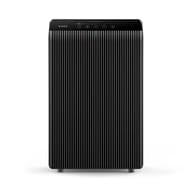
4. Winix 5500-2: Best Value (Lowest Long-Term Cost)
The Winix 5500-2 wins on long-term value. Its washable AOC carbon filter means you only replace the HEPA filter annually ($35 to $45), making it the cheapest purifier on this list to operate over multiple years. The 243 CFM dust CADR is competitive with models costing more.
Dust performance: True HEPA captures fine dust at 99.97% efficiency. The pollen CADR of 246 CFM is actually the highest on this list, which helps if your dust problem includes pollen tracked indoors. The smart sensor detects airborne particles and adjusts fan speed in auto mode.
PlasmaWave technology: Winix's PlasmaWave generates hydroxyl radicals that break down chemical compounds at the molecular level. For dust, this is a secondary benefit. But if your dusty home also has VOCs from cleaning products, new furniture, or building materials, the PlasmaWave adds a layer of chemical filtration that HEPA alone cannot provide. It is CARB certified and can be turned off if preferred.
Cost advantage: The washable AOC carbon filter saves $20 to $30 per year versus purifiers with disposable carbon filters. Over three years, you save $60 to $90 in filter costs. Combined with the $180 purchase price, the total cost of ownership is among the lowest for any quality air purifier.
Noise: 28 dB on low, quiet enough for bedroom use but slightly louder than the Levoit and Coway models. On turbo, 56 dB is best reserved for daytime use.
Who this is for: Budget-conscious buyers who want strong dust removal without high ongoing costs. Especially smart for households that run purifiers year-round, where filter costs compound over time.
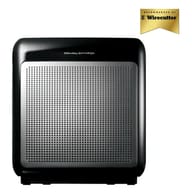
5. Coway Airmega 200M: Budget Pick
The Coway Airmega 200M delivers nearly identical dust performance to its more famous sibling, the AP-1512HH, at the same price point. With a 246 CFM dust CADR and True HEPA filtration, it punches well above its weight for $160.
Dust performance: The four-stage filtration is effective and straightforward: pre-filter for large particles, activated carbon for odors, True HEPA for fine dust, and an air quality indicator for real-time feedback. The 246 CFM dust CADR is identical to the AP-1512HH and handles rooms up to 361 sq ft with confidence.
Eco mode: Like the AP-1512HH, the 200M features eco mode that pauses the fan when air quality is consistently clean. This is useful in rooms where dust generation is intermittent, such as guest bedrooms or home offices.
Build quality: Compact and solidly built, the 200M fits easily on a shelf or side table. The air quality indicator ring provides visual confirmation that the purifier is working, which is reassuring in a dusty room.
Noise: 24.4 dB on low is effectively silent. You will not notice it running in a bedroom or office.
Who this is for: Anyone looking for capable dust removal at the lowest possible price. The Coway 200M is also a strong choice for a second unit in a multi-room dust control strategy, since you can place one in the bedroom and one in the living room for under $320 total.
6. Levoit Core 300S: Best for Small Rooms and Bedrooms
Dust accumulates fastest in bedrooms, where fabric fibers from bedding, skin cells, and closed-door air circulation concentrate particles in a small space. The Levoit Core 300S is purpose-built for rooms under 220 sq ft, with ultra-quiet operation and smart controls that make overnight dust control effortless.
Dust performance: The 141 CFM dust CADR is modest compared to the larger models on this list, but in a 150 to 200 sq ft bedroom, it delivers 4 to 5 air changes per hour. That is enough to meaningfully reduce airborne dust throughout the night. The H13 True HEPA filter captures the fine particles that trigger morning allergy symptoms and the stuffy feeling of sleeping in a dusty room.
Smart features: Wi-Fi connectivity through the VeSync app lets you schedule the purifier to run on high for 30 minutes before bedtime, then automatically switch to sleep mode. You can check overnight air quality readings in the morning to see how particle levels changed while you slept.
Noise: At 22 dB on its lowest setting, the Core 300S is the quietest purifier on this list. For context, 22 dB is roughly the sound of rustling leaves. The display turns off completely in sleep mode, so there is no light disturbance either.
Compact size: At 8.7 inches in diameter and 14.2 inches tall, the Core 300S fits on a nightstand or dresser. The 360-degree air intake means placement near a wall is fine.
Who this is for: Bedroom dust control, especially for light sleepers who need silent operation. Also a good choice for a home office, nursery, or any small room where dust builds up. For dust problems in larger spaces, step up to the Core 400S. Need help understanding what the numbers mean? Our guide on what is CADR explains how to match room size to CADR ratings.
7. IQAir HealthPro Plus: Premium Pick for Severe Dust Problems
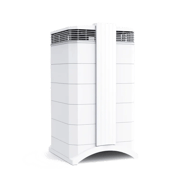
The IQAir HealthPro Plus is the nuclear option for dust. Its HyperHEPA filter captures particles down to 0.003 microns, 100 times smaller than standard HEPA can reach. If you have tried other purifiers and your dust problem persists, or if you have a medical condition exacerbated by fine particulate matter, this is the most effective residential air purifier money can buy.
Dust performance: The 300 CFM dust CADR covers up to 1,125 sq ft, making it effective for large living areas and open floor plans that smaller units cannot handle. The three-stage filtration processes air through a pre-filter (large particles and coarse dust), a V5-Cell gas and odor filter (5 lbs of granular activated carbon), and the HyperHEPA final stage. The result is air quality that approaches clean room standards.
Medical credibility: IQAir purifiers are used in hospitals, dental offices, and allergy clinics worldwide. The HealthPro Plus carries AAFA (Asthma and Allergy Foundation of America) certification. For people with dust mite allergies severe enough to affect quality of life, this level of filtration can make a measurable difference.
Filter life: IQAir filters last significantly longer than consumer models. The HyperHEPA filter is rated for 12 to 18 months, and the pre-filter lasts up to 18 months. While replacements are expensive ($70 to $200 per stage), the longer intervals partially offset the cost.
Noise: 29 dB on speed 1 is very quiet. The Swiss-engineered fan motor runs smoothly without vibration. On maximum speed (6), it reaches 59 dB.
Who this is for: People with severe dust allergies or respiratory conditions, large homes with persistent dust problems, or anyone willing to invest in the best available air purification technology. If you also deal with pet dander dust, the HyperHEPA's ultrafine particle capture is unmatched.
How to Choose an Air Purifier for Dust
Match Dust CADR to Your Room Size
The dust CADR rating is the single most important spec when shopping for a dust-focused air purifier. It measures cubic feet of dust-free air delivered per minute and directly determines how quickly the purifier can clean your room.
Sizing formula: Your dust CADR should be at least two-thirds of your room's square footage.
- 150 sq ft bedroom: minimum 100 CFM dust CADR
- 250 sq ft living room: minimum 167 CFM dust CADR
- 400 sq ft open area: minimum 267 CFM dust CADR
Undersizing is the most common mistake. A purifier with insufficient CADR for your room will run constantly without keeping up with dust generation.
True HEPA Is Non-Negotiable
For dust removal, accept nothing less than True HEPA (H13 grade) filtration. This is the standard that captures 99.97% of particles at 0.3 microns, the size range that includes the fine dust most harmful to respiratory health.
Avoid filters labeled "HEPA-type," "HEPA-style," or "99% filtration" without specifying the 0.3-micron standard. These cheaper alternatives miss 10 to 100 times more particles than True HEPA, which defeats the purpose of running a purifier for dust.
Pre-Filters Save Money in Dusty Homes
In a dusty home, large particles like hair, visible dust, and fabric lint reach the HEPA filter quickly and clog it. A good pre-filter catches this coarse debris first, keeping the expensive HEPA filter focused on fine particles and extending its usable life by months.
The Coway AP-1512HH and Winix 5500-2 both have washable pre-filters, meaning zero ongoing cost for that filtration stage. The Blueair Blue Pure 211+ has a washable fabric pre-filter. These models will cost less to operate over time in a dusty environment than purifiers without washable pre-filters.
Auto Mode vs. Manual for Dust Control
Dust generation in a home is unpredictable. Vacuuming stirs up settled particles. Opening a window on a dry day introduces outdoor dust. Shaking out bedding releases a cloud of skin cells and dust mite debris. A purifier with a particle sensor and auto mode detects these spikes and responds immediately.
If you prefer to set it and forget it, auto mode is the clear winner. The Levoit Core 400S, Coway AP-1512HH, Coway 200M, and Winix 5500-2 all include this feature. If you are comfortable running the purifier on a fixed speed, the Blueair Blue Pure 211+ and IQAir HealthPro Plus deliver excellent results on manual settings.
Noise Matters for 24/7 Operation
Since dust purifiers should run continuously, noise level on the lowest speed setting is critical. Here is how the models compare:
| Purifier | Low Speed Noise |
|---|---|
| Levoit Core 300S | 22 dB |
| Levoit Core 400S | 24 dB |
| Coway AP-1512HH | 24 dB |
| Coway Airmega 200M | 24.4 dB |
| Winix 5500-2 | 28 dB |
| IQAir HealthPro Plus | 29 dB |
| Blueair Blue Pure 211+ | 31 dB |
Everything under 30 dB is quiet enough for bedroom use. The Blueair at 31 dB is borderline; most sleepers will not notice it, but light sleepers may prefer a quieter model.
Annual Filter Cost Comparison
Running costs add up over time. Here is what each model costs to keep running:
| Purifier | HEPA Filter Cost | Replacement Interval | Est. Annual Cost |
|---|---|---|---|
| Levoit Core 300S | $25-35 | 6-8 months | $35-55 |
| Winix 5500-2 | $35-45 | 12 months | $35-45 |
| Levoit Core 400S | $30-40 | 6-8 months | $45-65 |
| Coway AP-1512HH | $40-50 | 12 months | $40-50 |
| Coway Airmega 200M | $40-50 | 12 months | $40-50 |
| Blueair Blue Pure 211+ | $40-55 | 6 months | $55-80 |
| IQAir HealthPro Plus | $70-200 | 12-18 months | $100-200 |
The Winix 5500-2 offers the lowest annual operating cost thanks to its washable carbon filter. The IQAir costs the most, but its filters last longer and the unit covers a much larger area.
Tips for Reducing Dust Alongside Your Air Purifier
An air purifier handles airborne dust, but combining it with a few habits makes a bigger difference:
Run it continuously. Dust never stops being generated. Auto mode or the lowest fan speed keeps particle counts low around the clock without running up your electric bill. Most purifiers on this list use less power than a light bulb on low speed.
Place it in the dustiest room first. Bedrooms produce the most dust per capita (skin cells, bedding fibers, dust mites). The living room is second. Start with one purifier in the bedroom, then add a second unit in the living area if dust is still a problem.
Vacuum before running on high. Vacuuming stirs up settled dust into the air. Run your purifier on high speed for 30 minutes after vacuuming to capture the particles you just kicked up. Then switch back to auto or low.
Check your HVAC filter. A dirty or low-quality furnace filter recirculates dust through your entire home. Upgrading to a MERV 11 or higher furnace filter alongside a room air purifier provides whole-house dust reduction. Learn more about how different filter types work together.
Address the source. If one room is consistently dustier than others, look for the cause. Common culprits include poorly sealed windows, exposed insulation, carpet versus hard floors, and proximity to construction or unpaved roads.
The Bottom Line
For most homes with a dust problem, the Levoit Core 400S is the best overall pick. It delivers strong dust CADR, smart auto mode with a real PM2.5 sensor, whisper-quiet operation, and reasonable filter costs. If you need to cover a large room, the Blueair Blue Pure 211+ has the highest dust CADR on this list at 350 CFM. For the tightest budget, the Coway Airmega 200M matches expensive models on dust CADR at just $160.
Whatever you choose, the key is to run it continuously and size it properly for your room. A well-matched HEPA air purifier will not eliminate dusting from your chore list, but it will reduce how often you need to do it, and more importantly, it will reduce the fine particles you breathe every day.
If dust allergies are your primary concern, see our dedicated guide to the best air purifiers for allergies. For bedroom-specific recommendations, check out the best air purifiers for bedroom use.
Last updated: March 2026. Prices and availability are subject to change. We update this guide seasonally and whenever significant new models launch.