Best Air Purifiers for Mold: HEPA Models That Work (2026)
We compared HEPA air purifiers for mold spores, musty odors, and basement air quality. These 6 picks capture mold at 0.3 microns and neutralize mycotoxins.

Table of Contents
- Our Top Picks at a Glance
- Best Air Purifiers for Mold
- 1. Levoit Core 600S: Best Overall for Mold
- 2. Winix 5500-2: Best Value for Mold
- 3. Coway Airmega AP-1512HH Mighty: Best for Bedrooms with Mold
- 4. Levoit Core 400S: Best Smart Air Purifier for Mold
- 5. GermGuardian AC4825: Best Budget Air Purifier for Mold with UV-C
- 6. IQAir HealthPro Plus: Best Premium Air Purifier for Mold
- Why Mold Needs a Different Approach
- How to Choose an Air Purifier for Mold
- Match CADR to Your Room (With Extra Margin)
- Prioritize Activated Carbon Volume
- Consider UV-C for Humid Environments
- Annual Operating Costs Compared
- Air Purifier Plus Dehumidifier: The Mold-Fighting Combination
- When to Call a Professional
TL;DR
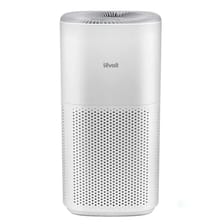
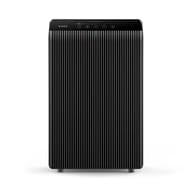
The best air purifier for mold is the Levoit Core 600S. Its 410 CFM CADR and H13 True HEPA filter capture 99.97% of mold spores down to 0.3 microns, and it covers rooms up to 635 sq ft, making it powerful enough for basements and large damp rooms. For a mid-range option with excellent value, the Winix 5500-2 combines True HEPA, a washable activated carbon filter, and PlasmaWave technology for $180. On a budget, the GermGuardian AC4825 adds UV-C germicidal light to True HEPA filtration for under $100.
Full Comparison
| # | Product | Best For | Rating | Price | |
|---|---|---|---|---|---|
| 1 | Levoit Core 600S Top Pick Levoit | Best Overall for Mold | 4.7 | $$ | Check Price |
| 2 | Winix 5500-2 Winix | Best Value | 4.5 | $$ | Check Price |
| 3 | Coway Airmega AP-1512HH Coway | Best for Bedrooms | 4.6 | $$ | Check Price |
| 4 | Levoit Core 400S Levoit | Best Smart Purifier | 4.5 | $$ | Check Price |
| 5 | GermGuardian AC4825 GermGuardian | Best Budget with UV-C | 4.3 | $ | Check Price |
| 6 | IQAir HealthPro Plus IQAir | Best Premium / Medical-Grade | 4.8 | $$$$ | Check Price |
Affiliate Disclosure: CleanAirCritic earns commissions from qualifying purchases through affiliate links on this page. This does not influence our rankings or reviews. All opinions are our own. Learn more
Mold spores are not like dust or pollen. They are living organisms that reproduce, spread, and release mycotoxins into your air. A standard air purifier can catch them, but the best air purifier for mold does more: it traps spores efficiently, absorbs the musty VOCs that mold produces, and cleans the air fast enough to keep concentrations low even in damp environments.
We evaluated air purifiers specifically for mold performance, looking at HEPA efficiency for spore-sized particles, activated carbon capacity for mycotoxin absorption, CADR for rapid air turnover, and features like UV-C that help with biological contaminants. Here are the six that handle mold best.
Our Top Picks at a Glance
| Purifier | Best For | CADR (Dust/Smoke) | Room Coverage | Price | Noise (Low) |
|---|---|---|---|---|---|
| Levoit Core 600S | Best Overall | 410/410 CFM | 635 sq ft | ~$240 | 26 dB |
| Winix 5500-2 | Best Value | 243/232 CFM | 360 sq ft | ~$180 | 28 dB |
| Coway AP-1512HH | Best for Bedrooms | 246/233 CFM | 361 sq ft | ~$160 | 24 dB |
| Levoit Core 400S | Best Smart | 260/256 CFM | 403 sq ft | ~$190 | 24 dB |
| GermGuardian AC4825 | Best Budget UV-C | 118/108 CFM | 167 sq ft | ~$99 | 40 dB |
| IQAir HealthPro Plus | Best Premium | 300/300 CFM | 1,125 sq ft | ~$899 | 29 dB |
Best Air Purifiers for Mold
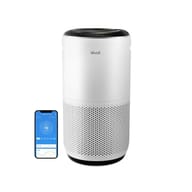
1. Levoit Core 600S: Best Overall for Mold
The Levoit Core 600S is the best all-around air purifier for mold because it combines the highest CADR on this list with smart features that let you monitor and respond to air quality in real time. In a moldy basement or large damp room, raw airflow matters more than anything else, and the Core 600S delivers 410 CFM.
Why it handles mold well: The 410 CFM CADR means this purifier delivers roughly 5 air changes per hour in a 400 sq ft basement with 8-foot ceilings. That is exactly the turnover rate you want in a mold-affected space. The three-stage H13 True HEPA filtration captures 99.97% of mold spores, which at 1 to 20 microns are well above the 0.3 micron HEPA threshold. The activated carbon layer absorbs musty odors and volatile mycotoxins.
Smart monitoring: The built-in laser PM2.5 sensor detects particle spikes in real time and displays readings on the unit and in the VeSync app. Auto mode ramps up fan speed when it detects elevated particle levels, which is exactly what you want when mold spore counts spike after disturbing a surface or during humid conditions. You can also set schedules to run on high during peak humidity hours.
Coverage and power: At 635 sq ft of rated coverage, the Core 600S handles large basements, master bedrooms, and open living areas. The VortexAir Technology creates a strong upward airflow column that pulls air from 360 degrees around the base.
Running costs: Replacement filters cost about $60 per year. At 49W maximum, annual energy cost is around $10 running 24/7. Total annual operating cost is roughly $70.
Downsides: The 12.4 x 12.4 inch footprint takes up more floor space than tower designs. Replacement filters cost more than smaller Levoit models. The fan is noticeable on speed 3 and 4, though auto mode usually keeps it on lower speeds. No UV-C, so captured spores sit on the filter until you replace it.
Who should buy this: Anyone dealing with mold in a basement, large bedroom, or living space over 300 sq ft. If you want the fastest possible air turnover with smart monitoring, this is the pick.
2. Winix 5500-2: Best Value for Mold
The Winix 5500-2 gives you four stages of filtration, including a washable activated carbon filter and PlasmaWave technology, for $180. It is the best balance of mold-fighting features and long-term cost efficiency.
Why it handles mold well: The four-stage system hits mold from multiple angles. The washable pre-filter catches large particles and extends HEPA life. The True HEPA filter traps mold spores. The washable AOC (Advanced Odor Control) carbon filter absorbs musty smells and mycotoxin VOCs. PlasmaWave technology generates hydroxyl radicals that break down biological contaminants at a molecular level without producing harmful ozone (CARB certified).
Washable carbon advantage: In mold-heavy environments, activated carbon saturates faster than in clean homes. The Winix AOC carbon filter is washable, so you can rinse it monthly to restore absorption capacity instead of replacing it every few months. Over a year, this saves $30 to $50 compared to purifiers with disposable carbon filters.
Auto mode: The built-in particle sensor and auto mode adjust fan speed based on real-time air quality. When you disturb mold or humidity spikes, the unit ramps up automatically. The air quality indicator shows conditions at a glance.
Performance: A dust CADR of 243 CFM covers rooms up to 360 sq ft, which handles most bedrooms, home offices, and small basements. That delivers about 4 air changes per hour in a 250 sq ft room.
Running costs: The washable AOC filter means your main recurring cost is the HEPA filter at about $40 per year. Energy cost is around $10 annually. Total annual cost is roughly $50, the lowest on this list for a mid-range purifier.
Downsides: No WiFi or app connectivity. The PlasmaWave feature produces trace ozone, though levels are well below CARB safety limits and you can turn it off entirely. The unit is bulkier than Levoit's cylindrical designs at 15 x 8.2 x 23.6 inches.
Who should buy this: Budget-conscious buyers who want strong mold protection without overspending. The washable carbon filter makes this the cheapest to operate over time, and PlasmaWave adds biological protection that most purifiers in this price range lack.
3. Coway Airmega AP-1512HH Mighty: Best for Bedrooms with Mold
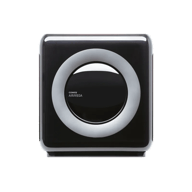
The Coway AP-1512HH is the most recommended air purifier in the industry for good reason. Its combination of strong CADR, quiet operation, and eco mode make it ideal for bedrooms where mold from window condensation, humidifiers, or adjacent bathrooms is a concern.
Why it handles mold well: The four-stage filtration system starts with a washable pre-filter, then a deodorization filter for musty odors, followed by a True HEPA filter that captures 99.97% of mold spores. The Vital Ion feature adds a mild ionization stage that helps particles clump together for easier capture. With a dust CADR of 246 CFM, it delivers 4+ air changes per hour in a standard bedroom.
Bedroom optimized: At 24 dB on the lowest setting, the AP-1512HH is quiet enough for light sleepers. The air quality indicator ring changes color based on particle levels, so you can see at a glance whether your bedroom air is clean. Eco mode turns off the fan entirely when air quality reaches acceptable levels, saving energy and eliminating noise overnight.
Proven reliability: The AP-1512HH has been continuously recommended by major consumer testing organizations for over a decade. Parts and filters are widely available. The build quality is a step above most competitors at this price, and the 3-year warranty reflects Coway's confidence in longevity.
Running costs: HEPA filter replacements run about $50 per year. The pre-filter is washable. Energy consumption is moderate at 77W max but low in eco mode. Total annual operating cost is roughly $55 to $60.
Downsides: No WiFi, no app, no smart home integration. The Vital Ion feature produces minimal ozone, though well below safety limits. The design is functional rather than stylish. At $160, it costs the same as purifiers that include WiFi, though none of those match its track record.
Who should buy this: Anyone with mold concerns in a bedroom, nursery, or room under 360 sq ft who values quiet operation and proven reliability over smart features. If you want a purifier you can trust to run for years without issues, this is the one.
4. Levoit Core 400S: Best Smart Air Purifier for Mold
The Levoit Core 400S is the best option if you want real-time PM2.5 monitoring and app-based control for a room with mold concerns. The laser dust sensor and VeSync app give you data-driven control over your air quality.
Why it handles mold well: The three-stage H13 True HEPA and activated carbon filtration captures mold spores and absorbs musty odors. The 260 CFM dust CADR covers rooms up to 403 sq ft with approximately 4 air changes per hour in a 250 sq ft space. What sets the Core 400S apart for mold is the laser PM2.5 sensor. You can actually see particle levels rise and fall in the app, which tells you when mold activity is elevated and whether the purifier is keeping up.
App advantages for mold: The VeSync app lets you set schedules to run on high during humid parts of the day, monitor PM2.5 trends over time to spot patterns, and receive alerts when air quality drops. If you notice particle spikes at the same time each day, that can help you identify the mold source. Alexa and Google Assistant support means you can boost fan speed with a voice command when you enter a musty room.
Performance: A dust CADR of 260 CFM and smoke CADR of 256 CFM are strong for the $190 price point. The purifier handles medium to large bedrooms, basements up to 400 sq ft, and home offices.
Running costs: Filter replacements cost about $45 per year. At 44W maximum, energy cost is around $8 annually. Total annual cost is roughly $53.
Downsides: No washable pre-filter, which means more frequent HEPA filter replacements in dusty or spore-heavy environments. The activated carbon layer is not as substantial as the Winix 5500-2's washable AOC filter. The cylindrical design requires floor space that some users may find inconvenient.
Who should buy this: Tech-savvy users who want data on their air quality. If you want to monitor mold spore trends, set schedules around humidity patterns, and control your purifier from your phone, the Core 400S is the best option under $200.
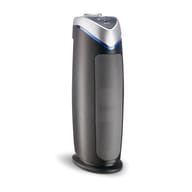
5. GermGuardian AC4825: Best Budget Air Purifier for Mold with UV-C
The GermGuardian AC4825 is the only purifier on this list with UV-C germicidal light, and at under $100, it is the most affordable option for mold-specific features. The UV-C adds a layer of biological protection that purely mechanical purifiers cannot match.
Why it handles mold well: The True HEPA filter captures mold spores, and the UV-C light damages the DNA of captured biological contaminants so they cannot reproduce. This matters for mold specifically because spores trapped on a HEPA filter can potentially grow if the filter stays damp. The UV-C light reduces that risk. The charcoal pre-filter handles light musty odors, though it is not a heavy-duty activated carbon stage.
UV-C for mold: Mold spores are biological, and UV-C light at 254 nm wavelength disrupts their cellular structure. The GermGuardian's UV-C bulb sits behind the HEPA filter, irradiating captured spores as air passes through. You can turn it on or off independently. In humid environments where filter dampness is a concern, running the UV-C adds meaningful protection against filter contamination.
Compact tower design: The 22-inch slim tower fits into tight spaces like bathroom counters, basement shelving, or between furniture. At 8.1 lbs, it is easy to move between rooms as needed.
Running costs: HEPA filters cost about $20 to $30 every 6 to 8 months. The UV-C bulb needs annual replacement at $10 to $15. Total annual cost is roughly $45 to $55, very reasonable for a purifier with UV-C.
Downsides: The CADR of 118 dust CFM limits this to rooms under 170 sq ft, making it a single-room solution only. The charcoal layer is thin and will not handle heavy musty odors. At 40 dB on low, it is the loudest purifier on this list. No auto mode, no sensor, no smart features. For larger moldy rooms, you would need two units or a more powerful model.
Who should buy this: Anyone dealing with mold in a single small room (bathroom, small bedroom, laundry room) who wants UV-C germicidal protection on a budget. Also a good supplemental unit for rooms where your primary purifier does not reach.
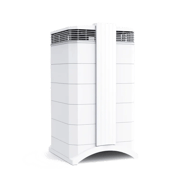
6. IQAir HealthPro Plus: Best Premium Air Purifier for Mold
The IQAir HealthPro Plus is the most powerful residential air purifier you can buy for mold. Its HyperHEPA filtration captures particles down to 0.003 microns, 100 times smaller than standard HEPA, and the V5-Cell gas and odor filter uses 5 lbs of granular activated carbon and alumina to neutralize mycotoxins and musty VOCs.
Why it handles mold well: Standard HEPA captures 99.97% at 0.3 microns. IQAir's HyperHEPA captures 99.5% of particles down to 0.003 microns. For mold, this means it catches not just whole spores (1 to 20 microns) but also the ultrafine fragments and mycotoxin particles that smaller spores break into. The V5-Cell gas filter contains 5 lbs of granular activated media, roughly 10 times the carbon in mid-range purifiers, giving it the capacity to absorb musty odors and VOCs for months without saturating.
Coverage and power: The 300 CADR and 1,125 sq ft coverage make this the right choice for large basements, whole-floor applications, or open floor plans with mold concerns. The three-stage filtration (PreMax pre-filter, V5-Cell gas, HyperHEPA) means each stage handles a specific particle size range, reducing the load on the final HEPA stage and extending filter life.
Swiss engineering: IQAir builds these in Switzerland with medical-grade manufacturing standards. The sealed housing prevents air bypass (air leaking around the filter instead of through it), which is critical for mold where you want every spore captured. The 10-year warranty is the longest on this list.
Running costs: The HyperHEPA filter lasts 4 years. The V5-Cell gas filter lasts about 2 years. The PreMax pre-filter lasts about 18 months. Annual filter cost averages about $120 when you spread it out. At 215W maximum, energy costs are higher at roughly $40 per year.
Downsides: The $899 price puts this out of reach for most budgets. At 35 lbs, it is heavy and not easily portable. No WiFi, no app, no smart features. The design is utilitarian. Energy consumption is the highest on this list. For many mold situations, the Levoit Core 600S at $240 handles the job.
Who should buy this: Anyone with severe mold sensitivity, compromised immune function, or chronic respiratory conditions where maximum spore removal is medically important. Homeowners dealing with extensive mold remediation who need the most thorough air cleaning available. If your doctor has recommended a medical-grade purifier, this is the standard.
Why Mold Needs a Different Approach
Most air purifier buying guides focus on general particle removal: dust, pollen, pet dander. Mold is different because it is a living organism that produces multiple types of airborne contaminants.
Mold spores are the reproductive particles that mold colonies release. They range from 1 to 20 microns and are easily captured by any True HEPA filter. This is the simplest part of the problem. Many homes dealing with mold also have elevated dust levels, since mold-prone environments tend to trap particulates — if dust is a concurrent concern, see our best air purifiers for dust guide.
Mycotoxins are toxic compounds that certain mold species produce. Some mycotoxins attach to particles, while others become volatile organic compounds (VOCs) that pass through HEPA filters entirely. You need activated carbon to absorb these gaseous compounds.
Musty odors are volatile organic compounds produced by mold metabolism. HEPA filters do not capture gases. Activated carbon or specialized odor filters are required.
This is why we weight activated carbon capacity more heavily in this guide than in our other roundups. A purifier with excellent HEPA but minimal carbon will catch spores but leave the musty smell and mycotoxins untouched.
How to Choose an Air Purifier for Mold
Match CADR to Your Room (With Extra Margin)
For mold, you want 4 to 6 air changes per hour, not the 2 to 3 that is standard for general purification. Here is the formula:
- Calculate room volume: length x width x ceiling height (in feet)
- Multiply by the desired air changes (4 to 6)
- Divide by 60 to get the minimum CADR in CFM
For a 300 sq ft basement with 8-foot ceilings: 300 x 8 = 2,400 cubic feet. At 4 air changes per hour: 2,400 x 4 / 60 = 160 CFM minimum. At 6 air changes: 240 CFM.
| Room Size | Min CADR (4x/hr) | Ideal CADR (6x/hr) | Recommended Pick |
|---|---|---|---|
| 150 sq ft | 80 CFM | 120 CFM | GermGuardian AC4825 |
| 250 sq ft | 133 CFM | 200 CFM | Coway AP-1512HH, Winix 5500-2 |
| 350 sq ft | 187 CFM | 280 CFM | Levoit Core 400S, Winix 5500-2 |
| 500 sq ft | 267 CFM | 400 CFM | Levoit Core 600S |
| 800+ sq ft | 427+ CFM | 640+ CFM | IQAir HealthPro Plus (or two units) |
Prioritize Activated Carbon Volume
Thin carbon sheets and carbon-impregnated pre-filters help with light odors but saturate within weeks in a moldy environment. For serious mold issues, look for purifiers with:
- Granular activated carbon (loose pellets, not a thin sheet)
- At least 1 lb of carbon for meaningful mycotoxin absorption
- Washable or replaceable carbon filters that can be refreshed independently
The IQAir HealthPro Plus leads with 5 lbs of granular media. The Winix 5500-2's washable AOC filter is the best mid-range solution. Budget models like the GermGuardian use thin carbon layers that help with light mustiness but will not handle heavy mold odor.
Consider UV-C for Humid Environments
UV-C light is not essential, but it adds value in specific mold scenarios:
- Very humid rooms where the HEPA filter itself might stay damp, potentially allowing captured spores to grow on the filter surface
- Rooms with active mold where spore concentrations are high and you want an extra layer of deactivation
- Bathrooms and laundry rooms with persistent moisture
The GermGuardian AC4825 is the only pick on this list with UV-C, making it a strong supplemental unit for bathrooms or small damp rooms.
Annual Operating Costs Compared
| Purifier | Purchase | Annual Filters | Annual Energy | 3-Year Total |
|---|---|---|---|---|
| Levoit Core 600S | ~$240 | ~$60 | ~$10 | ~$450 |
| Winix 5500-2 | ~$180 | ~$40 | ~$10 | ~$330 |
| Coway AP-1512HH | ~$160 | ~$50 | ~$14 | ~$352 |
| Levoit Core 400S | ~$190 | ~$45 | ~$8 | ~$349 |
| GermGuardian AC4825 | ~$99 | ~$45 | ~$10 | ~$264 |
| IQAir HealthPro Plus | ~$899 | ~$120 | ~$40 | ~$1,379 |
The Winix 5500-2 has the lowest 3-year cost among mid-range options at $330, thanks to its washable carbon filter. The GermGuardian wins on absolute cost at $264 but covers a much smaller room.
Air Purifier Plus Dehumidifier: The Mold-Fighting Combination
An air purifier alone is not enough for serious mold problems. Here is the full strategy:
Step 1: Control moisture. Use a dehumidifier to keep relative humidity below 50%. Mold cannot grow without moisture. Fix leaks, improve ventilation, and address condensation sources.
Step 2: Clean visible mold. Remove mold from surfaces using appropriate cleaning methods. An air purifier catches airborne spores but does nothing for mold growing on your walls, ceiling, or floor.
Step 3: Run the air purifier continuously. Set it to auto mode if available, or run on medium speed 24/7. Mold spores are released continuously, so intermittent purification leaves gaps in protection.
Step 4: Replace filters on schedule. In mold-heavy environments, replace filters 20 to 30% sooner than recommended. A saturated carbon filter stops absorbing mycotoxins, and a loaded HEPA filter loses efficiency.
For more on choosing the right purifier for your situation, see our guide to choosing an air purifier. If you are dealing with a large open space, our best air purifiers for large rooms guide covers high-CADR options in detail.
When to Call a Professional
An air purifier manages airborne mold spores, but there are situations where professional mold remediation is necessary:
- Visible mold covering more than 10 square feet
- Mold inside HVAC ducts or behind walls
- Persistent musty odors despite running a purifier and dehumidifier
- Health symptoms (respiratory issues, headaches, skin irritation) that worsen indoors
- After flooding or major water damage
In these cases, an air purifier is a temporary measure while you arrange professional assessment. It reduces exposure but does not solve the underlying problem.
Last updated: March 2026. Prices and availability are subject to change. All CADR ratings are AHAM verified unless otherwise noted. An air purifier is a complement to moisture control, not a replacement for it.