Best Air Purifiers for New Homes & New Construction (2026)
6 best air purifiers for new construction and off-gassing in 2026. Activated carbon picks for formaldehyde, paint fumes, and VOCs from new flooring and furniture.

Table of Contents
- Our Top Picks at a Glance
- What Makes New Construction Different
- The Off-Gassing Timeline
- Why You Need More Carbon
- Detailed Reviews
- 1. IQAir HealthPro Plus: Best for Heavy Off-Gassing
- 2. Medify MA-112: Best for Large New Homes
- 3. Levoit Core 600S: Best Overall Value
- 4. Coway Airmega 400: Best Dual-Filter Design
- 5. Levoit Core 400S: Best Mid-Range
- 6. Winix 5500-2: Budget Pick
- What to Look For in an Air Purifier for a New Home
- Activated Carbon: Weight and Type Matter
- Room Coverage for Open Floor Plans
- Filter Replacement Budget
- Smart Features for Set-and-Forget Operation
- Tips for Reducing VOCs in Your New Home
- The Bottom Line
TL;DR
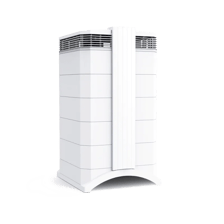
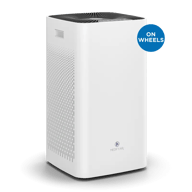
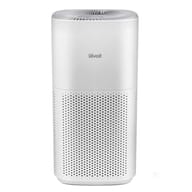
The best air purifier for a new home is the IQAir HealthPro Plus, with 5 lbs of granular activated carbon and alumina that targets formaldehyde and a full spectrum of construction VOCs. For the best value, the Levoit Core 600S delivers 410 CFM CADR with a honeycomb carbon layer under $300. If you need to cover a large open-concept new build, the Medify MA-112 handles up to 2,500 sq ft with dual granular carbon filters and a 950 CFM CADR.
Full Comparison
| # | Product | Best For | Rating | Price | |
|---|---|---|---|---|---|
| 1 | IQAir HealthPro Plus Top Pick IQAir | Best for Heavy Off-Gassing | 4.9 | $$$$ | Check Price |
| 2 | Medify MA-112 Medify | Best for Large New Homes | 4.7 | $$$ | Check Price |
| 3 | Levoit Core 600S Levoit | Best Overall Value | 4.8 | $$ | Check Price |
| 4 | Coway Airmega 400 Coway | Best Dual-Filter Design | 4.6 | $$$ | Check Price |
| 5 | Levoit Core 400S Levoit | Best Mid-Range | 4.5 | $$ | Check Price |
| 6 | Winix 5500-2 Winix | Budget Pick | 4.4 | $ | Check Price |
Affiliate Disclosure: CleanAirCritic earns commissions from qualifying purchases through affiliate links on this page. This does not influence our rankings or reviews. All opinions are our own. Learn more
Moving into a new home should feel exciting, not like you are breathing chemicals. But that "new house smell" is actually a cocktail of volatile organic compounds off-gassing from fresh paint, new flooring, adhesives, cabinetry, and insulation. The EPA has found indoor VOC levels to be 2 to 5 times higher than outdoor levels, and new construction pushes those numbers even higher.
Research published in the journal Indoor Air found that elevated VOC emission rates in new homes persisted for at least nine months after construction. Formaldehyde, one of the most concerning construction VOCs and a known carcinogen, takes roughly two years to reach the same levels found in older homes.
The problem is that standard HEPA filters are designed for particles, not gases. Formaldehyde, benzene, toluene, and other construction VOCs pass right through even the best True HEPA media. You need activated carbon filtration to adsorb these gas molecules, and you need enough of it to handle the elevated concentrations in a new build.
We evaluated over a dozen air purifiers specifically for new construction environments, prioritizing activated carbon capacity, formaldehyde-specific filtration media, CADR ratings, coverage area for open floor plans, and filter replacement costs in high-VOC conditions. Here are the best options for 2026.
Our Top Picks at a Glance
| Purifier | Best For | Carbon Filter | CADR (Smoke) | Room Coverage | Price Range |
|---|---|---|---|---|---|
| IQAir HealthPro Plus | Heavy Off-Gassing | 5 lbs carbon + alumina | 300+ CFM | Up to 1,125 sq ft | $$$$ |
| Medify MA-112 | Large New Homes | Dual granular carbon | 594 CFM | Up to 2,500 sq ft | $$$ |
| Levoit Core 600S | Best Overall Value | Honeycomb carbon layer | 410 CFM | Up to 635 sq ft | $$ |
| Coway Airmega 400 | Dual-Filter Design | Dual Max2 carbon | 233 CFM | Up to 1,560 sq ft | $$$ |
| Levoit Core 400S | Mid-Range | Activated carbon layer | 260 CFM | Up to 403 sq ft | $$ |
| Winix 5500-2 | Budget Pick | Washable AOC carbon | 232 CFM | Up to 360 sq ft | $ |
A note on CADR and VOCs: There is no standardized CADR rating for VOC removal. The smoke CADR rating is the closest proxy because it measures removal of the smallest test particles. However, actual VOC removal depends primarily on the activated carbon filter's weight, type, and surface area, not the CADR number alone.
What Makes New Construction Different
Before getting into specific models, it is worth understanding why a new home demands more from an air purifier than an established one.
The Off-Gassing Timeline
New construction creates a perfect storm of VOC sources. Paint, adhesives, sealants, engineered flooring, pressed wood cabinetry, insulation, carpet backing, and even new appliances all release volatile compounds simultaneously. Total VOC concentrations drop about 77% in the first three weeks as the most volatile compounds dissipate, but the decline slows dramatically after that.
Formaldehyde follows a different curve. It is released primarily from pressed wood products (MDF, particleboard, plywood), and its emission rate depends on temperature and humidity. Studies show that formaldehyde levels fall roughly 48% after one year and reach baseline levels comparable to older homes only after about two years. Seasonal temperature changes can cause secondary spikes as warmer conditions accelerate off-gassing.
Why You Need More Carbon
In a typical home, a carbon filter handles occasional cooking odors, cleaning product fumes, and ambient VOCs at low concentrations. In new construction, that same filter faces continuous, elevated exposure from dozens of sources simultaneously. The result is faster saturation. A carbon filter rated for 6 to 12 months in a normal environment may need replacement every 3 to 4 months in a new build.
This is why activated carbon weight matters so much for this use case. More carbon means more adsorption capacity before the filter becomes ineffective.
Detailed Reviews
1. IQAir HealthPro Plus: Best for Heavy Off-Gassing
The IQAir HealthPro Plus is our top recommendation for new homes with significant off-gassing. Its V5-Cell gas and odor filter contains 5 pounds of granular activated carbon and alumina, the heaviest carbon bed in any consumer air purifier we have evaluated.
Why it works for new construction: The combination of activated carbon (for broad-spectrum VOC adsorption) and alumina pellets is what sets this apart. Alumina is particularly effective against formaldehyde and other aldehydes, which are the primary concern in new builds. Standard activated carbon handles most VOCs well, but formaldehyde is notoriously difficult to capture. The alumina component directly addresses this gap. The four-stage filtration system also includes a HyperHEPA filter that captures particles down to 0.003 microns, handling construction dust that lingers after the build is complete.
Build quality: Swiss-made with a fully sealed, medical-grade housing. No air bypasses the filters. This matters for gas filtration because any unfiltered air leaking around the carbon bed means VOC molecules passing through untreated.
Performance: Covers up to 1,125 sq ft with effective air cycling. The V5-Cell filter lasts 1 to 2 years under normal conditions, though in a new construction environment with heavy off-gassing, plan for replacement closer to every 8 to 12 months.
Downsides: The price is substantial at roughly $900 to $1,200 depending on the model. No smart features, Wi-Fi, or app connectivity on the standard model (the newer XE model adds smart monitoring). The unit is large (35 lbs) and not easy to move between rooms. But if you are dealing with active off-gassing from new construction, this is the purifier to buy.
2. Medify MA-112: Best for Large New Homes
The Medify MA-112 is a commercial-grade unit purpose-built for large spaces. With a 950 CFM CADR and coverage up to 2,500 sq ft, it is the only purifier on this list that can handle an entire open-concept main floor in a new build without needing supplemental units.
Why it works for new construction: The dual-filter system uses granular activated carbon pellets rather than carbon sheets. Pellets provide substantially more surface area for VOC adsorption. With dual H13 HEPA filters pulling air from both sides, the MA-112 cycles air fast enough to address the concentrated VOC loads typical of new construction, where formaldehyde from cabinetry, paint fumes, adhesive off-gassing, and new carpet VOCs all hit simultaneously.
Performance: The 594 CFM smoke CADR (the most relevant metric for gas removal) is the highest on this list. A digital display shows real-time particle counts. The dual air intake processes large volumes of air quickly, which matters when VOC sources are distributed across a large space.
Build quality: H13 HEPA filtration captures 99.97% of particles down to 0.1 microns. Sealed housing prevents air bypass. A child lock secures the controls, useful when moving into a new home with young children.
Downsides: The unit is large and heavy (33.5 lbs). Dual filter replacements cost $60 to $90 per set. Fan noise on high reaches 70 dB, clearly audible. No app connectivity or smart home integration. The $400 to $500 price point is significant, though the coverage area justifies it for large new builds.
3. Levoit Core 600S: Best Overall Value
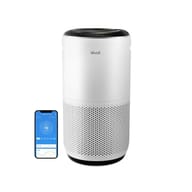
The Levoit Core 600S delivers the best balance of VOC removal, smart features, and affordability. At under $300, it offers 410 CFM smoke CADR and a custom honeycomb activated carbon layer that outperforms flat carbon sheets, all with full app integration.
Why it works for new construction: The three-stage filtration includes a washable pre-filter, H13 True HEPA, and an activated carbon filter with a honeycomb structure that increases surface area for gas adsorption. While the carbon weight is not in the same class as the IQAir, it handles the moderate VOC levels you will encounter after the initial high-concentration period subsides (roughly 3 to 4 weeks after move-in). For most new homeowners who were not present during the construction phase, this covers the ongoing off-gassing that persists for months.
Smart features: The VeSync app provides real-time AQI monitoring and auto-mode that adjusts fan speed based on detected pollutants. The laser PM2.5 sensor responds quickly to changes in air quality. You can set schedules, monitor filter life, and control the unit remotely. This is valuable when you want the purifier running at full speed while you are away and quieter when you are home.
Noise: 26 dB on low (near silent) up to 55 dB on turbo. Sleep mode dims the display and locks the fan at the quietest setting.
Downsides: The activated carbon quantity is moderate, meaning it saturates faster in high-VOC environments than premium units. Plan on filter replacements every 3 to 4 months during the first 6 months in a new home, then every 6 months thereafter. Replacement filters run $40 to $50 each.
4. Coway Airmega 400: Best Dual-Filter Design
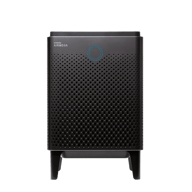
The Coway Airmega 400 covers up to 1,560 sq ft with dual Max2 filters that combine True HEPA and activated carbon, making it a strong option for large rooms in new homes.
Why it works for new construction: The dual-filter design means twice the activated carbon surface area compared to single-filter purifiers. Each Max2 filter cartridge contains both HEPA media and an activated carbon layer. Since the Airmega 400 uses two cartridges simultaneously, it processes air from both sides and doubles the contact time between air and carbon. For new construction, that additional carbon surface area means more capacity to handle the sustained VOC output from multiple sources.
Smart features: A color-coded air quality ring provides at-a-glance feedback (blue for clean, red for polluted). Eco mode shuts off the fan when air quality stabilizes, saving energy when VOC levels are low.
Noise: 22 dB on low, 52 dB on high. One of the quieter large-room options, suitable for open living areas where the purifier runs continuously.
Downsides: While the dual filter design doubles the carbon surface area, the individual carbon weight per cartridge is modest. For very heavy off-gassing (active painting, sealing, or the first week in a brand-new build), the carbon will saturate faster than units with heavier carbon beds. Filter replacements run $50 to $60 per set. The 233 CFM smoke CADR is adequate but lower than what the room coverage rating suggests. For a detailed look at how it compares on specific specs, see our best air purifier for VOCs roundup.
5. Levoit Core 400S: Best Mid-Range
The Levoit Core 400S slots between the budget options and premium units, offering solid VOC filtration with smart features at roughly $190. It is a practical choice for bedrooms and home offices in new builds where you want VOC protection without a large investment.
Why it works for new construction: The three-stage filtration combines a pre-filter, H13 True HEPA, and an activated carbon filter. At 260 CFM smoke CADR and 403 sq ft coverage, it handles a bedroom or home office where VOC sources like new furniture, fresh paint, and new carpet are concentrated in a smaller space. Smart auto mode uses the built-in sensor to ramp up when it detects increased pollutant levels, useful during temperature fluctuations that accelerate off-gassing.
Smart features: Full VeSync app integration, PM2.5 sensor with real-time display, scheduling, and auto mode. Compatible with Alexa and Google Home for voice control.
Multi-room strategy: At roughly $190 each, placing two Core 400S units in separate rooms (bedroom and living area) can be more effective than one large purifier for a new home, because each unit cycles air independently in its own space.
Noise: 24 dB on sleep mode, 52 dB on turbo. Quiet enough for overnight bedroom use.
Downsides: The activated carbon layer is thinner than premium units. In a new home with heavy off-gassing, the carbon will saturate faster. Plan for filter replacements every 3 to 4 months initially ($30 to $40 each). Room coverage at 403 sq ft limits it to single rooms in a typical new home. For guidance on how to choose an air purifier based on your room size and needs, see our buying guide.
6. Winix 5500-2: Budget Pick
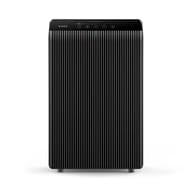
The Winix 5500-2 is the best option under $200 for new homeowners who need activated carbon filtration on a budget. Its combination of True HEPA, washable AOC carbon filter, and PlasmaWave technology provides broader VOC coverage than most competitors in this price range.
Why it works for new construction: True HEPA captures construction dust and fine particles at 99.97% efficiency. The washable AOC (Advanced Odor Control) carbon filter handles VOCs and off-gassing odors. PlasmaWave technology breaks down VOCs at the molecular level without producing harmful ozone (CARB certified). This three-pronged approach, HEPA for particles, carbon for gas adsorption, and PlasmaWave for molecular breakdown, gives it an edge over other budget models that rely on thin carbon sheets alone.
Cost advantage: The AOC carbon filter is washable, so you only replace the HEPA filter ($35 to $45 annually). In a new home where you would normally burn through disposable carbon filters quickly, the washable carbon saves meaningful money over the first year.
Performance: 232 CFM smoke CADR covers rooms up to 360 sq ft. The smart sensor detects particles and adjusts fan speed in auto mode. An ambient light sensor dims indicator lights in dark rooms.
Downsides: Room coverage at 360 sq ft is average, limiting it to single rooms. No Wi-Fi or app integration. The washable carbon filter, while cost-effective, has less adsorption capacity than a heavy granular carbon bed. For serious off-gassing in the first few weeks of a new build, this should supplement ventilation, not replace it. For a detailed look at how it stacks up, read our Winix 5500-2 review.
What to Look For in an Air Purifier for a New Home
Activated Carbon: Weight and Type Matter
This is the single most important factor for new construction. Activated carbon adsorbs VOC gas molecules onto millions of microscopic pores in the carbon surface. The more carbon by weight, the more VOC molecules it can capture before becoming saturated.
Granular activated carbon pellets are more effective than carbon sheets or carbon-coated foam. Pellets provide significantly more surface area for adsorption. For new construction, look for at least 2 to 3 pounds of granular carbon. The IQAir HealthPro Plus leads with 5 pounds.
Some purifiers use specialty media alongside carbon. Zeolite and alumina are particularly effective against formaldehyde, which standard activated carbon handles less efficiently. If formaldehyde from pressed wood products is your primary concern, prioritize models with these materials.
Room Coverage for Open Floor Plans
New homes frequently feature open-concept layouts where the kitchen, living room, and dining area share one large connected space. A purifier rated for 300 sq ft cannot effectively process air across a 1,200 sq ft open area.
Match the purifier's coverage to your actual space. For open floor plans, either choose a high-capacity unit like the Medify MA-112 (2,500 sq ft) or use multiple mid-range units positioned in different zones.
Filter Replacement Budget
In a new construction environment, plan on replacing carbon filters 2 to 3 times more frequently than the manufacturer's standard recommendation. If a filter is rated for 6 to 12 months, budget for replacements every 3 to 4 months during the first year. This added cost is a factor in your total ownership expense.
Models with washable carbon filters (like the Winix 5500-2) save money here, though they trade some adsorption capacity for reusability.
Smart Features for Set-and-Forget Operation
Auto mode with air quality sensors is particularly useful in new homes. VOC levels fluctuate with temperature, humidity, and activity. When the HVAC kicks on or the sun heats a south-facing room (accelerating off-gassing from flooring and cabinetry), a smart purifier ramps up automatically. This means consistently cleaner air without manually adjusting fan speeds.
Tips for Reducing VOCs in Your New Home
An air purifier is one part of a broader strategy. Here are additional steps that work alongside your purifier:
Ventilate aggressively during the first few weeks. Open windows and run fans whenever weather and outdoor air quality allow. Ventilation is the fastest way to reduce acute VOC spikes.
Run the HVAC system continuously. Even before you move in, if possible. The air handler circulates air and helps distribute purified air through the home.
Ask your builder about low-VOC materials. If you are still in the construction phase, low-VOC paints, adhesives, and sealants reduce the baseline. They are not zero-VOC, but they make a significant difference.
Prioritize the bedroom. You spend 7 to 9 hours breathing bedroom air every night. Place your best purifier there and close the door while sleeping.
Monitor VOC levels. A TVOC sensor ($100 to $250) gives you objective data on whether your efforts are working. Aim for TVOC levels below 300 micrograms per cubic meter.
Replace carbon filters on schedule. Once activated carbon is saturated, it stops adsorbing gases entirely, with no gradual decline. If you can still smell paint, adhesives, or chemical odors with the purifier running, the carbon is likely spent.
The Bottom Line
New construction creates a unique air quality challenge that standard HEPA filtration alone cannot solve. The formaldehyde, benzene, toluene, and other VOCs released by construction materials require activated carbon filtration, and enough of it to handle sustained elevated exposure over months.
For the best protection, the IQAir HealthPro Plus provides unmatched carbon capacity with formaldehyde-specific alumina media. For most new homeowners who want strong performance without the premium price, the Levoit Core 600S delivers the best balance of VOC removal, smart features, and value. And if your new build has a large open floor plan, the Medify MA-112 is the only unit that can cover the full space without supplemental purifiers.
Whichever model you choose, start running it the day you move in. The first few months are when VOC exposure is highest, and that is when activated carbon filtration makes the biggest difference.
Frequently Asked Questions
How long do VOCs last in a new construction home?
Can a HEPA air purifier remove formaldehyde from a new home?
What VOCs are in new construction homes?
Should I run an air purifier 24/7 in a new home?
Is it better to ventilate or use an air purifier in a new home?
How much activated carbon do I need for new construction off-gassing?
Do new home builders offer any air quality solutions?
You Might Also Like

Best Air Purifiers Under $500 (2026): 8 Top Picks for Every Room
The 8 best air purifiers under $500 ranked by CADR, noise, and value. Large-room coverage, smart features, and proven HEPA filtration without the premium price.

Best Air Purifiers for Basements (2026)
6 best air purifiers for basements in 2026. We cover mold spores, musty odors, and humidity concerns with CADR ratings, carbon filters, and sizing advice.

Best Air Purifiers for Wildfire Smoke (2026)
6 best air purifiers for wildfire smoke in 2026, ranked by smoke CADR and activated carbon capacity. Top pick: Levoit Core 600S (410 CFM, ~$240).

Best Air Purifiers (2026): Top 8 Picks Tested
The 8 best air purifiers of 2026 for every budget and room size. Ranked by CADR, noise, filter cost, and real-world performance.