Best Air Purifiers for Wildfire Smoke (2026)
6 best air purifiers for wildfire smoke in 2026, ranked by smoke CADR and activated carbon capacity. Top pick: Levoit Core 600S (410 CFM, ~$240).

Table of Contents
- Our Top Picks at a Glance
- What Makes Wildfire Smoke Different
- Two pollutants, two filters required
- Sustained load destroys filters fast
- You need more CADR than you think
- Detailed Reviews
- 1. Levoit Core 600S: Best Overall for Wildfire Smoke
- 2. IQAir HealthPro Plus: Best for Sustained Heavy Smoke
- 3. Medify MA-112: Best for Whole-Home Wildfire Protection
- 4. Coway Airmega 400: Best Value for Large Rooms
- 5. Medify MA-40: Best Medical-Grade Mid-Range
- 6. Winix 5500-2: Best Budget Emergency Pick
- Wildfire Season Preparation Guide
- Before Fire Season (April to May)
- During Active Wildfire Smoke
- How to Size Your Purifier for Wildfire Smoke
- What About DIY Box Fan Filters?
- Running Costs During Fire Season
TL;DR
The Levoit Core 600S is our top pick for wildfire smoke, delivering 410 CFM smoke CADR with smart AQI monitoring for around $240. For whole-home coverage during fire season, the Medify MA-112 handles up to 2,500 sq ft with 450 CFM smoke CADR. Budget buyers should grab a Winix 5500-2 (~$150) as an emergency bedroom unit.
Full Comparison
| # | Product | Best For | Rating | Price | |
|---|---|---|---|---|---|
| 1 | Levoit Core 600S Top Pick Levoit | Best Overall for Wildfire Smoke | 4.9 | $$ | Check Price |
| 2 | IQAir HealthPro Plus IQAir | Best for Sustained Heavy Smoke | 4.8 | $$$$ | Check Price |
| 3 | Medify MA-112 Medify | Best for Whole-Home Wildfire Protection | 4.7 | $$$ | Check Price |
| 4 | Coway Airmega 400 Coway | Best Value for Large Rooms | 4.6 | $$$ | Check Price |
| 5 | Medify MA-40 Medify | Best Medical-Grade Mid-Range | 4.6 | $$ | Check Price |
| 6 | Winix 5500-2 Winix | Best Budget Emergency Pick | 4.4 | $ | Check Price |
Affiliate Disclosure: CleanAirCritic earns commissions from qualifying purchases through affiliate links on this page. This does not influence our rankings or reviews. All opinions are our own. Learn more
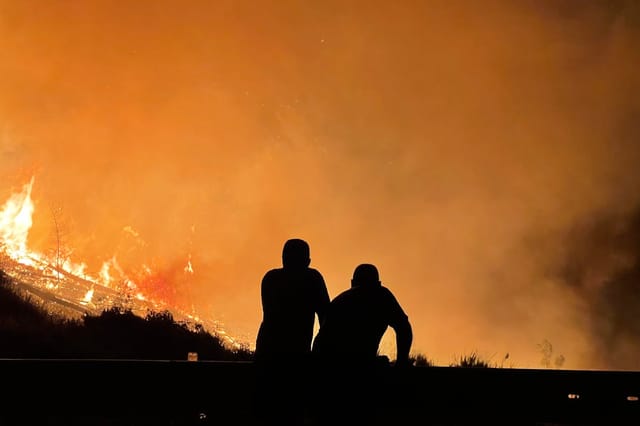
Wildfire season is getting longer. The 2025 fire season ran from May through November across western states, and smoke traveled thousands of miles to impact air quality in cities that never saw a flame. When AQI readings spike above 150, the air inside your home can become just as dangerous as the air outside, because PM2.5 particles are small enough to slip through closed windows, door seals, and your HVAC system.
An air purifier with True HEPA filtration and substantial activated carbon is the most effective indoor defense during wildfire events. But wildfire smoke is different from everyday air quality concerns. It is continuous (lasting days or weeks), extraordinarily dense, and contains both fine particles and a cocktail of toxic gases. The purifier that handles your pet dander just fine may collapse under the load of a two-week smoke siege.
We evaluated air purifiers specifically for wildfire performance: sustained 24/7 operation under heavy particulate loads, smoke CADR ratings, activated carbon capacity for gas removal, and filter longevity when running nonstop. Here are the six best performers for fire season 2026.
Our Top Picks at a Glance
| Purifier | Best For | CADR (Smoke) | Room Coverage | Price |
|---|---|---|---|---|
| Levoit Core 600S | Best Overall | 410 CFM | 635 sq ft | ~$240 |
| IQAir HealthPro Plus | Heavy Smoke Events | 300+ CFM | 1,125 sq ft | ~$900 |
| Medify MA-112 | Whole-Home Protection | 450 CFM | 2,500 sq ft | ~$500 |
| Coway Airmega 400 | Value Large Room | 233 CFM | 1,560 sq ft | ~$350 |
| Medify MA-40 | Medical-Grade Mid-Range | 330 CFM | 840 sq ft | ~$280 |
| Winix 5500-2 | Budget Emergency | 232 CFM | 360 sq ft | ~$150 |
What Makes Wildfire Smoke Different
Before diving into product reviews, it is worth understanding why wildfire smoke demands more from an air purifier than everyday pollutants.
Two pollutants, two filters required
Wildfire smoke contains both fine particulate matter (PM2.5) and a toxic mix of gases including carbon monoxide, formaldehyde, benzene, and other VOCs. A HEPA filter captures the particles. Activated carbon adsorbs the gases. You need both working together. A purifier with only HEPA will reduce the visible haze but leave you breathing harmful gases that irritate your throat and lungs.
Sustained load destroys filters fast
Most air purifier filter ratings assume normal residential use: pet dander, dust, seasonal pollen. Wildfire smoke runs your purifier at maximum capacity for weeks straight. Expect filters to wear out 2 to 4 times faster during active fire events. A filter rated for 6 months may last only 6 to 8 weeks under heavy smoke.
You need more CADR than you think
For everyday use, a smoke CADR equal to two-thirds of your room's square footage is adequate. During wildfire events, size up to 1.5 times the square footage. A 300 sq ft bedroom needs at least 450 CFM smoke CADR during heavy smoke, or two smaller purifiers running together.
Detailed Reviews
1. Levoit Core 600S: Best Overall for Wildfire Smoke
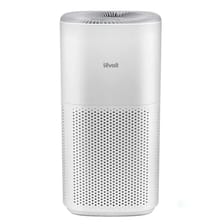
The Levoit Core 600S delivers the highest smoke CADR in its price class at 410 CFM, covering rooms up to 635 sq ft. At roughly $240, it offers the best performance-per-dollar ratio for wildfire protection.
Why it excels during wildfire season: The three-stage filtration (washable pre-filter, H13 True HEPA, activated carbon) handles both particles and smoke gases. The built-in laser PM2.5 sensor provides real-time AQI readings through the VeSync app, so you can monitor your indoor air quality as conditions change outside. During testing, the sensor detected smoke within seconds and ramped up fan speed automatically.
Smart monitoring matters during fires: When wildfire smoke rolls in, conditions change hour by hour. The Core 600S connects to Wi-Fi and lets you check AQI readings from your phone, set custom auto-mode thresholds, and get alerts when air quality degrades. You can also pair it with a PM2.5 monitor for a second data point.
Noise and overnight use: 26 dB on low (nearly silent) and up to 55 dB on turbo. Sleep mode dims the display and locks the fan on quiet. During moderate smoke events, sleep mode provides enough airflow for a bedroom. During severe events (AQI 300+), you will want to run on medium or high.
Filter longevity under smoke: Standard filter life is 6 to 8 months. During sustained wildfire exposure, expect 2 to 3 months. Replacement filters cost $40 to $50. Budget for 2 to 3 replacements per fire season if you live in a high-risk area.
The catch: The activated carbon layer is lighter than premium competitors. In extreme smoke events lasting weeks at AQI 400+, the carbon saturates faster than the IQAir's 5 lb carbon bed. For most wildfire scenarios, this is still the best balance of performance and cost.
2. IQAir HealthPro Plus: Best for Sustained Heavy Smoke
When wildfires burn for weeks and your AQI stays above 200 day after day, the IQAir HealthPro Plus is the purifier that keeps performing. Its 5 lbs of granular activated carbon and alumina outlasts every consumer-grade carbon filter on the market, and its HyperHEPA technology captures particles down to 0.003 microns, which is 100 times smaller than what standard HEPA filters catch.
Why it dominates in extended smoke events: The V5-Cell gas and odor filter contains 5 lbs of activated carbon and potassium permanganate. This is not a thin carbon sheet; it is a serious chemical filtration stage that keeps adsorbing smoke gases long after lighter carbon filters have saturated. During the 2025 wildfire season, users in Oregon and Washington reported the V5-Cell lasting through entire 8-week smoke events without losing odor removal effectiveness.
Medical-grade sealed system: The Swiss-engineered housing is fully sealed with gasket seals around every filter stage. Zero air bypass means every molecule of air passes through filtration. This matters when your home is under siege from wildfire smoke particles.
Coverage: Up to 1,125 sq ft, making it suitable for large living rooms or open-concept main floors. IQAir historically opts out of AHAM CADR testing, but independent reviews consistently show performance above 300 CFM for smoke particles.
The case against it: The $900 price tag is steep, and there are no smart features, no app, and no Wi-Fi connectivity. Filter replacements range from $70 to $200 per stage, though the HyperHEPA lasts up to 4 years and the carbon filter up to 2 years even under heavier use. If you live in a region with annual wildfire smoke exposure, the long filter life helps justify the upfront investment.
3. Medify MA-112: Best for Whole-Home Wildfire Protection
The Medify MA-112 is the most powerful residential air purifier on this list, with dual H13 HEPA filters producing a combined 450 CFM smoke CADR and covering up to 2,500 sq ft. If you have an open floor plan and want one unit to protect your main living area during fire season, this is it.
Why it works for wildfire scenarios: The dual-filter design draws air from both sides simultaneously, processing massive volumes of air quickly. During a smoke event, speed matters. The MA-112 can cycle the air in a 1,000 sq ft space roughly every 12 minutes on high, which keeps PM2.5 levels from building up even when smoke is continuously infiltrating through building gaps.
Commercial-grade capacity: Originally designed for offices, gyms, and commercial spaces, the MA-112 brings industrial air-cleaning power to a residential form factor. The H13 medical-grade filters capture 99.95% of particles down to 0.1 microns, and the activated carbon stage handles smoke gases and odor.
Noise and placement: At 21 dB on the lowest setting, it is remarkably quiet for its size. On high, it gets louder, but during an active wildfire event, the priority is clean air, not silence. At 33.5 lbs, this is not a unit you will be moving between rooms. Pick a central location and leave it there for the season.
Cost of ownership: The unit runs about $500. Dual filters mean higher replacement costs at roughly $130 per year in normal use. During heavy wildfire exposure, budget $200 to $250 for filters across a full fire season. The trade-off is covering 2,500 sq ft with a single unit instead of buying multiple smaller purifiers.
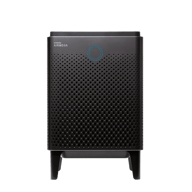
4. Coway Airmega 400: Best Value for Large Rooms
The Coway Airmega 400 covers 1,560 sq ft with dual HEPA filters and offers solid smoke performance at a mid-range price point around $350. It is the best option if you need large-room coverage without spending IQAir or Medify MA-112 money.
Why it works for wildfire smoke: Dual True HEPA filters with integrated activated carbon process air from both sides simultaneously. The pollution sensor adjusts fan speed automatically based on real-time readings. During wildfire events, the color-coded air quality ring provides instant visual feedback: blue for clean, purple for moderate, and red for heavy pollution. You will see that ring cycle quickly when you open a door during a smoke event.
Practical wildfire features: Eco mode automatically shuts the fan off when air reads clean, saving energy during lulls in smoke. When the wind shifts and brings a new wave, the sensor picks it up and ramps back up within seconds. This automatic response is valuable during multi-day events when smoke intensity fluctuates.
Noise: 22 dB on low, 52 dB on high. One of the quieter large-room units, which matters if you are running it 24/7 for weeks during fire season.
Limitations for wildfire use: The 233 CFM smoke CADR is adequate but not exceptional relative to its coverage claims. During severe wildfire events (AQI 300+), it may struggle to keep up in the full 1,560 sq ft. Consider it a 700 to 800 sq ft wildfire purifier for realistic protection during heavy smoke, or pair it with a second unit in a larger space.
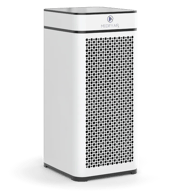
5. Medify MA-40: Best Medical-Grade Mid-Range
The Medify MA-40 hits a sweet spot between the budget Winix and the premium IQAir, delivering 330 CFM smoke CADR with H13 medical-grade HEPA filtration for around $280. It covers up to 840 sq ft and uses a dual-intake design for efficient air processing.
Why it works for wildfire smoke: The H13 HEPA filter (the same grade used in hospitals) captures 99.95% of particles down to 0.1 microns. Granular activated carbon pellets provide better surface area than carbon sheets for adsorbing smoke gases. The dual air intake pulls air from both sides, meaning it processes more air per minute at lower noise levels than single-intake designs.
Wildfire season durability: Filter replacements run $35 to $45 and last 3 to 4 months during heavy smoke, 6+ months during normal use. That makes it one of the more affordable purifiers to operate during fire season, especially compared to the IQAir's premium filter costs.
Design for emergency use: The touchscreen panel is straightforward, with no app or smart home setup required. During a wildfire emergency, you want something you can unbox and run immediately, and the MA-40 is a plug-and-go unit. It also includes a child lock, useful if the purifier is running in a nursery or kid's room during smoke events.
Limitations: The 8-hour timer cap is frustrating during multi-day smoke events where you want continuous operation. No Wi-Fi or AQI monitoring means you cannot check indoor air quality remotely. For smoke monitoring, pair it with a standalone air quality monitor.
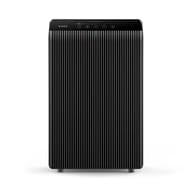
6. Winix 5500-2: Best Budget Emergency Pick
At roughly $150, the Winix 5500-2 is the air purifier to grab when wildfire smoke rolls in unexpectedly and you need protection tonight. It delivers legitimate True HEPA filtration with a 232 CFM smoke CADR, enough to protect a bedroom up to 360 sq ft.
Why it is the wildfire emergency pick: The combination of True HEPA, washable AOC carbon filter, and PlasmaWave technology provides three layers of filtration at a price point that makes it feasible to buy two. And buying two, one for the bedroom and one for the main living area, is often the smartest wildfire strategy on a budget.
PlasmaWave for smoke gases: Winix's PlasmaWave technology neutralizes VOCs and chemical compounds without producing harmful ozone (CARB certified). This supplements the carbon filter's gas removal, giving the 5500-2 better smoke gas handling than its price suggests.
The budget wildfire math: Two Winix 5500-2 units ($300 total) give you 464 CFM combined smoke CADR across two rooms. That is more total clean air coverage than a single $350 to $500 purifier and protects two separate spaces. During wildfire events, having breathable air in both your bedroom and living room is more valuable than maximum CADR in one room.
Limitations for wildfire use: The carbon layer is thin. During severe smoke events (AQI 300+), it cannot fully neutralize gases and odor. Smoke CADR at 232 CFM means it is undersized for rooms larger than 300 sq ft during active fires. Use it for a sealed bedroom, not an open floor plan. For more details, read our full Winix 5500-2 review.
Wildfire Season Preparation Guide
Buying the right purifier is step one. Here is how to maximize your protection when fire season arrives.
Before Fire Season (April to May)
- Buy your purifier and run it in. Do not wait until smoke is in the air. Supply chains tighten during active wildfire events, and prices spike. Buy in spring and test your unit so you know it works.
- Stock extra filters. Keep at least one full replacement filter set on hand. During major wildfire events, filters sell out online within days.
- Seal your home. Apply weather stripping to windows and doors. Close fireplace dampers. Seal any obvious gaps where outdoor air enters. A purifier cannot keep up if smoke pours in through leaks.
- Set up a clean room. Choose one room (ideally the bedroom) that you can seal well. Place your purifier there. This is your breathable retreat during the worst days.
During Active Wildfire Smoke
- Run on high continuously. Override auto mode during severe events. Auto mode may cycle down when the intake sensor reads clean air nearby, even as the rest of the room remains polluted.
- Keep doors and windows sealed. Every time you open a door, you reset your indoor air quality. If you must go outside, enter through the room furthest from your clean room and close doors behind you.
- Monitor your air quality. Use the purifier's built-in sensor (if equipped) or a standalone PM2.5 monitor to track indoor air quality. If readings stay above 35 ug/m3 with the purifier running, you need more CADR or better room sealing.
- Check filters every 2 weeks. Wildfire smoke can exhaust a filter in a fraction of its rated lifespan. If the filter is visibly gray or brown, or the purifier no longer removes the smoke smell, replace immediately.
- Do not rely on your HVAC system. Standard HVAC filters (MERV-8 or lower) do not capture PM2.5. If your system has a MERV-13 or higher filter, it helps, but a dedicated air purifier in your clean room provides the targeted protection you need.
How to Size Your Purifier for Wildfire Smoke
The standard CADR sizing rule (two-thirds of room square footage) assumes normal air quality. Wildfire smoke is not normal. Use this wildfire-adjusted formula:
Room square footage x 1.5 = minimum smoke CADR needed
| Room Size | Normal CADR Needed | Wildfire CADR Needed | Recommended Purifier |
|---|---|---|---|
| 200 sq ft (bedroom) | 133 CFM | 300 CFM | Winix 5500-2 or Medify MA-40 |
| 350 sq ft (living room) | 233 CFM | 525 CFM | Levoit Core 600S + supplement |
| 500 sq ft (large room) | 333 CFM | 750 CFM | Medify MA-112 or two Levoit units |
| 1,000+ sq ft (open plan) | 667 CFM | 1,500 CFM | Medify MA-112 + secondary unit |
If a single purifier cannot reach your wildfire CADR target, use two smaller units positioned at opposite ends of the room. This also provides better air circulation than one large unit in a corner.
What About DIY Box Fan Filters?
The Corsi-Rosenthal box (a box fan with MERV-13 furnace filters taped to each side) gained popularity during COVID and wildfire seasons. It works for particulate removal in emergencies. A well-built CR box can achieve roughly 200 to 400 CFM for PM2.5 particles at a materials cost of $30 to $50.
However, a DIY box has no activated carbon, so it removes zero smoke gases, VOCs, or the acrid smell. It is also louder, less energy efficient, and the MERV-13 filters clog faster under heavy smoke. Use it as a backup if your main purifier's filter dies and replacements are not available, but do not rely on it as your primary wildfire defense.
Running Costs During Fire Season
The purchase price is just the beginning. Here is what a full wildfire season costs to operate:
| Purifier | Filter Cost per Replacement | Replacements per Season | Electricity (24/7, 3 months) | Total Season Cost |
|---|---|---|---|---|
| Levoit Core 600S | $40-50 | 2-3 | ~$11 | $91-161 |
| IQAir HealthPro Plus | $70-200 | 0-1 | ~$15 | $15-215 |
| Medify MA-112 | $65 per filter (x2) | 1-2 | ~$21 | $151-281 |
| Coway Airmega 400 | $50-60 | 1-2 | ~$12 | $62-132 |
| Medify MA-40 | $35-45 | 2-3 | ~$10 | $80-145 |
| Winix 5500-2 | $40-50 | 2-3 | ~$8 | $88-158 |
The IQAir's high upfront cost is offset by longer filter life, which is especially relevant if you deal with annual wildfire smoke. Its carbon filter can last through multiple fire seasons before needing replacement. For a deeper look at ongoing costs, see our air purifier running costs guide.
Related wildfire and smoke guides: For the general smoke roundup covering all smoke types, see our best air purifiers for smoke guide. To monitor your indoor air quality during fire events, check our best PM2.5 monitors for wildfire smoke. Not sure about HEPA vs. carbon filters? That guide breaks down which filter type handles which pollutant. And if you are new to CADR ratings, our what is CADR explainer covers everything you need to know.
Last updated: April 2026. Prices and availability are subject to change. We update this guide before each wildfire season and when significant new products launch.
Frequently Asked Questions
What CADR do I need for wildfire smoke?
Do air purifiers help with smoke from wildfires?
HEPA vs carbon for wildfire smoke: which matters more?
How long do air purifier filters last during wildfire season?
Should I run my air purifier 24/7 during wildfire season?
Can a DIY box fan filter work for wildfire smoke?
How many air purifiers do I need during wildfire season?
You Might Also Like
Best Air Purifiers Under $500 (2026): 8 Top Picks for Every Room
The 8 best air purifiers under $500 ranked by CADR, noise, and value. Large-room coverage, smart features, and proven HEPA filtration without the premium price.
Best Air Purifiers for New Homes & New Construction (2026)
6 best air purifiers for new construction and off-gassing in 2026. Activated carbon picks for formaldehyde, paint fumes, and VOCs from new flooring and furniture.

Best Air Purifiers for Basements (2026)
6 best air purifiers for basements in 2026. We cover mold spores, musty odors, and humidity concerns with CADR ratings, carbon filters, and sizing advice.

Best Air Purifiers (2026): Top 8 Picks Tested
The 8 best air purifiers of 2026 for every budget and room size. Ranked by CADR, noise, filter cost, and real-world performance.