Best Air Purifiers Under $100 (2026)
6 best budget air purifiers under $100 with True HEPA filtration. Verified CADR ratings, real performance, and low running costs.

Table of Contents
- Our Top Picks at a Glance
- Best Air Purifiers Under $100
- 1. Levoit Core 300: Best Overall Under $100
- 2. Coway Airmega 100: Best Air Quality Monitor Under $100
- 3. Levoit Core 200S: Best Smart Budget Air Purifier
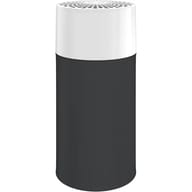
- 4. Blueair Blue Pure 411: Best Ultra-Quiet Under $100
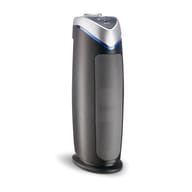
- 5. GermGuardian AC4825: Best Tower Design Under $100
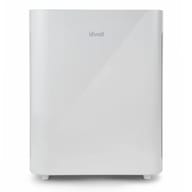
- 6. Levoit Vital 100: Best for Medium Rooms Under $100
- How We Chose These Purifiers
- Budget Air Purifier Buying Guide
- What to Prioritize Under $100
- What You Give Up Under $100
- Annual Running Costs Compared
- Room Size Quick Guide
- When to Spend More
TL;DR
The best air purifier under $100 is the Levoit Core 300. It delivers a 141 dust CADR with H13 True HEPA filtration, covers rooms up to 219 sq ft, and runs at just 24 dB on low. For smart features on a tight budget, the Levoit Core 200S adds WiFi and app control for around $70. If you want a built-in air quality sensor with auto mode, the Coway Airmega 100 is the standout at $79.
Full Comparison
| # | Product | Best For | Rating | Price | |
|---|---|---|---|---|---|
| 1 | Levoit Core 300 Top Pick Levoit | Best Overall Under $100 | 4.7 | $ | Check Price |
| 2 | Coway Airmega 100 Coway | Best Air Quality Monitor | 4.6 | $ | Check Price |
| 3 | Levoit Core 200S Levoit | Best Smart Budget | 4.5 | $ | Check Price |
| 4 | Blueair Blue Pure 411 Blueair | Best Ultra-Quiet | 4.5 | $ | Check Price |
| 5 | GermGuardian AC4825 GermGuardian | Best Tower Design | 4.3 | $ | Check Price |
| 6 | Levoit Vital 100 Levoit | Best for Medium Rooms | 4.4 | $ | Check Price |
Affiliate Disclosure: CleanAirCritic earns commissions from qualifying purchases through affiliate links on this page. This does not influence our rankings or reviews. All opinions are our own. Learn more
You can get a genuinely effective air purifier for under $100. Not a gimmicky ionizer, not a "HEPA-type" filter that captures 85% of particles on a good day. A real H13 True HEPA air purifier with verified performance specs.
The market under $100 has grown significantly over the past two years. Brands like Levoit and Coway have pushed strong performers into this price range, and the filtration quality is identical to what you get in purifiers costing two or three times as much. The tradeoffs are in coverage area, smart features, and activated carbon volume, not in the HEPA media itself.
We evaluated every True HEPA air purifier priced at or under $100, comparing CADR ratings, noise levels, filter replacement costs, and feature sets. Here are the six that are actually worth your money.
Our Top Picks at a Glance
| Purifier | Best For | CADR (Dust/Smoke) | Room Coverage | Price | Noise (Low) |
|---|---|---|---|---|---|
| Levoit Core 300 | Best Overall | 141/140 CFM | 219 sq ft | ~$100 | 24 dB |
| Coway Airmega 100 | Best AQ Monitor | 124/108 CFM | 405 sq ft | ~$79 | 20 dB |
| Levoit Core 200S | Best Smart Budget | 118/118 CFM | 183 sq ft | ~$70 | 24 dB |
| Blueair Blue Pure 411 | Best Ultra-Quiet | 120/105 CFM | 190 sq ft | ~$80 | 17 dB |
| GermGuardian AC4825 | Best Tower | 118/108 CFM | 167 sq ft | ~$99 | 40 dB |
| Levoit Vital 100 | Best for Medium Rooms | 130/130 CFM | 200 sq ft | ~$90 | 23 dB |
Best Air Purifiers Under $100
1. Levoit Core 300: Best Overall Under $100
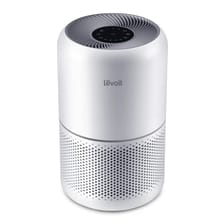
The Levoit Core 300 is the bestselling air purifier in the under-$100 category for a reason. It delivers the highest CADR on this list, uses genuine H13 True HEPA filtration, and has earned over 100,000 verified reviews. At $100, it is the performance benchmark that every other budget purifier has to beat.
Why it stands out: The Core 300 packs a 141 dust CADR and 140 smoke CADR into a compact cylinder that weighs just 7.5 lbs. The three-stage filtration system (pre-filter, H13 True HEPA, activated carbon) handles dust, pollen, smoke particles, and light odors. It is AHAM verified, Energy Star certified, and CARB compliant. At this price, that combination of certifications is remarkable.
Specialty filters: Levoit offers multiple filter options for the Core 300: the standard filter, a pet allergy filter with extra activated carbon, and a toxin absorber filter for smoke and VOCs. You can swap between them based on your primary concern without buying a different purifier. This flexibility is unique at the price.
Noise: 24 dB on the lowest speed is quieter than a whisper. The unit is compact at 8.7 x 14.2 inches, making it easy to tuck into a corner or on a nightstand without taking up significant space.
Running costs: Replacement filters cost $25 to $30 every 6 to 8 months. Annual energy cost at 45W is around $8. Total annual operating cost is roughly $35, the lowest on this list alongside the Core 200S.
Downsides: No auto mode, no air quality sensor, no WiFi, no app. Three manual fan speeds and a timer are the entire control set. Coverage is limited to rooms under 220 sq ft, so this is a bedroom or home office purifier, not a living room solution.
Who should buy this: Anyone who wants the best HEPA filtration per dollar without paying for features they do not need. Students, renters, first-time air purifier buyers, and anyone who values simplicity over connectivity. If you are wondering whether the extra $90 for the Core 400S is worth it, our Levoit Core 300 vs Core 400S comparison covers CADR, smart features, and long-term costs.
2. Coway Airmega 100: Best Air Quality Monitor Under $100
The Coway Airmega 100 is the most feature-rich air purifier you can buy under $100. It includes a real-time PM2.5 air quality monitor, auto mode, sleep mode, and a 3-year warranty, features that most competitors reserve for purifiers costing $150 or more.
Why it stands out: The Airmega 100 is the only purifier on this list with a built-in PM2.5 particle sensor and auto mode at this price. The real-time air quality indicator shows you exactly what your air looks like, and auto mode adjusts fan speed accordingly. You get the "set it and forget it" convenience that the Levoit Core 300 lacks, plus the confidence of knowing your purifier is responding to actual air quality changes.
Coway quality: Coway's reputation is built on the Airmega AP-1512HH, one of the most recommended air purifiers in the industry. The Airmega 100 brings that same engineering philosophy to a smaller, more affordable package. The three-stage filtration (pre-filter, True HEPA, deodorization filter) captures 99.97% of particles at 0.3 microns.
Compact footprint: At 8.7 x 15.6 inches and 6.6 lbs, the Airmega 100 is about the same size as the Levoit Core 300. The CADR of 124 dust and 108 smoke is lower, but the auto mode means the purifier runs at the right speed for current conditions rather than relying on you to guess.
Noise: 20 dB on the lowest setting makes this the second-quietest purifier on this list, behind only the Blueair Blue Pure 411. Sleep mode dims all lights and drops to near-silent operation.
Running costs: The 3-in-1 filter lasts about 12 months and costs $30 to $35 to replace. At 25W maximum, energy costs are negligible. Total annual operating cost is around $35 to $40.
Downsides: The CADR is lower than the Levoit Core 300, so it cleans air more slowly in the same-sized room. No WiFi or app connectivity. The deodorization layer is thin, so do not expect heavy-duty odor removal. The 3-year warranty is excellent, but the brand has less retail presence in the US than Levoit.
Who should buy this: Anyone who wants auto mode and air quality monitoring without paying $150 or more. If you want your purifier to adjust on its own rather than running at a fixed speed, this is the best option under $100.
3. Levoit Core 200S: Best Smart Budget Air Purifier
The Levoit Core 200S is the most affordable smart air purifier worth buying. At around $70, it gives you WiFi connectivity, VeSync app control, and Alexa/Google Assistant support in a compact package that fits on a nightstand.
Why it stands out: The Core 200S is the entry point to smart air purification. The VeSync app lets you set schedules, create timers, check filter life, and control the purifier from anywhere. Voice control through Alexa and Google Assistant means you can adjust settings without reaching for your phone. At $70, nothing else on the market matches this combination of smart features and True HEPA filtration.
Smart on a budget: Schedule the purifier to run on high while you are at work and switch to sleep mode before bedtime. Set a timer so it shuts off after a few hours. Control it from bed with a voice command. These are small conveniences that make a real difference in daily use, and the Core 200S delivers them at a price that used to buy only a basic manual purifier.
Performance: The 118 dust CADR is adequate for rooms up to 183 sq ft. The H13 True HEPA filter captures 99.97% of particles at 0.3 microns. For a bedroom, nursery, or home office, this is enough purification power. It is not meant for living rooms or open spaces.
Energy efficiency: At just 15W maximum, the Core 200S is remarkably energy-efficient. Running it 24/7 for a year costs about $3 in electricity. Combined with $25 annual filter costs, total operating cost is under $30 per year.
Noise: 24 dB on sleep mode. The display turns off in sleep mode so it will not light up a dark bedroom. At 6.6 lbs and 8.1 x 12.6 inches, it is the most compact smart purifier available.
Downsides: CADR is too low for rooms larger than about 185 sq ft. No built-in air quality sensor means no auto mode based on particle readings. You get scheduling automation but not reactive purification. The activated carbon layer is minimal.
Who should buy this: Budget-conscious buyers who want smart features. Parents who want to manage a nursery purifier from their phone. Students in dorm rooms. Anyone who wants WiFi and voice control without paying $150 or more.
4. Blueair Blue Pure 411: Best Ultra-Quiet Under $100
The Blueair Blue Pure 411 is the quietest air purifier on this list and one of the most energy-efficient air purifiers at any price. If noise is your primary concern and you have a small room, this 3.8 lb unit delivers genuine HEPA-grade filtration while drawing less power than a nightlight.
Why it stands out: At 17 dB on the lowest setting, the Blue Pure 411 is quieter than ambient room noise in most homes. You genuinely cannot hear it. Blueair's HEPASilent technology combines mechanical and electrostatic filtration to capture 99.97% of particles at 0.1 microns while maintaining extremely low noise and energy use. The 360-degree air intake pulls air from all directions, so placement is flexible.
Ultra-low energy: 10 watts on the lowest setting. Running this purifier 24/7 for a year costs roughly $3 to $4 in electricity. Combined with the rest of this list, only the Levoit Core 200S comes close on energy efficiency.
Design and portability: The fabric pre-filter wraps around the outside and comes in multiple colors (blue, dark shadow, buff yellow). It is washable and adds a design element that most budget purifiers lack. At 3.8 lbs, you can move it between rooms with one hand. It looks and feels like a product that costs more than it does.
Noise: 17 dB on low, 46 dB on high. The low setting produces a gentle airflow that many people find soothing for sleep. There is no mechanical whine or vibration at any speed.
Running costs: Replacement filters cost about $20 to $25 every 6 months. With near-zero electricity costs, annual operating cost is roughly $40 to $50.
Downsides: CADR of 120 dust and 105 smoke limits this to small rooms (190 sq ft maximum). No auto mode, no sensor, no smart features, no display at all. Three speeds controlled by a single button. The regular retail price hovers around $80 to $100, occasionally spiking higher. If you need coverage for anything larger than about 14 x 14 feet, look at the Levoit Core 300 instead.
Who should buy this: Light sleepers who cannot tolerate any audible noise. Anyone with a small bedroom, dorm room, or home office under 190 sq ft. People who want the lowest possible energy consumption. It also works well as a second purifier for a room that does not need high CADR.
5. GermGuardian AC4825: Best Tower Design Under $100
The GermGuardian AC4825 has been one of the bestselling air purifiers on Amazon for over a decade. Its tower design fits into narrow spaces where cylindrical purifiers would not work, and it includes UV-C sanitization alongside True HEPA filtration.
Why it stands out: The AC4825 is the only tower-style purifier on this list, which matters if you need to fit a purifier between furniture or against a wall in a tight space. The 22-inch tower footprint is narrow and unobtrusive. The four-stage filtration system includes a pre-filter/charcoal combo, True HEPA filter, and an optional UV-C light that targets airborne bacteria and viruses.
UV-C feature: The UV-C bulb adds a layer of germicidal protection that no other purifier on this list offers. While the HEPA filter does the heavy lifting on particles, the UV-C can help reduce airborne microorganisms. You can turn it on or off independently. The 5W UV-C bulb needs replacement annually ($10 to $15).
Performance: The CADR of 118 dust and 108 smoke is solid for a tower-style purifier in this price range. Coverage is rated for rooms up to about 167 sq ft at two air changes per hour. It is best suited for bedrooms and small offices.
Running costs: HEPA filter replacements run about $20 to $30 every 6 to 8 months. The charcoal pre-filter layer handles light odors. With the UV-C bulb replacement factored in, total annual cost is roughly $45 to $55.
Downsides: The AC4825 is the loudest purifier on this list, with the lowest speed sitting around 40 dB. That is noticeable background noise, not whisper-quiet. No auto mode, no air quality sensor, no smart features. The activated carbon is a thin layer bonded to the pre-filter, so odor removal is minimal. The design is functional but dated compared to newer competitors.
Who should buy this: Anyone who needs a slim tower-style purifier for a narrow space. People who want UV-C germicidal protection alongside HEPA filtration. Buyers who prioritize proven reliability and easy filter availability over modern features.
6. Levoit Vital 100: Best for Medium Rooms Under $100
The Levoit Vital 100 bridges the gap between compact bedroom purifiers and larger living room models. Its side-intake design and higher airflow make it a better fit for open rooms than the cylindrical Core series.
Why it stands out: The Vital 100 uses a U-shaped air intake that pulls air from both sides, creating a wider coverage pattern than the top-intake Core models. The 130 dust CADR and coverage area of roughly 200 sq ft put it between the Core 200S and Core 300 in performance. The filter design includes a washable pre-filter, a True HEPA filter, and a separate activated carbon filter, giving it slightly better odor handling than the Core series models at this price.
Washable pre-filter: The Vital 100's pre-filter is designed to be removed and washed, which extends the life of the HEPA filter by capturing larger particles before they reach it. This is a small but meaningful cost-saving feature for households with pets or in dusty environments.
Design: The rectangular shape and front-facing controls give the Vital 100 a more traditional appliance look compared to Levoit's cylindrical Core series. At 8.9 x 5.1 x 14.5 inches, it sits flat and stable on a table or shelf. It weighs 8.4 lbs.
Noise: 23 dB on the lowest speed, which is slightly quieter than the Core 300. Three fan speeds give you adequate control for daytime and nighttime use.
Running costs: Replacement HEPA filters cost $25 to $30 annually. The activated carbon filter is separate and costs about $10 to $15 per year. Energy consumption is low at 27W maximum. Total annual operating cost is roughly $40.
Downsides: No WiFi, no app, no air quality sensor, no auto mode. The Vital 100 is being phased out in favor of the Vital 100S ($110 to $140), so availability may become inconsistent. The CADR is modest compared to purifiers in the $150 to $200 range. Not ideal for rooms much over 200 sq ft.
Who should buy this: Buyers who want a slightly larger coverage area than the Core 300 in a flat, shelf-friendly form factor. Pet owners who appreciate the washable pre-filter. Anyone who prefers a side-intake design over the cylindrical top-intake style.
How We Chose These Purifiers
We started with every air purifier priced at or under $100 at major US retailers and applied three non-negotiable requirements.
True HEPA (H13) or better. Any purifier using "HEPA-type," "HEPA-style," or unspecified filtration was immediately excluded. True HEPA is the minimum standard for meaningful air purification. If it does not capture 99.97% of particles at 0.3 microns, it does not belong on this list.
Verified CADR. We required independently verified CADR ratings, whether through AHAM certification or equivalent third-party testing. Manufacturer-claimed numbers without verification were treated with skepticism. A verified CADR gives you a standardized, comparable performance metric.
Safe emissions profile. Every purifier on this list is CARB compliant, meaning ozone emissions are below 0.050 ppm. Models with UV-C (GermGuardian) or ionizer features allow you to turn those features off for purely mechanical filtration.
After those requirements, we ranked the remaining purifiers on CADR per dollar, noise on the lowest setting, annual operating cost, build quality, and useful features.
Budget Air Purifier Buying Guide
What to Prioritize Under $100
When you are shopping under $100, every dollar counts. Here is what to focus on and what to ignore.
CADR is still the most important spec. CADR (Clean Air Delivery Rate) tells you how much clean air the purifier delivers per minute. Match it to your room size: your target CADR should be at least two-thirds of the room's square footage. A 150 sq ft bedroom needs at least 100 CFM.
Noise on the lowest speed determines whether you will actually use it. If it is too loud on low, you will turn it off at night. That defeats the purpose. Every purifier on this list runs under 25 dB on low except the GermGuardian (40 dB). Anything under 25 dB is effectively inaudible.
Filter replacement cost is your real expense. A purifier with $40/year filters costs $120 more over three years than one with $25 filters. That turns a $70 purifier into a $190 total investment. Check filter prices before you buy, not after.
What You Give Up Under $100
Budget purifiers save money in predictable ways:
- Coverage area. Most cap out at 180 to 220 sq ft. For large rooms, see our guide to the best air purifiers for large rooms.
- Smart features. WiFi, apps, and sensors add $30 to $80 to the price. The Levoit Core 200S is the exception, offering smart features at $70 because it has a smaller coverage area.
- Activated carbon volume. Premium purifiers pack 2 to 5 lbs of granular activated carbon for VOC and chemical removal. Budget models use a thin carbon layer that handles light odors but will not tackle serious chemical off-gassing.
- Build quality. More plastic, lighter frames, simpler controls. Functional, but you will not mistake them for premium appliances.
What you keep:
- The same H13 HEPA media. A True HEPA filter in a $70 purifier captures 99.97% of particles at 0.3 microns. Identical to a $500 purifier.
- Competitive CADR for the room size. The Levoit Core 300 at $100 has a CADR that rivals purifiers at twice the price.
- Quiet operation. Five of the six picks on this list run under 25 dB on low.
Annual Running Costs Compared
| Purifier | Purchase | Annual Filters | Annual Energy | 3-Year Total |
|---|---|---|---|---|
| Levoit Core 300 | ~$100 | ~$35 | ~$8 | ~$186 |
| Coway Airmega 100 | ~$79 | ~$35 | ~$5 | ~$159 |
| Levoit Core 200S | ~$70 | ~$25 | ~$3 | ~$140 |
| Blueair 411 | ~$80 | ~$45 | ~$4 | ~$227 |
| GermGuardian AC4825 | ~$99 | ~$40 | ~$10 | ~$249 |
| Levoit Vital 100 | ~$90 | ~$35 | ~$5 | ~$210 |
The Levoit Core 200S has the lowest three-year total cost at $140. The Coway Airmega 100 offers the best balance of features and long-term value. If you plan to run a purifier for years, these numbers matter more than the sticker price.
Room Size Quick Guide
Not sure which purifier fits your room? Here is a quick reference:
- Under 150 sq ft (small bedroom, dorm, office): Levoit Core 200S, Blueair Blue Pure 411
- 150 to 200 sq ft (standard bedroom, nursery): Levoit Core 300, Coway Airmega 100, Levoit Vital 100, GermGuardian AC4825
- 200 to 220 sq ft (master bedroom): Levoit Core 300 (at its coverage limit)
- Over 220 sq ft: Step up to a purifier in the under-$200 range or a large room model
When to Spend More
A sub-$100 purifier is the right call for many people, but there are situations where spending more makes sense:
- Rooms over 220 sq ft. Budget purifiers do not have the CADR for large spaces. The Coway Airmega 200M or Levoit Core 400S are better options starting around $150.
- Auto mode with a real sensor. The Coway Airmega 100 has auto mode under $100, but if you want a laser PM2.5 sensor with app-based monitoring, the Levoit Core 400S at $190 is the entry point.
- Severe odors or VOCs. If cooking smells, cigarette smoke, or chemical off-gassing are your main concern, you need a purifier with a heavy activated carbon stage. Budget models have lightweight carbon layers that saturate quickly.
- Allergies or asthma. If you have severe respiratory issues, the extra CADR and AAFA certification available in the $150+ range can be worth the investment.
For most bedrooms, nurseries, dorm rooms, and small offices, a well-chosen purifier under $100 does the job. Our guide to choosing an air purifier covers the full decision framework.
Last updated: March 2026. Prices and availability are subject to change. All CADR ratings are AHAM verified unless otherwise noted.