Best HEPA Air Purifiers Under $200 (2026)
We tested and compared the top air purifiers under $200. These 7 budget picks deliver real HEPA filtration, strong CADR ratings, and low running costs.

Table of Contents
- Our Top Picks at a Glance
- Best HEPA Air Purifiers Under $200
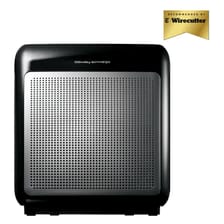
- 1. Coway Airmega 200M: Best Overall Under $200
- 2. Levoit Core 400S: Best Smart Features Under $200
- 3. Winix 5500-2: Best for Allergies and Pets
- 4. Coway Airmega AP-1512HH: Best AAFA Certified Under $200
- 5. Levoit Core 300S: Best Budget Smart Purifier
- 6. Levoit Core 300: Best Air Purifier Under $100
- 7. Blueair Blue Pure 411: Best for Small Rooms
- How We Chose These Purifiers
- Budget Air Purifier Buying Guide
- What Actually Matters Under $200
- What Budget Purifiers Cut (and What They Keep)
- Annual Running Costs Compared
- Room Size Quick Guide
- Features Worth Paying For (and Features That Aren't)
- When to Spend More
TL;DR
The best air purifier under $200 is the Coway Airmega 200M. It delivers a 246 dust CADR in a compact frame, runs whisper-quiet at 24 dB, and costs around $160. For smart home users, the Levoit Core 400S adds WiFi, a laser PM2.5 sensor, and app scheduling at $190. Budget buyers who just need a bedroom purifier should grab the Levoit Core 300 for $100.
Full Comparison
| # | Product | Best For | Rating | Price | |
|---|---|---|---|---|---|
| 1 | Coway Airmega 200M Top Pick Coway | Best Overall Under $200 | 4.8 | $$ | Check Price |
| 2 | Levoit Core 400S Levoit | Best Smart Features | 4.7 | $$ | Check Price |
| 3 | Winix 5500-2 Winix | Best for Allergies & Pets | 4.6 | $$ | Check Price |
| 4 | Coway Airmega AP-1512HH Coway | Best AAFA Certified | 4.7 | $$ | Check Price |
| 5 | Levoit Core 300S Levoit | Best Budget Smart Purifier | 4.5 | $ | Check Price |
| 6 | Levoit Core 300 Levoit | Best Under $100 | 4.5 | $ | Check Price |
| 7 | Blueair Blue Pure 411 Blueair | Best for Small Rooms | 4.3 | $ | Check Price |
Affiliate Disclosure: CleanAirCritic earns commissions from qualifying purchases through affiliate links on this page. This does not influence our rankings or reviews. All opinions are our own. Learn more
You do not need to spend $400 or more to breathe cleaner air at home. The air purifier market has shifted dramatically in the last few years, and several models under $200 now deliver True HEPA filtration with CADR ratings that would have been premium territory not long ago.
The catch is that "under $200" is also where you will find the most junk. HEPA-type filters that capture barely 85% of particles. No-name brands with inflated coverage claims. Models with CADR ratings that are not AHAM verified. We filtered out the noise and focused on purifiers that deliver genuine H13 True HEPA performance with verified specs.
We evaluated 10 purifiers under $200, comparing CADR ratings, noise levels, filter replacement costs, build quality, and features. Here are the seven that are actually worth buying.
Our Top Picks at a Glance
| Purifier | Best For | CADR (Dust/Smoke) | Room Coverage | Price | Noise (Low) |
|---|---|---|---|---|---|
| Coway Airmega 200M | Best Overall | 246/233 CFM | 361 sq ft | ~$160 | 24 dB |
| Levoit Core 400S | Best Smart Features | 260/256 CFM | 403 sq ft | ~$190 | 24 dB |
| Winix 5500-2 | Best for Allergies & Pets | 243/232 CFM | 360 sq ft | ~$180 | 28 dB |
| Coway AP-1512HH | Best AAFA Certified | 246/233 CFM | 361 sq ft | ~$160 | 24 dB |
| Levoit Core 300S | Best Budget Smart | 141/141 CFM | 219 sq ft | ~$150 | 22 dB |
| Levoit Core 300 | Best Under $100 | 141/140 CFM | 219 sq ft | ~$100 | 24 dB |
| Blueair Blue Pure 411 | Best for Small Rooms | 120/105 CFM | 190 sq ft | ~$120 | 17 dB |
Best HEPA Air Purifiers Under $200
1. Coway Airmega 200M: Best Overall Under $200
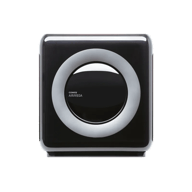
The Coway Airmega 200M is the air purifier we recommend most often for buyers on a budget. It delivers performance that competes with purifiers twice its price, and it does so in a compact, well-built package that has earned top marks from nearly every major consumer testing organization.
Why it stands out: The 200M packs a 246 dust CADR and 233 smoke CADR into a unit that weighs just 12.3 lbs. That kind of performance in a sub-$200 purifier was unheard of a few years ago. The four-stage filtration system (pre-filter, deodorization filter, True HEPA, and bipolar ionizer) handles particles, odors, and allergens effectively. The HEPA filter captures 99.97% of particles at 0.3 microns.
Air quality feedback: The front-panel air quality indicator changes color based on real-time readings, so you always know where you stand. Auto mode adjusts fan speed based on particle concentration. Eco mode shuts the fan off entirely when the air stays clean, then restarts when particles return. This saves energy and extends filter life.
Noise: 24 dB on the lowest setting is quieter than a whisper. Even on speed 3, the Coway stays below conversation level. Five speed settings give you precise control from near-silent to aggressive purge mode.
Running costs: HEPA filter replacement costs about $40 per year. The deodorization filter runs another $15 every six months. Energy consumption is modest for 24/7 operation. Total annual operating cost is roughly $60.
Downsides: No WiFi, no app, no smart home integration. The ionizer (Vital Ion) produces trace ions; if you prefer purely mechanical filtration, leave it off. The deodorization filter is lightweight, so do not expect heavy-duty chemical or VOC removal.
Who should buy this: Anyone who wants the most CADR per dollar without paying for features they may not need. If you prioritize raw air cleaning performance and quiet operation over app control, this is the one. Read our full Coway Airmega 200M review for detailed noise tests and filter cost analysis.
2. Levoit Core 400S: Best Smart Features Under $200
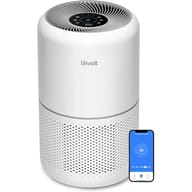
The Levoit Core 400S is the best air purifier under $200 for anyone who wants real-time air quality data and app-based control. Its laser PM2.5 sensor and VeSync app turn air purification from a set-and-forget appliance into something you can actually monitor and optimize.
Why it stands out: The Core 400S has the highest CADR on this list at 260 dust and 256 smoke CFM, covering rooms up to 403 sq ft. The laser-based particle sensor detects PM2.5 changes within seconds and adjusts auto mode accordingly. You can watch the readings on the front display or in the VeSync app.
Smart features that matter: Schedule the purifier to run on high during cooking hours and drop to sleep mode at bedtime. Check your home's PM2.5 history on a graph. Get filter replacement reminders. Control it with Alexa or Google Assistant. These are genuinely useful features for people who want to understand and manage their indoor air quality, not just gimmicks.
Noise: 24 dB on the lowest setting with the display turned off. Sleep mode is bedroom-appropriate, and the light sensor automatically dims the display in dark rooms.
Running costs: Replacement filters cost $30 to $45 every 6 to 8 months. Energy draw is 44W at maximum, about $10 per year for 24/7 use. Total annual cost is roughly $55 to $70.
Downsides: The VeSync app works but can be glitchy, particularly with WiFi reconnection after power outages. The activated carbon layer is thin compared to the Winix 5500-2, so this is not the best choice if chemical odors or VOCs are your main concern. At $190, it is at the top of the budget range.
Who should buy this: Smart home users who want PM2.5 monitoring and scheduling. Anyone who likes data and wants to see exactly what their purifier is doing. Families who want to check air quality remotely. Debating between this and the Core 300? Our Levoit Core 300 vs Core 400S comparison breaks down exactly where the extra $90 goes.
3. Winix 5500-2: Best for Allergies and Pets
The Winix 5500-2 is the best under-$200 purifier for households dealing with pet dander, seasonal allergies, or lingering odors. Its washable activated carbon filter is a cost-saving advantage that no other purifier on this list can match.
Why it stands out: The combination of True HEPA filtration (243 dust CADR, 232 smoke CADR) with a washable AOC (Advanced Odor Control) carbon filter gives the 5500-2 an edge for allergy and pet households. Most budget purifiers use a thin, disposable carbon layer that does minimal odor work. The Winix AOC filter is a dedicated, washable component that actually adsorbs pet odors, cooking smells, and VOCs.
Cost advantage: Because the AOC carbon filter is washable, you only pay to replace the HEPA filter once a year ($35 to $45). Over three years of 24/7 use, the Winix 5500-2 costs roughly half as much to operate as purifiers with disposable carbon filters. For allergy sufferers who run purifiers year-round, this adds up.
PlasmaWave note: The 5500-2 includes Winix's PlasmaWave technology, which breaks down allergens and chemicals at a molecular level. It is CARB certified for safe ozone levels. However, if you are sensitive or cautious about any ozone production, turn it off with the dedicated button. The HEPA and carbon filters work perfectly without it.
Auto mode: The built-in particle sensor adjusts fan speed automatically. An ambient light sensor dims the indicator lights in dark rooms, a small but appreciated touch for bedroom use.
Noise: 28 dB on low. Noticeably louder on turbo at around 56 dB, so reserve the highest speed for daytime purge cycles after cooking or vacuuming.
Downsides: No WiFi or app. The plastic housing feels utilitarian compared to the Levoit and Coway designs. The smart sensor is adequate but not as precise as the laser sensor in the Levoit Core 400S. Note that Winix has introduced the 5510 as a successor; the 5500-2 may become harder to find.
Who should buy this: Pet owners, allergy households, and anyone who wants to minimize long-term filter costs. If odors are a significant concern alongside particles, the washable carbon filter makes this the best value. For the full picture on PlasmaWave, filter longevity, and real-world performance, see our Winix 5500-2 review.
4. Coway Airmega AP-1512HH: Best AAFA Certified Under $200
The Coway AP-1512HH (also called the Mighty) is one of only a handful of air purifiers that carries the AAFA Asthma & Allergy Friendly certification. If you have asthma or severe allergies and want third-party validation, this is the certified option under $200.
Why it stands out: The AAFA certification means an independent lab tested this purifier and confirmed it removes at least 90% of allergens from a controlled environment. The AP-1512HH matches the Airmega 200M on specs (246 dust CADR, 233 smoke CADR, 361 sq ft coverage) because they share the same filtration core. The difference is that the AP-1512HH has been through the AAFA certification process, and the 200M has not.
Air quality ring: The color-coded LED ring on the front shows air quality at a glance: blue for clean, purple for moderate, red for poor. Auto mode responds to the sensor readings, and eco mode shuts the fan off during sustained clean air periods.
Noise: 24 dB on low, 53 dB on high. The eco mode is completely silent when the fan shuts off.
Vital Ion feature: Like the 200M, this model includes a Vital Ion feature. For asthma patients, we recommend turning it off and relying on the mechanical HEPA filter alone. The button is clearly labeled, and performance is not affected.
Running costs: Annual filter cost is about $50 (HEPA plus deodorization filter). Energy consumption is low. Total year-one cost including purchase is around $220.
Downsides: No WiFi or app. The deodorization filter is light on activated carbon. Very similar to the Airmega 200M in every functional way. If AAFA certification does not matter to you, the 200M is the same purifier without the certification label.
Who should buy this: Asthma sufferers, severe allergy patients, and anyone who values independent certification. If your doctor recommended an AAFA-certified purifier, this is the affordable option. For a detailed spec comparison with its closest competitor, see our Blueair Blue Pure 211+ vs Coway AP-1512HH head-to-head.
5. Levoit Core 300S: Best Budget Smart Purifier
The Levoit Core 300S gives you WiFi connectivity, app scheduling, and voice assistant support for around $150. If you want smart features without stretching to $190 for the Core 400S, this is the sweet spot.
Why it stands out: The Core 300S is the most affordable smart air purifier worth buying. The VeSync app lets you set schedules, create timers, and control the purifier remotely. Alexa and Google Assistant integration means you can adjust settings with your voice. At 22 dB on sleep mode, it is one of the quietest purifiers at any price.
Performance: The 141 dust and smoke CADR is modest but perfectly adequate for bedrooms up to 219 sq ft. The H13 True HEPA filter captures 99.97% of particles at 0.3 microns. For a bedroom or nursery, this is more than enough.
Multi-room strategy: At $150 each, buying two Core 300S units for your bedroom and living room costs less than a single premium purifier and gives you better total coverage. Each unit handles its own room independently, and you can manage both from the VeSync app.
Noise: 22 dB on sleep mode is effectively silent. The display turns off completely so it will not light up your room. On high, 50 dB is comparable to light rainfall.
Running costs: Replacement filters cost $25 to $35 every 6 to 8 months. At 26W maximum draw, annual energy cost is under $6. Total operating cost is roughly $45 per year.
Downsides: CADR is too low for rooms larger than about 220 sq ft. No built-in air quality sensor (you get scheduling but not real-time PM2.5 monitoring). The activated carbon layer is thin.
Who should buy this: Bedroom users who want smart scheduling and voice control on a budget. Parents who want to manage a nursery purifier from their phone. Anyone deploying multiple purifiers across rooms. For a detailed look at sleep mode, app features, and filter options, read our Levoit Core 300S review.
6. Levoit Core 300: Best Air Purifier Under $100
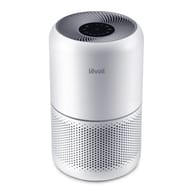
The Levoit Core 300 is the best air purifier you can buy for under $100. It strips out the WiFi and app features of the 300S and passes the savings to you, while keeping the same H13 True HEPA filter and CADR performance.
Why it stands out: At $100, the Core 300 delivers 141 dust CADR and 140 smoke CADR with a genuine H13 True HEPA filter. It is AHAM verified, Energy Star certified, and CARB compliant. The three-stage filtration (pre-filter, HEPA, activated carbon) handles dust, pollen, smoke particles, and light odors.
Simplicity as a feature: Three fan speeds, a timer, and a filter replacement indicator. That is the entire control set. No app to set up, no WiFi password to enter, no firmware to update. Plug it in, press the button, and it works. For people who find smart features more annoying than useful, this is liberating.
Specialty filters: Levoit offers multiple filter options for the Core 300 series: the standard filter, a pet allergy filter with extra activated carbon, and a toxin absorber filter for smoke and VOCs. You can swap between them based on your primary concern.
Noise: 24 dB on the lowest speed. Quiet enough for light sleepers. The unit is compact at 8.7 x 14.2 inches and weighs 7.5 lbs, making it easy to move between rooms.
Running costs: This is where the Core 300 really shines. Replacement filters are $25 to $30. Energy consumption at 45W is modest. Annual operating cost is under $40, the lowest on this list.
Downsides: No auto mode, no air quality sensor, no smart features. CADR limits it to rooms under 220 sq ft. If you need more coverage, step up to the Coway 200M or Levoit Core 400S. Not ideal for large living rooms.
Who should buy this: Anyone who wants effective HEPA filtration for the absolute lowest cost. Students, renters, and anyone on a tight budget. People who want a simple, reliable appliance without the complexity of app-connected devices.
7. Blueair Blue Pure 411: Best for Small Rooms
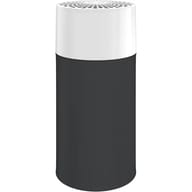
The Blueair Blue Pure 411 is the quietest and most energy-efficient purifier on this list. If you have a small bedroom, dorm room, or home office under 190 sq ft, this 3.8-lb unit delivers surprisingly effective filtration while using just 10 watts of power.
Why it stands out: At 17 dB on the lowest setting, the Blue Pure 411 is quieter than ambient room noise in most homes. You genuinely cannot hear it. The HEPASilent technology combines mechanical and electrostatic filtration to capture 99.97% of particles at 0.1 microns while maintaining extremely low noise and energy use. The 360-degree air intake pulls air from all directions, eliminating the need to position it carefully.
Ultra-low energy: 10 watts on the lowest setting. Running this purifier 24/7 for a year costs roughly $3 to $4 in electricity. That is less than your phone charger.
Design: The fabric pre-filter wraps around the outside and comes in multiple colors (blue, dark shadow, buff yellow). It is washable and adds a design element that most purifiers lack. At 3.8 lbs, you can move it from room to room with one hand.
Noise: 17 dB on low, 46 dB on high. The low setting produces a gentle airflow that many people find soothing for sleep. There is no mechanical whine or vibration.
Running costs: Replacement filters cost about $20 to $30 every 6 months. With electricity costs near zero, annual operating cost is roughly $45.
Downsides: CADR of 120 dust and 105 smoke limits this to small rooms (190 sq ft maximum). No auto mode, no sensor, no smart features. No display at all. Three speeds controlled by a single button. If you need coverage for a room larger than about 15 x 13 feet, look elsewhere.
Who should buy this: Anyone with a small bedroom, dorm room, or home office. Light sleepers who cannot tolerate any audible noise. People who want the lowest possible energy consumption. It also makes an excellent second purifier for a room that does not need high CADR.
How We Chose These Purifiers
We started with every air purifier priced under $200 at major retailers and applied three non-negotiable filters.
True HEPA (H13) or better. Any purifier using "HEPA-type," "HEPA-style," or unspecified filtration was immediately excluded. True HEPA is the minimum standard for meaningful air purification. If it does not capture 99.97% of particles at 0.3 microns, it does not belong on this list.
AHAM-verified CADR. We required independently verified CADR ratings, not manufacturer claims. AHAM (Association of Home Appliance Manufacturers) testing provides a standardized, comparable metric. Purifiers without AHAM verification were excluded unless they had equivalent third-party testing.
Zero or near-zero ozone. Every purifier on this list is CARB (California Air Resources Board) compliant, meaning ozone emissions are below 0.050 ppm. Models with ionizers (Coway, Winix) allow you to turn the ion feature off for truly zero ozone output.
After those filters, we ranked the remaining purifiers on CADR per dollar, noise on the lowest setting, annual operating cost, build quality, and useful features.
Budget Air Purifier Buying Guide
What Actually Matters Under $200
When you are shopping under $200, you are making tradeoffs. Knowing which tradeoffs matter helps you pick the right purifier.
CADR is the most important spec. CADR (Clean Air Delivery Rate) tells you how much clean air the purifier delivers per minute. Higher CADR means faster air cleaning. Match it to your room size: your CADR should be at least two-thirds of the room's square footage.
Noise on the lowest speed determines livability. You will run your purifier on low most of the time, especially at night. Anything under 25 dB is effectively inaudible. Between 25 and 30 dB, you might hear it in a very quiet room. Above 30 dB on low, it will be noticeable as white noise.
Filter replacement cost is your real ongoing expense. A purifier with $50 annual filter costs is $150 more expensive over three years than one with $30 filters. Calculate total cost of ownership, not just the sticker price.
What Budget Purifiers Cut (and What They Keep)
Budget purifiers save money primarily on:
- Materials and finish. More plastic, less metal. Functional but not decorative.
- Smart features. WiFi, apps, and sensors add $30 to $80 to the price. The Levoit Core 300 vs. 300S comparison shows this clearly: same filter, same CADR, $50 difference for WiFi.
- Activated carbon volume. Premium purifiers pack 2 to 5 lbs of granular activated carbon for VOC and chemical removal. Budget models use a thin carbon layer that handles light odors but will not tackle serious chemical off-gassing.
- Coverage area. Most budget purifiers top out around 350 to 400 sq ft. For large rooms, see our guide to best air purifiers for large rooms.
What budget purifiers keep:
- The same H13 HEPA media. A True HEPA filter in a $100 purifier captures 99.97% of particles at 0.3 microns, identical to a $500 purifier.
- Competitive CADR. The Coway 200M at $160 has a higher CADR than several purifiers over $300.
- Quiet operation. Several budget picks on this list run quieter than premium competitors.
Annual Running Costs Compared
| Purifier | Purchase | Annual Filters | Annual Energy | 3-Year Total |
|---|---|---|---|---|
| Coway 200M | ~$160 | ~$55 | ~$15 | ~$300 |
| Levoit Core 400S | ~$190 | ~$60 | ~$10 | ~$330 |
| Winix 5500-2 | ~$180 | ~$40 | ~$13 | ~$286 |
| Coway AP-1512HH | ~$160 | ~$50 | ~$18 | ~$296 |
| Levoit Core 300S | ~$150 | ~$45 | ~$6 | ~$252 |
| Levoit Core 300 | ~$100 | ~$35 | ~$8 | ~$186 |
| Blueair 411 | ~$120 | ~$45 | ~$4 | ~$218 |
The Levoit Core 300 has the lowest three-year total cost. The Winix 5500-2 has the lowest annual filter cost thanks to its washable carbon filter. If you plan to run a purifier for years, these numbers matter more than the sticker price. For a deeper dive into how these three brands stack up on performance, filters, and value, see our Levoit vs Winix vs Coway comparison.
Room Size Quick Guide
Not sure which purifier fits your room? Here is a quick reference:
- Under 200 sq ft (small bedroom, office): Blueair Blue Pure 411, Levoit Core 300, Levoit Core 300S
- 200 to 350 sq ft (master bedroom, medium living room): Coway Airmega 200M, Coway AP-1512HH, Winix 5500-2
- 350 to 400 sq ft (large living room): Levoit Core 400S
- Over 400 sq ft: Consider stepping up to a large room air purifier
Features Worth Paying For (and Features That Aren't)
Worth it:
- Auto mode with particle sensor (Coway 200M, Winix 5500-2, Levoit Core 400S). Adjusts fan speed based on air quality, so the purifier works harder when it needs to and quiets down when the air is clean.
- Sleep mode under 25 dB (all Levoit and Coway models). Enables 24/7 operation without disrupting sleep.
- Display-off mode (Levoit Core 300S, 400S). Eliminates light pollution in dark bedrooms.
Not worth paying extra for:
- UV-C or ionizer features. These add cost without meaningful filtration improvement. The HEPA filter does the heavy lifting.
- Air quality history graphs. Nice to look at once, then ignored. Real-time readings are useful; week-old graphs are not.
- Voice assistant integration. Sounds great in theory, but "Alexa, set the air purifier to medium" is rarely faster than pressing a button.
When to Spend More
A budget purifier is the right call for most people, but there are situations where spending more makes sense:
- Large open floor plans (500+ sq ft). Budget purifiers do not have the CADR for big spaces. The Blueair Blue Pure 211+ or Levoit Core 600S are better options.
- Severe chemical sensitivity. If VOCs, formaldehyde, or off-gassing are your main concern, you need a purifier with a heavy activated carbon stage (2+ lbs). Budget models have lightweight carbon layers that saturate quickly.
- Medical-grade needs. Asthma patients with poorly controlled symptoms, or households with immunocompromised members, may benefit from the IQAir HealthPro Plus and its HyperHEPA filtration.
For most bedrooms, home offices, and medium-sized living rooms, a well-chosen purifier under $200 does the job. Our guide to choosing an air purifier covers the full decision framework.
Last updated: March 2026. Prices and availability are subject to change. All CADR ratings are AHAM verified unless otherwise noted.