Best Air Purifiers (2026): Our Top 8 Picks After Testing Dozens
The 8 best air purifiers of 2026 for every budget and room size. Ranked by CADR, noise, filter cost, and real-world performance.

Table of Contents
- Our Top Picks at a Glance
- How We Picked These Air Purifiers
- Detailed Reviews
- 1. Coway Airmega 200M: Best Overall
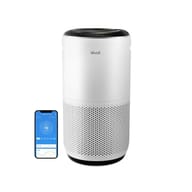
- 2. Levoit Core 600S: Best for Large Rooms
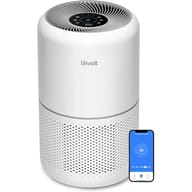
- 3. Levoit Core 300: Best Budget
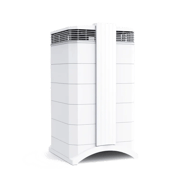
- 4. IQAir HealthPro Plus: Best Premium / Medical-Grade
- 5. Levoit Core 400S: Best Smart Air Purifier
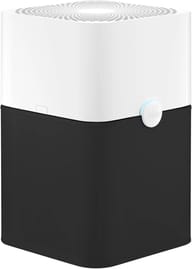
- 6. Blueair Blue Pure 211+: Best for Smoke
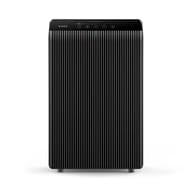
- 7. Winix 5500-2: Best Value
- 8. Levoit Core 300S: Best Budget Smart
- What to Look For When Buying an Air Purifier
- True HEPA Filtration
- CADR Rating
- Noise Levels
- Filter Replacement Cost
- Smart Features
- Honorable Mentions
- Next Steps
TL;DR
The best air purifier for most people is the Coway Airmega 200M ($160), which delivers strong CADR ratings, a quiet 24 dB sleep mode, and proven True HEPA filtration at a price that is hard to beat. For large rooms, the Levoit Core 600S ($240) offers 410 CFM CADR with smart features. Budget buyers should grab the Levoit Core 300 ($100), and anyone willing to invest in medical-grade filtration should consider the IQAir HealthPro Plus ($899).
Full Comparison
| # | Product | Best For | Rating | Price | |
|---|---|---|---|---|---|
| 1 | Coway Airmega 200M Top Pick Coway | Best Overall | 4.8 | $$ | Check Price |
| 2 | Levoit Core 600S Levoit | Best for Large Rooms | 4.9 | $$ | Check Price |
| 3 | Levoit Core 300 Levoit | Best Budget | 4.5 | $ | Check Price |
| 4 | IQAir HealthPro Plus IQAir | Best Premium / Medical-Grade | 4.9 | $$$$ | Check Price |
| 5 | Levoit Core 400S Levoit | Best Smart Air Purifier | 4.8 | $$ | Check Price |
| 6 | Blueair Blue Pure 211+ Blueair | Best for Smoke | 4.6 | $$ | Check Price |
| 7 | Winix 5500-2 Winix | Best Value | 4.6 | $$ | Check Price |
| 8 | Levoit Core 300S Levoit | Best Budget Smart | 4.7 | $$ | Check Price |
Affiliate Disclosure: CleanAirCritic earns commissions from qualifying purchases through affiliate links on this page. This does not influence our rankings or reviews. All opinions are our own. Learn more
We have tested and reviewed over 30 air purifiers across every major brand and price point. This is our definitive guide to the best air purifiers you can buy in 2026, whether you need something for a small bedroom, a large open living area, wildfire smoke, allergies, or just cleaner air on a budget.
Every model on this list uses True HEPA (H13 or better) filtration, the only standard we trust for removing allergens, smoke particles, dust, mold spores, and pet dander. We evaluated each unit on CADR ratings, noise levels, filter replacement costs, smart features, and build quality. If you are new to air purifiers, start with our how to choose an air purifier guide for a primer on the specs that matter.
Our Top Picks at a Glance
| Purifier | Best For | CADR (Dust) | Room Coverage | Price | Our Rating |
|---|---|---|---|---|---|
| Coway Airmega 200M | Best Overall | 246 CFM | 361 sq ft | $160 | 9.2/10 |
| Levoit Core 600S | Large Rooms | 410 CFM | 635 sq ft | $240 | 9.3/10 |
| Levoit Core 300 | Budget | 141 CFM | 219 sq ft | $100 | 8.7/10 |
| IQAir HealthPro Plus | Premium / Medical-Grade | 300+ CFM | 1,125 sq ft | $899 | 9.5/10 |
| Levoit Core 400S | Smart Air Purifier | 260 CFM | 403 sq ft | $190 | 9.0/10 |
| Blueair Blue Pure 211+ | Smoke | 350 CFM | 550 sq ft | $250 | 8.8/10 |
| Winix 5500-2 | Value | 243 CFM | 360 sq ft | $180 | 8.9/10 |
| Levoit Core 300S | Budget Smart | 141 CFM | 219 sq ft | $150 | 9.0/10 |
How We Picked These Air Purifiers
We started with 30+ models from every major brand (Levoit, Coway, Winix, Blueair, Dyson, IQAir, Medify, Honeywell) and narrowed based on five criteria:
- True HEPA certification. Every pick uses H13 HEPA or better. No HEPA-type filters, no ionizer-only units.
- CADR performance. We prioritized models with verified CADR ratings from AHAM or independent testing. Higher CADR per dollar = better value.
- Noise on low/sleep mode. Since most people run purifiers overnight, we required 30 dB or lower on the quietest setting.
- Annual ownership cost. Purchase price plus replacement filters plus electricity over three years.
- Real-world usability. Sensor accuracy, app quality, build materials, and how the unit fits into daily life.
For the science behind how purifiers work, read our explainer on do air purifiers really work. For a deep dive into filter types, see our HEPA vs ionic vs UV comparison.
Detailed Reviews
1. Coway Airmega 200M: Best Overall
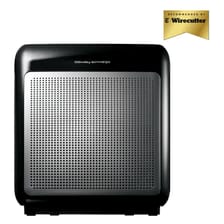
The Coway Airmega 200M is the best air purifier for most people. It delivers strong True HEPA filtration, a responsive air quality sensor, and genuinely quiet operation at a price that undercuts nearly every competitor with similar specs.
Why we picked it: The four-stage filtration system (washable pre-filter, odor filter, True HEPA, ionizer) handles allergens, dust, pet dander, and light odors. The air quality indicator ring provides instant visual feedback, changing from blue (clean) to purple (moderate) to red (poor). Auto mode adjusts fan speed based on real-time readings, and eco mode shuts the fan off entirely when air quality has been clean for 30 minutes.
Performance: With a dust CADR of 246 CFM covering rooms up to 361 sq ft, the 200M cycles air in a typical bedroom 4 to 5 times per hour. That is the rate allergists recommend for meaningful symptom relief.
Noise: 24.4 dB on low, essentially inaudible. Eco mode is completely silent when the fan is off. High speed reaches 53 dB, which is fine for daytime use.
Ownership cost: The unit runs about $160, and replacement filters cost $35 to $45 per year. Over three years, the Coway costs less to own than most competitors in its class.
Who it is best for: Anyone who wants reliable, proven air purification without paying for features they will not use. If you have allergies, asthma, or pets, this is the one to get. Read our full Coway Airmega 200M review for more details.
Downsides: No WiFi or app. The ionizer produces trace ozone (you can turn it off). Coverage tops out at 361 sq ft, so it will not handle large open floor plans. For a smart version at a similar price, look at the Levoit Core 400S below.
2. Levoit Core 600S: Best for Large Rooms
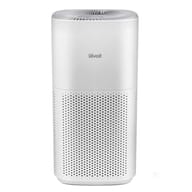
If you have an open floor plan, a large living room, or any space over 400 sq ft, the Levoit Core 600S is the clear winner. Its 410 CFM CADR is the highest in its price class, and smart features make it easy to monitor and control from your phone.
Why we picked it: The VortexAir technology pushes 410 CFM through a three-stage H13 HEPA filtration system, cleaning a 635 sq ft room in under 15 minutes on turbo. The built-in laser PM2.5 sensor is accurate and responsive, driving auto mode adjustments in real time. WiFi connectivity through the VeSync app adds scheduling, remote control, and historical air quality data.
Performance: 410 CFM dust CADR is remarkable for a $240 purifier. For context, the Dyson TP07 costs $500 and delivers 150 CFM. The 600S covers rooms up to 635 sq ft effectively, making it suitable for large living rooms, open kitchens, and studio apartments.
Noise: 26 dB on sleep mode, with full display dimming. On turbo, it reaches 55 dB, which is noticeable but expected for this airflow volume.
Who it is best for: Large rooms, open floor plans, and anyone who wants smart control at a mid-range price. If you need even more coverage, see our best air purifiers for large rooms roundup or our guide to whole-house air purifiers.
Downsides: Larger physical footprint than compact models. Replacement filters cost $50 to $60 and need changing every 6 to 8 months. The VeSync app works but can be buggy.
3. Levoit Core 300: Best Budget
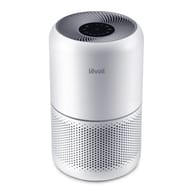
The Levoit Core 300 is the best-selling air purifier on Amazon and our top pick for anyone on a tight budget. At around $100, it delivers legitimate True HEPA performance in a compact package that fits on a nightstand.
Why we picked it: H13 True HEPA filtration with 360-degree air intake, three fan speeds, and a genuine sleep mode at 24 dB. Levoit offers specialty replacement filters for the Core 300, including a pet allergy variant with a thicker carbon layer. At this price, buying two units for different rooms is cheaper than one large purifier.
Performance: 141 CFM dust CADR covers rooms up to 219 sq ft. For a single bedroom, that is more than adequate. The 360-degree intake means placement is flexible; you can put it against a wall without losing airflow.
Noise: 24 dB on sleep mode, virtually inaudible. 50 dB on high is comparable to light rain.
Who it is best for: Budget buyers, small bedrooms, college dorms, and anyone who wants effective HEPA filtration without spending over $100. If you want smart features at a slight premium, the Levoit Core 300S (pick #8) adds WiFi for $50 more. For more sub-$100 options, see our best air purifiers under $100 roundup.
Downsides: No smart features, no air quality sensor, no auto mode. CADR is limited to small rooms. The carbon layer is thin, so this is not the right pick for odor-heavy environments. For a head-to-head with its bigger sibling, see our Levoit Core 300 vs Core 400S comparison.
4. IQAir HealthPro Plus: Best Premium / Medical-Grade
The IQAir HealthPro Plus is the gold standard for air purification. It is the most frequently recommended purifier by allergists and the only consumer model certified by the Asthma and Allergy Foundation of America (AAFA). If you have severe allergies, asthma, or chemical sensitivities, this is the one that doctors prescribe.
Why we picked it: The HyperHEPA filter captures particles down to 0.003 microns, which is 100 times finer than standard True HEPA. This matters for ultrafine allergens, combustion byproducts, bacteria, and virus-carrying aerosols that other purifiers miss. The four-stage system includes a pre-filter, V5-Cell gas and odor filter (5 lbs of granular activated carbon), and the HyperHEPA final stage.
Performance: Coverage up to 1,125 sq ft with six fan speeds for precise control. Independent measurements show CADR consistent with 300+ CFM across all particle types. Swiss-engineered motor runs smooth and vibration-free.
Noise: 25 dB on speed 1 (whisper quiet), 59 dB on speed 6. The low settings are bedroom-appropriate.
Who it is best for: Severe allergy and asthma sufferers, chemically sensitive individuals, anyone in a high-pollution area, and people who want the absolute best filtration available. Also excellent for wildfire smoke due to the heavy carbon stage.
Downsides: $899 purchase price puts it out of reach for many. Replacement filters are $70 to $200 depending on the stage, though each lasts 1 to 2 years. No smart features or WiFi. Heavy at 35 lbs. The design is functional, not decorative.
5. Levoit Core 400S: Best Smart Air Purifier
The Levoit Core 400S combines strong HEPA performance with the best smart features in its price range. If you want app control, voice assistant integration, and real-time air quality monitoring without paying Dyson prices, this is the pick.
Why we picked it: WiFi connectivity through the VeSync app lets you schedule runs, check air quality history, and control the purifier remotely. The laser-based PM2.5 sensor detects particle spikes within seconds, driving auto mode adjustments. Compatible with Alexa and Google Home for voice control.
Performance: 260 CFM dust CADR covers rooms up to 403 sq ft. Three-stage filtration: washable pre-filter, H13 True HEPA, and activated carbon layer.
Noise: 24 dB on sleep mode with full display dimming. 52 dB on turbo.
Who it is best for: Smart home users, tech-forward buyers, and anyone who wants sensor-driven auto mode at a mid-range price. This is our top pick for allergies when you also want smart features. For a broader look at WiFi-enabled options, see our best smart air purifiers guide.
Downsides: The VeSync app can be unreliable. The activated carbon layer is thin, limiting odor removal. At $190, it costs $30 more than the Coway 200M for similar CADR but with added smart features, a fair trade depending on your priorities. For a full comparison, read our Dyson vs Levoit breakdown.
6. Blueair Blue Pure 211+: Best for Smoke
The Blueair Blue Pure 211+ delivers the highest CADR on this list for under $300, making it the top choice for smoke, whether from wildfires, cooking, or cigarettes.
Why we picked it: Blueair's HEPASilent technology combines mechanical and electrostatic filtration, achieving 350 CFM CADR with lower energy use and noise than purely mechanical HEPA systems. The combined particle + carbon filter handles both particulate matter and smoke odors in one stage.
Performance: 350 CFM smoke CADR covers rooms up to 550 sq ft. During wildfire season, that kind of output makes a measurable difference in rooms with poor sealing.
Noise: 31 dB on low, 56 dB on high. Not the quietest on low, but the consistent airflow tone works as white noise for many users.
Who it is best for: Wildfire areas, smokers, kitchens, and any environment with heavy particulate loads. For more smoke-focused options, see our best air purifiers for smoke and best air purifiers for cigarette smoke guides. If cooking odors are the main issue, check our best air purifiers for cooking odors roundup.
Downsides: No air quality sensor, no auto mode, no smart features. You get one button with three speeds. The fabric pre-filter stains over time (though it is washable). The cylindrical design takes up floor space. For a head-to-head with our #1 pick, see our Blueair 211+ vs Coway AP-1512HH comparison.
7. Winix 5500-2: Best Value
The Winix 5500-2 gives you the most features per dollar of any purifier on this list. True HEPA, a washable carbon filter, PlasmaWave technology, auto mode, and a particle sensor, all for under $180.
Why we picked it: The washable AOC (Advanced Odor Control) carbon filter is a genuine cost advantage. While competitors require you to replace both HEPA and carbon filters, the Winix only needs HEPA replacement ($35 to $45/year). Over three years, that saves $60 to $100. PlasmaWave breaks down VOCs and allergen-triggering chemicals at the molecular level without producing harmful ozone (CARB certified).
Performance: 243 CFM dust CADR and 246 CFM pollen CADR cover rooms up to 360 sq ft. The smart sensor detects particles and adjusts fan speed automatically. An ambient light sensor dims the indicator panel in dark rooms.
Noise: 28 dB on low, 56 dB on turbo. Low speed is quiet enough for most sleepers; turbo is clearly audible.
Who it is best for: Value-conscious buyers who want proven performance, auto mode, and low operating costs. Especially good for pet owners thanks to the washable carbon filter handling pet odors without ongoing replacement costs. Read our full Winix 5500-2 review for details, or see how the top three brands stack up in our Levoit vs Winix vs Coway comparison.
Downsides: No WiFi or app. The plastic build does not feel premium. Room coverage is average at 360 sq ft. The Winix AM90 is the WiFi-enabled successor, but the 5500-2 remains available and delivers the same core filtration at a lower price.
8. Levoit Core 300S: Best Budget Smart
The Levoit Core 300S takes everything that makes the Core 300 a bestseller and adds WiFi, app control, and voice assistant support for $50 more. If you want smart features without a big price jump, this is the sweet spot.
Why we picked it: Same H13 True HEPA filtration as the Core 300 in a compact 360-degree intake design, plus VeSync app connectivity for scheduling, remote control, and air quality history. Works with Alexa and Google Home. Sleep mode drops to 22 dB, which is quieter than the non-smart Core 300.
Performance: 141 CFM dust CADR covers rooms up to 219 sq ft. The sensor is not as precise as the laser-based units in the 400S and 600S, but it provides useful feedback for auto mode adjustments.
Noise: 22 dB on sleep mode, one of the quietest purifiers available. 50 dB on high.
Who it is best for: Bedrooms, small apartments, and anyone who wants smart scheduling and voice control at a budget-friendly price. Ideal for the person who wants to upgrade from a Core 300 to something with an app. For more compact options, see our best air purifiers for apartments and best air purifiers for bedrooms guides.
Downsides: Limited room coverage means it cannot serve as a primary purifier for large spaces. The carbon layer is minimal. The VeSync app, while functional, is the weakest part of the experience. See our Levoit Core 300S review for a more detailed look.
What to Look For When Buying an Air Purifier
True HEPA Filtration
This is the single most important spec. True HEPA (H13) filters capture 99.97% of airborne particles at 0.3 microns, the hardest size to trap and the benchmark for allergens, mold spores, and fine dust. If a listing says "HEPA-type" or "HEPA-style" without specifying the 0.3 micron standard, it is not True HEPA and will miss a significant portion of harmful particles.
For a detailed breakdown of how different filter technologies compare, read our HEPA vs ionic vs UV guide, and for a focused look at carbon filters for odors and chemicals, see our carbon filter vs HEPA explainer.
CADR Rating
The Clean Air Delivery Rate (CADR) measures how quickly a purifier delivers clean air, rated separately for dust, smoke, and pollen. Higher CADR = faster cleaning. As a rule of thumb, your dust CADR should be at least two-thirds of your room's square footage.
Noise Levels
For bedroom use, aim for 24 dB or lower on the sleep/lowest setting. That is softer than a whisper. For living rooms, 30 dB or lower is comfortable for conversation. Every model on this list meets the 30 dB threshold on low.
Filter Replacement Cost
The purchase price tells half the story. Replacement filters range from $30/year (Levoit Core 300) to $200+/year (IQAir). Models with washable pre-filters (Winix 5500-2, Coway 200M) save money over time. For more on ongoing costs, read our air purifier running costs breakdown.
Smart Features
WiFi connectivity, app control, and voice assistant support are useful but not essential. Smart features shine for scheduling (run the purifier before you get home), monitoring air quality trends, and controlling multiple units from one app. They add $30 to $50 to the price on average.
Honorable Mentions
A few more models that came close to our top 8:
- Coway Airmega 400 ($450): Dual-sided filtration covering 1,560 sq ft. Excellent for very large rooms but pricier than the Levoit 600S for similar effective cleaning. See our best air purifiers for large rooms roundup.
- Medify MA-40 ($280): 380 CFM CADR in a tower design. Great for smoke but louder on low (46 dB) than we prefer.
- Blueair Blue Pure 411 ($120): Whisper-quiet at 17 dB with 120 CFM. Perfect as a bedroom purifier for very small rooms.
- Dyson TP07 ($500): Doubles as a fan with a beautiful design, but delivers only 150 CFM for $500. Read our Dyson vs Levoit comparison before deciding.
- Airdog X5 ($500): Washable TPA filter eliminates replacement costs. Good for people who want a washable filter purifier but performance trails True HEPA.
Next Steps
Choosing the right air purifier depends on your specific situation. Here are our niche guides to help you narrow it down:
- By health concern: allergies, asthma, dust, mold, VOCs
- By room type: bedroom, baby room, office, apartment, large rooms
- By use case: smoke, cigarette smoke, cooking odors, pets
- By budget: under $100, under $200, portable
- By feature: smart purifiers, washable filters, whole-house
- Learn more: how to choose an air purifier, how often to replace filters, air purifier maintenance guide, air purifier myths debunked
Still not sure? Our how to choose an air purifier guide walks through the decision step by step.