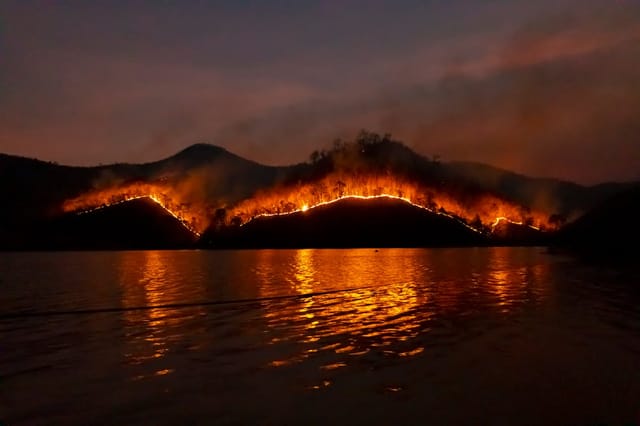
Wildfire Smoke Air Purifier Prep Guide (2026)
Prepare your home for wildfire smoke season with this step-by-step guide. Seal your space, stock filters, set up a clean room, and learn AQI triggers.

Table of Contents
- Know Your Fire Season Timeline
- Western US (May – November)
- Pacific Northwest (July – October)
- Southeast US (March – May, October – December)
- Great Plains and Midwest
- The Pre-Season Checklist (4-6 Weeks Before Fire Season)
- 1. Stock Replacement Filters
- 2. Test Your Purifier
- 3. Designate Your Clean Room
- 4. Upgrade Your HVAC Filter
- 5. Get an Air Quality Monitor
- AQI Action Thresholds
- AQI 0-50 (Good)
- AQI 51-100 (Moderate)
- AQI 101-150 (Unhealthy for Sensitive Groups)
- AQI 151-200 (Unhealthy)
- AQI 201-300 (Very Unhealthy)
- AQI 300+ (Hazardous)
- Sizing Your Purifier for Wildfire Smoke
- The 1.5x Rule
- Two Smaller Purifiers Can Beat One Large One
- Emergency Response: When Smoke Arrives Without Warning
- Immediate (First Hour)
- Short-Term (First 24 Hours)
- The Box Fan Stopgap
- Filter Management During Smoke Events
- Checking Filter Condition
- Filter Lifespan Under Smoke
- When to Replace vs. Tough It Out
- After the Smoke Clears
- Common Mistakes
- The Bottom Line
TL;DR
Start preparing for wildfire smoke 4-6 weeks before your region's fire season. Stock extra HEPA and activated carbon filters now; they sell out fast when smoke hits. Designate one bedroom as your clean room: seal the gaps, run a properly sized purifier 24/7, and keep the door closed. When AQI crosses 100, move to your clean room. Above 200, you need a purifier with smoke CADR of at least 1.5x your room's square footage running on high.
Full Comparison
| # | Product | Best For | Rating | Price | |
|---|---|---|---|---|---|
| 1 | Levoit Core 600S Top Pick Levoit | Best overall for wildfire smoke prep | 4.9 | $$ | Check Price |
| 2 | Coway Airmega 400 Coway | Best for large clean rooms | 4.6 | $$$ | Check Price |
| 3 | Winix 5510 Winix | Best budget emergency backup | 4.5 | $ | Check Price |
Wildfire smoke does not give you a week to prepare. A fire starts, the wind shifts, and your AQI goes from 30 to 200 in a few hours. The people who breathe clean air during these events are the ones who prepared before fire season, not the ones scrambling to order a purifier when the sky turns orange.
This guide covers what to do now, before the smoke arrives. When to act, what to buy, how to set up your home, and what to do when AQI starts climbing.
For product recommendations, see our best air purifiers for wildfire smoke roundup.
Know Your Fire Season Timeline
Wildfire season is not a single event. It varies by region and has been extending earlier and later each year.
Western US (May – November)
California, Oregon, Washington, Colorado, and the mountain states see the longest fire seasons. Peak smoke exposure typically hits July through October. The 2025 season ran May through November, with smoke reaching the East Coast multiple times.
Pacific Northwest (July – October)
Oregon and Washington see concentrated fire activity in late summer. Smoke inversions can trap particulate matter in valleys for weeks at a time, pushing sustained AQI above 200.
Southeast US (March – May, October – December)
Prescribed burns and seasonal wildfires in Florida, Georgia, and the Carolinas create shorter but intense smoke periods, often in spring and late fall.
Great Plains and Midwest
Historically less impacted, but increasingly affected by smoke transport from western fires. Chicago, Minneapolis, and New York have all recorded AQI spikes above 150 from fires burning 1,000+ miles away.
The takeaway: If you live in the western US, start preparing in April. If you live anywhere else in the US, you are still at risk from transported smoke: prepare by May.
The Pre-Season Checklist (4-6 Weeks Before Fire Season)
Do not wait for a fire to start. Everything on this list becomes harder or impossible once smoke is in the air.
1. Stock Replacement Filters
This is the single most important prep item. During the 2025 fire season, replacement HEPA filters for popular models were backordered for 3-4 weeks. Amazon listings for Levoit and Winix filters showed "out of stock" within 48 hours of the first major California fire.
Buy at least two complete filter sets (HEPA + activated carbon) per purifier. Store them sealed in their original packaging until needed. Check our filter replacement guide for brand-specific part numbers.
2. Test Your Purifier
Pull it out of storage and run it:
- Does it power on and cycle through all fan speeds?
- Is the current filter still viable? If it ran through last fire season, it probably needs replacement now.
- Does the air quality sensor respond? Hold a match near the intake; the sensor should detect the smoke particles and ramp up.
- Are the intake and exhaust vents clean and unobstructed?
Replace worn filters now, while supply is plentiful and you are not breathing smoke.
3. Designate Your Clean Room
Pick one room to be your primary refuge during smoke events. The bedroom is the best choice because:
- You spend 7-9 hours there sleeping
- It is typically smaller than the living room, so one purifier can handle the volume
- The door stays closed naturally while you sleep
Clean room setup:
- Seal the door gap. Use a door draft stopper or roll up a towel. The gap under the door is the biggest source of smoke infiltration.
- Check window seals. Close and lock all windows. Locked windows compress the seal tighter than simply closed ones. If you can feel air around the frame, apply temporary weatherstrip tape.
- Cover vent openings. If the room has a fireplace or a fresh-air vent, seal it with plastic sheeting and tape during smoke events.
- Close HVAC registers (optional). If your HVAC filter is below MERV 13, closing the bedroom register prevents the system from pushing smoky air into your clean room. If you have upgraded to MERV 13+, leave it open.
- Place the purifier correctly. Center of the room or between the bed and the window, at least 3 feet from walls. See our placement guide for details.
4. Upgrade Your HVAC Filter
Replace your standard HVAC filter with a MERV 13 or higher rated filter before fire season. This will not replace a room air purifier, but it reduces the baseline PM2.5 load throughout your home.
Important: Check that your HVAC system can handle the higher restriction. MERV 13 filters have more resistance than a standard MERV 8. Most systems built after 2010 handle MERV 13 fine, but older systems may strain. Check your system's manual or ask your HVAC technician.
5. Get an Air Quality Monitor
You cannot manage what you cannot measure. An indoor air quality monitor in your clean room tells you whether your purifier is keeping up. Place it across the room from the purifier, not right next to the clean air exhaust.
Target readings during smoke events:
- PM2.5 below 12 µg/m³ = excellent (EPA "good")
- PM2.5 12-35 µg/m³ = acceptable
- PM2.5 above 35 µg/m³ = your purifier is losing the battle, and you need to seal gaps better or add a second unit
For outdoor AQI monitoring, use AirNow.gov or the EPA's AQI app. These give you the trigger points to escalate your response.
AQI Action Thresholds
Knowing when to escalate saves you from either overreacting to mild haze or underreacting to dangerous smoke. Here is the escalation ladder:
AQI 0-50 (Good)
No action needed. Normal operations.
AQI 51-100 (Moderate)
- Turn on your clean room purifier on low or auto
- Close windows throughout the house
- Check that your HVAC filter is installed correctly
AQI 101-150 (Unhealthy for Sensitive Groups)
- Move to your clean room if you have asthma, allergies, heart disease, or are pregnant, elderly, or have young children
- Run the purifier on medium
- Minimize opening exterior doors
- Run HVAC fan on auto (not continuous)
AQI 151-200 (Unhealthy)
- Everyone should spend most time in the clean room
- Run the purifier on high
- Seal the clean room door gap if not already done
- Limit cooking (which generates its own PM2.5) or use exhaust fan if you must cook
- Check your indoor air quality monitor: PM2.5 should be below 35 µg/m³
AQI 201-300 (Very Unhealthy)
- Stay in the clean room as much as possible
- Purifier on maximum
- Minimize all door openings: enter and exit the clean room quickly
- If your PM2.5 monitor shows readings above 35 µg/m³ despite the purifier running on high, your room has leaks. Find and seal them.
- Consider running a second purifier if available
AQI 300+ (Hazardous)
- Do not leave the clean room except for necessities
- If indoor PM2.5 stays above 50 µg/m³ despite maximum purification, consider evacuation if you or household members have respiratory conditions
- Check filter condition: under this load, filters degrade rapidly. A clogged filter moves air but does not clean it.
Sizing Your Purifier for Wildfire Smoke
Normal CADR recommendations assume everyday air quality. Wildfire smoke demands more.
The 1.5x Rule
During active wildfire events with AQI above 150, you need a smoke CADR of approximately 1.5 times your room's square footage:
- 150 sq ft bedroom: 225 CFM smoke CADR minimum
- 200 sq ft bedroom: 300 CFM smoke CADR minimum
- 300 sq ft living room: 450 CFM smoke CADR minimum
This is higher than the standard two-thirds rule used for everyday air quality because wildfire smoke represents a sustained, heavy particulate load that continuously infiltrates even sealed rooms.
Two Smaller Purifiers Can Beat One Large One
If your clean room is 250 sq ft and you have a purifier rated for 200 sq ft, adding a second smaller unit (even a $50-80 model) often works better than upgrading to one expensive large unit. Two purifiers placed on opposite sides of the room create better air circulation and coverage than one unit in a corner.
For specific purifier recommendations and CADR comparisons, see our best air purifiers for wildfire smoke roundup.
Emergency Response: When Smoke Arrives Without Warning
Sometimes you do not get the 4-6 week lead time. A fire starts nearby and smoke is here today. Here is the compressed version:
Immediate (First Hour)
- Close every window and exterior door in the house
- Turn on any air purifier you have, on the highest setting
- Move to the smallest bedroom and close the door
- Stuff a towel under the door gap
- Check AQI on your phone (AirNow.gov or the EPA AQI app)
Short-Term (First 24 Hours)
- Set your HVAC to recirculate only; if it has a fresh air intake, close it
- Avoid cooking, vacuuming, burning candles, or anything that generates indoor particles
- If you do not own a purifier, a box fan taped to a MERV-13 furnace filter (Corsi-Rosenthal box) works as an emergency measure for particles only
- Order a real purifier and filters online with expedited shipping
The Box Fan Stopgap
If you have no purifier and stores are sold out, build a Corsi-Rosenthal box:
- One 20-inch box fan
- Four 20x20x2 MERV-13 furnace filters (available at hardware stores)
- Tape the four filters into a cube, attach the fan on top blowing outward
- This removes particles but not gases or VOCs; it is better than nothing, not a substitute for a real purifier with activated carbon
Filter Management During Smoke Events
Filters are consumables, and wildfire smoke burns through them fast.
Checking Filter Condition
- Visual check: Pull the HEPA filter out every 2 weeks during active smoke. If it is visibly gray or dark brown, replace it.
- Airflow check: Hold your hand 6 inches from the exhaust. If airflow feels noticeably weaker than when the filter was new, the filter is loaded and restricting flow.
- Smell check: If the purifier no longer removes the smoke smell, the activated carbon is saturated. Replace the carbon filter even if the HEPA still looks okay.
Filter Lifespan Under Smoke
| Normal Use | Light Smoke (AQI 50-100) | Heavy Smoke (AQI 150+) |
|---|---|---|
| 6-12 months | 3-4 months | 6-8 weeks |
These are estimates. Your specific conditions depend on room size, seal quality, and smoke density. The visual and airflow checks are more reliable than counting days.
When to Replace vs. Tough It Out
A partially loaded filter still works, just at reduced capacity. If you are on your last filter and cannot get a replacement, keep running it. A degraded filter is far better than no filter. Only replace when a fresh one is available.
After the Smoke Clears
When AQI drops below 50 and stays there for 48 hours:
- Open windows to ventilate the house. Fresh air flushes out accumulated gases that the carbon filter may not have fully captured.
- Inspect your filters. If they ran through a multi-week event, they are likely due for replacement. Do not wait for the next event to find out.
- Clean the purifier housing. Smoke residue settles on the exterior, intake grilles, and sensor. Wipe everything down.
- Restock immediately. Order replacement filters while they are in stock. The off-season is when prices are lowest and availability is highest.
- Assess your clean room setup. Did your PM2.5 monitor stay below 35 µg/m³? If not, identify where smoke was getting in and fix it before next season.
Common Mistakes
Waiting until smoke is visible to start your purifier. PM2.5 particles are invisible. By the time you see haze indoors, concentrations are already dangerously high. Use AQI data, not your eyes.
Running the purifier with windows open for "fresh air." There is no fresh air during a wildfire event. Every open window introduces more smoke than your purifier can handle.
Relying on HVAC alone. Even with a MERV 13 filter, your duct system has leaks that pull in outdoor air. HVAC supplementation helps but does not replace a room purifier.
Ignoring the carbon filter. Wildfire smoke is not just particles: it contains hundreds of toxic compounds including benzene, formaldehyde, and acrolein. HEPA catches particles. Carbon catches gases. You need both. See carbon filter vs. HEPA for the full breakdown.
Buying a purifier during the event. Popular models sell out within days of a major fire. Stock your setup before the season, not during it.
The Bottom Line
Wildfire smoke prep is a timing problem with a supply chain constraint. The purifiers and filters you need will be available and affordable in April. They will be sold out in August.
Set up your clean room now. Stock your filters now. Know your AQI thresholds. When the smoke comes — and in much of the US, it will — you will be ready.
For product recommendations, see our best air purifiers for wildfire smoke roundup. For understanding CADR ratings and how they apply to smoke, read what is CADR. For filter type comparisons, see carbon filter vs. HEPA. Once smoke arrives, our clean air room setup guide walks through sealing and sizing step by step.
Last updated: June 2026, ahead of peak fire season. We refresh this prep guide each spring before western US wildfire season begins.
Frequently Asked Questions
When should I start preparing my air purifier for wildfire season?
What AQI level means I should turn on my air purifier?
How many replacement filters should I stock for wildfire season?
What is a clean room and how do I set one up?
Do I need activated carbon for wildfire smoke or just HEPA?
Should I seal my whole house or just one room?
Can my HVAC system filter wildfire smoke?
You Might Also Like
IQAir HealthPro Plus Review: Is It Worth $1,199?
IQAir HealthPro Plus XE review: does the $1,199 Swiss HyperHEPA purifier justify its price? We break down 0.003-micron filtration, coverage, and value.

Winix 5510 Review: The 5500-2 Successor, Tested
Our Winix 5510 review covers 252 CADR, WiFi and the Smart App, PlasmaWave, noise levels, Filter Q costs, and how it compares to the 5500-2 it replaces.
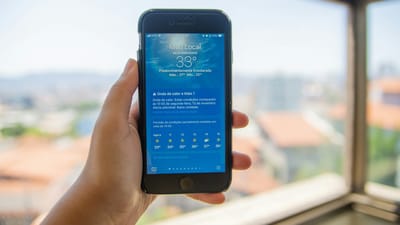
Best Air Quality Apps for Wildfire Season (2026)
The best air quality apps for wildfire smoke monitoring. Compare AirNow, PurpleAir, IQAir, and built-in weather AQI to build your smoke alert setup.
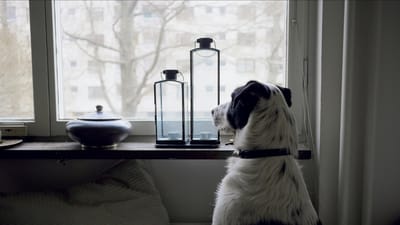
Wildfire Smoke and Pets: How to Protect Your Dogs and Cats
Learn how wildfire smoke affects pets, recognize warning signs in dogs and cats, and take practical steps to protect your animals during fire season.