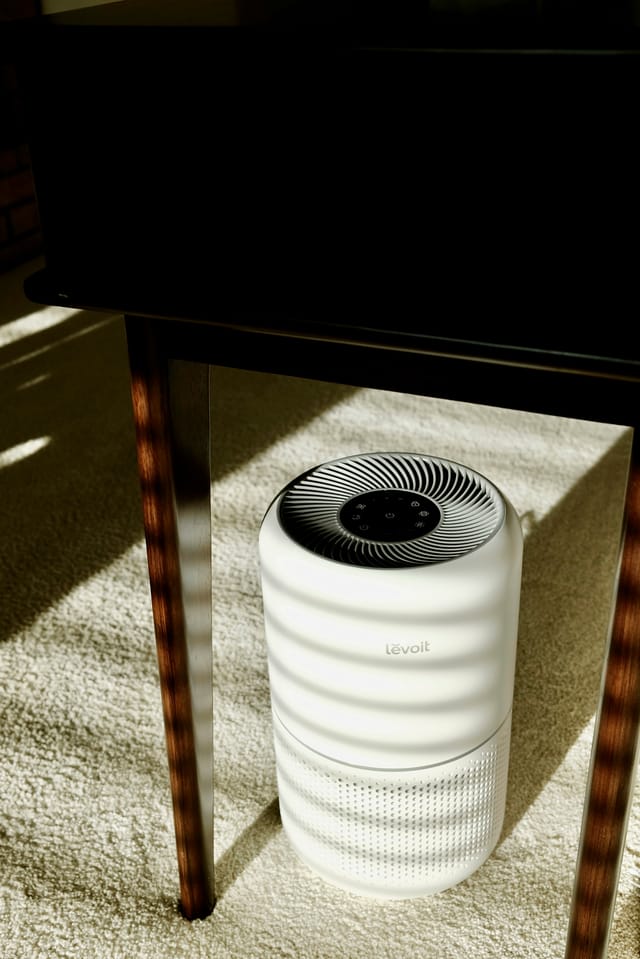
Air Purifier Running Costs: Electricity, Filters & Hidden Expenses
Find out what it really costs to run an air purifier. We break down electricity, filter replacements, and total cost of ownership for popular models.

Table of Contents
- The Three Categories of Air Purifier Running Costs
- Electricity Costs: What Powers Your Purifier
- How to Calculate Your Electricity Cost
- Tips to Reduce Electricity Costs
- Filter Replacement Costs: The Biggest Ongoing Expense
- Typical Filter Lifespans
- How Models Compare on Filter Costs
- How to Reduce Filter Costs
- Hidden and Overlooked Costs
- Extended Warranties
- Smart Features and Subscriptions
- Electricity Rate Variation
- Total Cost of Ownership: 4 Popular Models Compared
- 1-Year Cost of Ownership
- 3-Year Cost of Ownership
- What the Numbers Tell You
- How to Estimate Your Own Running Costs
- The Bottom Line
TL;DR
Running an air purifier 24/7 typically costs $15 to $80 per year in electricity depending on wattage and your local rate. Filter replacements add $35 to $100 annually. Total cost of ownership over 3 years ranges from about $400 for a budget model like the Levoit Core 300S to over $800 for a premium unit like the Dyson TP07. The purchase price is often less than half the real cost.
The price tag on an air purifier is only the beginning. After the purchase, you pay for electricity every hour it runs and for replacement filters every few months. Over a three-year lifespan, these ongoing costs often exceed the original purchase price.
This guide breaks down every running cost category, calculates real numbers for four popular models, and shows you exactly what each purifier costs to own over one and three years.
This article contains affiliate links. We may earn a commission if you purchase through our links, at no extra cost to you. See our affiliate disclosure for details.
The Three Categories of Air Purifier Running Costs
Every air purifier has three cost components after purchase:
- Electricity — the cost of powering the fan motor and any smart features, 24/7 or on a schedule
- Filter replacements — the recurring expense of new HEPA, carbon, and pre-filters
- Hidden costs — optional extras like extended warranties, smart subscriptions, or upgraded filter types
Most people focus only on the purchase price. That is a mistake. A $150 purifier with low wattage and cheap filters can cost half as much over three years as a $500 unit with expensive replacements.
Electricity Costs: What Powers Your Purifier
Air purifiers use relatively little electricity compared to other household appliances. Most models draw between 20 and 80 watts, which is far less than a refrigerator (150–400W), a window AC unit (500–1,500W), or even a desktop computer (100–300W).
How to Calculate Your Electricity Cost
The formula is straightforward:
Monthly cost = (Watts × Hours per day × 30) ÷ 1,000 × Rate per kWh
Using the U.S. average residential electricity rate of $0.16 per kWh (EIA, 2025):
- 26W purifier running 24/7: (26 × 24 × 30) ÷ 1,000 × $0.16 = $3.00/month
- 58W purifier running 24/7: (58 × 24 × 30) ÷ 1,000 × $0.16 = $6.69/month
- 77W purifier running 24/7: (77 × 24 × 30) ÷ 1,000 × $0.16 = $8.88/month
These figures represent maximum speed. In practice, most people run their purifier on auto or medium, which uses 40–60% of the rated wattage. A 77W purifier on medium might draw only 35–45W, cutting the electricity cost roughly in half.
Tips to Reduce Electricity Costs
- Use auto mode. Models with air quality sensors (like the Coway AP-1512HH and Winix 5500-2) automatically reduce fan speed when the air is clean.
- Use eco mode when available. The Coway AP-1512HH stops the fan entirely when it detects clean air for 30 minutes.
- Run on low at night. Most purifiers draw under 10W on their lowest setting.
- Right-size your purifier. An oversized unit can clean the room on a lower speed, using less energy than a small unit running on high.
For a deeper look at how purifier capacity relates to room size, see our how to choose an air purifier guide.
Filter Replacement Costs: The Biggest Ongoing Expense
Filter replacements are where running costs add up. Unlike electricity (which costs a few dollars per month), a single HEPA filter replacement can cost $25 to $80 depending on the brand.
Typical Filter Lifespans
| Filter Type | Typical Lifespan | Cost Range |
|---|---|---|
| True HEPA filter | 6–12 months | $25–$80 |
| Activated carbon filter | 3–6 months | $10–$40 |
| Pre-filter (washable) | Permanent (wash monthly) | $0 |
| Pre-filter (disposable) | 2–3 months | $5–$15 |
How Models Compare on Filter Costs
Annual filter costs vary dramatically by brand:
- Levoit Core 300S: ~$35/year — uses a combined HEPA + carbon filter cartridge ($25–$30, replaced every 6–8 months)
- Winix 5500-2: ~$40/year — the AOC carbon filter is washable, so you only replace the HEPA ($30–$35, every 12 months)
- Coway AP-1512HH: ~$50/year — HEPA and deodorization filter set ($40–$50, every 12 months)
- Dyson TP07: ~$99/year — sealed HEPA + carbon filter unit ($70–$80, every 12 months)
The Winix 5500-2 stands out here. Its washable AOC carbon filter means you only buy the HEPA replacement, keeping annual costs low despite being a mid-range unit. For more on washable filter options, see our best air purifiers with washable filters roundup.
How to Reduce Filter Costs
- Buy multi-packs. Many brands offer 2- or 3-packs at a discount.
- Use the pre-filter. If your model has a washable pre-filter, clean it monthly. It catches large particles before they clog the HEPA, extending its useful life.
- Avoid off-brand filters. Cheap third-party filters may not seal properly, reducing performance and potentially voiding warranties.
- Monitor filter indicators. Replace filters based on actual condition, not just a timer. Some models overestimate replacement frequency to sell more filters.
To understand the differences between HEPA and carbon filters and why both matter, read our carbon filter vs HEPA guide.
Hidden and Overlooked Costs
Beyond electricity and filters, a few other costs can affect your total ownership expense:
Extended Warranties
Most air purifiers come with a 1–2 year warranty. Extended warranties cost $15–$40 and may be worth it for premium models. For a $150 purifier, they rarely make financial sense.
Smart Features and Subscriptions
Some brands offer premium app features or air quality data subscriptions. As of now, the four models covered here do not charge for app access. But check before you buy — this is a growing trend in the appliance industry.
Electricity Rate Variation
The $0.16/kWh average masks significant regional differences. In Hawaii, rates exceed $0.40/kWh. In some southern states, rates are under $0.12/kWh. Your actual electricity costs could be double or half the estimates in this article. Check your utility bill for your exact rate.
Total Cost of Ownership: 4 Popular Models Compared
Here is what each purifier actually costs over 1 year and 3 years, including purchase price, electricity (24/7 at max wattage), and filter replacements.
1-Year Cost of Ownership
| Model | Purchase | Electricity | Filters | 1-Year Total |
|---|---|---|---|---|
| Levoit Core 300S | $150 | $36 | $35 | $221 |
| Winix 5500-2 | $180 | $81 | $40 | $301 |
| Coway AP-1512HH | $160 | $108 | $50 | $318 |
| Dyson TP07 | $500 | $78 | $99 | $677 |
3-Year Cost of Ownership
| Model | Purchase | Electricity | Filters | 3-Year Total |
|---|---|---|---|---|
| Levoit Core 300S | $150 | $109 | $105 | $364 |
| Winix 5500-2 | $180 | $243 | $120 | $543 |
| Coway AP-1512HH | $160 | $323 | $150 | $633 |
| Dyson TP07 | $500 | $235 | $297 | $1,032 |
What the Numbers Tell You
The Levoit Core 300S is the cheapest to own at every time horizon. Its low 26W power draw and affordable $35/year filters keep total costs well below the competition. The trade-off is a smaller coverage area (219 sq ft) and lower CADR. It is ideal for bedrooms and small offices. Read our Levoit Core 300S review for the full breakdown.
The Winix 5500-2 offers the best value for medium rooms. At 360 sq ft coverage and a 3-year total of $543, it costs significantly less than the Coway while delivering comparable CADR numbers. The washable carbon filter is a genuine cost-saver. See our Winix 5500-2 review for details.
The Coway AP-1512HH costs more to run than you might expect. Its 77W max draw makes it the most electricity-hungry model here, adding $323 over three years. The eco mode helps in practice, but if you run it on high frequently, expect higher bills. Check our best air purifier for allergies for how it compares to other allergy-focused picks.
The Dyson TP07 is the most expensive to own by a wide margin. Its $500 purchase price is already more than triple the Levoit, and $99/year filters push the 3-year total past $1,000. You are paying for the fan/purifier combo, multi-sensor air quality monitoring, and Dyson design — not for cost efficiency. See our Dyson vs Levoit comparison for a direct matchup.
How to Estimate Your Own Running Costs
Use this quick method to estimate annual running costs for any air purifier:
- Find the wattage on the product spec sheet or our product reviews.
- Multiply: Watts × 8.76 (hours in a year, thousands) × your electricity rate per kWh = annual electricity cost.
- Find the filter price and how often it needs replacing. Multiply to get annual filter cost.
- Add them together for your annual running cost.
Example: A 45W purifier at $0.16/kWh with a $40 filter replaced annually:
- Electricity: 45 × 8.76 × $0.16 = $63/year
- Filters: $40/year
- Total running cost: $103/year
The Bottom Line
The cheapest air purifier to buy is not always the cheapest to own. Before you pick a model, add up the running costs for at least one year — ideally three. A few dollars more upfront for a low-wattage unit with affordable filters saves real money over time.
For our top picks across all budgets, see the best air purifier under $100 and best air purifier under $200 roundups. If filter costs are your biggest concern, our best air purifiers with washable filters guide highlights models that minimize replacements.
For a comprehensive overview of what to look for when shopping, start with our how to choose an air purifier guide.