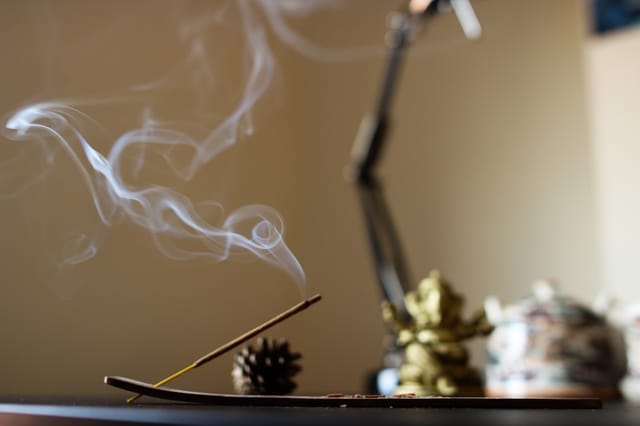
Is Incense Bad for Indoor Air Quality?
Burning incense releases PM2.5, benzene, formaldehyde, and PAHs into your home. Here's what the research says and how to reduce the health risks.
Based on peer-reviewed research from Environmental Health Perspectives, Atmospheric Environment, Indoor Air journal, WHO air quality guidelines, and EPA particulate matter standards
Table of Contents
- What Incense Smoke Contains
- Fine Particulate Matter (PM2.5)
- Benzene
- Formaldehyde
- Polycyclic Aromatic Hydrocarbons (PAHs)
- Carbon Monoxide (CO)
- Incense Types Compared: Which Produces the Most Pollution?
- Stick Incense (Agarbatti)
- Cone Incense
- Resin Incense on Charcoal
- Japanese-Style Low-Smoke Incense
- Health Research on Incense Exposure
- Cancer Risk
- Respiratory Effects
- Cardiovascular Effects
- Ventilation Strategies
- Open Windows (Cross-Ventilation)
- Exhaust Fans
- Burn Near an Open Door or Window
- Time Your Sessions
- How Air Purifiers Help with Incense Smoke
- HEPA Filtration for Particles
- Activated Carbon for Gases and VOCs
- Recommended Approach
- Comparing Incense to Other Indoor Combustion Sources
- Safer Alternatives to Burning Incense
- The Bottom Line
TL;DR
Yes. Burning incense releases fine particulate matter (PM2.5), benzene, formaldehyde, and polycyclic aromatic hydrocarbons (PAHs) at concentrations that often exceed WHO air quality guidelines. A single incense stick can raise PM2.5 levels to 10-20 times above safe thresholds in a closed room. Stick incense produces the most smoke, cones burn hotter with more incomplete combustion, and resin on charcoal generates the highest particulate loads. If you burn incense, ventilate aggressively, limit sessions to 30 minutes, and run an air purifier with both HEPA and activated carbon filtration.
Incense has been part of religious ceremonies, meditation practices, and daily life across cultures for thousands of years. But the smoke that carries those familiar scents of sandalwood, frankincense, and nag champa also carries a complex mixture of pollutants that can push your indoor air quality into unhealthy territory within minutes.
Unlike essential oil diffusers, which release VOCs and particles through aerosolization, incense introduces pollutants through combustion — the same fundamental process that makes wildfire smoke and cigarette smoke harmful. And the research shows that incense smoke is not a mild concern. It contains carcinogenic compounds at concentrations that surprised even the researchers studying it.
What Incense Smoke Contains
When incense burns, it undergoes incomplete combustion: smoldering at temperatures between 400-600°C without a sustained flame. This low-temperature burning is efficient at producing aromatic compounds (which is the point) but also generates a wide range of harmful byproducts.
Fine Particulate Matter (PM2.5)
Incense is one of the most potent indoor sources of PM2.5. A single stick burning in a closed room can raise particulate concentrations to 150-2,000 µg/m³, depending on the incense type, room size, and ventilation. For context, the WHO 24-hour guideline is 15 µg/m³, and the EPA considers anything above 35 µg/m³ unhealthy.
Research published in Atmospheric Environment found that incense generates particles predominantly in the ultrafine range (below 100 nanometers), which penetrate deepest into lung tissue. These particles are smaller than what most candles produce and comparable in size to cigarette smoke particles.
| Source | Typical PM2.5 (µg/m³) in closed room | Particle size |
|---|---|---|
| Incense stick | 300-2,000 | 10-100 nm (ultrafine) |
| Incense cone | 500-3,000 | 50-200 nm |
| Resin on charcoal | 1,000-5,000+ | 100-500 nm |
| Scented candle | 50-300 | 100-300 nm |
| Cigarette | 300-1,500 | 100-300 nm |
| WHO 24-hour limit | 15 | — |
The numbers above are not typos. A single incense cone in a small room can produce particulate concentrations 100-200 times above WHO guidelines.
Benzene
Incense smoke contains benzene, a known human carcinogen (IARC Group 1). A study in Environmental Health Perspectives measured benzene concentrations of 70-350 µg/m³ in rooms during incense burning, compared to typical indoor backgrounds of 2-10 µg/m³. Benzene has no safe threshold for cancer risk; any exposure adds incremental risk.
Formaldehyde
Incomplete combustion of organic materials in incense releases formaldehyde at concentrations of 20-120 µg/m³, often exceeding the WHO 30-minute guideline of 100 µg/m³. Formaldehyde is another IARC Group 1 carcinogen and a potent respiratory irritant even at sub-carcinogenic doses. It is also produced when limonene from citrus oils reacts with ozone, but incense generates it directly through combustion.
Polycyclic Aromatic Hydrocarbons (PAHs)
PAHs are a class of compounds formed during incomplete combustion of organic material. Many are carcinogenic or mutagenic. Incense smoke contains the same PAHs found in diesel exhaust and grilled meat, including benzo[a]pyrene, one of the most studied carcinogens.
A study comparing PAH concentrations found that burning four sticks of incense in a temple produced benzo[a]pyrene levels 40 times higher than levels measured beside a busy roadway. Residential use produces lower concentrations, but daily exposure over years is the relevant risk metric.
Carbon Monoxide (CO)
Incense combustion releases CO, though at lower concentrations than an open fire. In well-ventilated rooms, CO from incense rarely reaches dangerous levels. In small, sealed rooms, it can contribute to headaches and drowsiness during extended burning sessions.
Incense Types Compared: Which Produces the Most Pollution?
Not all incense burns the same way. The format, ingredients, and combustion characteristics vary significantly across types.
Stick Incense (Agarbatti)
The most common form worldwide. A thin bamboo core coated with a paste of aromatic materials, binding agents (often charcoal powder), and fragrance oils or natural resins. Burns for 30-60 minutes.
Air quality impact: High. Stick incense produces sustained smoke output over a long burn time. The bamboo core and binding agents add their own combustion byproducts. Indian-style masala sticks (where fragrance materials are rolled onto the stick) tend to produce more smoke than Japanese-style sticks (which are thinner, coreless, and formulated for lower smoke output).
Typical PM2.5: 300-1,500 µg/m³ in a 15m² room with doors closed.
Cone Incense
Compressed cones of aromatic material that burn from the tip downward. No bamboo core. Burns for 15-30 minutes but with a faster burn rate and higher temperature than sticks.
Air quality impact: Very high. Cones burn hotter and faster, producing more smoke per minute than sticks. The compressed format creates more smoldering surface area as the cone burns down. The shorter burn time partially offsets this, but peak particulate concentrations are typically higher than stick incense.
Typical PM2.5: 500-3,000 µg/m³ in a 15m² room with doors closed.
Resin Incense on Charcoal
Traditional method: natural tree resins (frankincense, myrrh, copal) placed on a burning charcoal disc. The charcoal provides the heat source, and the resin melts and vaporizes on contact.
Air quality impact: Highest. The charcoal disc itself produces significant CO, PM2.5, and PAHs before you even add resin. When resin hits the hot charcoal (600-800°C), it undergoes rapid thermal decomposition that generates intense but short-lived smoke plumes. The charcoal continues burning for 45-90 minutes regardless of how much resin is used.
Typical PM2.5: 1,000-5,000+ µg/m³ in a 15m² room with doors closed.
Japanese-Style Low-Smoke Incense
Specifically formulated for lower smoke output. Uses refined ingredients, no bamboo core, and a denser composition that burns more completely. Brands like Shoyeido and Nippon Kodo engineer their products for minimal visible smoke while preserving fragrance.
Air quality impact: Moderate. Produces 40-60% less particulate matter than traditional stick incense. Still releases VOCs, benzene, and formaldehyde through combustion, but the reduced particle load is meaningful for air quality. This is the least harmful option if you insist on burning incense.
Typical PM2.5: 100-600 µg/m³ in a 15m² room with doors closed.
Health Research on Incense Exposure
The epidemiological evidence on incense comes primarily from Asia, where daily use is common in homes and temples. Long-term studies have tracked populations with heavy incense exposure over decades.
Cancer Risk
The IARC classifies incense smoke as Group 2B (possibly carcinogenic to humans). Key findings:
- A large cohort study in Singapore (over 61,000 participants followed for 12 years) found that long-term daily incense use was associated with increased risk of squamous cell carcinoma of the respiratory tract.
- Temple workers with decades of occupational exposure show elevated rates of upper respiratory cancers compared to the general population.
- The PAHs and benzene in incense smoke are established carcinogens through other exposure routes; the question is whether residential incense use produces sufficient cumulative dose to elevate cancer risk meaningfully.
The risk is dose-dependent. Occasional use (a few times per month) with ventilation is a very different exposure profile than daily burning in a closed room for hours. The studies finding elevated cancer risk predominantly involved daily, long-term, heavy use.
Respiratory Effects
More immediate and better-established than cancer risk:
- Asthma: Multiple studies show that regular incense exposure increases asthma symptoms and medication use. A meta-analysis found a 30-50% increased risk of asthma symptoms in adults with regular household incense exposure.
- Chronic bronchitis: Daily incense users show higher rates of chronic cough and sputum production, similar to patterns seen in secondhand smoke exposure.
- Children's respiratory health: Children in homes with daily incense use have higher rates of wheezing, cough, and respiratory infections. The developing respiratory system is more vulnerable to particulate exposure.
- Lung function: Long-term daily exposure is associated with reduced FEV1 (the amount of air you can force out of your lungs in one second), indicating airway obstruction.
Cardiovascular Effects
Emerging research suggests incense PM2.5 has cardiovascular effects similar to other combustion-source particles:
- Acute exposure increases markers of systemic inflammation
- Regular exposure is associated with elevated blood pressure in some studies
- The ultrafine particles in incense smoke can cross from lungs into the bloodstream
Ventilation Strategies
Ventilation is the single most effective way to reduce incense pollution exposure. The goal is to move contaminated air out and bring fresh air in before concentrations build up.
Open Windows (Cross-Ventilation)
The simplest approach. Open at least two windows or a window and a door to create airflow across the room. Cross-ventilation can reduce peak PM2.5 by 60-80% compared to burning in a closed room.
Best practice: Place the incense near an open window so smoke is drawn outside before dispersing through the room. Avoid burning incense in the center of a room with closed windows, as that maximizes the time particles spend in your breathing zone.
Exhaust Fans
A bathroom or kitchen exhaust fan creates negative pressure that pulls air (and smoke) out of the space. If you burn incense in a room adjacent to a bathroom, opening the bathroom door and running the exhaust fan creates directional airflow.
Burn Near an Open Door or Window
Even without cross-ventilation, positioning incense within 30 cm of an open window allows convective airflow to carry a large portion of the smoke plume directly outside. This single change can reduce your exposure by 50% or more.
Time Your Sessions
Burn incense when you can ventilate most effectively: during mild weather when windows can stay open, not during winter when the house is sealed. If you burn in cold weather, open a single window in the room for the duration plus 30 minutes after.
How Air Purifiers Help with Incense Smoke
An air purifier is the second line of defense after ventilation. For incense smoke, you need both particle filtration and gas-phase filtration.
HEPA Filtration for Particles
A True HEPA filter (H13 grade) captures 99.97% of particles at 0.3 microns and is even more efficient at the ultrafine sizes typical of incense smoke. Running a HEPA purifier in the same room as burning incense will reduce PM2.5 concentrations significantly, though it cannot keep up with active burning in a closed room.
For best results, choose a purifier with a high smoke CADR rating, at least 200 cfm for a typical bedroom. The higher the CADR, the faster it clears the particulate load after you extinguish the incense.
Activated Carbon for Gases and VOCs
HEPA does nothing for benzene, formaldehyde, or other gaseous VOCs. For those, you need activated carbon. The more carbon in the filter, the more gas-phase pollutants it can adsorb.
Look for purifiers with at least 1-2 lbs of activated carbon. Thin carbon pre-filters found in budget models do very little for serious VOC loads. The difference between carbon and HEPA filtration matters here: you need both working together.
Recommended Approach
- Ventilate first. Open a window. No air purifier replaces fresh air exchange.
- Run the purifier on high during burning and for 30-60 minutes after.
- Place the purifier between you and the incense source, so cleaned air flows toward your breathing zone. See our guide on air purifier placement for optimal positioning.
- Replace carbon filters on schedule. Carbon saturates over time and stops adsorbing VOCs. If you burn incense regularly, the carbon filter will exhaust faster than the manufacturer's timeline assumes.
Purifiers with substantial carbon filtration that work well for smoke and VOCs include models like the Winix 5510 (with True HEPA plus activated carbon and PlasmaWave) and Levoit Vital 100, both of which combine True HEPA with meaningful activated carbon capacity.
Comparing Incense to Other Indoor Combustion Sources
To put incense in context, here is how it compares to other common sources of indoor combustion pollution.
| Source | PM2.5 output | Key toxic compounds | Duration |
|---|---|---|---|
| Incense (1 stick) | 300-1,500 µg/m³ | Benzene, formaldehyde, PAHs, CO | 30-60 min |
| Scented candle | 50-300 µg/m³ | Formaldehyde, acrolein, toluene | 1-4 hours |
| Gas stove (1 burner) | 100-400 µg/m³ | NO₂, CO, formaldehyde | While cooking |
| Cigarette (1) | 300-1,500 µg/m³ | Benzene, formaldehyde, PAHs, CO, nicotine | 5-10 min |
| Wood fireplace | 200-2,000 µg/m³ | PAHs, CO, benzene, acrolein | 2-6 hours |
Incense produces pollution comparable to cigarette smoke on a per-minute basis, but a typical incense session lasts 5-10 times longer than smoking a cigarette. The cumulative particulate dose from one incense stick is substantial.
Safer Alternatives to Burning Incense
If you want the aromatic experience with less air quality impact, consider these alternatives in order of decreasing pollution:
- Japanese low-smoke incense: still combustion-based but engineered for 40-60% less smoke output. A meaningful compromise if you value the ritual of burning.
- Incense warmers (electric): heat incense sticks or resins below combustion temperature, releasing fragrance without producing smoke particles or PAHs. VOCs still released but no combustion byproducts.
- Evaporative diffusers with resinous oils: sandalwood, frankincense, and myrrh essential oils in a reed or fan diffuser provide similar scent profiles without any combustion. Still release VOCs inherent to the oils but eliminate PM2.5 and PAHs entirely.
- Scented wax melts: low-temperature warming releases fragrance without combustion. Minimal PM2.5, though some VOCs are present.
- Sachets and solid fragrance: zero air quality impact. Dried herbs, resin chips, or scented beads in a cloth pouch provide subtle ambient fragrance through passive evaporation.
The Bottom Line
Incense smoke is a significant indoor air pollutant. It contains carcinogenic compounds (benzene, formaldehyde, PAHs), generates PM2.5 at levels that routinely exceed WHO guidelines by 10-100 times, and long-term daily exposure is associated with increased respiratory disease and possible cancer risk.
This does not mean occasional incense use will harm you. Dose matters. Burning a single stick once or twice a week in a well-ventilated room with an air purifier running is a very different exposure profile than burning multiple sticks daily in a closed room for years. The research showing serious health effects comes from populations in the latter category.
If you burn incense, do three things: ventilate the room (open a window), limit burn time (30 minutes or less), and run an air purifier with both HEPA and activated carbon filtration. Those three steps can reduce your exposure by 80-90% compared to burning in a closed, unfiltered space.
And if you have children, respiratory conditions, or spend hours daily in the room where you burn incense, it is worth reconsidering whether the experience is worth the cumulative exposure, or whether one of the lower-pollution alternatives can satisfy the same need.
Wonder how other common scent sources compare? Our explainer on whether candles are bad for indoor air quality breaks down the soot and VOC tradeoffs of the most popular incense alternative.
Frequently Asked Questions
Is incense worse for air quality than candles?
Can incense smoke cause cancer?
How long does incense smoke stay in the air?
Is natural incense safer than synthetic?
Will an air purifier remove incense smoke?
Is it safe to burn incense around babies or children?
How can I enjoy incense scent without the air quality impact?
You Might Also Like
How Wildfire Smoke Affects Your Health
Wildfire smoke health effects explained: how PM2.5, VOCs, and toxic gases damage your lungs, heart, and brain. Learn who is most at risk and how to stay safe.
Dyson Air-Purifying Headphones: Gimmick or Legit?
We break down whether Dyson's air-purifying headphones (Zone and Aura) deliver real air filtration value, who actually benefits, and how they stack up against masks and portable purifiers.
Is an Air Purifier Worth the Money? Cost vs. Value Analysis
We break down whether an air purifier is worth the investment by comparing multi-year ownership costs against allergy meds, doctor visits, and lost productivity.
Are Candles Bad for Indoor Air Quality?
Candles release PM2.5, soot, and VOCs that degrade indoor air. Learn how paraffin, soy, and beeswax compare, what air quality monitors detect, and how to reduce exposure.