VOCs Explained: The Invisible Gases Polluting Your Indoor Air
VOCs are invisible gases from everyday household products. Common sources, health effects, and practical ways to reduce them at home.

Table of Contents
- What VOCs Actually Are
- Where VOCs Come From in Your Home
- Building Materials and Furniture
- Paint and Finishes
- Cleaning Products
- Cooking
- Personal Care and Hobbies
- Health Effects of VOC Exposure
- Short-Term Exposure
- Long-Term Exposure
- Who Is Most Vulnerable?
- Understanding VOC Measurements
- TVOC: Total Volatile Organic Compounds
- Guideline Levels
- How VOC Sensors Work
- Metal Oxide Sensors (Consumer Monitors)
- Photoionization Detectors (Professional Grade)
- What Consumer Monitors Are Good For
- How to Reduce VOCs in Your Home
- 1. Choose Low-VOC Products
- 2. Ventilate Aggressively
- 3. Use Activated Carbon Filtration
- 4. Control Temperature and Humidity
- 5. Let New Products Breathe
- VOCs vs. Other Indoor Pollutants
- The Bottom Line
TL;DR
Volatile organic compounds (VOCs) are gases released by everyday products like paint, cleaning supplies, new furniture, and even cooking. Indoor VOC levels are typically 2 to 5 times higher than outdoors. Short-term exposure causes headaches and eye irritation; long-term exposure is linked to liver damage, kidney damage, and cancer. There is no single safe threshold because VOCs include hundreds of different chemicals. You can measure total VOCs with a metal oxide sensor ($100-250) and reduce exposure through ventilation, low-VOC products, and HEPA purifiers with activated carbon filters.
That "new car smell." The chemical scent of fresh paint. The fumes from a recently cleaned bathroom. These are all volatile organic compounds, and they are one of the most common indoor air pollutants you are exposed to every day.
Unlike particulate matter that you can sometimes see as dust or haze, VOCs are invisible gases. And because many of their sources are products we use intentionally, they are easy to overlook as a health concern.
What VOCs Actually Are
Volatile organic compounds (VOCs) are a broad category of carbon-based chemicals that evaporate easily at room temperature. The "volatile" part means they turn from liquid or solid into gas readily, which is why you can smell fresh paint from across a room.
The category is enormous. There are hundreds of individual VOCs, each with different properties and health effects. Some common ones you may recognize by name:
| VOC | Where You Find It |
|---|---|
| Formaldehyde | Pressed wood furniture, plywood, some fabrics, adhesives |
| Benzene | Tobacco smoke, stored fuels, paint, vehicle exhaust |
| Toluene | Paint, paint thinners, adhesives, nail polish |
| Xylene | Paint, varnish, automotive coatings |
| Acetone | Nail polish remover, some cleaning products |
| Ethanol | Cleaning products, hand sanitizers, personal care products |
| Limonene | Citrus-scented cleaners, air fresheners, laundry detergent |
| Tetrachloroethylene | Dry-cleaned clothing, spot removers |
Because VOCs are gases, they behave differently from particles like PM2.5. A HEPA filter that captures 99.97% of particles will not touch VOCs at all. Gas molecules are far too small and simply pass through particulate filters. This is why understanding VOCs as a separate pollutant category matters.
Where VOCs Come From in Your Home
Indoor VOC concentrations are typically 2 to 5 times higher than outdoors, and during certain activities like painting or cleaning, levels can spike to 1,000 times background levels. The EPA has identified this as a consistent pattern across climate zones and housing types.
Building Materials and Furniture
New materials are the biggest long-term VOC source for most homes. Pressed wood products (particleboard, MDF, plywood) release formaldehyde from the resins used to bind them. New carpet off-gasses from both the fibers and the adhesive backing. Vinyl flooring, foam insulation, and caulking all contribute their own VOC profiles.
Off-gassing is highest when materials are new and gradually decreases over weeks to months. But some products, particularly pressed wood with urea-formaldehyde resin, can continue releasing low levels of formaldehyde for years, especially in warm or humid conditions.
Paint and Finishes
Paint is one of the most concentrated VOC sources in a home. Conventional oil-based paints can contain over 300 grams of VOCs per liter. Water-based latex paints are lower but still contain 30 to 150 grams per liter depending on the formula. The most intense off-gassing occurs during application and the first 48 hours of drying, but curing can continue for weeks.
Varnishes, stains, and polyurethane finishes also release significant VOCs, particularly toluene and xylene. If you have recently refinished hardwood floors or stained furniture, those products are contributing to your indoor VOC load.
Cleaning Products
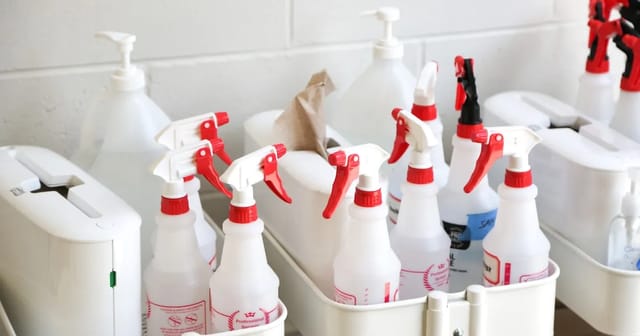
Household cleaners are a major intermittent VOC source. Bleach, ammonia-based cleaners, glass cleaners, disinfectant sprays, and oven cleaners all release VOCs during and after use. Air fresheners and scented candles are particularly deceptive because they add VOCs (limonene, linalool, and other fragrance compounds) to the air while masking other odors.
A 2019 study from the University of Melbourne found that fragranced consumer products emitted more than 100 different VOCs, including some classified as toxic or hazardous. The irony is that products marketed as making your home smell "clean" or "fresh" are often adding to your VOC burden. Essential oil diffusers and nebulizers are a common culprit; see our article on essential oil nebulizers and air quality for the full breakdown.
Cooking
Gas stoves release VOCs as combustion byproducts, including formaldehyde, benzene, and nitrogen dioxide. Frying and high-heat cooking with oils also generates VOCs from the breakdown of fats. These are separate from the PM2.5 particles that cooking produces; you are getting both gas and particle pollution simultaneously.
Personal Care and Hobbies
Nail polish and remover, hair spray, perfume, deodorant sprays, and craft supplies like glue and markers all contribute VOCs. Stored fuels, paint thinners, and pesticides in attached garages can also infiltrate living spaces, especially in homes without a good air seal between the garage and living area.
Health Effects of VOC Exposure
Because "VOCs" covers hundreds of different chemicals, health effects vary depending on which compounds you are exposed to, at what concentration, and for how long. The effects range from mild annoyance to serious disease.
Short-Term Exposure
Exposure over minutes to hours can cause:
- Eye, nose, and throat irritation
- Headaches and dizziness
- Nausea
- Worsened asthma symptoms
- Fatigue and difficulty concentrating
These symptoms often overlap with what people describe as "sick building syndrome," which was largely attributed to poor ventilation and elevated indoor VOC levels when researchers investigated it in office buildings during the 1980s and 1990s.
Many people notice these effects when painting a room, using strong cleaners, or spending time in a newly renovated space. The symptoms typically resolve once you move to fresh air or the source is removed.
Long-Term Exposure
Chronic exposure to certain VOCs at lower levels is where the stakes get higher:
- Formaldehyde is classified as a known human carcinogen (Group 1) by the International Agency for Research on Cancer (IARC). Long-term residential exposure is linked to nasopharyngeal cancer and leukemia.
- Benzene is also a Group 1 carcinogen, linked to leukemia and other blood cancers. Most residential exposure comes from tobacco smoke and attached garages where vehicles or fuel are stored.
- Toluene and xylene can cause neurological effects with chronic exposure, including memory problems, hearing loss, and impaired coordination.
- Liver and kidney damage has been documented with prolonged exposure to several common VOCs, including trichloroethylene and tetrachloroethylene.
Who Is Most Vulnerable?
Children are at higher risk because they breathe faster relative to their body weight, their organs are still developing, and they spend more time on the floor where heavier VOCs can concentrate. Pregnant women, the elderly, and people with existing respiratory conditions like asthma are also more susceptible to VOC effects.
Understanding VOC Measurements
Unlike PM2.5, which has clear EPA and WHO standards, VOC measurement is more complicated because the category includes so many different chemicals.
TVOC: Total Volatile Organic Compounds
Most consumer air quality monitors report TVOC (Total Volatile Organic Compounds), measured in either µg/m³ (micrograms per cubic meter) or ppb (parts per billion). TVOC is the sum of all detectable volatile organic compounds in the air, treated as a single aggregate number.
This is useful as a general indicator but has real limitations. A TVOC reading of 500 µg/m³ could mean a moderate level of relatively harmless ethanol from hand sanitizer, or it could mean a dangerous level of formaldehyde from pressed wood. The sensor cannot tell the difference.
Guideline Levels
Since no enforceable federal standard exists for indoor TVOC in homes, these guidelines from the German Federal Environment Agency (Umweltbundesamt) are commonly referenced:
| TVOC Level (µg/m³) | Category | What It Means |
|---|---|---|
| Below 300 | Good | No action needed; target range for healthy indoor air |
| 300-1,000 | Acceptable | Adequate if no individual VOC exceeds its guideline |
| 1,000-3,000 | Elevated | May cause discomfort; identify and reduce sources |
| 3,000-10,000 | High | Headaches, irritation likely; ventilate immediately |
| Above 10,000 | Very High | Do not occupy; professional assessment needed |
For individual VOCs, the WHO has set specific guidelines. Formaldehyde has a recommended 30-minute average of no more than 100 µg/m³ (0.08 ppm). Benzene has no safe threshold identified; the WHO recommends minimizing exposure as much as possible.
How VOC Sensors Work
If you have an air quality monitor with a VOC reading, it almost certainly uses a metal oxide semiconductor (MOS) sensor. Understanding how these work helps you interpret the readings.
Metal Oxide Sensors (Consumer Monitors)
A MOS sensor contains a small heated plate coated with a metal oxide film (typically tin dioxide). When VOC molecules in the air contact this heated surface, they react with oxygen on the film's surface, changing the film's electrical resistance. The sensor converts that resistance change into a TVOC reading.
These sensors are affordable ($5-15 for the component itself) and fit easily into consumer monitors like the Airthings View Plus or Amazon Air Quality Monitor. They respond quickly to changes, typically within 15 to 30 seconds, and give you a useful trend line of your indoor air quality throughout the day.
The trade-off is specificity. A MOS sensor cannot tell you whether it is detecting formaldehyde, ethanol, or cooking fumes. It reacts to all of them and reports a single TVOC number. It also has cross-sensitivity to humidity and temperature, which is why better monitors include compensation algorithms.
Photoionization Detectors (Professional Grade)
Professional VOC monitors use photoionization detection (PID). A PID sensor uses an ultraviolet lamp to ionize gas molecules, then measures the resulting electrical current. PIDs are more sensitive (detecting parts per billion), more accurate, and can be calibrated for specific compounds.
PID monitors cost $500 to $5,000, which puts them out of range for most homeowners. They are used by industrial hygienists, environmental consultants, and researchers. If you suspect a serious VOC problem (persistent chemical odors, health symptoms that improve when you leave the building), hiring a professional with PID equipment is worthwhile.
What Consumer Monitors Are Good For
Despite their limitations, consumer TVOC sensors are genuinely useful for:
- Catching spikes when you cook, clean, paint, or bring in new furniture
- Tracking trends to see if your home's baseline VOC level is improving over time
- Validating ventilation by watching readings drop when you open windows or run exhaust fans
- Alerting you to sources you might not notice, like off-gassing from a new mattress while you sleep
For monitor recommendations, see our roundup of the best indoor air quality monitors.
How to Reduce VOCs in Your Home
Reducing VOC exposure comes down to three strategies: removing sources, increasing ventilation, and filtering what remains.
1. Choose Low-VOC Products
This is the most effective long-term strategy because it prevents VOCs from entering your home in the first place.
- Paint: Look for "Low-VOC" (under 50 g/L) or "Zero-VOC" (under 5 g/L) labels. These are now widely available from every major brand at comparable prices and performance.
- Furniture: Choose solid wood over pressed wood when possible. If buying pressed wood, look for CARB Phase 2 or NAF (no added formaldehyde) certification.
- Cleaning products: Switch to fragrance-free, plant-based cleaners. Avoid aerosol sprays when a liquid alternative exists. Skip air fresheners entirely.
- Flooring: If installing new flooring, look for FloorScore or Greenguard Gold certification, which limits VOC emissions.
2. Ventilate Aggressively
Fresh air dilutes indoor VOCs. This is especially important during and after activities that generate them.
- Open windows on opposite sides of the room for cross-ventilation
- Run exhaust fans while cooking, cleaning, or painting
- After bringing in new furniture, ventilate the room for at least the first week
- If you can, unbox and air out new furniture in a garage or well-ventilated space before moving it inside
During wildfire events or high outdoor pollution days, this strategy conflicts with keeping particulate matter out. In those cases, keep windows closed and rely on air filtration instead.
3. Use Activated Carbon Filtration
For ongoing VOC reduction, you need activated carbon. This is a highly porous form of carbon (usually derived from coconut shells or coal) with an enormous surface area. VOC molecules stick to the carbon's surface through a process called adsorption.
Many air purifiers combine a HEPA filter (for particles) with an activated carbon filter (for gases and odors). For meaningful VOC removal, look for purifiers with at least 2 to 3 pounds of granular activated carbon. Thin carbon pre-filters or carbon-infused HEPA filters do not have enough surface area to make a significant difference.
Keep in mind that activated carbon filters saturate over time and need regular replacement, typically every 3 to 6 months depending on your VOC load. If you are shopping for a purifier specifically for VOC reduction, our best air purifiers for VOCs guide ranks the top options by carbon filter weight and gas removal performance.
4. Control Temperature and Humidity
VOC off-gassing increases with temperature and humidity. Keeping your home below 70°F and below 50% relative humidity can measurably reduce emissions from building materials and furniture. This is particularly relevant in summer when higher temperatures accelerate off-gassing from everything in your home.
5. Let New Products Breathe
The simplest intervention is also one of the most effective: give new products time to off-gas before using them in enclosed spaces.
- Air out new mattresses for 24 to 48 hours in a well-ventilated room before sleeping on them
- Leave new furniture unwrapped with windows open for at least a few days
- After painting, ventilate for a minimum of 72 hours before sleeping in the room
- Wash new clothing and linens before first use to remove formaldehyde from textile treatments
VOCs vs. Other Indoor Pollutants
VOCs are one piece of the indoor air quality puzzle. Understanding how they relate to other pollutants helps you prioritize your monitoring and mitigation efforts.
| Pollutant | Type | Source Examples | Measured by VOC Sensor? |
|---|---|---|---|
| PM2.5 | Particle | Cooking, candles, wildfire smoke | No (need particle sensor) |
| CO2 | Gas | Breathing, combustion | No (need NDIR sensor) |
| VOCs | Gas | Paint, furniture, cleaners | Yes (MOS or PID) |
| Carbon monoxide | Gas | Gas stoves, heaters, vehicles | No (need CO sensor) |
| Radon | Radioactive gas | Soil beneath foundation | No (need alpha particle detector) |
| Humidity | Water vapor | Cooking, showers, breathing | No (need hygrometer) |
A comprehensive air quality monitor that covers PM2.5, CO2, and TVOC gives you a solid picture of your indoor environment. For more on choosing the right monitoring setup, see our guide on how to test air quality at home.
The Bottom Line
VOCs are the invisible gas pollutants in your home that you are probably breathing right now. They come from products you use every day: paint, furniture, cleaners, cooking, and personal care items. Indoor levels are consistently higher than outdoor levels, and certain activities can spike concentrations dramatically.
The good news is that the solutions are straightforward. Choose low-VOC products when you can, ventilate your home regularly (especially when using VOC-heavy products), and consider an air purifier with a substantial activated carbon filter if your monitor shows persistently elevated TVOC readings. Start by monitoring your levels for a week to establish your baseline; you may be surprised by which activities and products contribute the most.