What Is PM2.5? The Invisible Pollutant in Your Home
PM2.5 are tiny particles that penetrate deep into your lungs and bloodstream. Learn what they are, where they come from, and what levels are safe.

Table of Contents
- What PM2.5 Actually Is
- Where PM2.5 Comes From
- Outdoor Sources
- Indoor Sources
- Why PM2.5 Is Dangerous
- Where These Particles Go
- Short-Term Health Effects
- Long-Term Health Effects
- Understanding PM2.5 Numbers
- EPA and WHO Guidelines
- AQI and PM2.5
- Real-World Context
- How Air Quality Monitors Measure PM2.5
- How Accurate Are Consumer Monitors?
- How to Reduce PM2.5 in Your Home
- 1. Run a HEPA Air Purifier
- 2. Ventilate When Cooking
- 3. Seal Your Home During Smoke Events
- 4. Upgrade Your HVAC Filter
- 5. Reduce Indoor Sources
- PM2.5 vs. Other Pollutants
- The Bottom Line
TL;DR
PM2.5 refers to fine particulate matter smaller than 2.5 microns, tiny enough to bypass your nose and throat and lodge deep in your lungs or enter your bloodstream. Major sources include wildfire smoke, cooking, vehicle exhaust, and candles. The EPA's annual standard is 9.0 µg/m³, and the WHO recommends even lower at 5 µg/m³. You can measure PM2.5 at home with a laser particle sensor ($30-80) and reduce it with a True HEPA air purifier.
You have probably seen headlines about PM2.5 during wildfire season or on air quality apps. But what exactly are these particles, why are they so dangerous, and what do the numbers actually mean? This guide breaks it all down in plain language.
What PM2.5 Actually Is
PM2.5 stands for particulate matter with a diameter of 2.5 microns or less. The "PM" is particulate matter, and the "2.5" is the size cutoff in microns (millionths of a meter).
To put that in perspective:
| Object | Size |
|---|---|
| Human hair | 50-70 microns |
| Grain of fine sand | 90 microns |
| PM10 (coarse particles) | 2.5-10 microns |
| PM2.5 (fine particles) | < 2.5 microns |
| Bacteria | 0.2-5 microns |
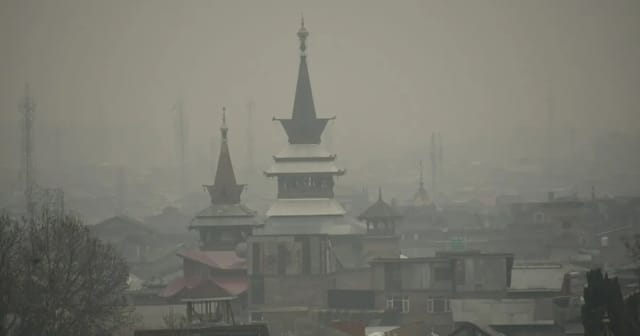
A single PM2.5 particle is roughly 30 times thinner than a human hair. You cannot see individual particles at this scale. When you see wildfire haze or cooking smoke, you are looking at billions of these particles concentrated enough to scatter light.
The category actually includes everything smaller than 2.5 microns, all the way down to ultrafine particles below 0.1 microns. This range covers a wide variety of particle types and sources, which is partly why PM2.5 is used as a broad indicator of air quality.
Where PM2.5 Comes From
PM2.5 has both outdoor and indoor sources. Most people assume outdoor pollution is the main concern, but indoor sources can produce concentrations that are far higher than what you would encounter outside on a normal day.
Outdoor Sources
- Wildfire smoke is one of the most intense PM2.5 sources. During the January 2025 Los Angeles fires, PM2.5 levels near the burn area reached 225 µg/m³, more than 25 times the EPA's annual standard. Even communities miles away saw dramatic spikes.
- Vehicle exhaust releases PM2.5 from both combustion and brake/tire wear. Homes near highways have measurably higher particle levels.
- Industrial emissions from power plants, refineries, and manufacturing.
- Construction dust contributes to coarser particles but also generates some PM2.5.
Indoor Sources
Indoor PM2.5 often surprises people. These are the most common culprits:
- Cooking is the biggest indoor source. Frying, sauteing, and grilling on a gas stove can spike PM2.5 above 100 µg/m³ in minutes. Even boiling water on gas produces some particles from the combustion itself.
- Candles and incense generate significant PM2.5. A single burning candle can raise room PM2.5 by 10-30 µg/m³.
- Tobacco and cannabis smoke produce extremely high concentrations.
- Fireplaces and wood stoves, even well-maintained ones, release fine particles.
- Vacuuming without a HEPA filter stirs up settled particles and sends them airborne.
- Infiltration from outdoors accounts for a large share of baseline indoor PM2.5. Studies show typical indoor-to-outdoor ratios of 0.45 to 0.80, meaning 45-80% of outdoor PM2.5 eventually makes it inside through gaps, windows, and HVAC systems.
For a full walkthrough of measuring all indoor pollutants, see our guide on how to test air quality at home.
Why PM2.5 Is Dangerous
The danger of PM2.5 comes down to size. Your body has natural defenses against larger particles: nose hairs, mucus, and the cilia in your airways catch and expel most particles above 10 microns. PM2.5 is small enough to slip past all of those barriers.
Where These Particles Go
PM2.5 particles travel deep into the alveoli, the tiny air sacs where oxygen enters your blood. Some particles are so small they cross the alveolar membrane and enter your bloodstream, reaching your heart, brain, and other organs.
Short-Term Health Effects
Exposure over hours to days can cause:
- Coughing, wheezing, and shortness of breath
- Aggravated asthma and other respiratory conditions
- Increased emergency room visits for heart and lung problems
- Eye, nose, and throat irritation
These effects are most pronounced in sensitive groups: children, older adults, pregnant women, and people with existing heart or lung disease.
Long-Term Health Effects
Chronic exposure over months to years is where PM2.5 becomes truly serious. The EPA and WHO link long-term exposure to:
- Cardiovascular disease, including heart attacks, strokes, and cardiac arrhythmia
- Lung cancer, even in non-smokers
- Reduced lung function and development of chronic respiratory disease
- Premature death, with research estimating PM2.5 contributes to millions of deaths worldwide each year
In February 2024, the EPA strengthened its annual PM2.5 standard from 12 µg/m³ to 9.0 µg/m³, reflecting growing evidence that lower levels of exposure still cause measurable harm.
Understanding PM2.5 Numbers
When you check an air quality app or monitor, you will see PM2.5 reported in micrograms per cubic meter (µg/m³). Here is what those numbers mean in practical terms.
EPA and WHO Guidelines
| Standard | Annual Average | 24-Hour Average |
|---|---|---|
| EPA (2024 update) | 9.0 µg/m³ | 35 µg/m³ |
| WHO (2021 update) | 5 µg/m³ | 15 µg/m³ |
The EPA standard applies to outdoor ambient air, but these thresholds are useful benchmarks for indoor air too. The WHO guidelines are stricter and represent what the science suggests is genuinely safe for long-term exposure.
AQI and PM2.5
The Air Quality Index (AQI) you see in weather apps translates PM2.5 concentrations into a 0-500 scale:
| AQI Range | PM2.5 (µg/m³) | Category | What to Do |
|---|---|---|---|
| 0-50 | 0-9.0 | Good | No precautions needed |
| 51-100 | 9.1-35.4 | Moderate | Sensitive groups should limit prolonged outdoor exertion |
| 101-150 | 35.5-55.4 | Unhealthy for sensitive groups | Children, elderly, and those with heart/lung conditions should reduce outdoor activity |
| 151-200 | 55.5-125.4 | Unhealthy | Everyone should reduce prolonged outdoor exertion |
| 201-300 | 125.5-225.4 | Very unhealthy | Everyone should avoid outdoor exertion; run air purifiers indoors |
| 301-500 | 225.5-500+ | Hazardous | Stay indoors with windows sealed and purifiers running |
Real-World Context
To give these numbers meaning:
- A clean day in a rural area: 3-8 µg/m³
- Typical urban background: 10-20 µg/m³
- Cooking dinner (frying) in your kitchen: 50-200 µg/m³
- Burning a candle in a closed room: 20-50 µg/m³
- Wildfire smoke event: 100-500+ µg/m³
- Inside your home with a HEPA purifier running: 2-8 µg/m³
How Air Quality Monitors Measure PM2.5
Consumer air quality monitors use a technology called laser light scattering to count particles. A small fan draws air into a chamber, a laser beam passes through it, and a photodetector counts the flashes of scattered light. The intensity and pattern of the scattering tells the sensor how many particles are present and their approximate size distribution.
How Accurate Are Consumer Monitors?
Consumer laser sensors are reasonably accurate for everyday use, typically within 10-20% of professional reference monitors. They work well for tracking trends and catching dangerous spikes. During extreme conditions like heavy wildfire smoke (AQI above 300), some consumer sensors can undercount because the laser gets saturated by the sheer number of particles.
The PurpleAir sensors are a notable standout. They use dual laser counters for cross-validation, and researchers have published correction factors specifically for wildfire smoke conditions. PurpleAir data is used by the EPA's AirNow Fire and Smoke Map alongside official monitoring stations.
For specific monitor recommendations during fire season, see our roundup of the best PM2.5 monitors for wildfire smoke.
How to Reduce PM2.5 in Your Home
Knowing your PM2.5 levels is only useful if you act on them. Here are the most effective interventions, ranked by impact.
1. Run a HEPA Air Purifier
True HEPA filters capture 99.97% of particles at 0.3 microns, which covers all PM2.5 sizes. A properly sized purifier can cut indoor PM2.5 by 80-90% within an hour. The key metric to look for is CADR (Clean Air Delivery Rate), which tells you how fast the purifier cleans the air relative to your room size.
During the 2025 LA wildfires, homes with HEPA purifiers maintained indoor PM2.5 levels roughly 50% lower than homes without them, even when outdoor levels were severely elevated.
2. Ventilate When Cooking
Cooking is the biggest daily PM2.5 source for most households. Use your range hood on high if it vents to the outside. If it recirculates, open a nearby window instead. Even cracking a window during cooking can cut particle spikes in half.
3. Seal Your Home During Smoke Events
During wildfires or high-pollution days, close all windows and doors, seal gaps with towels or weatherstripping, and set your HVAC to recirculate mode. The typical indoor-to-outdoor infiltration ratio drops from 0.4 on normal days to 0.2 when homes are properly sealed, meaning only 20% of outdoor particles make it inside.
4. Upgrade Your HVAC Filter
If you have central air, upgrade to a MERV 13 filter, which captures about 85% of PM2.5. Check and replace it more frequently during wildfire season or high-pollution periods. MERV 13 is the sweet spot: good filtration without restricting airflow enough to strain your system.
5. Reduce Indoor Sources
Small changes add up:
- Switch from candles to LED flameless alternatives (or at least trim wicks to reduce soot)
- Use a vacuum with a sealed HEPA filter
- Avoid burning incense indoors
- If you have a fireplace, make sure the damper seals properly when not in use
PM2.5 vs. Other Pollutants
PM2.5 is one of several indoor air pollutants, and it is important to understand what it does and does not capture.
| Pollutant | What It Is | Measured by PM2.5? |
|---|---|---|
| PM10 (coarse dust, pollen) | Larger particles | No (separate measurement) |
| CO2 | Gas from breathing/combustion | No (need NDIR sensor) |
| VOCs | Gases from furniture, cleaning products | No (need VOC sensor) |
| Radon | Radioactive gas from soil | No (need dedicated detector) |
| Humidity | Water vapor | No (need hygrometer) |
A PM2.5 monitor tells you about particles, but it will not detect carbon dioxide buildup from poor ventilation or volatile organic compounds from new furniture. For a complete picture of your indoor air, you need a multi-parameter monitor or a combination of sensors. Our guide on how to test air quality at home covers all of these pollutants and the best tools for measuring each one.
The Bottom Line
PM2.5 is the most health-relevant air pollutant you are exposed to daily. It is invisible, it comes from sources you might not expect (your kitchen, your candles, your commute), and chronic exposure has real consequences for your cardiovascular and respiratory health.
The good news is that PM2.5 is also one of the easiest pollutants to address. A $30-80 air quality monitor shows you the problem, and a True HEPA purifier solves it. Start by monitoring your levels for a week. If you regularly see readings above 12 µg/m³, especially during cooking or in rooms without good ventilation, a purifier will make a measurable difference.