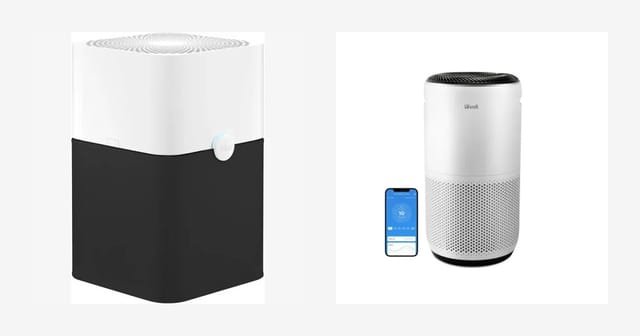
Blueair vs Levoit Air Purifier: Premium Simplicity vs Smart Value
Blueair vs Levoit air purifier comparison. We compare HEPASilent vs True HEPA filtration, noise levels, smart features, filter costs, and value across both lineups.

Table of Contents
- The Short Answer
- The Core Difference: HEPASilent vs True HEPA
- Blueair's HEPASilent Technology
- Levoit's True HEPA Approach
- Head-to-Head: Blueair Blue Pure 211+ vs Levoit Core 400S
- Air Cleaning Performance
- Noise Levels
- Smart Features and Sensors
- Design and Build Quality
- Filter and Energy Costs
- Expanding the Matchup: Small Room Models
- Blueair Blue Pure 411 vs Levoit Core 300S
- Levoit Core 600S: The Model Blueair Cannot Match
- The Brand Philosophy Question
- Who Should Buy Blueair
- Who Should Buy Levoit
- Our Recommendation
TL;DR
Levoit wins for most buyers. The Core 400S ($190) matches or beats the Blueair Blue Pure 211+ ($250) on noise, smart features, and value, while the Blueair only pulls ahead in raw CADR. Blueair's HEPASilent technology delivers more airflow per watt, but Levoit's WiFi, app control, and PM2.5 sensor make it the more practical daily-use purifier. Choose Blueair for maximum airflow in large rooms or heavy smoke; choose Levoit for everything else.
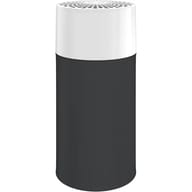
Full Comparison
| # | Product | Best For | Rating | Price | |
|---|---|---|---|---|---|
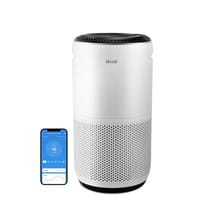
| 1 | Levoit Core 400S Top Pick Levoit | Best Overall Value | 4.5 | $$ | Check Price |
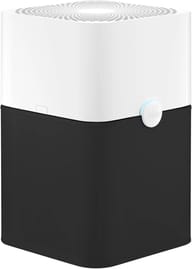
| 2 | Blueair Blue Pure 211+ Blueair | Best for Large Rooms and Heavy Smoke | 4.4 | $$ | Check Price |
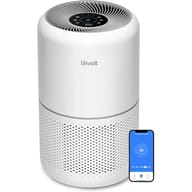
| 3 | Levoit Core 300S Levoit | Best Budget Smart Purifier | 4.5 | $ | Check Price |
| 4 | Blueair Blue Pure 411 Blueair | Best Ultra-Compact Option | 4.3 | $ | Check Price |
You are probably here because you have narrowed your air purifier search to two brands that keep showing up in every recommendation list: Blueair and Levoit. Both are well-regarded, both use genuine HEPA filtration, and both have models under $300. The difference is in how they get the job done.
Blueair uses a proprietary filtration technology called HEPASilent that delivers unusually high airflow for its noise and energy levels. Levoit uses standard True HEPA filters paired with smart features, app control, and aggressive pricing. One brand charges more for engineering; the other gives you more features for less money.
We compared these two brands head to head across the metrics that actually matter: how much air they clean, how loud they are, how smart they are, and what they cost to own over three years.
This article contains affiliate links. We may earn a commission if you purchase through our links, at no extra cost to you. See our affiliate disclosure for details.
The Short Answer
Levoit wins for most buyers. It is not that Blueair makes bad products. It is that Levoit gives you more for less money.
The Levoit Core 400S ($190) delivers 260 CFM CADR for dust with WiFi, app control, voice assistant support, and a laser PM2.5 sensor. The Blueair Blue Pure 211+ ($250) delivers a higher 350 CFM CADR but has no smart features, no air quality sensor, and no app. You are paying $60 more for raw airflow and getting less of everything else.
Blueair earns its price in one specific scenario: you need maximum airflow for a large room (400 to 550 sq ft) or heavy particulate conditions like wildfire smoke. In that narrow use case, the Blue Pure 211+ is hard to beat. For every other situation, Levoit is the smarter buy.
The Core Difference: HEPASilent vs True HEPA
This is the most interesting part of the comparison, and the reason these two brands feel so different despite doing the same job.
Blueair's HEPASilent Technology
Blueair's HEPASilent system gives particles an electric charge before they reach the filter. Charged particles stick to filter fibers more easily, which means Blueair can use less dense filter media while still capturing 99.97% of particles at 0.3 microns. Less dense media means lower airflow resistance, which means the fan can move more air with less noise and less energy.
The practical result: the Blue Pure 211+ pushes 350 CFM CADR at just 60 watts max. That is an exceptional airflow-to-energy ratio.
The tradeoff: HEPASilent requires a proprietary filter design, and Blueair charges accordingly. There are no generic alternatives. You pay what Blueair asks, or you do not replace the filter.
Levoit's True HEPA Approach
Levoit uses conventional H13 True HEPA filters with activated carbon for odors and VOCs. This is the same filtration technology used by most air purifier brands. The filters are dense, which means higher airflow resistance relative to Blueair, but the capture efficiency is identical at 99.97% for 0.3-micron particles.
Where Levoit compensates is in everything around the filter: WiFi connectivity, real-time PM2.5 sensors, auto mode that adjusts fan speed intelligently, and an app that shows air quality history. These features make the purifier more useful day to day, even if the underlying filtration is less technically elegant than HEPASilent.
For a deeper dive into how these filtration technologies work, read our guide on HEPA vs ionic vs UV air purifiers.
Head-to-Head: Blueair Blue Pure 211+ vs Levoit Core 400S
This is the matchup most buyers are actually weighing: the flagship affordable model from each brand. For the full spec-by-spec breakdown, see our detailed Blueair Blue Pure 211+ vs Levoit Core 400S comparison.
Air Cleaning Performance
The Blueair Blue Pure 211+ wins on CADR, and the gap is significant. It delivers 350 CFM for dust, smoke, and pollen, all identical because the HEPASilent technology is equally effective against all particle types. The Levoit Core 400S delivers 260 CFM for dust and 256 CFM for smoke.
In practical terms, the Blueair will clean a large room faster and can maintain lower particulate levels under heavy load. If you live in a wildfire-prone area, near a busy road, or have a large open-plan living space, that extra 90 CFM makes a measurable difference. To understand why this metric matters so much, see our guide on what CADR really means.
For typical indoor air quality in a room under 400 sq ft, both purifiers perform well. The difference matters most under stress, specifically heavy smoke, high pollen days, or large rooms.
Winner: Blueair, by a meaningful margin.
Noise Levels
Levoit wins here, and it matters for bedroom use. The Core 400S runs at 24 dB on its lowest setting, which is nearly inaudible. The Blueair Blue Pure 211+ runs at 31 dB on low, which is still quiet but noticeably more present than the Levoit.
That 7 dB difference sounds small, but decibels are logarithmic. A 7 dB increase means the Blueair is roughly twice as loud as the Levoit on the low setting in perceived volume.
On high speed, the gap narrows: the Levoit reaches about 52 dB and the Blueair about 56 dB. Both are audible at full power.
Winner: Levoit.
Smart Features and Sensors
This is where the comparison becomes lopsided. The Levoit Core 400S includes WiFi connectivity, the VeSync app, voice control through Alexa and Google Assistant, and a laser PM2.5 sensor that drives an intelligent auto mode. You can check your air quality from your phone, set schedules, and let the purifier adjust itself based on real-time particle readings.
The Blueair Blue Pure 211+ has a single button. One button. Three fan speeds. No sensor, no auto mode, no app, no WiFi. You set the speed manually, and it stays there until you change it.
Some people will see the Blueair's simplicity as a feature, and there is something to be said for a device that just works without accounts, firmware updates, or app connectivity. But for most buyers in 2026, the lack of any air quality feedback is a real limitation. You have no way to know if the purifier is actually making a difference without buying a separate air quality monitor.
For a broader look at connected purifiers, see our best smart air purifiers guide.
Winner: Levoit, decisively.
Design and Build Quality
Both purifiers use a cylindrical form factor, but the Blueair feels more considered. The Blue Pure 211+ has a distinctive fabric pre-filter that wraps around the base, available in multiple colors, giving it a softer, more furniture-like appearance. The build quality is solid, and the design has aged well since its introduction.
The Levoit Core 400S is a white cylinder. It looks fine. The plastics are decent for the price, and the build is solid, but it does not draw the eye. It is designed to blend in rather than stand out.
The Blueair is also larger (13 x 13 x 20 inches vs 8.5 x 8.5 x 20.5 inches) and heavier (12.5 lbs vs 9.4 lbs). The Levoit's more compact footprint is an advantage if floor space is limited.
Winner: Blueair on aesthetics, Levoit on compactness. A tie overall.
Filter and Energy Costs
| Cost Factor | Blueair Blue Pure 211+ | Levoit Core 400S |
|---|---|---|
| Purchase price | $250 | $190 |
| Annual filter cost | $55 | $45 |
| Annual energy cost (est.) | $26 | $19 |
| 3-year total | $493 | $382 |
Over three years, the Levoit costs $111 less in total ownership. That is a meaningful difference, though not as dramatic as the Dyson vs Levoit gap. The savings come from a lower purchase price, slightly cheaper filters, and lower energy consumption.
For a complete breakdown of running costs across brands, see our air purifier running costs guide.
Winner: Levoit.
Expanding the Matchup: Small Room Models
Blueair Blue Pure 411 vs Levoit Core 300S
For bedrooms and small spaces, this is the head-to-head. The Blueair Blue Pure 411 ($120) is an ultra-compact unit with 120 CFM CADR and a remarkably quiet 17 dB low setting. The Levoit Core 300S ($150) offers 141 CFM CADR and WiFi with app control.
The Blueair 411 wins on quietness (17 dB is practically silent), portability (just 3.8 lbs), and price. The Levoit 300S wins on smart features and slightly higher CADR. Both are excellent bedroom purifiers. For the detailed comparison, see our Levoit Core 300S vs Blueair Blue Pure 411 breakdown.
Levoit Core 600S: The Model Blueair Cannot Match
The Levoit Core 600S ($240) delivers 410 CFM CADR, which is higher than the Blueair Blue Pure 211+ at 350 CFM, while costing $10 less. It covers rooms up to 635 sq ft with full smart features. Blueair has no consumer model in this airflow class at this price point.
If raw air cleaning power is your priority and you want smart features, the Core 600S is the best value in either lineup. See our best air purifiers for large rooms guide for more options.
The Brand Philosophy Question
Blueair and Levoit represent genuinely different approaches to air purification, and neither is wrong.
Blueair invests in filtration engineering. Their HEPASilent technology is genuinely innovative, delivering more clean air per watt than conventional HEPA systems. They keep their products simple, focusing on the thing that matters most: moving clean air. If you view an air purifier the way you view a kitchen knife (buy a good one, keep it sharp, skip the gimmicks), Blueair's approach makes sense.
Levoit invests in features and accessibility. Their filtration is standard True HEPA, which works well but is not technologically distinctive. Where they differentiate is in smart connectivity, sensors, auto modes, and price. They make air purifiers that are easy to buy, easy to set up, and easy to forget about once the auto mode takes over.
The market has increasingly favored Levoit's approach. Smart features that were nice-to-have in 2020 feel essential in 2026, and Blueair's decision to keep WiFi and sensors out of their entry-level lineup looks increasingly like a misstep. The newer Blueair i-series models add smart features, but at a significant price premium.
Who Should Buy Blueair
- You need maximum airflow. The Blue Pure 211+ delivers 350 CFM CADR, beating every Levoit model except the Core 600S. For wildfire smoke or high-pollen environments, more airflow means faster relief.
- You prefer simple, no-app devices. One button, three speeds, no accounts or firmware updates. Some buyers genuinely prefer this.
- You want the quietest small-room purifier. The Blue Pure 411 at 17 dB is the quietest unit across both brands.
- Design matters to you. The fabric pre-filter and cylindrical design look better than Levoit's utilitarian white cylinders.
- You prioritize energy efficiency. HEPASilent delivers more CADR per watt than conventional True HEPA systems.
Who Should Buy Levoit
- Your primary goal is clean air at the best price. Levoit consistently offers more CADR per dollar than Blueair.
- You want smart features. WiFi, app control, voice assistants, and auto mode come standard on every S-series model.
- You want real-time air quality data. The laser PM2.5 sensor tells you exactly how clean your air is, which the Blueair 211+ and 411 cannot do.
- You need a large-room powerhouse. The Core 600S at 410 CFM and $240 has no Blueair equivalent at that price.
- Low total cost matters. Lower purchase prices and competitive filter costs keep 3-year ownership costs $100+ below comparable Blueair models.
- You want quiet bedroom operation. The Core 300S at 22 dB and Core 400S at 24 dB are among the quietest smart purifiers available.
Our Recommendation
For most buyers, the Levoit Core 400S is the better purchase. It cleans the air well, runs quietly, costs less to buy and maintain, and includes smart features that make it genuinely easier to live with. The auto mode with PM2.5 sensing means it adjusts itself to changing conditions, something the Blueair simply cannot do.
The Blueair Blue Pure 211+ earns its place for a specific type of buyer: someone who needs maximum airflow for a large room or heavy pollution, who values simplicity over connectivity, and who appreciates the quieter-than-expected HEPASilent engineering. It is a well-built machine that does one thing exceptionally well.
If you are still deciding, our Dyson vs Levoit comparison and Levoit vs Winix vs Coway three-way comparison provide additional context on how these brands stack up against other popular options. For help choosing the right purifier for your specific needs, start with our how to choose an air purifier guide.
Frequently Asked Questions
Is Blueair better than Levoit for air purification?
What is HEPASilent technology and is it better than True HEPA?
Which Blueair and Levoit models compete directly with each other?
Do Blueair air purifiers have WiFi or app control?
How do filter replacement costs compare between Blueair and Levoit?
Which brand is quieter, Blueair or Levoit?
Can Blueair or Levoit handle wildfire smoke?
You Might Also Like
Dyson vs Levoit Air Purifier: Is Dyson Worth 3x the Price?
Dyson vs Levoit air purifier comparison. We compare CADR, filter costs, noise, smart features, and value to help you decide if the Dyson premium is justified.

Moss Air Purifiers vs HEPA: Which Cleans Better?
We compare moss air purifiers and HEPA filters on filtration, cost, noise, room coverage, and maintenance. See which technology wins for your needs.
Levoit vs Winix vs Coway: Which Brand Wins?
Levoit Core 400S vs Winix 5500-2 vs Coway AP-1512HH compared on CADR, noise, filter costs, smart features, and overall value for your money.