Dyson vs Levoit Air Purifier: Is Dyson Worth 3x the Price?
Dyson vs Levoit air purifier comparison. We compare CADR, filter costs, noise, smart features, and value to help you decide if the Dyson premium is justified.

Table of Contents
- The Short Answer
- Brand Overview: Two Very Different Approaches
- Dyson: Engineering, Design, and Premium Pricing
- Levoit: Performance-Focused Value
- Head-to-Head: Dyson TP07 vs Levoit Core 400S
- Air Cleaning Performance
- Noise Levels
- Smart Features and Sensors
- Design and Build Quality
- The Fan Factor
- Filter and Energy Costs
- Expanding the Matchup: More Models
- Levoit Core 600S vs Dyson TP07
- Levoit Core 300S: The Budget Killer
- The "Is Dyson Just Marketing?" Question
- Who Should Buy Dyson
- Who Should Buy Levoit
- Our Recommendation
TL;DR
Levoit wins for most buyers. The Levoit Core 400S ($190) delivers nearly double the CADR of the Dyson TP07 ($500) at less than half the price, with quieter sleep mode and cheaper filters. Dyson only makes sense if you specifically want the built-in fan, the heater combo (HP07), or the premium design aesthetic. Dollar for dollar, Levoit gives you more clean air.
Full Comparison
| # | Product | Best For | Rating | Price | |
|---|---|---|---|---|---|
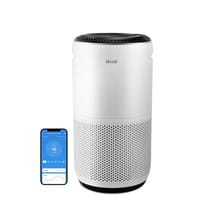
| 1 | Levoit Core 400S Top Pick Levoit | Best Overall Value | 4.5 | $$ | Check Price |
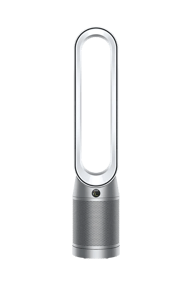
| 2 | Dyson Purifier Cool TP07 Dyson | Best Fan + Purifier Combo | 3.8 | $$$$ | Check Price |
| 3 | Levoit Core 600S Levoit | Best for Large Rooms | 4.7 | $$ | Check Price |
| 4 | Levoit Core 300S Levoit | Best Budget Pick | 4.5 | $ | Check Price |
You are probably here because you are staring at a Dyson air purifier that costs $500 or more and wondering if it is genuinely three times better than a Levoit at $150 to $240. It is a fair question, and the answer is more nuanced than either brand's marketing would suggest.
We compared these two brands head to head on the things that actually matter: how much air they clean, how loud they are, what they cost to own over time, and whether the Dyson premium buys you better air quality or just a nicer looking device.
This article contains affiliate links. We may earn a commission if you purchase through our links, at no extra cost to you. See our affiliate disclosure for details.
The Short Answer
Levoit wins on air cleaning performance per dollar. It is not even close.
The Levoit Core 400S ($190) delivers a CADR of 260 CFM for dust. The Dyson Purifier Cool TP07 ($500) delivers an estimated 150 CFM. That means the Levoit moves and cleans nearly twice as much air per minute at less than half the price. Add in cheaper filters ($45/year vs $99/year) and lower energy consumption, and Levoit's total cost advantage over three years exceeds $400.
Dyson earns its price in other ways: the bladeless fan function, premium build materials, more comprehensive air quality sensors, and a design that looks at home in an interior design magazine. If those things matter to you, the premium is not wasted. If your primary goal is the cleanest possible air for your budget, Levoit is the smarter buy.
Brand Overview: Two Very Different Approaches
Dyson: Engineering, Design, and Premium Pricing
Dyson builds air purifiers that double as fans (and in some models, heaters). Every Dyson purifier uses a bladeless design with 350-degree oscillation, fully sealed H13 HEPA filtration, and multi-sensor air quality monitoring that tracks particles, VOCs, NO2, humidity, and temperature.
Dyson does not participate in AHAM's industry-standard CADR testing program. Instead, the company uses its proprietary POLAR test, which measures air purification across a larger room using multiple sensors. This makes direct performance comparisons with other brands difficult, which critics argue is a deliberate choice.
Current Dyson purifier prices range from $500 for the TP07 (fan + purifier) to $650 for the HP07 (fan + heater + purifier) and $900+ for the Big Quiet Formaldehyde BP04.
Levoit: Performance-Focused Value
Levoit focuses on delivering strong HEPA filtration and smart features at aggressive price points. Their purifiers use standard H13 True HEPA filters with activated carbon, and most models include WiFi connectivity, VeSync app control, and voice assistant support with Alexa and Google Assistant.
Levoit submits its products to AHAM for independent CADR verification, which means you can compare their numbers directly against other brands. Their lineup spans from the compact Core Mini ($45) to the powerful Core 600S ($240), with the Core 300S ($150) and Core 400S ($190) as the most popular models.
Head-to-Head: Dyson TP07 vs Levoit Core 400S
This is the matchup most buyers are actually considering: Dyson's mid-range purifier against Levoit's best-selling smart model. For the full spec-by-spec breakdown, see our detailed Dyson TP07 vs Levoit Core 400S comparison.
Air Cleaning Performance
This is where the gap is widest. The Levoit Core 400S has AHAM-verified CADR ratings of 260 CFM for dust, 256 CFM for smoke, and 260 CFM for pollen. These numbers tell you exactly how much clean air the unit delivers per minute.
The Dyson TP07 does not have official CADR ratings. Independent estimates put it around 150 CFM for dust and 130 CFM for smoke. Dyson claims 800 sq ft coverage based on its POLAR testing methodology, but that number isn't directly comparable to how other brands measure room coverage.
In practical terms, the Levoit will clean a medium-sized room faster and maintain lower particulate levels during continuous operation. If you want to understand why CADR matters so much, our guide on what CADR really means breaks down the math.
Winner: Levoit, by a wide margin.
Noise Levels
Both brands have invested in quiet operation, but Levoit has the edge on the low end. The Core 400S runs at 24 dB on its lowest setting, which is essentially inaudible in a bedroom. The Dyson TP07 produces around 35 dB on low, which is quiet but noticeably more present than the Levoit.
On high speed, both units are audible. The Levoit reaches about 52 dB, while the Dyson hits around 60 dB. The Dyson's fan function contributes to higher noise on max because it is pushing air across the room, not just through a filter.
For bedroom use, the Levoit's 24 dB sleep mode with display dimming is hard to beat. Light sleepers will notice the Dyson.
Winner: Levoit.
Smart Features and Sensors
This is where Dyson pulls ahead. The TP07 includes sensors for particles, VOCs, NO2, humidity, and temperature, all viewable in real time through the Dyson Link app. The data is detailed and well-presented, showing hourly and daily trends for each measurement.
The Levoit Core 400S has a laser PM2.5 sensor and auto mode that adjusts fan speed based on particle levels. The VeSync app shows real-time and historical PM2.5 data, supports scheduling, and integrates with Alexa and Google Assistant. It does not measure VOCs, NO2, or humidity.
Dyson also supports Apple Siri in addition to Alexa and Google Assistant. Levoit does not offer Siri support. If you are deep in the Apple ecosystem, this could be a meaningful difference.
That said, for most people, knowing your PM2.5 level is the most actionable data point. The additional sensors in the Dyson are interesting but rarely change what you would do (run the purifier on auto mode).
For a broader look at smart purifier options from multiple brands, see our best smart air purifiers guide.
Winner: Dyson, but the practical gap is smaller than the spec sheet suggests.
Design and Build Quality
Dyson wins this one without argument. The TP07's bladeless tower design is visually striking, with a slim profile that fits naturally into living rooms and offices. The build quality feels premium, with smooth plastics, tight tolerances, and a satisfying weight to the base.
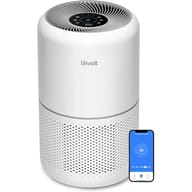
The Levoit Core 400S is a functional white cylinder. It looks fine. It does not look like a piece of industrial design. The plastics are decent for the price, and the build feels solid, but it is clearly a product engineered to a price point rather than a design statement.
If your purifier will sit prominently in your living room, the Dyson looks better. If it is going in a corner or a bedroom, the Levoit's understated design is perfectly fine.
Winner: Dyson.
The Fan Factor
The Dyson TP07 doubles as a bladeless fan with 350-degree oscillation and 10 speed settings. This is a genuine feature that Levoit does not offer. The fan provides light cooling and air circulation, though it is not a replacement for a dedicated tower fan or ceiling fan in summer heat.
If you live in a climate where you need light air circulation for parts of the year, the combo function saves you from buying and placing two separate devices. In a small apartment, that convenience and space savings have real value.
If you live somewhere with central AC or already have adequate fans, the built-in fan adds cost without adding much utility.
The Dyson HP07 ($650) takes this further by adding a 1500W heater, making it a purifier, fan, and heater in one unit. For year-round use in a single room, it consolidates three devices.
Winner: Dyson (by default; Levoit does not compete in this category).
Filter and Energy Costs
This is where the total cost of ownership equation gets interesting.
| Cost Factor | Dyson TP07 | Levoit Core 400S |
|---|---|---|
| Purchase price | $500 | $190 |
| Annual filter cost | $99 | $45 |
| Annual energy cost (est.) | $25 | $19 |
| 3-year total | $872 | $382 |
Over three years, the Dyson costs $490 more. That is enough to buy two Levoit Core 400S units and still have money left over for filters.
The Levoit Core 300S ($150) is even more affordable, with filters at just $35/year. Over three years, it costs roughly $255 total, less than the Dyson's purchase price alone.
Winner: Levoit, decisively.
Expanding the Matchup: More Models
Levoit Core 600S vs Dyson TP07
If your primary concern is raw air cleaning power, the Levoit Core 600S ($240) is an even more dramatic value comparison. It delivers 410 CFM CADR, nearly three times the Dyson's estimated output, in a unit that costs less than half as much.
The Core 600S covers rooms up to 635 sq ft with 5 air changes per hour. It includes the same smart features as the Core 400S (WiFi, VeSync app, Alexa, Google Assistant) plus a laser PM2.5 sensor. Annual filter costs run about $60.
For large rooms and serious air quality concerns, like wildfire smoke or pet dander in an open floor plan, the Core 600S is one of the best values in the market. See our best air purifiers for large rooms guide for more options.
Levoit Core 300S: The Budget Killer
At $150, the Levoit Core 300S delivers 141 CFM CADR for dust. That is roughly comparable to the Dyson TP07's estimated performance, at less than one-third the price. Its 219 sq ft coverage makes it ideal for bedrooms and small offices.
The Core 300S runs at just 22 dB on its lowest setting, uses only 26W of power, and has annual filter costs of $35. It lacks the Dyson's fan function, detailed multi-sensor monitoring, and premium design, but it matches or beats the Dyson on the thing that matters most: cleaning the air.
The "Is Dyson Just Marketing?" Question
This comes up in every Dyson air purifier discussion, and the honest answer is: partly, but not entirely.
Dyson does spend heavily on brand building, and the premium you pay includes a significant design and brand component. The company's refusal to participate in standard CADR testing makes it harder to evaluate their purifiers on an equal playing field, which understandably frustrates value-conscious buyers.
But the Dyson TP07 is not a bad air purifier. The H13 HEPA filtration is genuine and effective. The sensors are best-in-class. The fan function is real and useful for some buyers. The build quality is noticeably better than budget competitors. Dyson's engineering team has solved real problems around sealed filtration, noise reduction, and room-wide air projection.
The issue is not quality. It is value. When a $190 Levoit cleans more air per minute than a $500 Dyson, the math makes it hard to recommend the Dyson on air cleaning merit alone. You are paying for the total package: design, fan, sensors, and brand experience.
If you want to understand the different filtration technologies at play, our guide on HEPA vs ionic vs UV air purifiers explains what matters.
Who Should Buy Dyson
- You want a fan and purifier in one. The bladeless design with 350-degree oscillation is genuinely useful if you do not want a separate fan.
- You care deeply about design. The Dyson will look better in your living room than any Levoit model.
- You want comprehensive air quality data. The multi-sensor setup (particles, VOCs, NO2, humidity, temperature) is the most detailed in the consumer market.
- You are in the Apple ecosystem. Siri support is a Dyson exclusive in this comparison.
- You want a heater combo. The HP07 adds heating, which Levoit does not offer.
Who Should Buy Levoit
- Your primary goal is clean air. Levoit delivers more CADR per dollar than almost any brand on the market.
- You want low total cost of ownership. Purchase price, filters, and energy costs are all significantly lower.
- You need a quiet bedroom purifier. The Core 300S at 22 dB and Core 400S at 24 dB are among the quietest options available.
- You want verified performance data. Levoit's AHAM-verified CADR ratings let you compare directly with other brands.
- You need coverage for large rooms. The Core 600S at 410 CFM CADR covers 635 sq ft at a price point where Dyson covers similar area with lower airflow.
Our Recommendation
For most people, the Levoit Core 400S is the better buy. It cleans more air, runs quieter, costs less to purchase, and costs less to maintain. The smart features cover everything most households need.
If you want a detailed head-to-head between the two most commonly compared models, read our Dyson TP07 vs Levoit Core 400S comparison.
The Dyson TP07 makes sense in a narrow set of circumstances: you want the fan function, you prioritize design, or you need the multi-sensor monitoring for specific air quality concerns. If any of those apply, the Dyson is a well-built machine that will serve you well. Just know that you are paying a premium that does not translate to better air cleaning performance.
For help choosing the right air purifier for your specific needs, our how to choose an air purifier guide walks through the key decision factors.