Best Air Purifiers for Garages and Workshops (2026)
The 6 best air purifiers for garages and workshops in 2026. Heavy-duty HEPA models that handle sawdust, paint fumes, chemical vapors, and fine particulates.

Table of Contents
- Our Top Picks at a Glance
- What Makes a Garage Air Purifier Different
- You Need Serious Airflow
- VOC Handling Is Critical
- Filters Will Wear Out Fast
- Temperature Extremes Matter
- Detailed Reviews
- 1. Medify MA-112: Best for Large Garages and Heavy-Duty Use
- 2. Coway Airmega 400: Best for Two-Car Garages
- 3. IQAir HealthPro Plus XE: Best for Chemical Fumes and VOCs
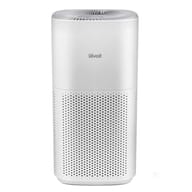
- 4. Levoit Core 600S: Best Value for Single-Car Garages
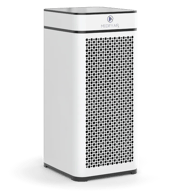
- 5. Medify MA-40: Best Compact Heavy-Duty Option
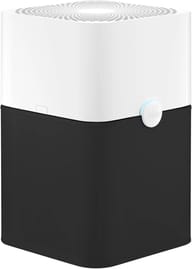
- 6. Blueair Blue Pure 211+: Best for Finishing and Odor Removal
- Garage Workshop Air Purifier Buying Guide
- Sizing Your Purifier to Your Garage
- Common Workshop Pollutants and How to Filter Them
- Air Purifier vs. Dust Collection
- Placement in a Garage Workshop
- Running Costs Compared
- When an Air Purifier Is Not Enough
- The Bottom Line
TL;DR
At Clean Air Critic, the best air purifier for a garage or workshop is the Medify MA-112, delivering dual H13 HEPA filtration with 950 m3/h combined CADR across spaces up to 2,500 sq ft. For mid-size workshops, the Coway Airmega 400 covers 1,560 sq ft with dual-sided filtration and an air quality sensor. Budget pick: the Levoit Core 600S at $260 pairs 410 CFM CADR with smart monitoring, handling most single-car garage workshops under 600 sq ft.
Full Comparison
| # | Product | Best For | Rating | Price | |
|---|---|---|---|---|---|
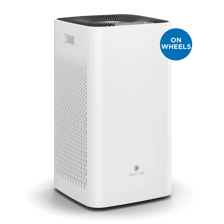
| 1 | Medify MA-112 Top Pick Medify | Best for Large Garages and Heavy-Duty Use | 4.7 | $$$$ | Check Price |
| 2 | Coway Airmega 400 Coway | Best for Two-Car Garages | 4.7 | $$$ | Check Price |
| 3 | IQAir HealthPro Plus XE IQAir | Best for Chemical Fumes and VOCs | 4.8 | $$$$ | Check Price |
| 4 | Levoit Core 600S Levoit | Best Value for Single-Car Garages | 4.7 | $$ | Check Price |
| 5 | Medify MA-40 Medify | Best Compact Heavy-Duty Option | 4.5 | $$ | Check Price |
| 6 | Blueair Blue Pure 211+ Blueair | Best for Finishing and Odor Removal | 4.6 | $$ | Check Price |
Affiliate Disclosure: CleanAirCritic earns commissions from qualifying purchases through affiliate links on this page. This does not influence our rankings or reviews. All opinions are our own. Learn more
Your garage is probably the most polluted room in your house, and you are spending hours working in it.
Sawdust from woodworking is classified as a Group 1 carcinogen by the International Agency for Research on Cancer. Paint fumes, polyurethane vapors, and solvent off-gassing produce volatile organic compounds that cause headaches, nausea, and long-term respiratory damage. Car exhaust residue coats every surface with fine particulate matter. Concrete dust, insulation fibers, and welding fumes add to the mix depending on what projects you tackle.
Unlike a bedroom or office, most garages have no HVAC filtration, minimal insulation, and ventilation limited to opening the garage door. An air purifier with high CADR, true HEPA filtration, and substantial activated carbon directly reduces your exposure to the particles and chemicals that accumulate during workshop sessions.
We evaluated six models specifically for garage and workshop use, prioritizing raw airflow, filter capacity for heavy particulate loads, VOC absorption, and durability in demanding environments.
Our Top Picks at a Glance
| Purifier | Best For | CADR (CFM) | Room Coverage | Price Range |
|---|---|---|---|---|
| Medify MA-112 | Large Garages / Heavy-Duty | 400-450 | Up to 2,500 sq ft | $$$$ |
| Coway Airmega 400 | Two-Car Garages | 328-400 | Up to 1,560 sq ft | $$$ |
| IQAir HealthPro Plus XE | Chemical Fumes / VOCs | 300 | Up to 1,125 sq ft | $$$$ |
| Levoit Core 600S | Single-Car Garages (Value) | 410 | Up to 635 sq ft | $$ |
| Medify MA-40 | Compact Heavy-Duty | 380 | Up to 840 sq ft | $$ |
| Blueair Blue Pure 211+ | Finishing / Odor Removal | 350 | Up to 550 sq ft | $$ |
What Makes a Garage Air Purifier Different
Choosing an air purifier for a garage or workshop is fundamentally different from choosing one for living spaces. The demands are higher, the air is dirtier, and the stakes for your lungs are greater.
You Need Serious Airflow
Garages are large. A single-car garage runs 200-300 sq ft. A two-car garage is 400-600 sq ft. Many are poorly sealed with gaps around the garage door, windows, and wall penetrations that let in outdoor pollutants. A purifier rated for a 150 sq ft bedroom will be overwhelmed immediately. You need a minimum CADR of 300 CFM for a single-car garage, and 400+ for a two-car.
VOC Handling Is Critical
Workshops produce chemical vapors that bedrooms and offices do not. Paint, stain, polyurethane, lacquer, contact cement, epoxy, and solvent-based cleaners all release VOCs at concentrations far above normal household levels. HEPA filters capture particles, not gas-phase molecules. Activated carbon is the only consumer-grade filtration technology that absorbs VOCs effectively. The more carbon, the more capacity before saturation.
Filters Will Wear Out Fast
A garage air purifier's filters face punishment that would destroy a bedroom purifier in weeks. Sawdust, concrete dust, metal filings, drywall dust, and sanding residue are coarser and more abrasive than household dust. Pre-filters become essential: they catch the large debris before it clogs the HEPA, extending the expensive main filter's useful life. Budget for filter replacement costs at 1.5 to 2x the manufacturer's standard recommendation.
Temperature Extremes Matter
Garages in most climates experience temperature swings that living spaces do not. Summer heat, winter cold, and high humidity from weather exposure all affect air purifier performance. Most consumer air purifiers operate within 41-104°F (5-40°C). If your garage drops below freezing or exceeds 100°F regularly, run the purifier during moderate conditions and your active work sessions.
Detailed Reviews
1. Medify MA-112: Best for Large Garages and Heavy-Duty Use
The Medify MA-112 is the most powerful residential air purifier we recommend for garage use. Its dual H13 HEPA filters produce a combined CADR of 950 m3/h, covering spaces up to 2,500 sq ft. For a garage workshop, this kind of headroom means you can run it on a lower speed and still get effective filtration.
Why it works for garages: The dual-intake design pulls air from both sides through two independent H13 True HEPA filters with activated carbon layers. In a garage where pollutants come from multiple directions (sawdust from the workbench, exhaust residue from the floor, paint fumes from the finishing area), dual air intake processes contaminated air faster than single-sided designs. The H13 filtration standard captures 99.95% of particles down to 0.1 microns, catching even the finest sanding dust that standard HEPA misses.
Handling workshop loads: At 400-450 CFM CADR, the MA-112 delivers roughly 5 air changes per hour in a 500 sq ft two-car garage on the highest setting. During active sawing or sanding, you can run it on high to keep pace with particle generation, then drop to medium once the dust settles. The dual filters share the particulate load, which means each individual filter lasts longer than a single-filter design handling the same air volume.
Practical for permanent placement: At 33.5 lbs with a 15.7 x 15.4 inch footprint, the MA-112 is not something you will move around casually. Place it against a wall away from your primary work area, where it can draw and return air without obstruction. The glass touch panel, timer, and filter replacement indicator are straightforward. Set the timer for your work session plus 90 minutes of post-work filtration.
Running costs: $595 purchase price plus $130/year for dual filter replacements. In a workshop, expect to replace filters every 3-4 months instead of the stated 6, which pushes annual costs closer to $200. At 95 watts, electricity runs roughly $12/year on continuous use. It is the most expensive option here, but you are getting commercial-grade performance.
Downsides: No WiFi, no app, no smart features. The weight makes repositioning impractical. Overkill for garages under 400 sq ft unless you want whisper-quiet operation on the lowest speed. The investment in dual filters adds up over years of heavy use.
2. Coway Airmega 400: Best for Two-Car Garages
The Coway Airmega 400 balances coverage, filtration quality, and smart features better than any other option for mid-to-large garage workshops. Its dual-sided Max2 filters cover up to 1,560 sq ft, and the air quality sensor provides real-time feedback on your garage's air.
Why it works for garages: Like the Medify MA-112, the Airmega 400 uses dual filtration, pulling air from both sides simultaneously. Each Max2 filter combines True HEPA with activated carbon, giving you both particle and VOC coverage on each intake side. For a two-car garage where you might be sanding on one side and the car is parked on the other, dual intake covers the full space more evenly than a single-intake design.
Air quality monitoring for workshops: The color-coded LED ring is genuinely useful in a garage. Walk in and see blue (clean) or red (poor) at a glance before you start breathing heavily during physical work. After a sanding session, watch the ring transition from red back to blue as the purifier clears the air. It is a simple visual indicator that tells you when the air is safe for unprotected breathing.
Eco mode for idle garages: When you are not working in the garage, eco mode detects clean air and stops the fan entirely, restarting only when particle levels rise. This is ideal for a space you use for a few hours a day. The purifier runs aggressively during your work session and conserves energy the rest of the time.
Performance: CADR of 328 CFM (dust/smoke) and 400 CFM (pollen) handles two-car garages up to 600 sq ft effectively. Running on medium provides solid air changes with moderate noise, which is irrelevant when power tools are running.
Downsides: At $349 for the standard non-WiFi model, it is a moderate investment. Dual Max2 filter replacements run $100/year at standard intervals; in a dusty workshop, budget $150-175. No WiFi connectivity. At 24.7 lbs, it can be moved but is designed to stay put.
3. IQAir HealthPro Plus XE: Best for Chemical Fumes and VOCs
If your workshop involves significant finishing work (painting, staining, lacquering, epoxy), the IQAir HealthPro Plus XE is the best option for chemical vapor removal. Its V5-Cell gas and odor filter contains over 5 lbs of activated carbon and potassium permanganate, far exceeding the thin carbon layers in typical air purifiers.
Why it works for garages: The 3-stage filtration system starts with a PreMax pre-filter that catches coarse workshop dust before it reaches the main filters. The V5-Cell handles gas-phase pollutants: VOCs from paints, formaldehyde from plywood and MDF, solvent vapors from finishing products, and adhesive off-gassing. The HyperHEPA filter captures particles down to 0.003 microns, smaller than any standard HEPA specification. For a workshop where you sand MDF (which produces extremely fine, harmful dust) or work with exotic woods that release irritating compounds, this filtration depth matters.
Swiss engineering for durability: The HealthPro Plus XE is built for years of heavy use. The metal housing, sealed filter compartments, and 10-year warranty reflect commercial-grade construction. In a garage environment where things get bumped, dusty, and dirty, this build quality pays off.
VOC capacity: The 5+ lbs of granular activated carbon in the V5-Cell absorb significantly more VOCs before saturation than the thin carbon sheets in consumer-grade purifiers. If you refinish furniture, spray lacquer, or use solvent-based products regularly, the HealthPro Plus XE will handle fumes that would saturate a standard carbon filter in weeks.
Performance: 300 CFM CADR with coverage up to 1,125 sq ft. Lower raw airflow than the Medify MA-112 or Coway Airmega 400, but the filtration quality is unmatched. For a single-car garage or dedicated finishing room, 300 CFM delivers adequate air changes.
Downsides: At $1,199, this is the most expensive option by a wide margin. Smart control is limited to IQAir's AirVisual app, with no Alexa or Google Assistant support. 35 lbs means it stays in one spot. 215 watts at max speed makes it the most power-hungry option, running roughly $25/year in electricity at continuous use. The investment only makes sense if VOC removal is a primary concern; for general sawdust, the Medify MA-112 delivers more airflow for less money.
4. Levoit Core 600S: Best Value for Single-Car Garages
The Levoit Core 600S delivers the best CADR-per-dollar on this list, making it the right choice for single-car garages and smaller workshops where you want effective filtration without the $450+ price tag of larger units.
Why it works for garages: At 410 CFM CADR, the Core 600S actually out-delivers the Coway Airmega 400 on raw airflow. For a single-car garage under 600 sq ft, that translates to roughly 4-5 air changes per hour on the highest setting. The H13 True HEPA filter captures 99.97% of particles at 0.3 microns, covering sawdust, concrete dust, and sanding residue. The activated carbon layer handles odors and light VOC loads from occasional finishing work.
Smart monitoring for workshop sessions: The laser PM2.5 sensor tracks particle levels in real time through the VeSync app. Start sanding and watch the numbers spike. Turn on the purifier and watch them drop. This data helps you understand how different activities affect your garage's air quality, and whether your ventilation strategy (opening doors, using fans) is actually working.
Auto mode for hands-free operation: In auto mode, the fan ramps up when particle levels rise and throttles down when the air clears. Walk into the garage, start a table saw, and the Core 600S responds without you touching it. This set-and-forget behavior is ideal when your hands are covered in sawdust and you do not want to adjust settings.
Size and cost: At 14.5 lbs, the Core 600S is light enough to move between positions in your garage depending on where you are working. At $260, it undercuts the Airmega 400 and costs a fifth of the IQAir HealthPro Plus XE. Filter replacements run $60/year at standard intervals; budget $90-100 in a dusty workshop.
Downsides: The carbon layer is thin compared to the IQAir's V5-Cell, so it saturates faster when exposed to heavy VOC concentrations. Coverage tops out at 635 sq ft, limiting its effectiveness in larger two-car garages. No washable pre-filter means sawdust and coarse debris hit the HEPA directly, shortening its life. For serious woodworking, pair it with a dust collection system to extend filter life.
5. Medify MA-40: Best Compact Heavy-Duty Option
The Medify MA-40 occupies the sweet spot between the compact Levoit Core 600S and the massive MA-112. At 380 CFM CADR with 840 sq ft of coverage, it handles mid-size garages with medical-grade H13 filtration in a smaller footprint.
Why it works for garages: The dual air intake draws from both sides, processing contaminated air faster than single-intake designs at a comparable size. H13 True HEPA captures 99.9% of particles down to 0.1 microns, which is particularly relevant for fine sanding dust and MDF particles that standard HEPA rated at 0.3 microns may partially miss. The activated carbon layer provides moderate VOC absorption for light finishing work.
Compact tower design: At 9.9 x 10.9 x 22 inches and 15.6 lbs, the MA-40 takes up less floor space than the Airmega 400 or MA-112 while delivering comparable CADR. In a cluttered garage where every square foot of floor space matters for equipment and projects, this footprint advantage is real.
Coverage for mid-size spaces: 840 sq ft of rated coverage handles most two-car garages on medium speed, with headroom to run on lower (quieter) settings while still maintaining adequate air changes. For a single-car garage, you can run it on the lowest setting and still get strong filtration.
Running costs: $250 purchase price with $70/year in filter costs at standard intervals. In a workshop, budget $100-120 for more frequent replacements. At 54 watts, energy costs are minimal.
Downsides: The minimum noise level of 46 dB is louder than any other option on its lowest setting, though this is irrelevant when power tools are running. No WiFi or app. The glass touch panel is functional but basic. The carbon layer is moderate; for heavy VOC work, the IQAir HealthPro Plus XE is a better fit.
6. Blueair Blue Pure 211+: Best for Finishing and Odor Removal
The Blue Pure 211+ earns its spot on this list for the same reason it excels in home gyms: efficient, high-volume air movement through a dense activated carbon filter. For workshops where odor and fume removal is as important as particle capture, the 211+ delivers.
Why it works for garages: HEPASilent technology combines mechanical and electrostatic filtration to achieve 99.97% particle capture while requiring less fan power than purely mechanical HEPA. The result is 350 CFM CADR at lower energy consumption (30-60 watts), meaning you can run it on high for extended finishing sessions without significant electricity costs. The activated carbon filter is denser than what you find in most comparably priced purifiers, giving it better VOC absorption for the price.
Washable pre-filter for workshop dust: The fabric pre-filter wraps around the bottom of the unit and catches coarse sawdust, wood chips, and large debris before they reach the HEPA. In a workshop, you will wash this weekly or biweekly instead of monthly. It is a simple, effective way to protect the main filter from the heaviest particulate loads, and replacement pre-filters are inexpensive.
Simplicity under shop conditions: One button. Three speeds. No display, no app, no touchscreen to navigate with sawdust-covered hands. In a workshop where simplicity means it actually gets used, this is a feature. There is nothing to configure, nothing to break, and nothing to malfunction from dust infiltration.
Performance: 350 CFM CADR with 550 sq ft coverage handles single-car garages and small to mid-size workshops well. For a finishing room or spray booth area, position it to draw fumes away from your breathing zone.
Downsides: No auto mode or air quality sensor. You set the speed and leave it. 550 sq ft coverage is insufficient for larger garages. No smart features. The cylindrical design takes up floor space, and at 12.5 lbs, it is stable but not immovable near heavy equipment.
Garage Workshop Air Purifier Buying Guide
Sizing Your Purifier to Your Garage
Garages present a sizing challenge that living spaces do not. They are often poorly sealed, with gaps around the garage door, wall penetrations for utilities, and minimal insulation. Air leaks in and out constantly, reducing the effective filtration rate.
Practical sizing guide:
- Small workshop / single-car garage (200-400 sq ft): Levoit Core 600S or Blueair Blue Pure 211+. The 410 and 350 CFM CADR handle the volume, and the lower price makes sense for spaces that may not need industrial-grade filtration.
- Two-car garage (400-600 sq ft): Coway Airmega 400 or Medify MA-40. Dual filtration and higher coverage ratings handle the larger volume effectively.
- Large garage / dedicated shop (600-1,000+ sq ft): Medify MA-112. The 2,500 sq ft rating provides headroom for air leaks and heavy particulate loads.
- Finishing room / chemical work (any size): IQAir HealthPro Plus XE. The V5-Cell's 5+ lbs of activated carbon is the priority when VOC removal is the primary concern.
Common Workshop Pollutants and How to Filter Them
Understanding what you are breathing helps you choose the right filtration:
- Sawdust: Fine wood dust (under 10 microns) stays airborne for hours and penetrates deep into lungs. True HEPA captures 99.97% at 0.3 microns. Hardwoods like oak, maple, and walnut produce the most hazardous fine dust. MDF generates extremely fine particles with added formaldehyde.
- Paint and stain fumes: VOCs from oil-based paints, stains, and varnishes require activated carbon filtration. Water-based products produce fewer VOCs but are not VOC-free. Ventilation remains critical during active application.
- Solvent vapors: Mineral spirits, lacquer thinner, acetone, and denatured alcohol off-gas rapidly. Thick activated carbon beds absorb these compounds; thin carbon sheets saturate within days of heavy use.
- Car exhaust residue: PM2.5 particulates and PAHs (polycyclic aromatic hydrocarbons) from vehicle exhaust settle on garage surfaces and become airborne when disturbed. HEPA captures the particles; carbon handles the chemical compounds.
- Concrete and drywall dust: Alkaline dust from concrete cutting or drywall sanding is irritating to airways. These are larger particles (5-50+ microns) that a pre-filter catches effectively, sparing the HEPA.
- Welding fumes: Metal oxide particles from welding are extremely fine (0.1-1 micron). H13 HEPA is recommended; standard HEPA may not capture the smallest fraction. For regular welding, consider a dedicated fume extractor at the source.
For more on how different filter types handle different pollutants, see our filter types guide.
Air Purifier vs. Dust Collection
These are complementary systems, not alternatives.
Dust collection (shop vac, cyclone separator, or dedicated dust collector) captures chips and coarse dust at the source, directly at the saw blade, sander pad, or router bit. It handles the bulk material that would overwhelm any air purifier in minutes.
Air purification handles the fine residual dust (under 10 microns) that escapes dust collection and stays suspended in the air. It also handles chemical vapors that dust collectors do not address at all.
If you do any serious woodworking, you need both. Running only an air purifier while cutting wood on a table saw will clog the HEPA filter in weeks and leave visible dust everywhere. Running only a dust collector will miss the invisible fine particles that cause the most lung damage.
Placement in a Garage Workshop
- Away from direct dust generation. Do not place the purifier next to your table saw or sander. The coarse dust output will overwhelm the pre-filter. Place it at least 8-10 feet from the primary dust source, letting your dust collection system handle the source and the purifier handle the ambient air.
- At breathing height when possible. If you can elevate the purifier on a sturdy shelf or workbench (3-5 feet), it processes air at the level where you are actually breathing. Floor-level intake draws from the zone where heavier particles have already settled.
- Intake facing the work area. Orient the purifier so its intake side faces toward your primary work zone. Clean air exhausts from the opposite side, creating a flow pattern that draws contaminated air through filtration.
- Clear the intake zone. Keep at least 2-3 feet of clearance around all intake sides. In a cluttered garage, this means not pushing the purifier behind toolboxes, lumber stacks, or equipment.
- Protect the unit. Cover the purifier with a cloth when doing heavy grinding, welding, or spray painting to prevent direct deposition of coarse material on the housing and filter surfaces. Remove the cover when running.
Running Costs Compared
| Purifier | Purchase Price | Annual Filter Cost | Annual Energy Cost | 3-Year Total |
|---|---|---|---|---|
| Levoit Core 600S | ~$260 | $90* | ~$8 | ~$554 |
| Blueair Blue Pure 211+ | ~$250 | $80* | ~$10 | ~$520 |
| Medify MA-40 | ~$250 | $105* | ~$9 | ~$583 |
| Coway Airmega 400 | ~$349 | $150* | ~$12 | ~$835 |
| Medify MA-112 | ~$500 | $195* | ~$12 | ~$1,121 |
| IQAir HealthPro Plus XE | ~$1,199 | $160* | ~$25 | ~$1,754 |
Filter costs adjusted for workshop use (1.5x standard replacement intervals due to heavy particulate loads).
When an Air Purifier Is Not Enough
An air purifier is one layer of protection. For garage workshops, also consider:
- Respirator: Wear an N95 or P100 respirator during active dust generation, spray painting, or solvent use. An air purifier cleans ambient air over time; a respirator protects your lungs right now.
- Ventilation: Open the garage door or use exhaust fans during chemical work. Moving contaminated air out is faster than filtering it in place.
- Dust collection: Capture coarse material at the source. A shop vac with a cyclone separator handles most hobby-level woodworking.
- CO detector: If you run vehicles or gas-powered equipment in the garage, install a carbon monoxide detector. No air purifier removes CO.
For more on understanding indoor air quality fundamentals, including how to measure and monitor the air in your workshop, see our basics guide. Our guide to air purifier running costs also covers long-term ownership planning.
The Bottom Line
For large garages and dedicated workshops, the Medify MA-112 delivers the most raw filtration power with dual H13 HEPA filters and 2,500 sq ft of coverage. It is the right choice when you need to move a lot of air through serious filtration in a big, dirty space.
For two-car garages where you want air quality monitoring and intelligent operation, the Coway Airmega 400 balances coverage, filtration, and eco-mode efficiency at a more accessible $349 price point.
For single-car garages and budget-conscious workshops, the Levoit Core 600S at $260 delivers 410 CFM CADR with smart monitoring, handling most home garage workshops under 600 sq ft effectively.
If chemical fume removal is your primary concern (finishing work, painting, solvent use), the IQAir HealthPro Plus XE is in a class of its own with over 5 lbs of activated carbon and HyperHEPA filtration down to 0.003 microns. The $1,199 price is steep, but nothing else on the consumer market matches its VOC absorption capacity.
Whatever you choose, pair it with proper dust collection for woodworking, ventilation for chemical work, and a respirator for the heaviest exposure. An air purifier cleans the ambient air in your garage, but it works best as part of a layered approach to workshop safety. Your lungs are not replaceable. Protect them accordingly.
For related reading: check our home gym air purifier guide if your garage doubles as a workout space, and our how to choose an air purifier guide for fundamentals that apply across all rooms.
Last updated: April 2026. Prices and availability are subject to change. We update this guide when significant new models launch or pricing shifts substantially.
Frequently Asked Questions
Do I need a special air purifier for a garage or workshop?
Will an air purifier handle sawdust from woodworking?
Can an air purifier remove paint fumes and solvent vapors?
How often will I need to replace filters in a workshop?
Should I get a portable air purifier or a ceiling-mount shop system?
Is it safe to run an air purifier while spray painting?
What about car exhaust and carbon monoxide in my garage?
You Might Also Like

Best Air Purifier for COPD (2026): 7 Ozone-Free Picks
The 7 best air purifiers for COPD in 2026, screened for zero ozone and costed for 24/7 use. Ozone-free HEPA picks from $56 to $290 a year to run.

Best Air Purifier for a Gas Stove (2026): 7 Carbon Picks
The 7 best air purifiers for gas stove pollution in 2026, ranked by carbon capacity. What they fix, what they cannot fix, and honest NO2 reduction numbers.

Best Air Purifier & Humidifier Combo (2026)
The best air purifier and humidifier combos in 2026. We rate the top HEPA+humidifier units and explain when a pairing of two separate devices beats any all-in-one.
Best Air Purifiers for Nail Salons (2026)
The best air purifiers for nail salons in 2026. We compare heavy-carbon units and source-capture options to clear acrylic fumes, MMA monomer, and VOCs at the nail table.