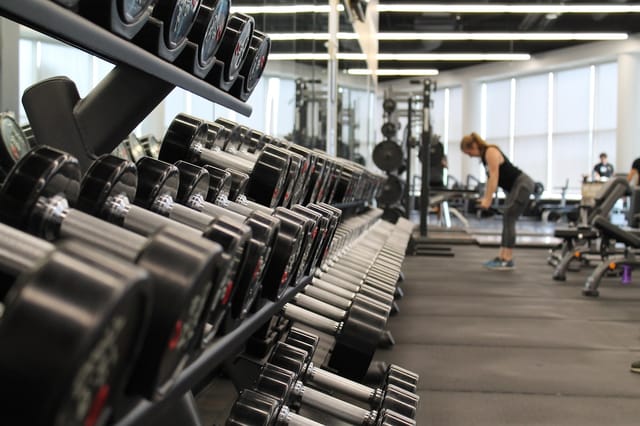
Best Air Purifiers for Home Gyms (2026)
The 6 best air purifiers for home gyms in 2026. High-airflow HEPA models that handle sweat odor, rubber mat off-gassing, and heavy breathing during workouts.

Table of Contents
- Our Top Picks at a Glance
- What Makes a Gym Air Purifier Different
- Airflow Matters More Than Whisper-Quiet
- Odor Control Is Non-Negotiable
- Your Filters Will Work Harder
- Placement and Durability
- Detailed Reviews
- 1. Levoit Core 600S: Best Overall for Home Gyms
- 2. Coway Airmega 400: Best for Large Garage Gyms
- 3. Blueair Blue Pure 211+: Best for Odor Removal
- 4. Winix 5510: Best Smart Value
- 5. Levoit Core 400S: Best Smart Features
- 6. Medify MA-112: Best Heavy-Duty for Large Spaces
- Home Gym Air Purifier Buying Guide
- Sizing Your Purifier to Your Gym
- Odor Sources in Home Gyms
- Placement in a Home Gym
- Running Costs Compared
- Ventilation vs. Air Purification
- The Bottom Line
TL;DR
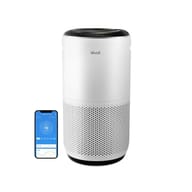
At Clean Air Critic, the best air purifier for a home gym is the Levoit Core 600S, delivering 410 CFM CADR with smart controls and a real-time PM2.5 sensor, all for around $260. For larger garage gyms or open basements, the Coway Airmega 400 covers up to 1,560 sq ft with dual-sided filtration. Budget pick: the Winix 5510 at $180 pairs strong CADR and WiFi control with a washable pre-filter that handles a gym's dust and hair load.
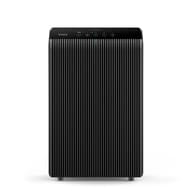
Full Comparison
| # | Product | Best For | Rating | Price | |
|---|---|---|---|---|---|
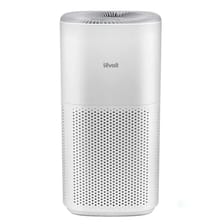
| 1 | Levoit Core 600S Top Pick Levoit | Best Overall for Home Gyms | 4.8 | $$ | Check Price |
| 2 | Coway Airmega 400 Coway | Best for Large Garage Gyms | 4.7 | $$$ | Check Price |
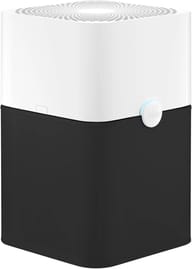
| 3 | Blueair Blue Pure 211+ Blueair | Best for Odor Removal | 4.7 | $$ | Check Price |
| 4 | Winix 5510 Winix | Best Smart Value | 4.5 | $ | Check Price |
| 5 | Levoit Core 400S Levoit | Best Smart Features | 4.6 | $$ | Check Price |
| 6 | Medify MA-112 Medify | Best Heavy-Duty for Large Spaces | 4.5 | $$$$ | Check Price |
Affiliate Disclosure: CleanAirCritic earns commissions from qualifying purchases through affiliate links on this page. This does not influence our rankings or reviews. All opinions are our own. Learn more
You built a home gym to get healthier. But the air in that gym might be working against you.
During intense exercise, your breathing rate jumps from a resting 12-20 breaths per minute to 40-60. You pull in 10 to 20 times more air per minute than when you are sitting at your desk. Every particle, every VOC molecule, every dust mite fragment in that room is entering your lungs at a dramatically higher rate.
And home gyms tend to have worse air quality than the rest of the house. Garages collect car exhaust residue, pesticide drift, and concrete dust. Basements trap humidity and mold spores. Rubber gym mats off-gas volatile organic compounds for weeks after unrolling. Sweat evaporates into the air carrying bacteria. Even chalk dust from lifting accumulates in corners.
A HEPA air purifier with strong airflow and activated carbon filtration directly reduces your exposure during the hours when your lungs are most actively pulling in air. We evaluated six models specifically for home gym use, prioritizing CADR, odor handling, and practical durability over bedroom-friendly features like sleep modes.
Our Top Picks at a Glance
| Purifier | Best For | CADR (CFM) | Room Coverage | Price Range |
|---|---|---|---|---|
| Levoit Core 600S | Best Overall | 410 | Up to 635 sq ft | $$ |
| Coway Airmega 400 | Large Garage Gyms | 328-400 | Up to 1,560 sq ft | $$$ |
| Blueair Blue Pure 211+ | Odor Removal | 350 | Up to 550 sq ft | $$ |
| Winix 5510 | Best Smart Value | 232-252 | Up to 372 sq ft | $ |
| Levoit Core 400S | Smart Features | 256-260 | Up to 403 sq ft | $$ |
| Medify MA-112 | Heavy-Duty / Commercial | 400-450 | Up to 2,500 sq ft | $$$$ |
What Makes a Gym Air Purifier Different
Choosing an air purifier for a home gym is not the same as choosing one for a bedroom or office. The priorities shift significantly.
Airflow Matters More Than Whisper-Quiet
In a bedroom, you want a purifier that runs silently at 24 dB. In a gym, you are already generating 70-80 dB of noise from treadmills, weights, and music. A purifier running at 40-50 dB is completely inaudible during a workout. This means you can prioritize raw airflow (CADR) over minimum noise specs, and run the purifier on medium or high speeds without caring about the decibel output.
Odor Control Is Non-Negotiable
HEPA filters catch particles. They do not catch odor molecules. For a gym with sweat, rubber, and cleaning product smells, you need activated carbon filtration alongside HEPA. The thicker the carbon layer, the more odor molecules it absorbs before saturating. A washable pre-filter, like the one on the Winix 5510, extends the main filter's life by catching hair, lint, and coarse dust before they reach it.
Your Filters Will Work Harder
A gym generates more airborne debris than a typical bedroom: skin cells from exercise, fabric fibers from towels and workout clothes, rubber particles from mats, chalk dust, and more. Expect to replace HEPA filters 30-50% sooner than the manufacturer's standard recommendation. Pre-filters with washable mesh are valuable because they catch the large particles before they clog the HEPA, extending its useful life.
Placement and Durability
Gym purifiers get bumped. They sit near equipment that generates vibration. They operate in higher humidity from sweat evaporation. Choose models with a stable base, durable construction, and enough weight to resist being knocked over by a stray jump rope or resistance band.
Detailed Reviews
1. Levoit Core 600S: Best Overall for Home Gyms
The Levoit Core 600S delivers the highest CADR on this list relative to its price, making it the best all-around choice for home gyms in the 300-600 sq ft range. At 410 CFM, it moves enough air to keep up with heavy breathing during intense sessions.
Why it works for gyms: The 3-stage H13 True HEPA filter captures 99.97% of particles at 0.3 microns, covering everything from dust and mold spores to the fine rubber particles that shed from gym mats. The activated carbon layer handles the odors that HEPA misses: sweat, rubber off-gassing, and cleaning product fumes.
Smart monitoring during workouts: The built-in laser dust sensor tracks PM2.5 in real time. In auto mode, the fan ramps up when particle levels spike (which they will, the moment you start moving on a treadmill or rolling out a mat) and throttles back when the air clears. You can watch the air quality readings in the VeSync app from your phone while resting between sets.
Airflow: 410 CFM CADR is genuinely impressive at this price point. For a 400 sq ft garage gym, that delivers roughly 4.5 air changes per hour on the highest setting, more than enough to maintain clean air during continuous exercise.
Size and stability: At 12.4 x 12.4 x 23.6 inches and 14.5 lbs, the Core 600S has a wide, stable base that resists tipping. It is substantial enough to stay put if bumped but not so heavy that you cannot move it when rearranging equipment.
Running costs: $60/year for replacement filters (expect closer to $80-90 in a gym with accelerated filter wear), roughly $8/year in electricity at 49 watts. Total cost of ownership is reasonable for the performance.
Downsides: The cylindrical design takes up a 12.4-inch diameter circle of floor space, which matters in a tight gym. No washable pre-filter means more frequent HEPA replacements. On the highest speed, fan noise reaches 51 dB, perfectly fine for gym use but noticeable in a quiet room.
2. Coway Airmega 400: Best for Large Garage Gyms
If your home gym occupies a full garage, a large basement, or an open-plan room over 500 sq ft, the Coway Airmega 400 is the pick. Its dual-sided filtration cleans air faster than single-intake designs, and 1,560 sq ft of rated coverage means it handles even oversized spaces.
Why it works for gyms: The Airmega 400 pulls air from both sides simultaneously through two Max2 filters (True HEPA + activated carbon). This dual-intake design is particularly effective in large, open gym spaces where air needs to circulate across a wide area. The activated carbon layer on each side doubles your odor absorption capacity compared to single-filter units.
Eco mode for post-workout: After you finish training and the air clears, the Airmega 400's eco mode detects clean air and stops the fan entirely. It restarts automatically when particles are detected again. This is ideal for a garage gym where you want the purifier running on its own schedule without manual adjustment.
Air quality monitoring: The color-coded LED ring shifts from blue (clean) through purple (moderate) to red (poor). Walking into your garage gym and seeing the ring color gives you an instant read on whether the air is ready for your workout, especially useful if you park a car in the same space.
Performance: CADR of 328 (dust/smoke) and 400 (pollen) delivers strong air changes even in a 600+ sq ft space. For a 400 sq ft gym, you can run it on medium speed and still get excellent filtration while keeping noise reasonable.
Downsides: At $349, the standard non-WiFi Airmega 400 is a mid-pack price here, but dual Max2 filter replacements run about $100/year, and you may need to replace them every 4-5 months in a dusty gym. No WiFi or app control. At 24.7 lbs, it stays where you put it.
3. Blueair Blue Pure 211+: Best for Odor Removal
The Blue Pure 211+ excels where gym air purifiers need to excel: moving large volumes of air through filtration that handles both particles and smells. Its 350 CFM CADR and HEPASilent technology make it one of the most efficient air-movers in its price range.
Why it works for gyms: HEPASilent combines mechanical filtration with electrostatic charging, achieving 99.97% particle capture while requiring less fan power than purely mechanical HEPA. Less fan power for the same filtration means more airflow per watt, which translates to better value in a gym where you want the purifier running on higher speeds for extended periods.
Odor handling: The activated carbon filter in the 211+ is denser than what you find in most comparably priced purifiers. For a gym environment with sweat, rubber mats, and cleaning products, this matters. Users consistently report noticeable odor reduction within 30-60 minutes of turning it on in a closed room.
Simplicity: One button. Low, medium, high. No display, no beeps, no app to set up. In a gym where your hands are sweaty and you just want the air cleaned, this simplicity is a feature. There is nothing to break, nothing to configure, and no screen glowing in the corner.
Washable pre-filter: The fabric pre-filter wraps around the bottom of the unit and catches large particles (dust bunnies, pet hair, clothing lint) before they reach the HEPA. It is washable and comes in multiple colors if you care about matching your gym decor. In a gym environment, washing this monthly extends the main filter's life significantly.
Downsides: No auto mode, no air quality sensor, no smart features. You set the speed manually and that is it. Coverage at 550 sq ft is adequate but not exceptional for a large garage gym. The cylindrical design needs floor space, and at 12.5 lbs, it can be moved but is not pocket-sized.
4. Winix 5510: Best Smart Value
At $180, the Winix 5510 delivers strong performance-per-dollar on this list and adds WiFi control, the successor to the discontinued Winix 5500-2. The washable pre-filter is a genuine advantage in a gym, where hair, lint, and chalk dust would otherwise clog the main filter fast.
Why it works for gyms: The 4-stage filtration (washable pre-filter, True HEPA and activated carbon in the replaceable Filter Q, plus PlasmaWave) addresses the full range of gym air quality issues. The HEPA handles particles, the activated carbon absorbs odors and VOCs from rubber and sweat, and the washable pre-filter catches the coarse debris that would otherwise shorten the main filter's life.
Washable pre-filter: This is the key durability feature for gym use. A gym throws off hair, towel lint, and chalk dust that clogs filters quickly. The Winix 5510's pre-filter rinses clean under water, so you maintain airflow without buying a replacement. The carbon now lives in the replaceable Filter Q, so plan on about $80/year for it; Winix supplies OEM filters through 2032.
WiFi and auto mode: The Winix Smart App lets you start the purifier before a session and check air quality from your phone. The built-in air quality sensor detects particle spikes when you start working out and increases fan speed automatically, then drops back down when you leave. Note there is no physical remote; you control it from the app or front panel.
PlasmaWave consideration: PlasmaWave technology produces trace amounts of ozone. For a gym, this is less of a concern than for a nursery where we recommend against it. The amounts are within CARB safe limits, and the additional pathogen neutralization can be useful in a sweaty, humid gym environment. You can disable PlasmaWave with a button press if you prefer.
Performance: CADR of 232-252 CFM handles gyms up to about 372 sq ft effectively. For a typical 200-300 sq ft home gym space, that is more than adequate.
Downsides: No physical remote. On high it reaches about 67 dB, which is fine mid-workout but loud in a quiet room. The unit is slightly bulky at 15 lbs. PlasmaWave may bother people sensitive to trace ozone, though it can be turned off.
5. Levoit Core 400S: Best Smart Features
The Levoit Core 400S occupies the middle ground between the compact Core 300S and the powerful Core 600S. For a small to medium home gym (200-400 sq ft) where you want smart controls without the 600S's size and price, this is the sweet spot.
Why it works for gyms: The H13 True HEPA filter captures 99.97% of particles at 0.3 microns, and the activated carbon layer handles odors from sweat and rubber. At 260 CFM CADR, it delivers solid air changes in a room up to 400 sq ft.
Smart scheduling for gym routines: If you work out at the same time every day, the VeSync app lets you schedule the purifier to ramp up to high speed 15-20 minutes before your session, pre-cleaning the air before you start breathing hard. It can automatically switch to auto mode during your workout window, then drop to low speed overnight. This set-and-forget automation is a genuine quality-of-life feature.
Real-time monitoring: The laser dust sensor shows PM2.5 levels in the app. You can track how your gym's air quality changes during and after workouts, and use that data to decide whether you need to improve ventilation (opening a window or door) or whether the purifier alone is handling it.
Compact footprint: At 8.5 x 8.5 x 20.5 inches and 9.4 lbs, the Core 400S takes up less floor space than any other purifier on this list. If your gym is tight and every square foot matters for equipment, this is a strong argument.
Downsides: 260 CFM CADR is solid but not exceptional for gym use. For a 400 sq ft space at high activity levels, it is adequate but will not deliver the aggressive air turnover of the Core 600S or Airmega 400. The thin carbon filter saturates faster than thicker alternatives in odor-heavy environments.
6. Medify MA-112: Best Heavy-Duty for Large Spaces
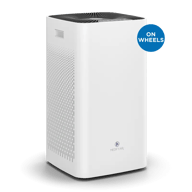
The Medify MA-112 is the most powerful residential air purifier on this list by a wide margin. With dual H13 HEPA filters and a CADR approaching 950, it is built for spaces where standard purifiers simply cannot keep up.
Why it works for gyms: If your home gym is a converted warehouse space, a large two-car garage, or a basement that doubles as a family room, the MA-112's 2,500 sq ft coverage ensures clean air throughout. The dual air intake draws from both sides, and the combined filtration surface area means the HEPA filters last longer even under heavy particulate load.
Oversized for strategic silence: The MA-112's massive coverage area means that in a typical 400 sq ft gym, you can run it on the lowest speed and still get more air changes per hour than most competitors on high. Fan speed 1-2 operates at 21-30 dB, making this the quietest effective option if you want both power and silence.
Medical-grade filtration: H13 HEPA captures 99.95% of particles down to 0.1 microns. For gyms that double as recovery spaces where you stretch, foam roll, and cool down while breathing deeply, this level of filtration matters.
Practical for shared spaces: The child lock, timer, and glass touch panel are simple but functional. Set the timer for your workout duration plus an hour of post-workout filtration, and the unit handles the rest.
Downsides: At $500, this is the most expensive option and overkill for gyms under 500 sq ft. At 33.5 lbs, it is heavy enough that you will pick a spot and leave it there. No WiFi or smart features. Dual filter replacements run $130/year, the highest ongoing cost on this list. Think of it as a semi-permanent installation, not a portable unit.
Home Gym Air Purifier Buying Guide
Sizing Your Purifier to Your Gym
The most common mistake is under-sizing. A purifier rated for 200 sq ft in a bedroom is rated for normal breathing. In a gym where you are inhaling 10x more air, that same room effectively needs a purifier with 1.5-2x the standard coverage rating to maintain clean air during workouts.
Practical sizing guide:
- Small gym (150-250 sq ft): Levoit Core 400S or Winix 5510. Either delivers adequate air changes for a spare bedroom gym.
- Medium gym (250-400 sq ft): Levoit Core 600S or Blueair Blue Pure 211+. The higher CADR keeps up with heavier workouts.
- Large gym (400-800 sq ft): Coway Airmega 400. Dual filtration handles the volume.
- Extra large / garage gym (800+ sq ft): Medify MA-112. Nothing else on this list covers the space.
Odor Sources in Home Gyms
Understanding what causes gym odors helps you choose the right filtration:
- Sweat: Evaporated sweat carries bacteria and organic compounds into the air. HEPA captures the particles; activated carbon absorbs the volatile compounds.
- Rubber mats: New rubber mats off-gas VOCs (primarily toluene and xylene) for 2-4 weeks. An activated carbon filter accelerates clearing these compounds. Airing out mats outdoors for 48 hours before installation also helps.
- Equipment lubricants: Treadmill belts, rowing machine chains, and cable systems use oils that produce faint but persistent chemical odors. Carbon filtration handles these.
- Cleaning products: Post-workout wipe-downs with disinfectants release their own VOCs. Using fragrance-free cleaners reduces this, but carbon filtration catches what remains.
For more on how different filter types handle different pollutants, see our filter types guide.
Placement in a Home Gym
- Against the wall, not in the center. Unlike bedrooms where center placement optimizes circulation, gyms need the purifier out of your movement path. Place it along a wall where it will not interfere with exercises.
- Near the worst air source. If your gym is in a garage, place the purifier near the garage door where outdoor pollutants infiltrate. If rubber mat smell is the issue, place it near the mat area.
- Intake unobstructed. Keep at least 2 feet of clearance around the intake. Do not push the purifier behind equipment or into a corner where airflow is restricted.
- Off the ground if possible. Elevating the purifier 1-2 feet on a stable shelf or platform can improve airflow distribution, particularly in basements where heavier particles settle near the floor.
- Protect the cord. Run power cords along walls, secured with clips or under rubber mat edges. A loose cord near workout equipment is a trip hazard.
Running Costs Compared
| Purifier | Purchase Price | Annual Filter Cost | Annual Energy Cost | 3-Year Total |
|---|---|---|---|---|
| Winix 5510 | ~$180 | $80 | ~$10 | ~$450 |
| Levoit Core 400S | ~$190 | $45 | ~$8 | ~$349 |
| Levoit Core 600S | ~$260 | $60 | ~$8 | ~$464 |
| Blueair Blue Pure 211+ | ~$250 | $55 | ~$10 | ~$445 |
| Coway Airmega 400 | ~$349 | $100 | ~$12 | ~$685 |
| Medify MA-112 | ~$500 | $130 | ~$16 | ~$938 |
Note: These filter cost estimates assume standard replacement intervals. In a gym environment with heavy use, expect 30-50% higher filter costs due to accelerated wear.
Ventilation vs. Air Purification
An air purifier is not a substitute for ventilation. If you can open a window or door during workouts, do it. Fresh outdoor air dilutes indoor pollutants in ways a purifier cannot replicate (particularly CO2 buildup from heavy breathing). An air purifier complements ventilation by filtering out the particles and odors that fresh air alone does not address.
If your gym has no windows (many basements and garages), an air purifier becomes even more critical. Consider a higher-CADR model like the Core 600S or Airmega 400 to compensate for the lack of natural air exchange.
For more on understanding indoor air quality fundamentals, see our indoor air quality basics guide.
The Bottom Line
For most home gyms, the Levoit Core 600S is the right choice. It delivers the highest CADR-per-dollar, includes smart monitoring so you can track your gym's air quality in real time, and handles both particles and odors with its 3-stage filtration. At $260, it is the best balance of performance and price for a room up to 600 sq ft.
If your gym occupies a large garage or open basement, step up to the Coway Airmega 400 for its dual-sided filtration and 1,560 sq ft coverage. If budget is the priority, the Winix 5510 at $180 delivers strong value with WiFi control and a washable pre-filter that shrugs off a gym's hair and dust load.
Whatever you choose, the most important thing is running the purifier consistently. An air purifier sitting in the corner turned off does nothing. Set it to auto mode, let it ramp up when you start sweating, and keep it running for an hour after you finish. Your lungs are working harder in your gym than anywhere else in your house. Give them clean air to work with.
For related reading: our guide to air purifier running costs breaks down long-term ownership expenses, and our how to choose an air purifier guide covers the fundamentals if you are also looking for purifiers for other rooms.
Last updated: April 2026. Prices and availability are subject to change. We update this guide when significant new models launch or pricing shifts substantially.
Frequently Asked Questions
Do I really need an air purifier in my home gym?
What CADR rating do I need for a home gym?
Will an air purifier help with rubber mat smell?
Should I run the air purifier during or after workouts?
How often do I need to replace filters in a gym air purifier?
Is a bigger air purifier always better for a home gym?
Can I use a portable air purifier or do I need a permanent one?
You Might Also Like
Best Air Purifier for COPD (2026): 7 Ozone-Free Picks
The 7 best air purifiers for COPD in 2026, screened for zero ozone and costed for 24/7 use. Ozone-free HEPA picks from $56 to $290 a year to run.

Best Air Purifier for a Gas Stove (2026): 7 Carbon Picks
The 7 best air purifiers for gas stove pollution in 2026, ranked by carbon capacity. What they fix, what they cannot fix, and honest NO2 reduction numbers.
Best Air Purifier & Humidifier Combo (2026)
The best air purifier and humidifier combos in 2026. We rate the top HEPA+humidifier units and explain when a pairing of two separate devices beats any all-in-one.
Best Air Purifiers for Nail Salons (2026)
The best air purifiers for nail salons in 2026. We compare heavy-carbon units and source-capture options to clear acrylic fumes, MMA monomer, and VOCs at the nail table.