Best Air Purifier for Home Renovation and Painting (2026)
The 6 best air purifiers for renovation dust, paint fumes, and construction VOCs in 2026. HEPA + activated carbon picks for sanding, painting, and remodeling.

Table of Contents
- Best Air Purifier for Renovation: Top Picks at a Glance
- Detailed Reviews
- 1. IQAir HealthPro Plus XE: Best Overall for Renovation
- 2. Medify MA-112: Best for Whole-House Renovation
- 3. Levoit Core 600S: Best Value for Renovation
- 4. Medify MA-40: Best for Single-Room Renovation
- 5. Coway Airmega 400: Best for Open Floor Plans During Renovation
- 6. Winix 5510: Budget Smart Pick for Light Renovation
- How to Use an Air Purifier During Renovation
- Placement Strategy by Renovation Phase
- Filter Management During Renovation
- Ventilation and Purification Together
- Renovation Scenarios: Which Purifier to Buy
- A Note on Lead Paint
- Running Costs During Renovation
- The Bottom Line
TL;DR
At Clean Air Critic, the best air purifier for home renovation is the IQAir HealthPro Plus XE, with 5 lbs of granular activated carbon for paint VOCs and HyperHEPA filtration that captures construction dust down to 0.003 microns. For the best value, the Levoit Core 600S delivers 410 CFM CADR with smart auto-mode under $300. If you are renovating a large open space, the Medify MA-112 covers up to 2,500 sq ft with dual HEPA filters and granular carbon at 950 CFM.
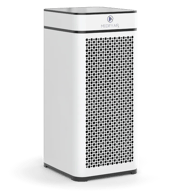
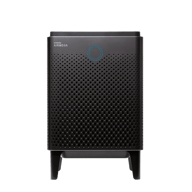
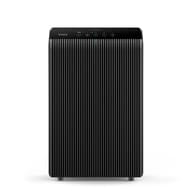
Full Comparison
| # | Product | Best For | Rating | Price | |
|---|---|---|---|---|---|
| 1 | IQAir HealthPro Plus XE Top Pick IQAir | Best Overall for Renovation | 4.9 | $$$$ | Check Price |
| 2 | Medify MA-112 Medify | Best for Whole-House Renovation | 4.7 | $$$ | Check Price |
| 3 | Levoit Core 600S Levoit | Best Value for Renovation | 4.8 | $$ | Check Price |
| 4 | Medify MA-40 Medify | Best for Single-Room Renovation | 4.5 | $$ | Check Price |
| 5 | Coway Airmega 400 Coway | Best for Open Floor Plans | 4.6 | $$$ | Check Price |
| 6 | Winix 5510 Winix | Budget Smart Pick for Light Renovation | 4.5 | $ | Check Price |
Affiliate Disclosure: CleanAirCritic earns commissions from qualifying purchases through affiliate links on this page. This does not influence our rankings or reviews. All opinions are our own. Learn more
Home renovation is the worst-case scenario for indoor air quality. You are generating two types of pollution at once: fine particulates from sanding, sawing, drilling, and demolition, plus a heavy dose of volatile organic compounds from paint, stain, polyurethane, adhesives, and caulk. The EPA estimates that VOC concentrations during interior painting can spike to 1,000 times normal indoor levels. Meanwhile, construction dust contains gypsum, silica, and in older homes, lead, particles that lodge deep in lung tissue.
A standard HEPA air purifier handles the dust but ignores the chemicals. A carbon-only filter handles fumes but chokes on particles. For renovation, you need both: True HEPA filtration plus substantial activated carbon. And you need enough airflow to keep up with the volume of pollutants renovation generates, which is far beyond what normal household use produces.
We tested and evaluated over a dozen purifiers for renovation-specific performance, prioritizing CADR, carbon weight, filter durability under heavy loads, and the ability to handle simultaneous particle and gas pollution. Here are the six best performers for 2026.
Best Air Purifier for Renovation: Top Picks at a Glance
| Purifier | Best For | Carbon Filter | CADR (Smoke) | Room Coverage | Price |
|---|---|---|---|---|---|
| IQAir HealthPro Plus XE | Best Overall | 5 lbs granular carbon + alumina | 300+ CFM | Up to 1,125 sq ft | ~$1,199 |
| Medify MA-112 | Whole-House Renovation | Dual granular carbon | 450 CFM | Up to 2,500 sq ft | ~$500 |
| Levoit Core 600S | Best Value | Honeycomb carbon layer | 410 CFM | Up to 635 sq ft | ~$260 |
| Medify MA-40 | Single-Room Renovation | Granular carbon | 380 CFM | Up to 840 sq ft | ~$280 |
| Coway Airmega 400 | Open Floor Plans | Dual Max2 carbon | 328 CFM | Up to 1,560 sq ft | ~$349 |
| Winix 5510 | Budget / Light Renovation | Carbon in Filter Q | 232 CFM | Up to 372 sq ft | ~$180 |
Detailed Reviews
1. IQAir HealthPro Plus XE: Best Overall for Renovation
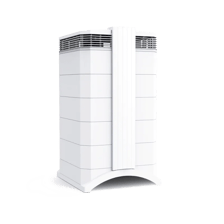
The IQAir HealthPro Plus XE is the strongest air purifier you can put in a renovation zone. Its V5-Cell gas and odor filter contains 5 pounds of granular activated carbon and alumina, the heaviest carbon bed in any consumer air purifier. The HyperHEPA filter captures particles down to 0.003 microns, which is 100 times smaller than standard HEPA and well below the size of the finest construction dust.
Why it excels at renovation: The dual threat of renovation, heavy particles and heavy VOCs, is exactly what this purifier was built for. The granular carbon handles paint fumes, polyurethane vapors, adhesive off-gassing, and stain VOCs. The alumina component specifically targets formaldehyde and other aldehydes, which are among the most common and most harmful renovation chemicals. The HyperHEPA stage captures drywall dust, sanding particles, and sawdust with zero bypass thanks to the fully sealed, medical-grade housing.
Build quality: Swiss-made with a sealed filter housing that prevents any air from bypassing the filtration stages. During renovation, this matters: unfiltered air leaking around the carbon means VOC molecules passing through untreated, and particles escaping the HEPA mean dust recirculating.
Renovation-specific considerations: The V5-Cell carbon filter lasts 1 to 2 years under normal conditions, but during active renovation, expect to replace it every 4 to 6 months. The pre-filter extends HEPA life significantly, and you should vacuum it weekly during dusty work. At $1,199, this is a serious investment, but if you are doing a multi-room renovation or are sensitive to chemical fumes, it is the most effective single-unit solution available.
Downsides: Smart control is limited to IQAir's AirVisual app, with no Alexa or Google Assistant support. Heavy at 35 lbs. The price is the highest on this list. Filter replacements ($120–$180 per set) add up during heavy use.
2. Medify MA-112: Best for Whole-House Renovation
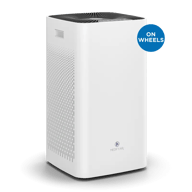
When renovation involves multiple rooms or an entire floor, you need a purifier that can cover the full space. The Medify MA-112 handles up to 2,500 sq ft with dual H13 HEPA filters, granular activated carbon, and a CADR of 450 CFM on smoke, the highest output of any unit on this list.
Why it excels at renovation: The dual-filter design pulls air from both sides, cycling large volumes fast enough to manage the elevated pollutant levels renovation creates. Granular activated carbon pellets in each filter provide more surface area than carbon sheets, handling paint and adhesive VOCs effectively. The H13 HEPA stage captures 99.95% of particles down to 0.1 microns, covering all construction dust types including the fine silica particles from concrete and tile work.
Scale advantage: If you are gutting a kitchen, refinishing floors across multiple rooms, or doing a whole-house remodel, running three smaller purifiers is more expensive and less effective than one MA-112 placed centrally. The 2,500 sq ft coverage means a single unit can protect an entire floor of a typical home.
Practical features: A glass touch panel with timer lets you schedule the purifier to run at maximum before you arrive each morning, so you walk into cleaner air. The child lock prevents kids or contractors from accidentally adjusting settings. A filter replacement indicator tracks usage, though during renovation you should check filters visually regardless.
Downsides: Large and heavy at 33.5 lbs, so it stays where you put it. No Wi-Fi or smart features. Dual filter replacements cost $60–90 per set. Fan noise on high is noticeable at 60+ dB, which matters less in an active work site but more if you are living in the home during renovation.
3. Levoit Core 600S: Best Value for Renovation
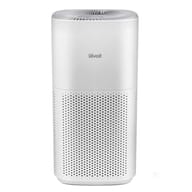
The Levoit Core 600S delivers the best combination of renovation-grade performance, smart features, and price. At roughly $260, you get 410 CFM CADR, a honeycomb activated carbon filter, H13 True HEPA, and app-based monitoring that tells you exactly how bad the air is in real time.
Why it excels at renovation: The 410 CFM smoke CADR is the highest on this list per dollar. The honeycomb carbon structure provides more surface area than flat carbon sheets, giving it reasonable VOC handling for moderate renovation scenarios like painting a room, installing new cabinetry, or applying adhesive for backsplash tile. The laser PM2.5 sensor and auto mode are especially valuable during renovation because they detect particle and pollution spikes and automatically ramp up fan speed in response.
Smart features that matter for renovation: The VeSync app lets you monitor air quality remotely, so you can check your home's AQI from outside while paint is curing. You can set schedules to run on high during work hours and medium overnight. The PM2.5 display gives you visual confirmation that the purifier is actually reducing dust levels, which is reassuring during a project that generates visible particle clouds.
Renovation-specific considerations: The carbon layer is lighter than premium units. During heavy painting or polyurethane application, it will saturate faster; budget for replacement every 3 months instead of the standard 6 to 8. The 635 sq ft coverage is sufficient for a single large room or two adjacent smaller rooms with the doors open.
Downsides: Not enough carbon capacity for simultaneous whole-house renovation fumes. The cylindrical design takes up floor space, which is already tight in a renovation zone. Filter replacements run $40–50 and will be needed more often during renovation.
4. Medify MA-40: Best for Single-Room Renovation
The Medify MA-40 is the sweet spot for a focused renovation project: one room getting painted, a bathroom being remodeled, or a kitchen backsplash going in. At $280 with 380 CFM CADR and 840 sq ft coverage, it has the power of larger units in a more compact form factor.
Why it excels at renovation: The dual air intake pulls air from both sides, processing more volume than single-intake designs at similar noise levels. The H13 True HEPA captures 99.9% of particles down to 0.1 microns, which covers sanding dust, drywall particulates, and the fine debris from tile cutting. The granular activated carbon handles paint and adhesive fumes with more capacity than the thin carbon layers found on budget purifiers.
Right-sized for real renovation scenarios: Most home renovation projects happen one room at a time. The MA-40's 840 sq ft coverage means it handles a bedroom, bathroom, or kitchen renovation with headroom to spare. The compact tower design (9.9 x 10.9 x 22 inches) fits against a wall or in a corner without blocking the work area.
Practical features: A glass touch panel with timer and child lock. Filter replacement indicator tracks usage. The dual HEPA plus carbon filters are single-cartridge replacements, which simplifies the process.
Downsides: Louder than competitors at 46 dB minimum, which is fine during active work but noticeable during evening hours if you are living in the home. No Wi-Fi or app. Filter replacements every 3 to 6 months at $35–50 per set add up during extended renovation.
5. Coway Airmega 400: Best for Open Floor Plans During Renovation
If your renovation involves an open-concept living area, kitchen, or great room, the Coway Airmega 400 covers up to 1,560 sq ft with dual Max2 filters that handle both particles and VOCs from both sides of the unit.
Why it excels at renovation: The dual-filter design doubles the activated carbon surface area compared to single-filter purifiers. Each Max2 cartridge contains True HEPA media and an activated carbon layer, and since the Airmega 400 uses two simultaneously, it processes air from both sides. In an open floor plan where paint fumes and sanding dust can drift freely, this dual-intake approach captures pollutants more evenly across the space.
Smart monitoring during renovation: The color-coded air quality ring provides instant visual feedback: blue means clean, purple means moderate, and red means polluted. During renovation, watching the ring shift from red to blue after a session of sanding or painting tells you the purifier is doing its job. Eco mode pauses the fan when air quality stabilizes, which saves energy during off-hours when no active work is happening.
Build quality: The well-sealed filter housing prevents bypass, and the combined HEPA/carbon cartridges ($50–60 per set) simplify replacement since you swap both stages at once. At 22 dB on low, it is one of the quietest large-room purifiers, which matters if you are living in the home during a multi-week renovation.
Downsides: The individual carbon weight per cartridge is modest. For sustained heavy VOC exposure like whole-room polyurethane application, it may not match the IQAir or Medify MA-112's carbon capacity. The 328 CFM smoke CADR is adequate but not class-leading for the 1,560 sq ft coverage claim.
6. Winix 5510: Budget Smart Pick for Light Renovation
At roughly $180, the Winix 5510 is the most affordable purifier on this list that provides genuine dual-threat filtration plus WiFi control, the successor to the discontinued Winix 5500-2. The combination of True HEPA, an activated carbon layer, and PlasmaWave technology gives it three layers of pollutant handling.
Why it works for renovation: The washable pre-filter catches coarse demolition and sanding dust before it loads the main filter, which matters during renovation when filters otherwise clog fast. PlasmaWave technology generates hydroxyls that break down VOCs at the molecular level without producing harmful ozone (CARB certified), giving it a second VOC-handling mechanism beyond carbon adsorption alone. True HEPA captures 99.97% of particles at 0.3 microns, including sanding dust and drywall particulates.
Best for lighter renovation work: Painting a bedroom, replacing trim, installing shelving, minor tile work, projects that generate moderate dust and fumes rather than the heavy, sustained output of a full gut renovation. The 372 sq ft coverage handles a single room well.
Smart control: WiFi and the Winix Smart App let you check air quality and adjust fan speed remotely while paint cures or dust settles. There is no physical remote.
Filter notes: The carbon now lives in the replaceable Filter Q (about $80/year), so this is the smart-value pick rather than the cheapest to run. The washable pre-filter slows loading; rinse it every few days during dusty work to maintain airflow. Winix supplies OEM filters through 2032.
Downsides: Not enough power or carbon capacity for heavy renovation. The 232 CFM CADR will fall behind in rooms with active sanding or cutting work. For major renovation projects, this should supplement a larger unit rather than serve as the primary purifier. No physical remote.
How to Use an Air Purifier During Renovation
Renovation is the most demanding use case for a residential air purifier. How you deploy and maintain the unit matters as much as which one you buy.
Placement Strategy by Renovation Phase
During demolition and sanding (heavy dust): Place the purifier in the next room or hallway, positioned to catch airborne dust as it migrates from the work area. Do not put the purifier directly in the demolition zone; the volume of coarse debris can overwhelm the pre-filter in hours. Seal off the work area with plastic sheeting and let the purifier clean the air that escapes into the living space.
During painting and staining (heavy VOCs): Run the purifier in an adjacent room during active application. Paint and stain release the highest VOC concentrations while wet, which can saturate a carbon filter rapidly if the unit is placed directly in the room. Once the paint is dry to the touch (typically 2 to 4 hours for latex, overnight for oil-based), move the purifier into the painted room and run it continuously for 3 to 7 days.
During curing and off-gassing (moderate, sustained): After active work is complete, place the purifier centrally in the renovated space. Close windows and doors to let the purifier cycle the room air efficiently. Run on medium or auto mode 24/7. This phase can last 2 to 6 weeks depending on the materials used.
Filter Management During Renovation
Standard filter replacement schedules do not apply during renovation. Follow this accelerated schedule:
- Pre-filter: Vacuum or wash every 3 to 5 days during dusty work. Replace monthly if the unit uses disposable pre-filters.
- HEPA filter: Check visually every 2 weeks. Replace every 2 to 3 months during active renovation instead of the normal 6 to 12 months.
- Carbon filter: Check monthly by nose: if you can smell paint or chemical fumes with the purifier running on high, the carbon is saturated. Replace every 2 to 3 months during heavy VOC exposure.
Budget for 2 to 3 extra filter sets before starting renovation. Running a purifier with saturated filters is worse than not running one at all, because it creates a false sense of protection.
Ventilation and Purification Together
An air purifier is not a substitute for ventilation during active renovation work. The two serve different purposes:
- Ventilation (open windows, fans) dilutes acute VOC spikes during painting and removes bulk dust during demolition. It is the fastest way to reduce peak concentrations.
- Air purification provides continuous, controlled pollutant removal after ventilation is closed. It handles the sustained low-to-moderate VOC levels during curing and the fine particulate that settles and re-suspends over days and weeks.
The best approach: ventilate aggressively during active work, then close up and run the purifier continuously during the curing and off-gassing period.
Renovation Scenarios: Which Purifier to Buy
| Renovation Project | Recommended Purifier | Why |
|---|---|---|
| Painting 1-2 rooms | Levoit Core 600S or Medify MA-40 | Moderate VOCs, smart monitoring helps track air quality during curing |
| Refinishing hardwood floors | IQAir HealthPro Plus XE | Polyurethane generates heavy, sustained VOCs for weeks; need maximum carbon capacity |
| Kitchen or bathroom remodel | Medify MA-40 or Coway Airmega 400 | Mixed dust (tile, drywall) and adhesive/grout VOCs; need strong particle + gas handling |
| Whole-house renovation | Medify MA-112 | Only sub-$600 unit with coverage and CADR for multi-room sustained use |
| Light cosmetic updates (trim, shelving, touch-up paint) | Winix 5510 | Budget-friendly for moderate dust and light VOC exposure |
| Sanding and stripping old paint | IQAir HealthPro Plus XE or Medify MA-112 | Lead risk in pre-1978 homes; need maximum particle capture and sealed housing |
A Note on Lead Paint
If your home was built before 1978 and you are sanding, scraping, or disturbing painted surfaces, there is a risk of lead exposure. Lead dust particles are extremely fine and dangerous, especially for children and pregnant women. An air purifier with True HEPA filtration captures lead particles, but it is not a substitute for EPA RRP (Renovation, Repair, and Painting) rule compliance. Contain the work area with plastic sheeting, use HEPA-filtered tools, wet-sand when possible, and consider hiring an RRP-certified contractor for large projects.
Running Costs During Renovation
Filter costs are significantly higher during renovation than normal use. Here is what to budget:
| Purifier | Normal Annual Filter Cost | Estimated Renovation Filter Cost (6-month project) |
|---|---|---|
| IQAir HealthPro Plus XE | ~$120/year | $180–$240 (1-2 V5-Cell replacements) |
| Medify MA-112 | ~$130/year | $120–$180 (2-3 dual filter sets) |
| Levoit Core 600S | ~$60/year | $80–$120 (2-3 filter replacements) |
| Medify MA-40 | ~$70/year | $70–$100 (2 filter sets) |
| Coway Airmega 400 | ~$100/year | $100–$150 (2 dual Max2 sets) |
| Winix 5510 | ~$80/year | $80–$120 (1-2 Filter Q sets; wash pre-filter) |
The Winix 5510 keeps maintenance simple with a washable pre-filter, though its carbon now lives in the replaceable Filter Q, so it is not the cheapest to run. The IQAir HealthPro Plus XE has the highest cost but its V5-Cell lasts longer per unit of VOC exposure due to the heavier carbon bed.
The Bottom Line
Renovation forces your air purifier to do double duty: capturing construction particles and adsorbing chemical fumes simultaneously, at volumes far beyond normal household use. The IQAir HealthPro Plus XE is the strongest overall performer with its unmatched carbon capacity and medical-grade particle filtration. The Medify MA-112 is the right choice for large-scale or multi-room projects. For most single-room renovations, the Levoit Core 600S or Medify MA-40 deliver strong performance at a reasonable price. Budget the extra filter costs into your renovation budget; they are a fraction of the project total and protect your lungs throughout the process.
Related guides: For a deeper dive into the chemicals renovation releases, read our VOCs explained guide. If your renovation is complete and you are dealing with off-gassing from new materials, see best air purifier for new homes. For garages and workshop spaces where renovation prep often happens, check our best air purifier for garage and workshop guide. To understand how activated carbon differs from HEPA, our comparison explains when you need each technology. And to understand ongoing costs, see our air purifier running costs breakdown.
Last updated: May 2026. Prices and availability are subject to change. We update this guide when new products launch or renovation-relevant filtration technology advances.
Frequently Asked Questions
Can an air purifier remove paint fumes?
Should I run an air purifier while painting or wait until after?
How long do paint fumes last after renovation?
Do I need a special air purifier for construction dust?
Is construction dust dangerous to breathe?
How often should I replace filters during renovation?
Can I use a shop vac or box fan filter instead of an air purifier?
You Might Also Like

Best Air Purifier for COPD (2026): 7 Ozone-Free Picks
The 7 best air purifiers for COPD in 2026, screened for zero ozone and costed for 24/7 use. Ozone-free HEPA picks from $56 to $290 a year to run.

Best Air Purifier for a Gas Stove (2026): 7 Carbon Picks
The 7 best air purifiers for gas stove pollution in 2026, ranked by carbon capacity. What they fix, what they cannot fix, and honest NO2 reduction numbers.

Best Air Purifier & Humidifier Combo (2026)
The best air purifier and humidifier combos in 2026. We rate the top HEPA+humidifier units and explain when a pairing of two separate devices beats any all-in-one.
Best Air Purifiers for Nail Salons (2026)
The best air purifiers for nail salons in 2026. We compare heavy-carbon units and source-capture options to clear acrylic fumes, MMA monomer, and VOCs at the nail table.