Best Air Purifier & Dehumidifier Combo (2026)
The best air purifier and dehumidifier combos for 2026. We explain why true 2-in-1 units are limited, and which purifier + dehumidifier pairings actually work.
Based on dehumidification capacity testing (pints per day), HEPA filtration analysis, coverage-area math, and an honest comparison of true 2-in-1 units against dedicated purifier plus dehumidifier pairings
Table of Contents
- Our Top Picks at a Glance
- The Honest Verdict First
- True 2-in-1 Combo Units
- 1. Afloia Q10: Best True 2-in-1 Combo
- 2. Tenergy Sorbi: Best Budget Combo for Small Spaces
- The Pairing We Actually Recommend
- 3. Midea Cube 35-Pint: Best Dehumidifier to Pair
- 4. Levoit Core 600S: Best Air Purifier to Pair (Large Rooms)
- 5. Levoit Core 400S: Best Smart Purifier to Pair (Mid-Size)
- 6. Coway Airmega 400: Best Purifier for Whole-Basement Coverage
- Why a Single Combo Box Struggles to Do Both Jobs
- Dehumidifiers Need a Compressor for Real Capacity
- Purifiers Need Airflow and a Deep Filter
- The Math on Coverage
- When a True Combo Is the Right Call
- How to Set Up the Pairing
- The Bottom Line
TL;DR
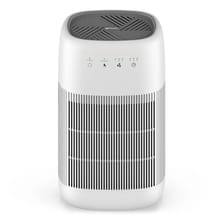
At Clean Air Critic, the best true 2-in-1 air purifier and dehumidifier combo is the Afloia Q10, a compact unit that pairs a H13 HEPA filter with a small thermoelectric dehumidifier for spaces up to about 270 sq ft. But here is the honest truth: single-box combos are underpowered for real moisture problems. For a basement or any room with genuine humidity, we recommend pairing a compressor dehumidifier like the Midea Cube 35-Pint with a dedicated purifier like the Levoit Core 600S. That two-device approach outperforms every all-in-one on the market.
Full Comparison
| # | Product | Best For | Rating | Price | |
|---|---|---|---|---|---|
| 1 | Afloia Q10 Top Pick Afloia | Best True 2-in-1 Combo | 4.2 | $ | Check Price |
| 2 | Tenergy Sorbi Tenergy | Best Budget Combo for Small Spaces | 4.1 | $ | Check Price |
| 3 | Midea Cube 35-Pint Midea | Best Dehumidifier to Pair | 4.5 | $$ | Check Price |
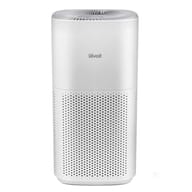
| 4 | Levoit Core 600S Levoit | Best Air Purifier to Pair (Large Rooms) | 4.7 | $$ | Check Price |
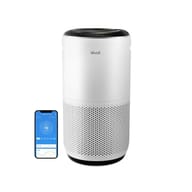
| 5 | Levoit Core 400S Levoit | Best Smart Purifier to Pair (Mid-Size) | 4.8 | $$ | Check Price |
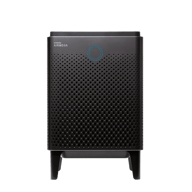
| 6 | Coway Airmega 400 Coway | Best Purifier for Whole-Basement Coverage | 4.6 | $$$ | Check Price |
Affiliate Disclosure: CleanAirCritic earns commissions from qualifying purchases through affiliate links on this page. This does not influence our rankings or reviews. All opinions are our own. Learn more
Search for an "air purifier dehumidifier combo" and you will find plenty of sleek little boxes that promise to do both jobs at once. Some of them genuinely do. The problem is not honesty, it is physics: the two jobs pull hardware in opposite directions, and cramming both into one compact housing means neither works as well as a dedicated device.
Real dehumidification needs a compressor and a cold coil to condense water out of the air. Strong air filtration needs high airflow pushing through a deep HEPA filter. The all-in-one units on the market shrink both systems to fit one shell, so you get a dehumidifier that removes about a pint and a half a day and a filter with modest airflow. For a closet or a small bathroom, that is fine. For a basement, a humid bedroom, or any space with a genuine moisture problem, it falls short.
So we split this guide in two. First, the best true 2-in-1 units, and exactly where they make sense. Then the pairing we actually recommend for most readers: a compressor dehumidifier plus a dedicated air purifier, which together outperform every combo box on its rated specs. If you are weighing the two categories against each other, our explainer on air purifier vs. dehumidifier covers the fundamentals, and our best air purifiers for basements guide digs into below-grade spaces where this question comes up most.
Our Top Picks at a Glance
| Product | Type | Moisture Removal | Air Filtration | Coverage | Price |
|---|---|---|---|---|---|
| Afloia Q10 | True 2-in-1 | ~1.6 pt/day | H13 True HEPA | ~270 sq ft | ~$100 |
| Tenergy Sorbi | True 2-in-1 | ~1.6 pt/day | H13 True HEPA | ~200 sq ft | ~$70 |
| Midea Cube 35-Pint | Dehumidifier | 35 pt/day | Dust screen | up to 3,500 sq ft | ~$250 |
| Levoit Core 600S | Air Purifier | None | H13 True HEPA | 635 sq ft | ~$260 |
| Levoit Core 400S | Air Purifier | None | H13 True HEPA | 403 sq ft | ~$220 |
| Coway Airmega 400 | Air Purifier | None | True HEPA + Carbon | 1,560 sq ft | ~$650 |
The Honest Verdict First
If you take one thing from this guide, take this: a true single-box combo is the right choice only when your space is small and your moisture problem is mild. The Afloia Q10 is our pick in that category, and it is a genuinely useful little machine for a closet, a small bathroom, an RV, or a dorm corner.
For everything else, buy two devices. A compressor dehumidifier removes roughly 20 times more water per day than a thermoelectric combo, and a dedicated purifier moves far more air through a deeper filter. The pairing costs more up front, but it actually solves the problem, and you can run each unit only when you need it.
With that framing set, here are the picks.
True 2-in-1 Combo Units
1. Afloia Q10: Best True 2-in-1 Combo
The Afloia Q10 is the combo unit we recommend when you truly want one box that does both jobs. It stacks a three-stage filtration system (pre-filter, activated carbon, and a H13 True HEPA layer) on top of a thermoelectric dehumidifier, and the two functions can run together or independently.
Dehumidifier performance: The Q10 removes up to 750 ml (about 1.6 pints) of water per day under warm, humid conditions, and holds it in a 1-liter tank. Coverage is rated to roughly 270 sq ft. That is real dehumidification, but at a small scale: think of it as a moisture manager for a bathroom, closet, or bedroom nook, not a basement solution. The tank shuts the unit off automatically when full so it never overflows.
Air filtration: This is where the Q10 earns its keep. The H13 True HEPA filter captures 99.97% of particles at 0.3 microns, and the activated carbon layer handles odors, which is a nice match for a humid room that tends to smell musty. Airflow is modest at 60 m³/h CADR, so treat the purifier side as bedroom-sized, not living-room-sized.
Noise and running cost: Thermoelectric cooling is nearly silent, a genuine advantage over compressor dehumidifiers that hum and cycle. Replacement filters run about $20 every 3 to 6 months depending on how hard you run it.
Who this is for: Anyone with a small, mildly humid space who values a quiet, single-box solution and does not want two appliances. Perfect for bathrooms, walk-in closets, RVs, and small bedrooms. Not the pick for a basement or any room with standing humidity above 60%.
2. Tenergy Sorbi: Best Budget Combo for Small Spaces
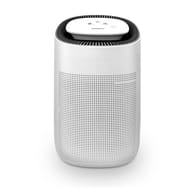
The Tenergy Sorbi is the budget version of the same idea, and at around $70 it is the most affordable genuine 2-in-1 we recommend. Like the Afloia, it uses Peltier cooling paired with a True HEPA filter in one compact tower.
Dehumidifier performance: The Sorbi removes about 750 ml (1.6 pints) per day at 80% humidity and 86°F, stored in a 1-liter removable tank. Coverage is rated to roughly 200 sq ft, slightly less than the Afloia. Auto shut-off protects against overflow, and a water-level window lets you see when it is time to empty.
Air filtration: A H13 medical-grade True HEPA filter captures 99.97% of dust, pollen, and mold spores at 0.3 microns. There is no separate carbon layer as substantial as the Afloia's, so the Sorbi is better at particles than odors. Touch controls and adjustable fan speeds keep operation simple.
Noise: At 35 to 42 dB it is quiet enough for a bedroom or small office, though not quite as silent as the Afloia on its lowest setting.
Who this is for: Budget-minded buyers who need light dehumidification plus real HEPA filtration in a closet, bathroom, or small bedroom. It is the cheapest honest combo on this list. As with the Afloia, do not expect it to tackle a basement.
The Pairing We Actually Recommend
For a basement, a whole bedroom, or any space with a real moisture problem, the two-device approach is not a compromise, it is the upgrade. Here is the dehumidifier we pair, plus three purifiers to match different room sizes.
3. Midea Cube 35-Pint: Best Dehumidifier to Pair
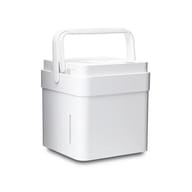
The Midea Cube 35-Pint is the moisture workhorse that makes the pairing approach work. Where a thermoelectric combo removes a pint and a half a day, the Cube's compressor pulls 35 pints, more than twenty times as much, and it can manage spaces up to 3,500 sq ft in drier conditions.
Dehumidifier performance: The Cube adjusts humidity from 35% to 85% and holds an unusually large tank thanks to its nesting design, so you empty it far less often than a conventional unit. Better still, it supports continuous drainage: remove the tank, attach the included hose, and route it to a floor drain or over a sink for hands-off operation. That is exactly what you want in a basement you do not visit daily.
Smart features: Wi-Fi and the SmartHome app let you set a target humidity and monitor the unit from upstairs, and it works with Alexa. Set it to hold 45% and forget about it.
Why it pairs so well: By keeping humidity below 50%, the Cube removes the moisture that mold and dust mites depend on. That makes any air purifier you run alongside it dramatically more effective, because the air carries fewer spores and lighter particle loads to begin with. This is the single most impactful device you can add to a damp space.
Who this is for: Anyone with a basement, laundry room, crawlspace, or humid main floor. Pair it with one of the purifiers below sized to your square footage.
4. Levoit Core 600S: Best Air Purifier to Pair (Large Rooms)
The Levoit Core 600S is our default purifier to run alongside the Midea Cube in a medium-to-large space. Its 410 CFM CADR cycles the air in a 500 sq ft room about five times an hour, fast enough to keep up with the spores and dust that moisture stirs up.
Filtration: A three-stage H13 True HEPA filter captures 99.97% of particles at 0.3 microns, and roughly 3 lbs of granular activated carbon absorbs the musty microbial VOCs that give damp spaces their smell. That carbon mass matters: thin carbon sheets saturate in weeks in a humid room, while a substantial layer keeps working for months.
Smart monitoring: A built-in PM2.5 laser sensor tracks particle levels in the VeSync app, and auto mode ramps the fan up after a humid day or a rainstorm and eases back when the air clears. On its lowest setting it runs at a near-silent 26 dB.
Who this is for: Pair it with the Midea Cube for a basement or large room between 400 and 635 sq ft. This is the combination we would put in most damp basements.
5. Levoit Core 400S: Best Smart Purifier to Pair (Mid-Size)
If your humid space is more of a rec room or bedroom in the 200 to 400 sq ft range, the smaller Levoit Core 400S is the more sensible match. At 260 CFM CADR it cycles a 300 sq ft room about five times an hour, and it brings the same H13 True HEPA and smart features as its bigger sibling in a smaller, cheaper package.
Filtration and smarts: The three-stage H13 True HEPA system handles mold spores, dust, and fine particulate, while the activated carbon layer manages moderate musty odors. The VeSync app shows real-time PM2.5 readings and lets you schedule the purifier to run on high before you use the space, so the air is already clean when you head in.
Noise: On sleep mode it drops to 24 dB, the quietest option here, which makes it a strong pick for a below-grade bedroom or home theater paired with the Midea Cube.
Who this is for: Mid-size humid rooms and smaller finished basements. It is also a great second purifier for an L-shaped basement where one large unit cannot reach every corner. See our full Levoit Core 400S review for a deeper look.
6. Coway Airmega 400: Best Purifier for Whole-Basement Coverage
When the space is the full footprint of the house, the Coway Airmega 400 is the only purifier here with the coverage to handle it in a single unit. It cleans up to 1,560 sq ft using dual air intakes and a 328 CFM dust CADR.
Filtration: Each side of the Max2 filter system contains a True HEPA layer and activated carbon, so the Airmega processes air across a wide area quickly, which matters in a large basement where air does not circulate on its own. Filters are rated for 12 months, though in a damp space plan on 9 to 10.
Smart features: A colored air quality ring shows conditions at a glance, auto mode adjusts to particle detection, and Eco mode pauses the fan when the air stays clean, then restarts when particles rise.
Who this is for: Large, open basements over 600 sq ft. Pair it with the Midea Cube (or two Cubes for a very wet space) for whole-basement humidity and air quality control. Our Coway Airmega 250S review covers the step-down model if your space is smaller.
Why a Single Combo Box Struggles to Do Both Jobs
It helps to understand the engineering tradeoff, because it explains every recommendation above.
Dehumidifiers Need a Compressor for Real Capacity
Serious dehumidification works like a small refrigerator: a compressor cools a coil, moisture condenses on it, and drips into a tank. That hardware is bulky and it hums. Compact combo units skip it in favor of thermoelectric (Peltier) cooling, which is silent and tiny but can only condense a small amount of water. The result is the roughly 1.6 pints per day you see from the Afloia and Tenergy, versus 35 pints from the Midea Cube. There is no way around this without a compressor.
Purifiers Need Airflow and a Deep Filter
A strong air purifier pushes a large volume of air through a thick HEPA filter many times an hour. That takes a wide filter surface and a capable fan, which is why dedicated purifiers like the Core 600S are as large as they are. Combo units share their housing with a water tank and a coil, so the filter and fan shrink. You still get True HEPA, but at bedroom-sized airflow, not living-room-sized.
The Math on Coverage
A thermoelectric combo covers 200 to 270 sq ft for moisture and a similar area for air. A basement is often 800 to 1,500 sq ft with higher humidity and worse ventilation than any other room. Asking a single small box to handle that is asking it to work five to seven times beyond its rating. The pairing approach sizes each device to the actual space, which is why it wins for anything larger than a closet.
When a True Combo Is the Right Call
None of this means combos are bad. They are the right tool in specific situations:
- Small bathrooms where a shower spikes humidity but the space is tiny.
- Walk-in closets where you want to protect clothes and shoes from musty air.
- RVs and boats where space and power are limited and a compressor is impractical.
- Dorm rooms and small bedrooms with mild seasonal humidity and no room for two appliances.
In all of these, the Afloia Q10 (or the budget Tenergy Sorbi) does exactly what you need: quiet, compact, dual-purpose, and affordable. Match the tool to the problem and a combo is a smart buy.
How to Set Up the Pairing
If you go the two-device route, a few placement tips get the most from both units.
Put the dehumidifier near the dampest spot. Position the Midea Cube close to a known moisture source (a foundation wall, sump pump, or laundry area) and set it to hold 45% humidity. Route the drain hose to a floor drain so you never have to empty a tank.
Place the purifier where you spend time. Set the Levoit or Coway in the part of the room you actually use, at least 12 inches from walls for proper airflow. Lower humidity from the dehumidifier means the purifier faces fewer spores and lighter dust, so it works less hard and its filter lasts longer.
Run them on a schedule. The dehumidifier can run continuously in humid months and pause in dry ones. The purifier is worth running year-round. For more on positioning, see our guide on where to place an air purifier.
The Bottom Line
For a genuine, compact 2-in-1, the Afloia Q10 is the best air purifier and dehumidifier combo you can buy, as long as your space is small and your moisture problem is mild. The budget Tenergy Sorbi does the same job for less in an even smaller area.
But for a basement, a humid bedroom, or any real moisture problem, do not buy a single box. Pair a Midea Cube 35-Pint dehumidifier with a dedicated purifier: the Levoit Core 600S for large rooms, the Levoit Core 400S for mid-size spaces, or the Coway Airmega 400 for a whole basement. That combination removes far more water and cleans far more air than any all-in-one, and it lets you run each device exactly when you need it.
For related reading, see our guides on the best air purifiers for mold, the best air purifiers for basements, and the fundamentals of air purifier vs. dehumidifier.
Last updated: July 2026. Prices and availability are subject to change. We update this guide seasonally and whenever significant new models launch.
Frequently Asked Questions
Is there a true air purifier and dehumidifier combo in one unit?
Why are 2-in-1 air purifier dehumidifier units so weak at dehumidifying?
Should I buy a combo unit or a separate purifier and dehumidifier?
What size dehumidifier do I need for a basement?
Will a dehumidifier alone clean my air?
Does a dehumidifier help with mold and musty smells?
Can I run an air purifier and dehumidifier in the same room?
You Might Also Like

Best Air Purifier for COPD (2026): 7 Ozone-Free Picks
The 7 best air purifiers for COPD in 2026, screened for zero ozone and costed for 24/7 use. Ozone-free HEPA picks from $56 to $290 a year to run.

Best Air Purifier for a Gas Stove (2026): 7 Carbon Picks
The 7 best air purifiers for gas stove pollution in 2026, ranked by carbon capacity. What they fix, what they cannot fix, and honest NO2 reduction numbers.
Best Air Purifier & Humidifier Combo (2026)
The best air purifier and humidifier combos in 2026. We rate the top HEPA+humidifier units and explain when a pairing of two separate devices beats any all-in-one.
Best Air Purifiers for Nail Salons (2026)
The best air purifiers for nail salons in 2026. We compare heavy-carbon units and source-capture options to clear acrylic fumes, MMA monomer, and VOCs at the nail table.