
Best Air Purifier for a Gas Stove (2026): 7 Carbon Picks
The 7 best air purifiers for gas stove pollution in 2026, ranked by carbon capacity. What they fix, what they cannot fix, and honest NO2 reduction numbers.

Table of Contents
- Our Top Picks at a Glance
- What a Purifier Actually Does About Each Gas Stove Pollutant
- How Fast Each Pick Clears the Particle Spike
- Best Air Purifiers for a Gas Stove, Reviewed
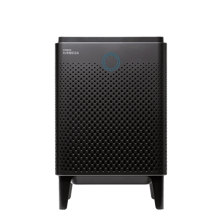
- 1. Coway Airmega 400: Best Overall for Gas Stoves
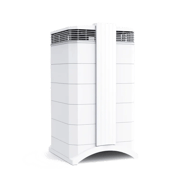
- 2. IQAir HealthPro Plus XE: Best Gas-Phase Filtration
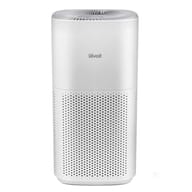
- 3. Levoit Core 600S: Best for Open-Plan Kitchens
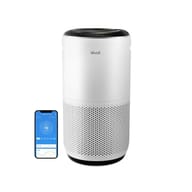
- 4. Levoit Core 400S: Best Value
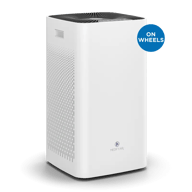
- 5. Medify MA-112: Best for Kitchen-Living Combos
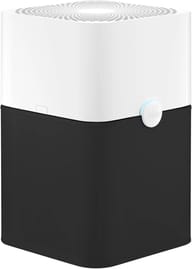
- 6. Blueair Blue Pure 211+: Best for Ultrafine Particle Bursts
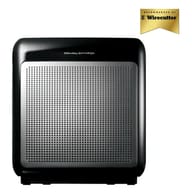
- 7. Coway Airmega 200M: Best Budget Kitchen Pick
- Ventilation First, Filtration Second
- How to Choose an Air Purifier for a Gas Stove
- The Bottom Line
TL;DR
At Clean Air Critic, the best air purifier for a home with a gas stove is the Coway Airmega 400. Its dual Max2 filters carry real carbon mass and its 328 CFM covers 1,560 sq ft, which matters because gas stove nitrogen dioxide does not stay in the kitchen. The IQAir HealthPro Plus XE is the only pick here with serious gas-phase media, 5 lbs of granular carbon plus alumina, and the Levoit Core 400S is the value pick for an enclosed kitchen at $190. Set your expectations honestly: the best randomized trial on this found HEPA and carbon purifiers cut kitchen NO2 by 27%, not 90%. Running your range hood is the bigger lever, and the purifier is the second one.
Full Comparison
| # | Product | Best For | Rating | Price | |
|---|---|---|---|---|---|
| 1 | Coway Airmega 400 Top Pick Coway | Best Overall for Gas Stoves | 4.6 | $$$ | Check Price |
| 2 | IQAir HealthPro Plus XE IQAir | Best Gas-Phase Filtration | 4.8 | $$$$ | Check Price |
| 3 | Levoit Core 600S Levoit | Best for Open-Plan Kitchens | 4.7 | $$ | Check Price |
| 4 | Levoit Core 400S Levoit | Best Value | 4.6 | $$ | Check Price |
| 5 | Medify MA-112 Medify | Best for Kitchen-Living Combos | 4.5 | $$$$ | Check Price |
| 6 | Blueair Blue Pure 211+ Blueair | Best for Ultrafine Particle Bursts | 4.4 | $$ | Check Price |
| 7 | Coway Airmega 200M Coway | Best Budget Kitchen Pick | 4.5 | $ | Check Price |
Affiliate Disclosure: CleanAirCritic earns commissions from qualifying purchases through affiliate links on this page. This does not influence our rankings or reviews. All opinions are our own. Learn more
If you searched for this, someone has probably told you gas stoves are bad for indoor air, and you are trying to work out whether a purifier fixes it.
Short answer: it fixes part of it, and the part it fixes is not the part most people are worried about. A gas burner emits particles and gases. Air purifiers are excellent at particles and mediocre at gases, and nitrogen dioxide is a gas.
So this guide is organized around that split. We will show you exactly which gas stove pollutants filtration handles, what the peer-reviewed reduction numbers actually are, and then rank seven units on the specification that decides gas performance, which is carbon capacity rather than CADR.
Our Top Picks at a Glance
| Purifier | Best For | CADR (Dust) | Coverage | Carbon Stage | Price | Filters/Yr |
|---|---|---|---|---|---|---|
| Coway Airmega 400 | Best Overall | 328 CFM | 1,560 sq ft | Dual Max2 carbon | ~$349 | $100 |
| IQAir HealthPro Plus XE | Gas-Phase Filtration | 300 CFM* | 1,125 sq ft | 5 lb granular + alumina | ~$1,199 | $120 |
| Levoit Core 600S | Open-Plan Kitchens | 410 CFM | 635 sq ft | Carbon layer | ~$260 | $60 |
| Levoit Core 400S | Best Value | 260 CFM | 403 sq ft | Carbon layer | ~$190 | $45 |
| Medify MA-112 | Kitchen-Living Combos | 400 CFM | 2,500 sq ft | Dual carbon | ~$500 | $130 |
| Blueair Blue Pure 211+ | Ultrafine Bursts | 350 CFM | 550 sq ft | Carbon in pre-filter | ~$250 | $55 |
| Coway Airmega 200M | Best Budget | 246 CFM | 361 sq ft | Carbon layer | ~$160 | $50 |
Prices checked 13 September 2026 against manufacturer listings and cross-referenced with retailer street pricing. * IQAir does not publish an AHAM-verified CADR for the HealthPro Plus XE. The 300 CFM figure is its maximum rated airflow, so that row is an estimate rather than a like-for-like comparison.
What a Purifier Actually Does About Each Gas Stove Pollutant
Here is the table we wanted when we started researching this and could not find. A gas burner is not one pollutant, it is six, and filtration's effectiveness ranges from excellent to zero depending on which one you mean.
| Pollutant | Where It Comes From | Particle or Gas | HEPA Captures It? | Carbon Captures It? | Realistic Reduction From a Purifier |
|---|---|---|---|---|---|
| Ultrafine particles / PM2.5 | Combustion plus hot cooking oil | Particle | Yes, 99.97% at 0.3 µm | Not its job | Large. 80%+ with adequate CADR |
| Nitrogen dioxide (NO2) | Flame chemistry, nitrogen plus heat | Gas | No | Partially, and it saturates | 20 to 27% (Paulin 2014 RCT) |
| Carbon monoxide (CO) | Incomplete combustion | Gas | No | No, poorly adsorbed | ≈0%. Needs ventilation and a CO alarm |
| Formaldehyde | Combustion byproduct | Gas | No | Only with impregnated media | Modest, entirely media-dependent |
| Benzene | Raw gas and combustion | Gas (VOC) | No | Yes, good carbon affinity | Moderate with real carbon mass |
| Unburned methane | Leaks at fittings and ignition | Gas | No | No | ≈0%. A leak to fix, not air to clean |
Four things worth sitting with.
The single biggest win is particles, and almost any decent unit delivers it. If your concern is the visible haze and smell of searing, a $160 Coway Airmega 200M handles that as well as a $1,199 IQAir. You do not need to overspend for the particle half of the problem.
The NO2 number is 20 to 27%, and anyone quoting higher is guessing. That range comes from the strongest study available: a three-armed randomized trial by Paulin and colleagues at Johns Hopkins, published in Indoor Air in 2014, in homes with unvented gas stoves. Placing HEPA and carbon purifiers cut median kitchen NO2 by 27% immediately and bedroom NO2 by 22%. At three months only the kitchen effect held, at 20%. That is a real, useful reduction. It is not a solution.
Two of the six are flatly unaffected. Carbon monoxide and unburned methane pass through every unit on this list essentially untouched. No purifier substitutes for a CO alarm, and a methane smell means you call the gas company, not that you turn the fan up.
NO2 reached the bedroom. That 22% bedroom figure is the most useful practical finding in the study, because it tells you gas stove pollution is a whole-home exposure, not a kitchen one. It is the reason our top pick is a 1,560 sq ft unit rather than a countertop model.
How Fast Each Pick Clears the Particle Spike
The particle half of the problem is the half filtration genuinely wins, so it is worth knowing how long you are waiting.
We converted each pick's AHAM dust CADR into the time to remove 90% of airborne particles from a typical 150 sq ft kitchen with 8-foot ceilings (1,200 cubic feet), using the exponential decay a room follows at a given air change rate.
| Purifier | Dust CADR | Air Changes/Hour | Time to 90% Particle Clearance | Same Unit in a 600 sq ft Open Plan |
|---|---|---|---|---|
| Levoit Core 600S | 410 CFM | 20.5 | 7 minutes | 27 minutes |
| Medify MA-112 | 400 CFM | 20.0 | 7 minutes | 28 minutes |
| Blueair Blue Pure 211+ | 350 CFM | 17.5 | 8 minutes | 32 minutes |
| Coway Airmega 400 | 328 CFM | 16.4 | 8 minutes | 34 minutes |
| IQAir HealthPro Plus XE | 300 CFM* | 15.0 | 9 minutes | 37 minutes |
| Levoit Core 400S | 260 CFM | 13.0 | 11 minutes | 43 minutes |
| Coway Airmega 200M | 246 CFM | 12.3 | 11 minutes | 45 minutes |
* Maximum airflow, not an AHAM CADR.
The honest conclusion from this table is that in a small enclosed kitchen, the differences barely matter. Every unit here clears the spike inside 11 minutes, and the gap between the cheapest and the most powerful is four minutes. If your kitchen is a separate room with a door, buy on carbon and price, not on CADR.
The right-hand column is where the spread opens up. In a 600 sq ft kitchen-and-living open plan, which is how most homes built in the last thirty years are laid out, the budget pick takes 45 minutes against the Core 600S's 27. That is the situation that justifies spending more, and it is also the situation most readers are actually in.
Best Air Purifiers for a Gas Stove, Reviewed
1. Coway Airmega 400: Best Overall for Gas Stoves
Best for: Most homes with a gas range, especially open-plan kitchens.
The Airmega 400 wins here on the combination the problem actually calls for: real carbon mass and coverage well past the kitchen. It draws air through Max2 filters on both sides of the unit, each pairing True HEPA with activated carbon, and covers 1,560 sq ft. Given that the trial data shows NO2 migrating into bedrooms, a unit that can service the kitchen and everything it opens onto is worth more than a faster unit with a smaller footprint.
It is also remarkably quiet for its output, 22 dB on the lowest speed, which matters in a kitchen you are standing in. The air quality indicator ring gives a live read, so you can actually watch it respond when you fire up a burner, and eco mode cuts the fan when things settle.
The cost is the filters. Two Max2 sets per replacement puts you at around $100 a year, the second highest here. And this is the non-connected model; the app-enabled Airmega 400S is a separate unit at roughly $650.
2. IQAir HealthPro Plus XE: Best Gas-Phase Filtration
Best for: Anyone whose actual priority is the gases rather than the smell or the haze.
This is the only unit on the list built to do gas-phase work properly. The V5-Cell carries about 5 lbs of granular activated carbon alongside alumina impregnated with potassium permanganate, which is a genuinely different proposition from the carbon-coated fabric in most purifiers. Where a thin carbon mat handles odor for a few months, a granular bed of that size has the capacity to keep adsorbing NO2, benzene, and formaldehyde for far longer before it saturates.
The HyperHEPA media is rated well below the 0.3 micron HEPA standard, the build is Swiss and heavy, and the warranty runs 10 years.
Two honest caveats. It is $1,199, and at 215 W it is expensive to run continuously, roughly $170 a year in electricity at current US average rates. And IQAir does not publish an AHAM CADR, so you cannot compare its particle performance like for like against the rest of this table. Buy it for the gas cell, which is the part that is genuinely without competition here.
3. Levoit Core 600S: Best for Open-Plan Kitchens
Best for: Large kitchen-and-living spaces where you want the particle spike gone fast.
410 CFM is the highest AHAM dust CADR on this list, and in the open-plan column of the clearance table it is the fastest unit by a clear margin. It covers 635 sq ft, runs at 26 dB on low, and has a laser PM2.5 sensor that makes auto mode genuinely responsive, which in a kitchen means it ramps when you start cooking without you touching it.
At $60 a year the filters are the cheapest-to-maintain option in the upper half of this list.
Where it falls short for this specific use is carbon. It is a competent carbon layer, not a granular bed, so it is doing odor and light VOC work rather than serious NO2 adsorption. If gases are your priority rather than particles, step up to the IQAir or across to the Airmega 400. If speed in a big room is your priority, this is the pick.
4. Levoit Core 400S: Best Value
Best for: A standard enclosed kitchen, on a budget.
The clearance table makes the case for this one. In a 150 sq ft kitchen the Core 400S clears the particle spike in 11 minutes against the Core 600S's 7, for $70 less up front and $15 a year less in filters. That is a small performance gap for a meaningful saving, and in a kitchen with a door it is the sensible trade.
You get H13 True HEPA, a carbon layer, a real PM2.5 sensor, app and voice control, and 24 dB in sleep mode. At 44 W it is also cheap to leave running.
Same carbon caveat as the 600S: it is a layer, not a bed. It will help with cooking odor and light VOCs and contribute modestly to NO2. It will not match the IQAir on gases and we would not claim otherwise.
5. Medify MA-112: Best for Kitchen-Living Combos
Best for: Very large open spaces, 1,000 sq ft and up.
Dual H13 True HEPA filters with carbon, 400 CFM, and a 2,500 sq ft rating make this the coverage champion here. If your kitchen opens onto a great room and you want one machine servicing the whole volume rather than two units, this is the one that can do it.
It is also quiet for its size, 21 dB on the lowest setting, and the glass touch panel with child lock is well executed.
The tradeoffs are size and running cost. It is 33.5 lbs and takes real floor space, there is no WiFi, and running two filter sets puts it at $130 a year, the highest on this list. It also has an optional ionizer, which we would leave switched off; Medify reports zero measurable ozone, but there is no filtration benefit you lose by disabling it.
6. Blueair Blue Pure 211+: Best for Ultrafine Particle Bursts
Best for: Homes where the visible cooking haze is the main complaint.
HEPASilent combines mechanical filtration with electrostatic charging, which is how the 211+ hits 350 CFM at only 30 to 60 W and stays reasonably quiet. For the ultrafine particle burst that comes off a gas burner, that combination performs very well, and the washable fabric pre-filter is genuinely useful in a kitchen where grease aerosols load the outer layer fast.
At $250 with $55 annual filters it sits in a sensible part of the price curve, and the one-button operation is refreshing.
The reason it is sixth rather than higher is that its carbon is in the pre-filter rather than a dedicated stage, so it is the weakest unit here on the gas half of the problem. There is also no auto mode and no air quality sensor, so it runs at whatever speed you set it to. Buy this if particles are your concern and you know it.
7. Coway Airmega 200M: Best Budget Kitchen Pick
Best for: A small, separate kitchen where you want particles handled cheaply.
At around $160 with $50 filters, the 200M delivers 246 CFM across 361 sq ft with a 4-stage True HEPA and activated carbon setup, an air quality indicator ring, and 24.4 dB on low. As the clearance table shows, in a 150 sq ft kitchen it clears the particle spike in 11 minutes, the same as purifiers costing more.
It has the smallest coverage area on the list, which is exactly the limitation the bedroom NO2 finding warns about. In a galley kitchen with a door you close, it is a genuinely good buy. In an open plan it is undersized, and the 45-minute figure in the right-hand column of the clearance table is the honest consequence.
No WiFi and no app, if that matters to you.
Ventilation First, Filtration Second
We would be doing you a disservice if we let a buying guide imply the purifier is the main intervention. It is not.
A range hood that exhausts to the outside removes combustion products from the building entirely, at the source, before they mix into the rest of the air. An air purifier attempts to scrub them out afterward, at 20 to 27% efficiency for the pollutant you are most concerned about. The ordering is not close.
The practical sequence, cheapest first:
Run the hood every single time, including for boiling water. Most people only use it when something smokes. NO2 production starts the moment the flame does.
Confirm your hood actually vents outside. A lot of over-the-range microwaves recirculate, filtering grease and blowing the air back into the kitchen. That does nothing for NO2. If you can trace a duct to an exterior vent, you have real ventilation. If you cannot, you have a grease filter.
Cook on the back burners when you can. Hood capture efficiency is dramatically higher on the rear burners than the front ones, often by a factor of two or more, because the front of the hood struggles to catch a rising plume from the edge.
Crack a window during and for ten minutes after cooking. Free, and it works.
Then add the purifier, sized to the kitchen plus what it opens onto, and leave it running rather than switching it on when you smell something. NO2 is odorless, so smell is not a useful trigger.
If you want to actually see this working rather than take our word for it, our guide to choosing an indoor air quality monitor covers what to look for. Note that most consumer monitors read PM2.5 and VOCs but not NO2 specifically, so you will be watching the particle half of the problem.
How to Choose an Air Purifier for a Gas Stove
Buy carbon, not CADR. In a normal-sized kitchen every unit here clears particles in about the same time. The specification that actually separates them is whether there is a real bed of activated carbon in the airflow or a thin coated mat. If the product page describes a "carbon layer" without a weight, assume it is the mat. Our comparison of carbon filters vs HEPA explains what each stage does.
Size for the kitchen plus the room it opens onto. The bedroom NO2 finding is the reason. Add the square footage of every space sharing the air volume and buy for that total, not for the kitchen alone.
Replace carbon on schedule even if airflow seems fine. A saturated carbon filter still passes air freely. It just stops adsorbing. Airflow is not the indicator. Our filter replacement guide covers the intervals.
Do not buy a washable carbon filter for this job. Washing removes surface dust. It does not regenerate adsorbed gas. Industrial carbon reactivation uses high-temperature steam, which your sink does not.
Put the unit between the stove and the rest of the house, not in the far corner of the kitchen. You are trying to intercept the plume on its way out, and placement matters more than most people assume.
The Bottom Line
If you cook with gas, the honest picture is that an air purifier is a worthwhile second-line measure and a poor first-line one. It will take a large bite out of the ultrafine particles and cooking aerosols, roughly a fifth to a quarter off your nitrogen dioxide, a moderate amount off benzene and VOCs, and nothing at all off carbon monoxide or unburned methane.
Ventilating to the outside does more, for less money, and you probably already have the hood.
Buy the Coway Airmega 400 if you want one unit that covers the kitchen and the rooms it opens onto with real carbon behind it. Buy the IQAir HealthPro Plus XE if the gases are specifically what you are trying to solve and the budget allows. Buy the Levoit Core 400S if your kitchen is an enclosed room and you want the particle problem handled well for under $200.
And run the hood. Every time.
If cooking smells rather than combustion gases are your main concern, our roundup of the best air purifiers for cooking odors is the more directly useful guide, and for broader chemical exposure see our best air purifiers for VOCs.
Frequently Asked Questions
Do air purifiers remove nitrogen dioxide from gas stoves?
What is the best air purifier for a gas stove?
Is a range hood better than an air purifier for a gas stove?
Does a HEPA filter help with gas stove pollution?
Does an air purifier remove carbon monoxide from a gas stove?
How big should an air purifier be for a kitchen with a gas stove?
Do I need a carbon filter, or is the one in my purifier enough?
Can you wash a carbon filter to restore it?
You Might Also Like

Best Air Purifier for COPD (2026): 7 Ozone-Free Picks
The 7 best air purifiers for COPD in 2026, screened for zero ozone and costed for 24/7 use. Ozone-free HEPA picks from $56 to $290 a year to run.

Best Air Purifier & Humidifier Combo (2026)
The best air purifier and humidifier combos in 2026. We rate the top HEPA+humidifier units and explain when a pairing of two separate devices beats any all-in-one.
Best Air Purifiers for Nail Salons (2026)
The best air purifiers for nail salons in 2026. We compare heavy-carbon units and source-capture options to clear acrylic fumes, MMA monomer, and VOCs at the nail table.
Best Air Purifier with UV-C Light (2026)
The best air purifiers with UV-C light in 2026. We rate the top ozone-free HEPA + UV-C units and explain honestly where UV-C actually helps and where it doesn't.