Best Air Purifier for RV and Camper (2026)
The 5 best air purifiers for an RV in 2026. Compact, 12V-friendly picks that handle wildfire smoke, propane fumes, and tight-cabin dust.

Table of Contents
- RV Air Purifiers Compared
- What to Look for in an RV Air Purifier
- Best Air Purifiers for RV Living
- Levoit Core Mini: Best Overall for Small RVs
- Levoit Core 300: Best for Class A Motorhomes
- Pure Enrichment PureZone Mini: Best for USB / 12V Power
- Levoit Core 200S: Best for Connected Rigs
- Bissell MyAir Pro: Best Slim Tabletop
- Setting Up an Air Purifier in an RV
- Frequently Asked Questions
TL;DR
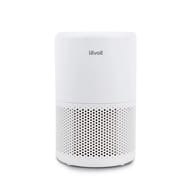
At Clean Air Critic, the best air purifier for an RV is the Levoit Core Mini. It draws 7 watts so it runs comfortably off an inverter or solar bank, weighs 2.2 lbs, and covers up to 178 sq ft, which is most of a Class B or small Class C. For larger Class A rigs, the Levoit Core 300 covers 219 sq ft and still runs on 23 watts. If you only have 12V and no inverter, the Pure Enrichment PureZone Mini runs on USB power.
Full Comparison
| # | Product | Best For | Rating | Price | |
|---|---|---|---|---|---|
| 1 | Levoit Core Mini Top Pick Levoit | Best Overall for Small RVs | 4.3 | $ | Check Price |
| 2 | Levoit Core 300 Levoit | Best for Class A Motorhomes | 4.7 | $ | Check Price |
| 3 | Pure Enrichment PureZone Mini Pure Enrichment | Best for USB / 12V Power | 4.4 | $ | Check Price |
| 4 | Levoit Core 200S Levoit | Best for Connected Rigs | 4.5 | $ | Check Price |
| 5 | Bissell MyAir Pro Bissell | Best Slim Tabletop | 4.4 | $ | Check Price |
Affiliate Disclosure: CleanAirCritic earns commissions from qualifying purchases through affiliate links on this page. This does not influence our rankings or reviews. All opinions are our own. Learn more
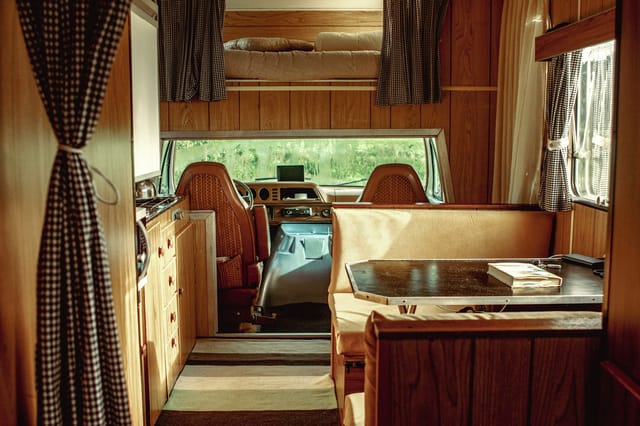
RV ventilation is a compromise. The roof vent fan moves a lot of air but filters nothing. The rooftop AC has a foam screen that catches lint and pet hair, not the particles that matter. Sidewall vents passively trade air with whatever is outside, which on a good day is forest and on a bad day is your neighbor's diesel idling at the next pad. The cabin volume is small, every cooking session loads it up, and propane appliances quietly add combustion byproducts that have nowhere to go.
This is also exactly why a small HEPA purifier works so well in an RV. A 46 CFM CADR that would be undersized in a bedroom can cycle a 150 square foot RV cabin five times per hour. The same physics that makes RV air bad in the first place makes it easy to fix.
RV Air Purifiers Compared
The two numbers that matter most in an RV are watt draw (can your power system run it?) and CADR (can it cycle your cabin?). Here is how the five picks compare, with typical street price. Prices reflect manufacturer and major-retailer listings as of July 2026 and move with sales, so treat them as a baseline.
| Purifier | Best For | Watts (Max) | Dust CADR | Coverage | Noise (Low) | Price |
|---|---|---|---|---|---|---|
| Levoit Core Mini | Small RVs | 7 W | 46 CFM | 178 sq ft | 27 dB | ~$50 |
| Levoit Core 300 | Class A rigs | 23 W | 141 CFM | 219 sq ft | 24 dB | ~$100 |
| Pure Enrichment PureZone Mini | USB / 12V | ~5 W (USB) | 13–16 CFM | 54 sq ft | 30 dB | ~$40 |
| Levoit Core 200S | Connected rigs | 25 W | 118 CFM | 183 sq ft | 25 dB | ~$70 |
| Bissell MyAir Pro | Slim tabletop | 30 W | 79 CFM | 110 sq ft | 27 dB | ~$100–$130 |
The Core Mini's 7-watt draw is the standout for boondockers: it pulls less than a single interior LED fixture, so a modest solar bank runs it around the clock without denting the battery budget.
What to Look for in an RV Air Purifier
Power compatible with your setup. This is the deal-breaker for most RVers. If you have a generator or shore power, anything works. If you boondock on solar, you need a unit that draws under 25 watts on max. If you have only 12V and no inverter, you need a USB-powered purifier like the PureZone Mini.
Compact enough to stow. RVs that move regularly have nowhere permanent for an appliance to live. The Core Mini at 6.5 inches square fits in a galley cabinet during travel. The Core 300 needs a dedicated spot or a tie-down strap.
Mechanical H13 HEPA only. Skip anything with an ionizer or photocatalytic oxidation. RV cabins are small enough that even trace ozone reaches concentrations you will notice. Every pick on this list is purely mechanical HEPA plus carbon.
CADR matched to your cabin. A typical Class B or Class C cabin is 100 to 200 sq ft. A Class A with slides extended is 200 to 300 sq ft. CADR targets: 75 to 130 CFM for small to medium rigs, 130 to 180 CFM for Class A.
Activated carbon for combustion and cooking. RV propane appliances and tight cooking spaces make the carbon layer matter more than in a typical home setup. Look for genuine granular activated carbon, not just a coated mesh.
Best Air Purifiers for RV Living
Levoit Core Mini: Best Overall for Small RVs
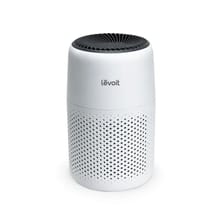
The Core Mini is the right answer for most RVers. It lists around $50 and dips to $40 during Levoit sales, pulls 7 watts on the highest setting, weighs 2.2 lbs, and fits in any galley cabinet. The H13 True HEPA plus carbon filter handles dust, pollen, smoke, and cooking odors. AHAM rates the CADR at 46 CFM, which cycles a 150 sq ft cabin about five times per hour.
The watt draw is what makes it the default RV pick. Solar boondockers and 12V-with-small-inverter setups can run it continuously without thinking about power budget. A 200 watt panel feeds a Core Mini comfortably even on cloudy days, with margin to spare for everything else.
The aromatherapy compartment at the top is gimmicky and you should leave it empty if you have any pollen sensitivity. The filter lasts 6 to 9 months and replacements run about $15. Total annual cost in an RV that is used heavily is around $20 for filter and electricity combined.
Levoit Core 300: Best for Class A Motorhomes
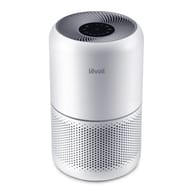
For a Class A with slides out, the cabin is too big for the Mini to cycle effectively. The Core 300 lists around $100, steps coverage up to 219 sq ft, brings CADR to 141 CFM across dust, pollen, and smoke, and still only pulls 23 watts on max. That keeps it inside the working budget of any modest solar setup.
The 8.7-inch diameter and 14-inch height make it a bigger stow problem during travel. The base is wide enough to be stable in stationary use but you will want to lay it on its side and secure it in a cabinet when moving. The filter lasts 6 to 8 months and runs about $25.
If your rig has plenty of inverter capacity and a permanent spot in the slide area or under the dinette, the Core 300 is the upgrade over the Mini. The difference shows up most during wildfire smoke days, when the higher CADR keeps the cabin under AQI 25 even when the campground is at 200 plus.
Pure Enrichment PureZone Mini: Best for USB / 12V Power
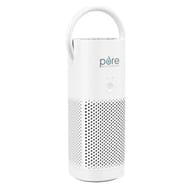
If you do not have an inverter and you do not want to add one, the PureZone Mini is the answer. At around $40 it is the cheapest pick here, runs off a USB-A cable, and works with any 12V cigarette adapter. The HEPA filter is genuine, the carbon layer is thin but present, and the unit is small enough to clip onto a dinette wall or sit on a tray.
Coverage is rated for 54 sq ft, which is small but enough for a Class B van or a sleeping area in a larger rig. The CADR is roughly 13 to 16 CFM, an order of magnitude below the Levoit picks. For most users this is a supplement to ventilation rather than a primary purifier.
The PureZone Mini's value is reliability of power source, not raw filtration capacity. If you boondock for weeks without shore power and want some particle filtration on your sleeping side, this is the unit that runs without thinking.
Levoit Core 200S: Best for Connected Rigs
The Core 200S is the smart sibling of the Core Mini class with WiFi added, typically around $70. Useful in an RV when you want to set a schedule that ramps the unit up an hour before you return from a hike, or kill it remotely if you forget. Pulls 25 watts max, covers 183 sq ft, and runs at 25 dB on sleep mode.
The WiFi requirement is the catch. RV Wi-Fi tends to be 4G hotspot or campground Wi-Fi, both of which are flaky. The unit works on local control without internet, but app features require the network. If your rig has reliable Starlink or cell coverage and you like automation, the 200S is worth the premium over the non-smart Core Mini.
Bissell MyAir Pro: Best Slim Tabletop
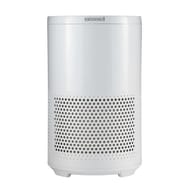
The MyAir Pro is a 10-inch tall, 6-inch wide tower that slides into spaces where a cylinder will not. Useful in tight RV bathrooms or on a galley counter where vertical space matters more than width. The 3-stage pre-filter, carbon, and HEPA filter is AHAM rated at a 79 CFM dust CADR and covers a 110 sq ft area. It typically sells for $100 to $130, with replacement filters around $26.
Watt draw is 30 on max, which is the highest of any pick here but still inside solar budget. The cabin sensor reads PM2.5 and adjusts fan speed automatically, which is useful when wildfire smoke rolls in overnight and you want the unit to ramp up without you waking up to do it manually.
The MyAir Pro is the pick for RVers who want set-and-forget automation in a slim form factor. It is also the easiest to clean: the filter slides out from the back without disassembly.
Setting Up an Air Purifier in an RV
Pick a stow plan first. Decide where the unit lives during travel before you buy. The Core Mini fits in any galley cabinet. The Core 300 needs a dedicated spot or a tie-down. The MyAir Pro lays flat in an overhead bin. If you cannot stow it safely, it will end up as a projectile.
Run it during cooking and for an hour after. RV galleys put a lot of particles and combustion byproducts in a small space fast. Even with the range hood running, a HEPA purifier on high during and after cooking keeps the long-term load down.
Close vents during smoke events. Roof vents and open windows defeat the purifier. When AQI outside is bad, close everything, run the AC on recirculate, and let the purifier work the cabin volume. A small unit with closed vents beats a big unit with open vents every time.
Service the filter on schedule. RV use is harder on filters than home use because of road dust and proximity to outdoor combustion sources at campgrounds. Plan to replace 1 to 2 months earlier than the home schedule, especially in dusty desert camping.
Frequently Asked Questions
For the broader picture on wildfire response in any indoor space, see our best air purifier for wildfire smoke and the wildfire smoke air purifier guide. For deeper background on what HEPA actually does, our understanding HEPA filters explainer is the place to start.
If you want a smaller-footprint purifier for a vehicle cab rather than an RV cabin, see our roundup of the best portable air purifiers. For RVers with pets along for the trip, the best air purifier for pets covers dander filtration in detail.
Frequently Asked Questions
Will an air purifier run off RV 12V power?
Do air purifiers help with wildfire smoke in an RV?
How big a CADR do I need for an RV?
Where should I place an air purifier in an RV?
Can I leave an air purifier running while driving?
Does the RV roof AC filter the same air as a purifier?
Should I worry about propane combustion in an RV?
You Might Also Like

Best Air Purifier for COPD (2026): 7 Ozone-Free Picks
The 7 best air purifiers for COPD in 2026, screened for zero ozone and costed for 24/7 use. Ozone-free HEPA picks from $56 to $290 a year to run.

Best Air Purifier for a Gas Stove (2026): 7 Carbon Picks
The 7 best air purifiers for gas stove pollution in 2026, ranked by carbon capacity. What they fix, what they cannot fix, and honest NO2 reduction numbers.
Best Air Purifier & Humidifier Combo (2026)
The best air purifier and humidifier combos in 2026. We rate the top HEPA+humidifier units and explain when a pairing of two separate devices beats any all-in-one.
Best Air Purifiers for Nail Salons (2026)
The best air purifiers for nail salons in 2026. We compare heavy-carbon units and source-capture options to clear acrylic fumes, MMA monomer, and VOCs at the nail table.