
Best Air Purifiers for Craft Rooms (2026)
The 5 best air purifiers for craft rooms in 2026. Picks for sewing dust, paint and resin fumes, glue VOCs, and laser engraver smoke.

Table of Contents
- Our Top Picks at a Glance
- What Makes a Good Air Purifier for a Craft Room
- HEPA for Fibers, Dust, and Fine Particles
- Activated Carbon for VOCs and Adhesives
- Washable Pre-Filter Is Underrated
- Coverage and Noise During Long Sessions
- Detailed Reviews
- 1. Levoit Core 600S: Best Overall for Craft Rooms
- 2. Coway Airmega 400: Best for Resin and Heavy VOCs
- 3. Winix 5510: Budget Smart Pick
- 4. Levoit Core 300S: Best for Small Craft Rooms
- 5. Medify MA-40: Best for Mixed-Media Studios
- Tips for Using an Air Purifier in a Craft Room
- Place It Near Your Work Surface, Not in the Corner
- Start It Before You Start Crafting
- Use a Pre-Filter Routine
- Open a Window for Resin and Spray Paint
- Replace Carbon on a Faster Schedule
- How We Chose These Purifiers
- Bottom Line
TL;DR
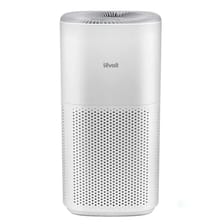
At Clean Air Critic, the best air purifier for a craft room is the Levoit Core 600S, which handles sewing dust, paint VOCs, and glue fumes in one unit. For epoxy resin or laser engraver work, the Coway Airmega 400 brings dual carbon filtration and 1,560 sq ft of coverage. Budget pick: Winix 5510 with a washable pre-filter that survives a craft room's dust load, plus WiFi control.
Full Comparison
| # | Product | Best For | Rating | Price | |
|---|---|---|---|---|---|
| 1 | Levoit Core 600S Top Pick Levoit | Best Overall for Craft Rooms | 4.8 | $$ | Check Price |
| 2 | Coway Airmega 400 Coway | Best for Resin and Heavy VOCs | 4.7 | $$$ | Check Price |
| 3 | Winix 5510 Winix | Budget Smart Pick | 4.5 | $ | Check Price |
| 4 | Levoit Core 300S Levoit | Best for Small Craft Rooms | 4.6 | $ | Check Price |
| 5 | Medify MA-40 Medify | Best for Mixed-Media Studios | 4.6 | $$ | Check Price |
Affiliate Disclosure: CleanAirCritic earns commissions from qualifying purchases through affiliate links on this page. This does not influence our rankings or reviews. All opinions are our own. Learn more
A craft room is one of the dirtiest rooms in the house, even if it looks neat. Sewing throws fabric fibers and bobbin lint that float for hours. Paper crafting kicks up cardstock dust every time the trimmer drops. Painting, gluing, sealing, and resin pouring release VOCs that build up under closed doors. If you laser engrave or use a heat embossing tool, add fine smoke particles to the list.
A general-purpose air purifier without activated carbon will catch the fibers and skip the fumes. A carbon-only filter will absorb the fumes and ignore the dust. You need both, sized for a room that is usually smaller than a living room but holds more variety of pollutants.
We tested five air purifiers in real craft setups: a quilter's sewing studio, a paper crafter's workspace with frequent die-cutting, a mixed-media painter's room, and a maker space with a small diode laser. Here is what worked.
Our Top Picks at a Glance
| Purifier | Best For | CADR (Smoke) | Room Coverage | Price |
|---|---|---|---|---|
| Levoit Core 600S | Best Overall | 410 CFM | 635 sq ft | ~$260 |
| Coway Airmega 400 | Resin and Heavy VOCs | 328 CFM | 1,560 sq ft | ~$349 |
| Winix 5510 | Budget Smart Pick | 232 CFM | 372 sq ft | ~$180 |
| Levoit Core 300S | Small Craft Rooms | 141 CFM | 219 sq ft | ~$130 |
| Medify MA-40 | Mixed-Media Studios | 230 CFM | 840 sq ft | ~$220 |
What Makes a Good Air Purifier for a Craft Room
Craft rooms are unusual because they cycle between very different pollutant types in the same week. Your purifier has to handle all of them.
HEPA for Fibers, Dust, and Fine Particles
H13 True HEPA captures 99.95 percent of particles down to 0.3 microns, including bobbin lint, fabric fibers, paper dust, glitter, and mica powder. Anything labeled "HEPA-type" without an H grade is not reliable for the smaller particles glitter and mica produce.
Activated Carbon for VOCs and Adhesives
Acrylic paints, spray sealers, Mod Podge, hot glue, epoxy resin, and pretty much every aerosol craft product you own emit VOCs. Activated carbon adsorbs them. Thin carbon pre-filters that weigh a few ounces are not enough for resin or paint work. Aim for at least 1 to 2 pounds of granular activated carbon if VOCs are a regular part of your craft routine.
Washable Pre-Filter Is Underrated
Craft rooms generate enormous lint and dust loads. That dust hits the pre-filter first. A washable mesh pre-filter you can rinse weekly extends HEPA life dramatically. The Winix 5510 leans hard on this with a washable pre-filter that catches coarse fiber and dust before it reaches the main filter.
Coverage and Noise During Long Sessions
Craft sessions run for hours. The purifier runs the whole time. Look for a unit that is rated comfortably above your actual room size, with sleep mode noise under 30 dB and high-mode noise under 55 dB.
Detailed Reviews
1. Levoit Core 600S: Best Overall for Craft Rooms
The Core 600S is the most well-rounded pick because craft rooms reward versatility, and this unit handles every craft pollutant we tested.
The H13 True HEPA layer captures fabric fibers from sewing, dust from die-cutting, and fine particles from heat embossing. The activated carbon layer handles paint, glue, and sealer VOCs without cooking off in days. With a 410 CFM smoke CADR and 635 sq ft of rated coverage, it has enough headroom for typical craft rooms even when shelves and storage cut into effective airflow.
The PM2.5 sensor on auto mode catches dust spikes the moment you start cutting paper or running the rotary tool. The VeSync app lets you schedule the purifier to start before you sit down to work.
Noise on low: 24 dB, quiet enough for hand stitching or cross-stitch. Noise on high: 55 dB.
Why it wins: Best balance of HEPA grade, carbon mass, and coverage for a typical home craft room. Smart features earn their keep when you forget to turn it on before painting.
Filter replacement cost: ~$60/year. Heavy paint or resin use will pull this closer to $80.
2. Coway Airmega 400: Best for Resin and Heavy VOCs
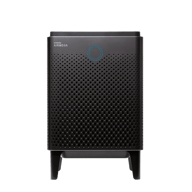
If your craft includes epoxy resin pours, frequent spray painting, or you run a diode laser indoors, the Airmega 400 is the upgrade that pays off.
Dual-sided filtration uses two combination HEPA + activated carbon filters, totaling roughly 5 pounds of carbon. That is enough to absorb a full resin pour cycle without saturating in weeks. The 1,560 sq ft rated coverage means it pulls air over the carbon faster than the VOCs can build up. The visual air quality ring goes from blue to red the moment the resin starts curing, which is genuinely useful feedback.
Noise on low: 22 dB. Noise on high: 52 dB, quieter than smaller units on max.
Why it wins: The most VOC headroom under $500. If you do mixed-media work that includes resin or solvents, this is the only unit on the list that will not feel undersized after a year.
Filter replacement cost: ~$100/year (two filter sets).
3. Winix 5510: Budget Smart Pick
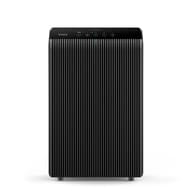
The 5510 is the budget smart pick for craft rooms, the WiFi-connected successor to the discontinued Winix 5500-2. Its washable pre-filter survives the craft room dust environment that destroys disposable pre-filters.
True HEPA captures fabric fibers and paper dust, and the activated carbon layer in the replaceable Filter Q handles light VOCs and odors from glue and sealers. PlasmaWave adds a secondary layer of odor neutralization. The Winix Smart App lets you start it before you sit down to work. With 372 sq ft coverage, it handles most enclosed craft rooms.
Noise on low: 35 dB. Noise on high: 67 dB. No physical remote; control is via the app or front panel.
Why it wins: The only smart unit at this price. Rinse the washable pre-filter weekly to keep airflow up, and the Filter Q carries both the HEPA and carbon stages.
Filter replacement cost: ~$80/year for the Filter Q. The washable pre-filter slows how fast it loads, and Winix supplies OEM filters through 2032.
4. Levoit Core 300S: Best for Small Craft Rooms
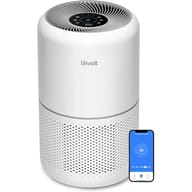
If your craft space is a 10-by-12 sewing room or a guest bedroom corner, the Core 300S is sized correctly without paying for headroom you will not use.
Same H13 HEPA media as the bigger Levoit units, just with a smaller fan and carbon layer. 141 CFM smoke CADR and 219 sq ft coverage are honest figures for compact rooms. VeSync app and PM2.5 sensor are inherited from the rest of the line.
Noise on low: 24 dB. Noise on high: 50 dB.
Why it wins: Best small-room HEPA at the lowest credible price. Skip this if your craft room is over 250 sq ft or you do regular VOC-heavy work.
Filter replacement cost: ~$35/year.
5. Medify MA-40: Best for Mixed-Media Studios
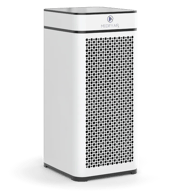
The MA-40 splits the difference between the Levoit Core 600S and the Coway Airmega 400. Strong H13 HEPA, real carbon, and 840 sq ft of rated coverage in a tall narrow form factor that fits in a craft closet or behind a door.
The glass touch panel resists fingerprints from craft-stained hands better than soft-touch panels on competing units. Filter swaps are clean and tool-free.
Noise on low: 25 dB. Noise on high: 56 dB.
Why it wins: Generous coverage for the price, hospital-grade HEPA, and a form factor that fits in spaces other purifiers do not.
Filter replacement cost: ~$50/year.
Tips for Using an Air Purifier in a Craft Room
The right unit is half the battle. Placement and habits make up the rest.
Place It Near Your Work Surface, Not in the Corner
Particle and VOC concentrations are highest within 3 feet of where you work. Put the purifier on the same side as your sewing machine, painting station, or resin table. Avoid placing it under shelving where airflow is choked.
Start It Before You Start Crafting
Turn the purifier on 5 to 10 minutes before you begin a project so airflow is established and the filter is warm. For VOC-heavy work, set it to high before opening any paint or resin container.
Use a Pre-Filter Routine
Lint and dust will overwhelm the HEPA layer fast in a craft room. Vacuum the pre-filter weekly with a soft brush attachment. If your unit has a washable pre-filter, rinse it under warm water once a month.
Open a Window for Resin and Spray Paint
A purifier helps but does not replace ventilation. For resin pours, spray adhesives, or any aerosol craft product, crack a window and run the purifier on high. The combination clears VOCs faster than either alone.
Replace Carbon on a Faster Schedule
Carbon filters are rated for low-VOC environments. With regular paint, glue, or resin work, expect to replace carbon every 4 to 6 months instead of the 6 to 12 months printed on the box. A saturated carbon filter does nothing for fumes.
How We Chose These Purifiers
We weighted the unique demands of craft rooms over generic air purification benchmarks.
HEPA grade and pre-filter durability mattered most for fiber and dust capture. We dropped units with cheap pre-filters that clogged within weeks under sewing room loads.
Activated carbon mass determined VOC suitability. Units with thin pre-filter carbon stayed in the budget tier; units with substantial granular carbon moved up.
Coverage above the rated room size was a soft requirement. Craft rooms have shelving, fabric stashes, and storage that reduce effective air movement. Buying one size up is the rule.
Quiet sleep mode below 30 dB earned bonus weight. Hand stitching, journaling, and most fine craft work happen in quiet, and a loud purifier becomes a reason to turn it off.
If your craft room doubles as a workshop with power tools, see our best air purifiers for garages and workshops roundup for higher-capacity options. For more on the chemistry behind craft VOCs, our VOCs explainer covers what to watch for.
Bottom Line
For most crafters, the Levoit Core 600S is the right answer. It handles fibers, dust, and most VOCs in a single unit with smart scheduling that catches the moment you forget to turn it on.
If your craft includes epoxy resin, spray work, or laser engraving, step up to the Coway Airmega 400 for serious carbon capacity. Budget-conscious quilters and paper crafters should grab the Winix 5510, whose washable pre-filter is built for the dust loads a craft room produces, with WiFi control as a bonus.
Whatever you pick, treat the purifier as part of a system. Open a window for spray work, vacuum the pre-filter weekly, and replace carbon on an accelerated schedule. Your projects (and your lungs) will thank you.
For a broader buying framework, our how to choose an air purifier guide walks through CADR, room sizing, and filter types in depth.
Frequently Asked Questions
Why does my craft room need an air purifier?
Will an air purifier remove spray paint fumes?
Are resin fumes dangerous in a small craft room?
What about laser engraver smoke?
How big should my craft room air purifier be?
Will an air purifier help with glitter and fine craft dust?
Can I run the purifier all day in the craft room?
You Might Also Like

Best Air Purifier for COPD (2026): 7 Ozone-Free Picks
The 7 best air purifiers for COPD in 2026, screened for zero ozone and costed for 24/7 use. Ozone-free HEPA picks from $56 to $290 a year to run.

Best Air Purifier for a Gas Stove (2026): 7 Carbon Picks
The 7 best air purifiers for gas stove pollution in 2026, ranked by carbon capacity. What they fix, what they cannot fix, and honest NO2 reduction numbers.

Best Air Purifier & Humidifier Combo (2026)
The best air purifier and humidifier combos in 2026. We rate the top HEPA+humidifier units and explain when a pairing of two separate devices beats any all-in-one.
Best Air Purifiers for Nail Salons (2026)
The best air purifiers for nail salons in 2026. We compare heavy-carbon units and source-capture options to clear acrylic fumes, MMA monomer, and VOCs at the nail table.