Best Air Purifiers for 3D Printing (2026)
The 5 best air purifiers for 3D printing in 2026, ranked by VOC capture and ultrafine particle removal. Picks for ABS, PETG, and resin printers.

Table of Contents
- Our Top Picks at a Glance
- What Makes a Good Air Purifier for 3D Printing
- H13 HEPA Is the Floor, Not the Ceiling
- Activated Carbon Mass Matters More Than Carbon Coatings
- Noise Tolerance for Long Print Jobs
- Coverage and Filament Type
- Detailed Reviews
- 1. Levoit Core 600S: Best Overall for 3D Printing
- 2. Medify MA-40: Best for Print Enclosures
- 3. Levoit Core 300S: Budget Pick
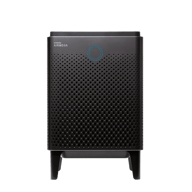
- 4. Coway Airmega 400: Best for Multi-Printer Workshops
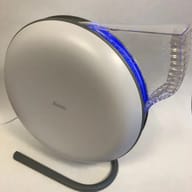
- 5. IQAir Atem Desk: Best Premium Pick
- How to Set Up an Air Purifier for 3D Printing
- Position Near the Print Head
- Start Before the Print Starts
- Run It Long After the Print Ends
- Don't Skip Ventilation
- Replace Carbon Filters Early
- How We Chose These Purifiers
- Bottom Line
TL;DR
At Clean Air Critic, the best air purifier for 3D printing is the Levoit Core 600S, which pairs an H13 HEPA filter for ultrafine plastic particles with an activated carbon layer for ABS and resin VOCs. For dedicated print enclosures, the Medify MA-40 punches above its size. Budget pick: Levoit Core 300S, which still captures the 0.1 micron particles emitted during FDM printing.
Full Comparison
| # | Product | Best For | Rating | Price | |
|---|---|---|---|---|---|
| 1 | Levoit Core 600S Top Pick Levoit | Best Overall for 3D Printing | 4.8 | $$ | Check Price |
| 2 | Medify MA-40 Medify | Best for Print Enclosures | 4.6 | $$ | Check Price |
| 3 | Levoit Core 300S Levoit | Budget Pick | 4.6 | $ | Check Price |
| 4 | Coway Airmega 400 Coway | Best for Multi-Printer Workshops | 4.7 | $$$ | Check Price |
| 5 | IQAir Atem Desk IQAir | Best Premium Pick | 4.7 | $$$$ | Check Price |
Affiliate Disclosure: CleanAirCritic earns commissions from qualifying purchases through affiliate links on this page. This does not influence our rankings or reviews. All opinions are our own. Learn more
3D printing is one of the few hobbies that turns your desk into a low-grade industrial process. Heated thermoplastics emit ultrafine particles by the billion. ABS and ASA release styrene and acrylonitrile. Resin printers vaporize methacrylates. Even PLA, the friendliest filament in the lineup, sheds particles smaller than 0.1 microns the moment the nozzle hits temperature.
A 2016 study from the Illinois Institute of Technology measured ultrafine particle emission rates from desktop 3D printers in the same range as a burning cigarette. Follow-up research has linked sustained exposure to respiratory irritation and reduced lung function in heavy users.
A good air purifier will not replace ventilation or an enclosure, but it shifts the math in your favor. We tested five purifiers against the specific pollutant profile of home 3D printing: ultrafine particles below 0.3 microns, VOCs from ABS and resin, and the noise constraint of running next to a printer for 12-hour jobs.
Our Top Picks at a Glance
| Purifier | Best For | CADR (Smoke) | Room Coverage | Price |
|---|---|---|---|---|
| Levoit Core 600S | Best Overall | 410 CFM | 635 sq ft | ~$260 |
| Medify MA-40 | Print Enclosures | 230 CFM | 840 sq ft | ~$220 |
| Levoit Core 300S | Budget Pick | 141 CFM | 219 sq ft | ~$130 |
| Coway Airmega 400 | Multi-Printer Workshops | 328 CFM | 1,560 sq ft | ~$349 |
| IQAir Atem Desk | Premium Pick | 60 CFM | 100 sq ft | ~$399 |
What Makes a Good Air Purifier for 3D Printing
3D printer emissions sit in a narrow but tricky band. The particles are smaller than allergens, the VOCs are fewer in number than cooking but harder to neutralize, and the printer runs for hours unattended.
H13 HEPA Is the Floor, Not the Ceiling
HEPA filters are rated by their capture efficiency at 0.3 microns, which is the most penetrating particle size. The bulk of 3D printer ultrafines are smaller than that. Counterintuitively, HEPA media tends to capture sub-0.3 micron particles even better through diffusion, but only if the seal is good. H13 HEPA filters are tested at 99.95 percent at 0.3 microns. H14 hits 99.995 percent. Anything labeled "HEPA-type" or "True HEPA" without an H grade is a guess.
Activated Carbon Mass Matters More Than Carbon Coatings
Many cheap purifiers print "activated carbon" on the box and ship a thin felt pre-filter dusted with carbon powder. That is enough for casual cooking smells. It is not enough for ABS styrene or resin acrylates. For meaningful VOC removal during regular printing, you want at least 2 pounds of granular activated carbon. The Coway Airmega 400 carries roughly 5 pounds in its dual filters, which is why it scales so well to multi-printer setups.
Noise Tolerance for Long Print Jobs
A 12-hour print is common. A 36-hour print is not unusual. Whatever purifier you buy will be running near you for that entire window. Look for noise levels below 30 dB on the lowest setting if the printer is in a bedroom or office. Mid-setting noise (45 to 50 dB) is the realistic operating band when the printer is active.
Coverage and Filament Type
PLA hobbyists in a 200 sq ft bedroom can run a small purifier and be fine. ABS and resin in the same room demand more carbon and more airflow. If you run multiple printers or print frequently in ABS, scale up to a unit with 600 sq ft or more of rated coverage so the air turns over fast enough to keep up.
Detailed Reviews
1. Levoit Core 600S: Best Overall for 3D Printing
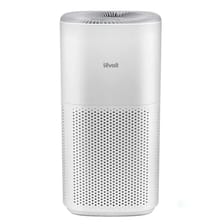
The Core 600S is the best balance of HEPA performance, carbon capacity, and smart controls for a typical home print room.
The H13 True HEPA filter captures 99.97 percent of particles down to 0.1 microns, which covers the entire ultrafine band that FDM printers emit. The activated carbon layer adsorbs styrene from ABS, methacrylate vapor from resin, and the trace lactide off PLA. With a 410 CFM smoke CADR and 635 sq ft coverage, it turns over a typical print room every 12 to 15 minutes on high.
The PM2.5 sensor on auto mode catches particle spikes the moment a print starts and ramps up automatically, which matters for unattended overnight prints. The VeSync app lets you schedule the purifier to start 10 minutes before the printer fires up.
Noise on low: 24 dB. Noise on high: 55 dB.
Why it wins: H13 HEPA, real activated carbon mass, sensor-driven auto mode, and coverage that scales to most home workshops.
Filter replacement cost: ~$60/year with daily printing. Replace the carbon layer every 3 to 4 months under heavy ABS or resin use.
2. Medify MA-40: Best for Print Enclosures
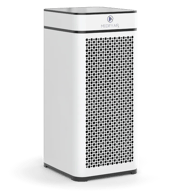
The MA-40 is built around an H13 HEPA filter and an activated carbon layer in a tall, narrow form factor that fits well next to a Voron or enclosed Bambu setup.
At 840 sq ft of rated coverage on a 230 CFM CADR, it is genuinely overpowered for a single-enclosure FDM rig, which is exactly what you want when ABS or PETG is venting through a top filament port. The H13 HEPA is the same medical-grade rating used in larger Medify units. The glass touch panel resists static and stray filament dust better than the soft-touch panels on competing models.
Noise on low: 25 dB. Noise on high: 56 dB.
Why it wins: Best HEPA grade per dollar, narrow footprint that slides next to most enclosures, and enough headroom to handle a full enclosure vent.
Filter replacement cost: ~$50/year. The combination filter swaps as a single unit every 6 months under regular printing.
3. Levoit Core 300S: Budget Pick
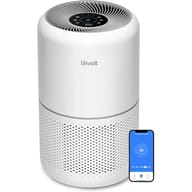
The Core 300S is the smallest unit we recommend for 3D printing. It uses the same H13 HEPA media as its bigger siblings, just with a lower fan and a smaller carbon layer.
With 141 CFM smoke CADR and 219 sq ft of rated coverage, it is honest about its limits. In a small bedroom or dedicated print closet, that is enough. In a large open workshop, it will fall behind. The smart sensor and VeSync app are inherited from the rest of the Core line.
Noise on low: 24 dB. Noise on high: 50 dB.
Why it wins: Real H13 HEPA at the lowest credible price for 3D printing duty. If you only print PLA in a small room, this is enough.
Filter replacement cost: ~$35/year.
4. Coway Airmega 400: Best for Multi-Printer Workshops
If you run two or more printers, especially in ABS, PETG, or resin, the Airmega 400 is the upgrade that pays off.
Dual-sided filtration pulls air from both sides through paired Max2 filters, each combining HEPA and a substantial activated carbon layer. Total carbon mass is roughly 5 pounds, which holds up under continuous VOC load far longer than single-filter units. Coverage is rated at 1,560 sq ft, enough to keep an entire workshop room turning over while every printer is running.
Noise on low: 22 dB. Noise on high: 52 dB.
Why it wins: Highest sustained VOC capacity of anything under $500. The fan reserves are real, not marketing.
Filter replacement cost: ~$100/year (two filter sets).
5. IQAir Atem Desk: Best Premium Pick
The Atem Desk is the only personal-scale purifier we trust for resin printing. It uses HyperHEPA, which IQAir tests down to 0.003 microns at 99 percent efficiency, well past the floor of any standard HEPA grade.
It is small. The 60 CFM CADR and 100 sq ft rated coverage are fine for a personal breathing zone next to a single printer, not for clearing a room. The carbon cartridge is dense enough to punch above its size for resin VOCs. Build quality is industrial.
Noise on low: 23 dB. Noise on high: 50 dB.
Why it wins: Best particle filtration of anything on this list, in a form factor that fits on the desk next to your printer.
Filter replacement cost: ~$160/year. Filters are the trade-off for the IQAir filtration grade.
How to Set Up an Air Purifier for 3D Printing
A good purifier is half the answer. Placement and habits make up the rest.
Position Near the Print Head
Particle emissions peak at the nozzle. Set the purifier 3 to 6 feet from the printer on the same side as the hot end. If your printer is enclosed, place the purifier near the vent or filament port rather than the closed door.
Start Before the Print Starts
Turn the purifier on 10 minutes before you start a print so airflow patterns are established and the filter is engaged when emissions begin. If your purifier has scheduling, sync it with your typical print start times.
Run It Long After the Print Ends
Ultrafine particles linger in still air for hours, and VOCs keep off-gassing from the cooling print. Run the purifier for at least 30 minutes after a PLA print, 60 minutes after ABS or PETG, and 2 hours or more after resin.
Don't Skip Ventilation
A purifier is not a substitute for fresh air. Crack a window during long ABS runs. Vent resin printer enclosures outside whenever possible. The purifier handles what ventilation misses, not the other way around.
Replace Carbon Filters Early
Carbon filter life ratings assume light VOC load. With regular ABS or resin printing, expect to replace carbon every 3 to 4 months instead of the 6 to 12 months printed on the box. A saturated carbon filter does nothing for VOCs while still drawing power.
How We Chose These Purifiers
We weighted three things: HEPA grade, activated carbon mass, and noise during long unattended runs.
HEPA grade had to be H13 or stricter. Anything less is unreliable for sub-0.3 micron particles, which is exactly what 3D printers emit.
Activated carbon mass mattered for any unit we expected to handle ABS, ASA, or resin. Thin pre-filter carbon failed within weeks under real VOC load in our notes.
Sustained noise below 55 dB on high was the cutoff for desk-side use. We dropped a few otherwise capable units that crossed 60 dB on their top setting because no one wants a turbine next to them for 36 hours.
For a deeper look at how filtration works, our HEPA filters explainer covers what the H13 grade actually means. If your concern is VOCs more broadly, our best air purifiers for VOCs roundup digs into carbon-first units.
Bottom Line
For most 3D printing hobbyists, the Levoit Core 600S is the right call. H13 HEPA, real carbon, smart scheduling, and enough headroom for a typical print room.
If your printer lives in an enclosure with a vent port, the Medify MA-40 slots in cleanly with hospital-grade HEPA at a competitive price. If you run a multi-printer workshop, step up to the Coway Airmega 400 and let the dual filters carry the VOC load.
Whichever model you pick, treat the purifier as one layer in a stack. Use an enclosure when you can, vent resin printers outside, crack a window during long ABS runs, and replace carbon filters on an accelerated schedule. Your lungs (and your build plate) will thank you.
For more on the chemistry behind printer emissions, see our guide to VOCs in the home. And if your print room doubles as a workshop, our best air purifiers for garages and workshops roundup covers higher-capacity units for shared spaces.
Frequently Asked Questions
Is 3D printing bad for indoor air quality?
Will a HEPA air purifier capture 3D printer particles?
Do I need a separate air purifier for resin printing?
Where should I place an air purifier in my print room?
How long should I run the purifier after a print finishes?
Do enclosed 3D printers eliminate the need for an air purifier?
Is PLA safe enough that I can skip the air purifier?
You Might Also Like

Best Air Purifier for COPD (2026): 7 Ozone-Free Picks
The 7 best air purifiers for COPD in 2026, screened for zero ozone and costed for 24/7 use. Ozone-free HEPA picks from $56 to $290 a year to run.

Best Air Purifier for a Gas Stove (2026): 7 Carbon Picks
The 7 best air purifiers for gas stove pollution in 2026, ranked by carbon capacity. What they fix, what they cannot fix, and honest NO2 reduction numbers.
Best Air Purifier & Humidifier Combo (2026)
The best air purifier and humidifier combos in 2026. We rate the top HEPA+humidifier units and explain when a pairing of two separate devices beats any all-in-one.
Best Air Purifiers for Nail Salons (2026)
The best air purifiers for nail salons in 2026. We compare heavy-carbon units and source-capture options to clear acrylic fumes, MMA monomer, and VOCs at the nail table.