Best Air Purifiers for Vape Smoke: That Actually Work (2026)
The 5 best air purifiers for vape smoke in 2026, ranked by ultrafine particle capture and VOC removal. Top pick: Levoit Core 600S (410 CFM, $240).

Table of Contents
- Our Top Picks at a Glance
- Why Vape Smoke Requires a Different Approach
- Ultrafine Particles, Not Combustion Ash
- Propylene Glycol and Vegetable Glycerin Vapor
- Flavoring Chemicals and VOCs
- What to Look For in a Vape Smoke Air Purifier
- True HEPA (H13 Grade) Filtration
- High Smoke CADR
- Activated Carbon Stage
- Air Quality Sensor
- Detailed Reviews
- 1. Levoit Core 600S: Best Overall for Vape Smoke
- 2. Medify MA-40: Best for Ultrafine Particles
- 3. Coway Airmega 400: Best for Large Rooms
- 4. Levoit Core 300S: Best for Bedrooms
- 5. Winix 5500-2: Budget Pick
- How to Get the Most Out of Your Air Purifier for Vaping
- Position It Close to Where You Vape
- Run It Continuously, Not Just During Sessions
- Use Auto Mode If Available
- Replace Filters on Schedule
- Ventilate When Possible
- Vape Smoke vs. Cigarette and Weed Smoke: Key Differences for Filtration
- The Bottom Line
TL;DR
The best air purifier for vape smoke is the Levoit Core 600S, with a 410 CFM smoke CADR and H13 True HEPA that captures the ultrafine particles (0.1 to 0.3 microns) in vape aerosol. For medical-grade ultrafine particle capture down to 0.1 microns, the Medify MA-40 is our runner-up at $280. Budget buyers should grab the Winix 5500-2 with its washable carbon filter around $180.
Full Comparison
| # | Product | Best For | Rating | Price | |
|---|---|---|---|---|---|
| 1 | Levoit Core 600S Top Pick Levoit | Best Overall for Vape Smoke | 4.8 | $$ | Check Price |
| 2 | Medify MA-40 Medify | Best for Ultrafine Particles | 4.6 | $$ | Check Price |
| 3 | Coway Airmega 400 Coway | Best for Large Rooms | 4.5 | $$$ | Check Price |
| 4 | Levoit Core 300S Levoit | Best for Bedrooms | 4.5 | $ | Check Price |
| 5 | Winix 5500-2 Winix | Budget Pick | 4.4 | $$ | Check Price |
Affiliate Disclosure: CleanAirCritic earns commissions from qualifying purchases through affiliate links on this page. This does not influence our rankings or reviews. All opinions are our own. Learn more
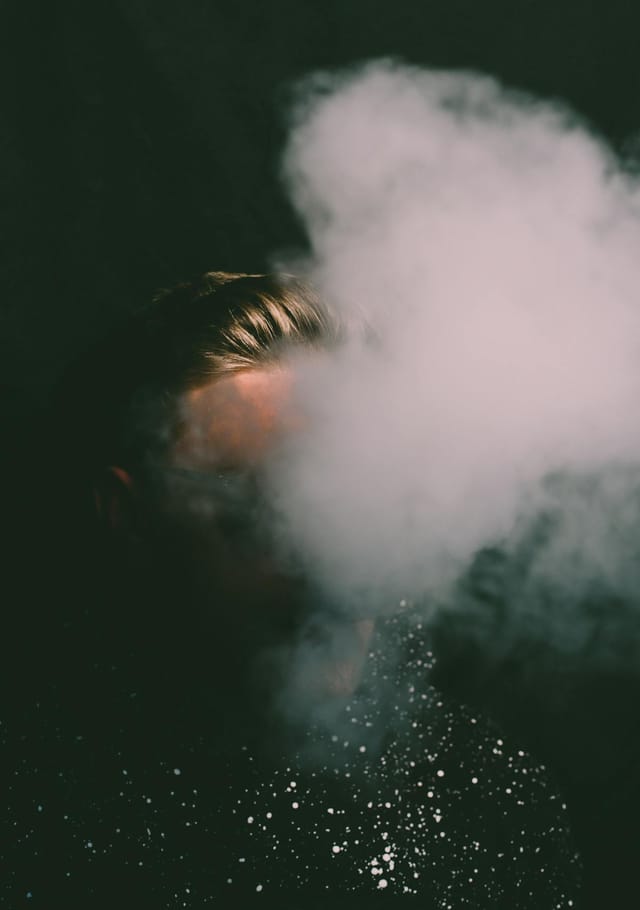
Vape smoke is not the same thing as cigarette smoke, and it should not be treated the same way when choosing an air purifier. E-cigarette aerosol is a suspension of ultrafine liquid droplets, not the product of combustion. The particles are smaller (median size 0.1 to 0.8 microns, with peaks around 0.04 and 0.2 microns), lighter, and composed primarily of propylene glycol, vegetable glycerin, nicotine, and flavoring chemicals rather than tar and ash.
That smaller particle size is what matters for filtration. Standard air purifiers with basic filters struggle with particles below 0.3 microns. You need a True HEPA (H13 grade) filter that captures 99.97% of particles at 0.3 microns, which is exactly the size range where vape aerosol concentrates. Activated carbon handles the flavoring VOCs and propylene glycol vapor that HEPA cannot capture.
We evaluated five air purifiers specifically for vape aerosol, prioritizing ultrafine particle capture, CADR smoke ratings, and VOC removal. If you also deal with combustion smoke from cigarettes or cannabis, our cigarette smoke and weed smoke guides cover models optimized for those heavier pollutants.
Our Top Picks at a Glance
| Purifier | Best For | CADR (Smoke) | Room Coverage | Price Range |
|---|---|---|---|---|
| Levoit Core 600S | Best Overall | 410 CFM | Up to 635 sq ft | ~$240 |
| Medify MA-40 | Ultrafine Particles | 380 CFM | Up to 840 sq ft | ~$280 |
| Coway Airmega 400 | Large Rooms | 328 CFM | Up to 1,560 sq ft | ~$450 |
| Levoit Core 300S | Bedrooms | 141 CFM | Up to 219 sq ft | ~$150 |
| Winix 5500-2 | Budget Pick | 232 CFM | Up to 360 sq ft | ~$180 |
Why Vape Smoke Requires a Different Approach
If you have read our other smoke guides, you might wonder why vape smoke needs its own article. The short answer: the particle profile is fundamentally different, and that changes which specs matter most.
Ultrafine Particles, Not Combustion Ash
Cigarette and weed smoke produce particles primarily in the 0.3 to 2.5 micron range through combustion. Vape aerosol skips combustion entirely. Instead, a heating element vaporizes e-liquid into a fine mist of droplets, with 97 to 99% of particles falling below 1.0 micron and significant concentration below 0.1 microns. Research from Johns Hopkins has identified nearly 2,000 chemicals in popular vape brands, the vast majority unidentified.
This means True HEPA filtration quality matters more than activated carbon weight for vaping. The opposite is true for cigarette smoke, where heavy carbon is the priority for tackling tar and nicotine gases.
Propylene Glycol and Vegetable Glycerin Vapor
The base of most e-liquids is a mix of propylene glycol (PG) and vegetable glycerin (VG). When heated, these produce a visible white cloud that can linger in a room. While less harmful than combustion byproducts, PG vapor can irritate the eyes and respiratory system in sensitive individuals. Higher VG ratios produce denser clouds with larger particles that are actually easier to filter.
Flavoring Chemicals and VOCs
The sweet, fruity, or dessert-like scent of vaping comes from flavoring compounds, many of which are volatile organic compounds. These exist as gases at room temperature and pass through HEPA filters. Activated carbon adsorbs these compounds, which is why you still want a purifier with a carbon stage even though carbon weight is less critical than it is for combustion smoke.
What to Look For in a Vape Smoke Air Purifier
True HEPA (H13 Grade) Filtration
This is the most important spec for vape aerosol. H13 True HEPA captures 99.97% of particles at 0.3 microns, which is the sweet spot for vape droplets. Avoid purifiers that claim "HEPA-type" or "HEPA-style" filtration, as these use lower-grade media that lets ultrafine particles pass through. For a deeper dive on filter grades, see our HEPA filter guide.
High Smoke CADR
The Clean Air Delivery Rate for smoke measures removal of the smallest tested particles (0.09 to 1.0 microns), which aligns closely with vape aerosol particle sizes. Aim for a smoke CADR that matches or exceeds your room's square footage. Frequent vapers should size up by 50% for faster clearance between sessions.
Activated Carbon Stage
While less critical than for combustion smoke, you still want activated carbon for the flavoring VOCs and propylene glycol vapor. A purifier with even a moderate carbon layer will handle vape odor effectively because the chemical load is lighter than cigarette or cannabis smoke. You do not need 5 lbs of granular carbon for vaping alone.
Air Quality Sensor
A built-in PM2.5 sensor lets you see exactly when the air returns to baseline after vaping. This is genuinely useful for vapers who want to monitor their indoor air quality and verify the purifier is working. Models with auto mode will ramp up fan speed when they detect the vape cloud and throttle back once the air is clear.
Detailed Reviews
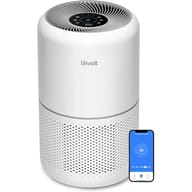
1. Levoit Core 600S: Best Overall for Vape Smoke
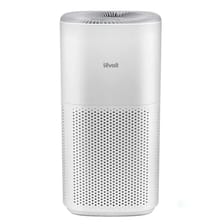
The Levoit Core 600S leads this list with the highest smoke CADR at 410 CFM and a three-stage H13 True HEPA filtration system that handles the ultrafine particles in vape aerosol. At around $240, it delivers premium performance without a premium price.
Why it works for vape smoke: The H13 True HEPA filter captures 99.97% of particles at 0.3 microns, which is exactly where vape aerosol concentrates. The activated carbon layer with honeycomb structure adsorbs flavoring VOCs and propylene glycol vapor. The 410 CFM smoke CADR means a medium-sized room clears of visible vapor within 10 to 15 minutes on high.
Smart features that matter for vapers: The VeSync app with laser-based PM2.5 sensor shows real-time air quality readings. You can watch the particle count spike when you vape and track exactly how long it takes to return to baseline. Auto mode detects the vapor cloud and ramps the fan automatically, so you do not need to manually adjust settings during a session.
Room coverage: Up to 635 sq ft, which handles most living rooms and open-plan spaces comfortably.
Noise: 26 dB on low (whisper quiet), up to 55 dB on turbo. Sleep mode dims the display and drops to the lowest fan speed.
The catch: The carbon filter quantity is moderate. This is fine for vaping (lighter chemical load), but if you also smoke cigarettes or cannabis, you will want to replace the carbon stage more frequently. Filter replacements run $40 to $50 each.
Annual cost estimate: ~$240 upfront + ~$60 to $100 in filters per year.
2. Medify MA-40: Best for Ultrafine Particles
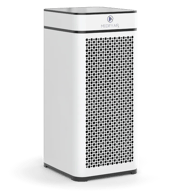
The Medify MA-40 captures particles down to 0.1 microns at 99.9% efficiency, making it the best choice for vapers concerned about the smallest aerosol droplets that standard HEPA might miss. Its 380 CFM smoke CADR in a compact tower design delivers strong performance without taking up much floor space.
Why it works for vape smoke: The H13 True HEPA filter with 0.1 micron capture is the key differentiator. Vape aerosol has significant particle concentration below 0.1 microns, and the Medify catches particles in that range more effectively than standard 0.3 micron HEPA. The dual air intake pulls vapor from both sides of the unit, speeding up clearance.
Compact and portable: At 9.9 x 10.9 x 22 inches and 15.6 lbs, the MA-40 is easy to move between rooms. Some vapers keep it near their desk or couch during the day and move it to the bedroom at night.
Room coverage: Up to 840 sq ft, which is generous for its size. It handles large living rooms and combined spaces well.
The catch: It is louder than the competition, with a minimum noise level of 46 dB. That is noticeable in a quiet room and will bother light sleepers. No WiFi or app connectivity, so you lose the real-time air quality monitoring that the Levoit offers.
Annual cost estimate: ~$280 upfront + ~$70 to $140 in filters depending on usage.
3. Coway Airmega 400: Best for Large Rooms
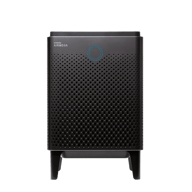
The Coway Airmega 400 covers 1,560 sq ft with dual-sided HEPA and activated carbon filtration. If you vape in a large living area or open floor plan and want the entire space covered with a single unit, this is the pick.
Why it works for vape smoke: Dual True HEPA filters with activated carbon pull air from both sides simultaneously, which means faster clearance across a wide area. The real-time air quality sensor with color-coded LED ring (blue for clean, red for polluted) gives you visual feedback when the vape cloud is detected. Auto mode adjusts fan speed based on particle readings.
Large space advantage: Most purifiers on this list are sized for one room. The Airmega 400 handles a combined living room, kitchen, and dining area, which is useful if vapor drifts between spaces. Its 328 CFM smoke CADR is more than adequate for vape aerosol, which dissipates faster than combustion smoke.
Quiet operation: 22 dB on the lowest setting, making it one of the quietest options for large room coverage. Eco mode stops the fan entirely when air quality is clean, saving energy between vaping sessions.
The catch: At $450, it is the most expensive option after dedicated premium units. The dual filter sets cost about $100 to $130 per year to replace. For a single bedroom or small space, you are paying for coverage you do not need.
Annual cost estimate: ~$450 upfront + ~$100 to $130 in filters per year.
4. Levoit Core 300S: Best for Bedrooms
The Levoit Core 300S is the most popular small-room air purifier on the market, and it handles vape smoke well in spaces up to 219 sq ft. If you primarily vape in a bedroom or home office, this compact, quiet, affordable unit is all you need.
Why it works for vape smoke: The H13 True HEPA filter captures the ultrafine particles in vape aerosol, and the activated carbon layer handles flavoring VOCs. The 141 CFM smoke CADR clears a typical bedroom of visible vapor within 15 to 25 minutes. Smart features through the VeSync app let you schedule the purifier to run on high during hours you typically vape.
Ultra-quiet: At 22 dB on the lowest setting, the Core 300S is virtually silent. Sleep mode dims the display completely, making it ideal for bedroom use where you vape before bed.
Compact size: At 8.7 x 8.7 x 14.2 inches and 7.5 lbs, it fits on a nightstand or desk without taking up meaningful space. It is easy to relocate between rooms if needed.
Smart connectivity: WiFi with VeSync app, Alexa, and Google Assistant support. You can trigger high-speed mode with a voice command before vaping and monitor air quality remotely.
The catch: The 141 CFM CADR and 219 sq ft coverage are not enough for living rooms or larger spaces. If you vape heavily, the limited airflow means slower clearance. This is a bedroom-only recommendation.
Annual cost estimate: ~$150 upfront + ~$35 in filters per year.
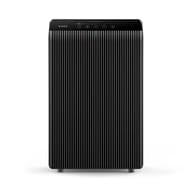
5. Winix 5500-2: Budget Pick
The Winix 5500-2 is the most affordable purifier on this list that still delivers genuine vape smoke filtration. Its four-stage system with a washable AOC carbon filter keeps long-term costs low, and the 232 CFM smoke CADR handles medium-sized rooms effectively.
Why it works for vape smoke: The True HEPA filter captures vape aerosol particles, the washable AOC (Advanced Odor Control) carbon filter adsorbs flavoring compounds and PG/VG vapor, and Winix PlasmaWave technology breaks down remaining VOCs at a molecular level without producing harmful ozone (CARB certified). For light to moderate vaping, this three-pronged approach works well.
The washable carbon advantage: Most carbon filters are disposable at $40 to $80 per replacement. The Winix AOC filter can be rinsed and reused multiple times, which matters for vapers who want ongoing odor control without frequent filter purchases. You will eventually replace it (roughly every 12 months even with washing), but the cost savings are real.
Room coverage: 360 sq ft, which covers most bedrooms and small to medium living rooms.
Auto mode: The built-in air quality sensor detects the vapor cloud and adjusts fan speed automatically. Not as precise as the laser-based sensors in the Levoit models, but it gets the job done.
The catch: No WiFi or app connectivity. The 232 CFM CADR is the lowest on this list (excluding the bedroom-focused Core 300S), so clearance takes longer in larger rooms. For heavy vapers in large spaces, the Levoit Core 600S or Coway Airmega 400 is a better fit.
Annual cost estimate: ~$180 upfront + ~$40 in filters (HEPA replacement; carbon is washable).
How to Get the Most Out of Your Air Purifier for Vaping
Position It Close to Where You Vape
Place the purifier 3 to 5 feet from your usual vaping spot, with the intake facing you. Vape clouds are dense and visible, so the closer the purifier is to the source, the faster it captures the aerosol before it disperses throughout the room. Avoid placing it behind furniture or in a corner where airflow is restricted.
Run It Continuously, Not Just During Sessions
Vape aerosol particles linger longer than you might think. Even after the visible cloud fades, ultrafine particles and flavoring compounds remain airborne. Running the purifier on a low or auto setting throughout the day gives you consistently better air quality compared to turning it on only when you vape.
Use Auto Mode If Available
Purifiers with air quality sensors (like the Levoit Core 600S and Core 300S) automatically detect the spike in PM2.5 when you vape and ramp up fan speed accordingly. This means you do not have to manually switch to high speed every time. Once the air clears, the fan drops back to a quiet, energy-efficient setting.
Replace Filters on Schedule
Vaping is easier on filters than combustion smoke because there is no tar or resin to clog the media. Expect your HEPA filter to last close to its rated lifespan (typically 6 to 12 months). Carbon filters may need attention sooner if you notice the sweet vape scent returning, which signals the carbon is saturating. A fresh carbon filter is the difference between a room that smells clean and one that carries a faint sweetness.
Ventilate When Possible
Opening a window briefly after a vaping session helps flush out residual aerosol before closing up and letting the purifier handle the remaining particles. Do not leave the window open while the purifier runs on high, as you will be pulling in outdoor pollutants instead of cleaning the indoor air.
Vape Smoke vs. Cigarette and Weed Smoke: Key Differences for Filtration
Understanding why vape aerosol behaves differently helps you choose the right purifier and set realistic expectations.
Particle size: Vape aerosol particles are smaller (0.1 to 0.8 microns median) than cigarette smoke (0.3 to 0.5 microns) or weed smoke (0.1 to 2.5 microns). This makes True HEPA filtration quality the top priority for vapers.
Chemical load: Cigarette smoke contains over 7,000 chemicals including tar, formaldehyde, and benzene. Weed smoke carries heavy terpenes and resinous compounds. Vape aerosol has a lighter but still concerning chemical profile: propylene glycol, vegetable glycerin, nicotine, flavoring agents, and trace levels of formaldehyde and acrolein. Less carbon weight is needed for vaping compared to combustion smoke.
Residue: Cigarette and weed smoke deposit sticky tar and resin on surfaces and filters, shortening filter life significantly. Vape aerosol leaves a thin, oily film (primarily VG) that is much easier to clean and less damaging to filters. Your filter replacement schedule will be closer to the manufacturer's recommendation for vaping versus combustion smoking.
Odor persistence: Cigarette smoke odor is notoriously difficult to eliminate and embeds into fabrics and drywall. Vape scent is lighter and dissipates faster, though flavoring compounds can linger if carbon filtration is not present. A moderate activated carbon filter handles vape odor effectively; you do not need the 5 lb carbon beds recommended for heavy tobacco smokers.
For a broader overview of all smoke types, see our general best air purifiers for smoke guide. For help choosing the right purifier beyond smoke concerns, our how to choose an air purifier guide covers all the basics.
The Bottom Line
For most vapers, the Levoit Core 600S is the best overall choice. Its 410 CFM smoke CADR clears rooms quickly, the H13 True HEPA captures the ultrafine particles in vape aerosol, and the smart features let you monitor air quality in real time. At $240, it is hard to beat.
If ultrafine particle capture is your top concern, the Medify MA-40 filters down to 0.1 microns at 99.9% efficiency, though you lose smart features and gain more noise.
For bedrooms, the Levoit Core 300S at $150 is quiet, compact, and smart-enabled. For large open spaces, the Coway Airmega 400 covers 1,560 sq ft with dual filtration. And for budget-conscious vapers, the Winix 5500-2 with its washable carbon filter keeps ongoing costs to a minimum.
The most important thing is consistent use. An air purifier running on auto throughout the day does more for your indoor air quality than the most expensive unit sitting in a closet. Pick the model that fits your room size and budget, keep the filters fresh, and let it run.