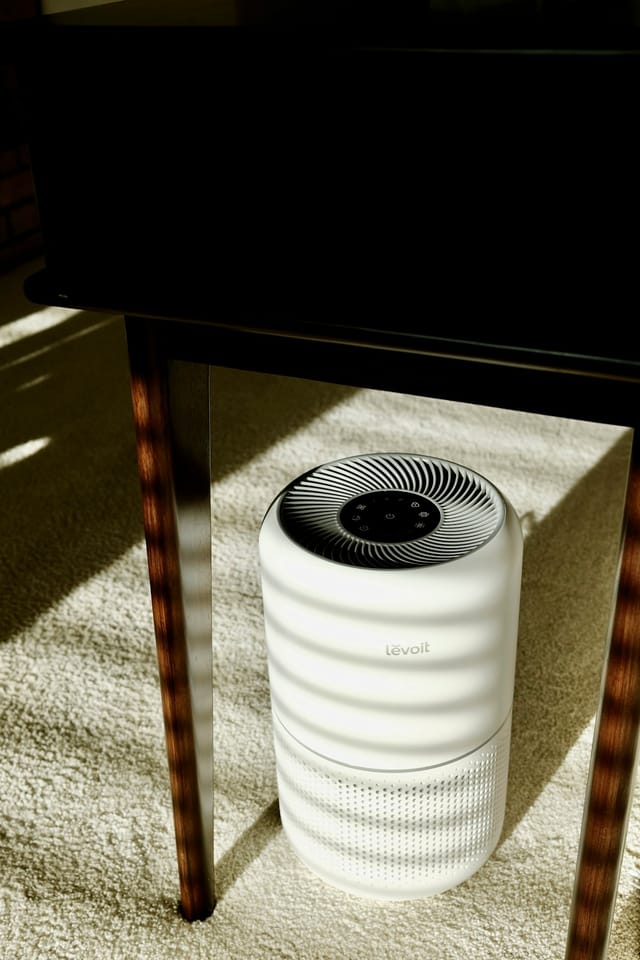
Air Purifier vs Dehumidifier: Which Do You Need?
Air purifiers remove particles and gases. Dehumidifiers remove moisture. Here is when you need one, the other, or both for healthier indoor air.

Table of Contents
- What an Air Purifier Does
- What a Dehumidifier Does
- Air Purifier vs Dehumidifier: Side-by-Side Comparison
- When You Need an Air Purifier
- When You Need a Dehumidifier
- When You Need Both
- Mold Problems
- Damp Basements
- Allergy Sufferers in Humid Climates
- What About Combo Units?
- Cost Comparison: Running Both Devices
- How to Decide: A Quick Framework
- Bottom Line
TL;DR
Air purifiers and dehumidifiers solve different problems. Air purifiers use HEPA filters to remove airborne particles like dust, pollen, mold spores, and pet dander. Dehumidifiers pull excess moisture from the air, preventing mold growth and dust mite reproduction. If your issue is allergies or airborne pollutants, get an air purifier. If your issue is dampness, condensation, or musty smells, get a dehumidifier. For basements or mold-prone rooms, you likely need both.
Air purifiers and dehumidifiers both promise cleaner, healthier air. But they do completely different things. Buying the wrong one means spending $150-400 on a device that will not fix your actual problem.
This guide explains exactly what each device does, when you need one versus the other, and when you need both.
What an Air Purifier Does
An air purifier draws air through filters to remove particles and, in some cases, gases. The most effective type uses a True HEPA filter, which captures 99.97% of particles down to 0.3 microns.
What it removes:
- Dust and dust mite debris
- Pollen and plant spores
- Mold spores (airborne, not growing mold)
- Pet dander and hair
- Smoke particles
- Some bacteria and virus-carrying droplets
If the purifier includes an activated carbon filter, it also adsorbs gases like VOCs (volatile organic compounds), cooking odors, and chemical fumes.
What it does not do:
- Remove moisture from the air
- Prevent mold from growing on surfaces
- Eliminate dust mite colonies in bedding or carpet
- Fix the source of an odor (only filters what reaches it)
The key spec for comparing air purifiers is CADR (Clean Air Delivery Rate), which measures how many cubic feet of air the device cleans per minute. Higher CADR means faster, more effective purification. For a deeper look at the science behind filtration, see our guide on whether air purifiers really work.
What a Dehumidifier Does
A dehumidifier pulls moisture out of the air and collects it in a tank or drains it through a hose. Most residential models use a refrigerant compressor, similar to an air conditioner, to condense water vapor.
What it does:
- Lowers relative humidity to a target level (ideally 30-50%)
- Prevents mold and mildew growth by removing the moisture they need
- Reduces dust mite populations (dust mites cannot survive below 50% humidity)
- Eliminates musty odors caused by dampness
- Prevents condensation on windows, pipes, and walls
- Protects furniture, books, and clothing from moisture damage
What it does not do:
- Remove particles like dust, pollen, or pet dander from the air
- Filter out smoke, VOCs, or chemical fumes
- Capture mold spores already floating in the air
- Improve air quality in dry climates
The key spec for dehumidifiers is pints per day, which measures how much moisture the unit can extract in 24 hours. A 30-pint unit handles a single damp room. A 50-70-pint unit is better for basements or whole-floor coverage.
Air Purifier vs Dehumidifier: Side-by-Side Comparison
| Feature | Air Purifier | Dehumidifier |
|---|---|---|
| Primary function | Removes airborne particles and gases | Removes excess moisture |
| Mold | Captures airborne spores | Prevents new growth |
| Dust mites | Captures airborne debris | Kills colonies by reducing humidity |
| Allergies | Direct relief (removes allergens from air) | Indirect relief (reduces allergen sources) |
| Odors | Removes with carbon filter | Eliminates musty/damp smells only |
| Smoke/VOCs | Yes (with carbon filter) | No |
| Electricity cost | $3-7/month | $15-40/month |
| Filter replacement | $40-80/year | None (most models) |
| Noise level | 24-55 dB (low to medium) | 45-65 dB (medium to high) |
| Typical price | $100-350 | $150-400 |
When You Need an Air Purifier
Get an air purifier if your main issue is airborne contaminants rather than moisture:
- Allergies to pollen, dust, or pet dander. A HEPA filter captures these particles directly and provides relief within 30-60 minutes in an enclosed room.
- Asthma or respiratory sensitivity. Reducing airborne particle counts helps prevent symptom flare-ups.
- Smoke exposure. Whether from cigarettes, cooking, or wildfires, an air purifier with HEPA and activated carbon handles both particles and odor.
- VOC concerns. Off-gassing from new furniture, paint, or cleaning products requires an activated carbon filter.
- General air quality improvement. If you live near a busy road, construction, or industrial area, a purifier reduces the particles that enter your home.
For specific product recommendations, see our best air purifiers guide.
When You Need a Dehumidifier
Get a dehumidifier if your main issue is excess moisture:
- Relative humidity consistently above 50-60%. Buy a hygrometer ($10-15) to check. Many indoor air quality monitors measure humidity too.
- Visible condensation on windows, pipes, or walls.
- Musty or damp odors in basements, crawl spaces, bathrooms, or closets.
- Visible mold or mildew growth (address the moisture source first, then run a dehumidifier to keep it from coming back).
- Water damage or flooding aftermath. A dehumidifier speeds drying and prevents secondary mold growth.
- Warping, peeling paint, or rust caused by excessive humidity.
Basements are the most common place people need a dehumidifier. They sit below grade, where groundwater moisture seeps through concrete walls and floors. Even a "dry" basement often runs 60-70% relative humidity without active dehumidification.
When You Need Both
Some situations call for an air purifier and a dehumidifier working together:
Mold Problems
This is the most common both-device scenario. Here is why:
- A dehumidifier drops humidity below 50%, cutting off the moisture that mold needs to grow. This is prevention.
- An air purifier with a HEPA filter captures mold spores already circulating in the air. This is remediation of what is already airborne.
Running only a dehumidifier stops new mold from forming but does nothing about spores from existing colonies. Running only an air purifier captures spores but does not stop the conditions that produce them. You need both to break the cycle.
For purifier recommendations specifically rated for mold spore capture, see our guide to the best air purifiers for mold.
Damp Basements
Basements combine high humidity with poor ventilation, creating a perfect storm for allergens. A 50-pint dehumidifier handles the moisture, while a HEPA purifier with 200+ CADR handles the stagnant, particle-heavy air. Place the dehumidifier near the dampest wall and the air purifier centrally for maximum coverage.
Allergy Sufferers in Humid Climates
If you live somewhere with hot, humid summers and your allergies flare up indoors, both devices address different parts of the problem. The dehumidifier starves dust mites and prevents mold. The air purifier catches the pollen, dander, and dust that trigger your symptoms directly.
What About Combo Units?
Several manufacturers sell devices that claim to be both an air purifier and a dehumidifier. In practice, these combo units have significant trade-offs:
- Lower CADR ratings than standalone air purifiers at the same price point. A $250 combo might deliver 100-150 CADR, while a $150 standalone purifier delivers 200-300 CADR.
- Less dehumidification capacity. Most combos pull 20-30 pints per day versus 50-70 for a dedicated dehumidifier.
- Higher failure rate. More components in one housing means more points of failure, and if one function breaks, you lose both.
- Harder to position optimally. Air purifiers work best in the center of a room with good airflow. Dehumidifiers work best near moisture sources. You cannot optimize placement for both with a single device.
The only scenario where a combo makes sense is a very small space, like a single closet or a tiny bathroom, where you genuinely cannot fit two devices.
Cost Comparison: Running Both Devices
Here is what to expect for total annual costs based on mid-range devices:
| Cost Category | Air Purifier | Dehumidifier | Both Combined |
|---|---|---|---|
| Purchase price | $150-250 | $200-350 | $350-600 |
| Electricity/year | $36-84 | $180-480 | $216-564 |
| Filters/year | $40-80 | $0 | $40-80 |
| Total first-year cost | $226-414 | $380-830 | $606-1,244 |
| Annual running cost | $76-164 | $180-480 | $256-644 |
The dehumidifier is the bigger ongoing expense due to its higher power draw. To minimize electricity costs, choose an Energy Star-rated dehumidifier and set it to maintain 45-50% humidity rather than running continuously. Most modern dehumidifiers have a built-in humidistat that cycles the compressor on and off automatically.
How to Decide: A Quick Framework
Ask yourself these three questions:
1. Is my indoor humidity above 50%? If yes, you need a dehumidifier. Check with a hygrometer or an indoor air quality monitor.
2. Do I have allergy symptoms, visible dust, or odor concerns indoors? If yes, you need an air purifier.
3. Do I have mold, or am I in a damp basement or humid climate with respiratory issues? If yes, you likely need both.
If you answered no to all three, your indoor air may already be in good shape. Consider getting a basic air quality monitor first to establish a baseline before buying any device.
Bottom Line
Air purifiers and dehumidifiers are not competing products. They solve different problems. An air purifier is a filter for particles and gases. A dehumidifier is a drain for excess moisture. Knowing which problem you have determines which device you need.
For most people in dry or moderate climates with allergy or air quality concerns, an air purifier is the right first purchase. For anyone dealing with dampness, condensation, or humidity-related mold, a dehumidifier comes first. And for basements, mold-prone homes, or humid climates with allergies, running both devices together gives you the most complete protection.
Frequently Asked Questions
Can an air purifier replace a dehumidifier?
Do I need both an air purifier and a dehumidifier for my basement?
Do dehumidifiers help with allergies?
Are combo air purifier and dehumidifier units worth it?
Which is cheaper to run, an air purifier or a dehumidifier?
Does lowering humidity improve air quality?
You Might Also Like
How Long Do Air Purifiers Last? Lifespan by Brand and Type
Air purifiers last 5 to 10 years depending on brand, build quality, and maintenance. See lifespan data by brand plus signs it is time to replace yours.

Do Air Purifiers Help with Pet Dander?
Do air purifiers help with pet dander? The research on how HEPA filters reduce airborne allergens, what they can't fix, and tips for best results.

Where to Place an Air Purifier for Best Results
Learn exactly where to place your air purifier for the best results. Room-by-room placement tips, height guidelines, and common mistakes to avoid.

Dyson Zone Review: Headphones + Air Purifier
An honest Dyson Zone review covering air filtration performance, noise canceling, battery life, comfort, and whether the $700+ price is worth it.