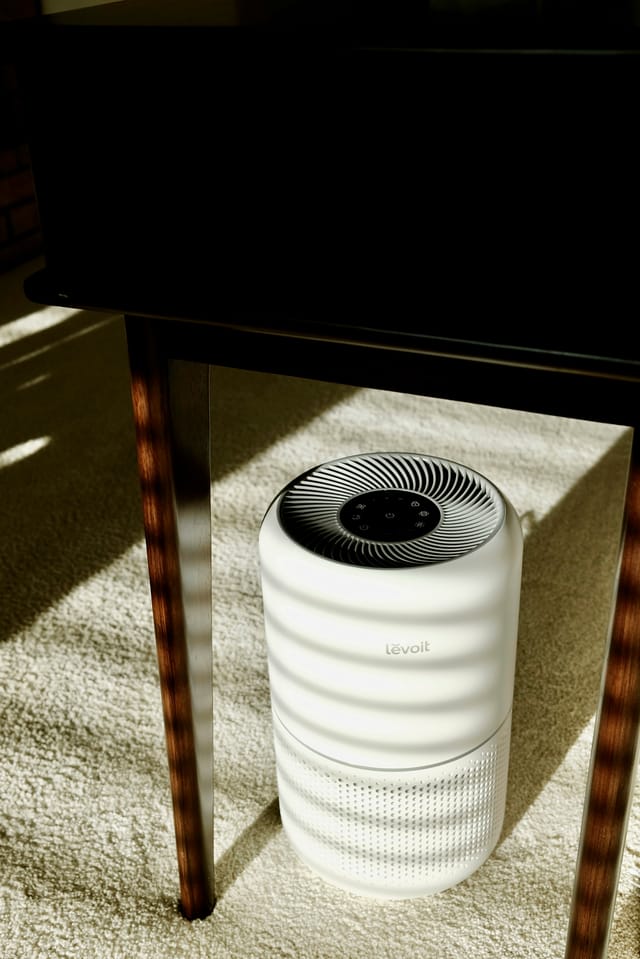
How Long Do Air Purifiers Last? Lifespan by Brand and Type
Air purifiers last 5 to 10 years depending on brand, build quality, and maintenance. See lifespan data by brand plus signs it is time to replace yours.

Table of Contents
- Average Air Purifier Lifespan by Brand
- What Wears Out First: Motor vs. Filter vs. Electronics
- The Motor
- The Filters
- The Electronics
- How Long Do Air Purifiers Last vs. Filters?
- 5 Signs Your Air Purifier Needs Replacing
- 1. The Motor Sounds Different
- 2. Airflow Has Dropped Permanently
- 3. Your Indoor Air Quality Has Gotten Worse
- 4. Electronics Are Failing
- 5. It Smells
- How to Make Your Air Purifier Last Longer
- When Repair Makes Sense vs. Replacement
- Cost Per Year: Is a Longer-Lasting Purifier Worth the Premium?
- The Bottom Line
TL;DR
Most home air purifiers last 5 to 10 years with proper maintenance. Budget models like the Levoit Core 300 typically last 5 to 7 years. Mid-range units from Coway and Winix often reach 8 to 10 years. Premium brands like Blueair and IQAir can last a decade or more. The motor is usually what fails first. Regular filter changes and keeping the unit clean are the two biggest factors in extending lifespan.
The motor inside your air purifier will not last forever. Most home air purifiers are designed to run for 5 to 10 years before the motor, electronics, or housing degrades past the point of useful service. But the actual lifespan depends heavily on the brand, how you maintain it, and how hard you push it.
This guide covers realistic lifespan expectations by brand and price tier, what wears out first, and how to tell when your purifier is past its prime.
Average Air Purifier Lifespan by Brand
Not all air purifiers are built to the same standard. Here is what to expect from the major brands based on warranty data, motor specifications, and long-term user reports.
| Brand | Typical Lifespan | Warranty | Motor Type | Price Tier |
|---|---|---|---|---|
| IQAir | 10-15 years | 5 years | Brushless DC | Premium ($800+) |
| Blueair | 8-12 years | 2 years | Brushless DC | Premium ($300-600) |
| Austin Air | 10-15 years | 5 years | Brushless DC | Premium ($400-700) |
| Coway | 8-10 years | 3 years | Brushless DC | Mid-range ($150-300) |
| Winix | 8-10 years | 2 years | Brushless DC | Mid-range ($150-250) |
| Levoit | 5-7 years | 2 years | Brushless DC | Budget ($80-200) |
| Blueair Blue Pure | 6-8 years | 2 years | Brushless DC | Budget ($100-200) |
Premium tier ($300+): Units from IQAir, Austin Air, and Blueair Pro use industrial-grade motors and heavy steel or aluminum housings. These purifiers are built to run for a decade or more. IQAir's HealthPro Plus XE, for example, has a reputation for lasting 15+ years with proper filter maintenance.
Mid-range ($150-300): Coway and Winix dominate this tier. Both brands use brushless DC motors rated for 40,000+ hours. The Coway Airmega 200M and Winix 5510 are known for multi-year durability. Coway's 3-year warranty is one of the longest in the mid-range segment.
Budget (under $150): Levoit and budget Blueair models use smaller motors and lighter plastic housings. They perform well for their price but are not designed for the same decade-long lifespan. Expect 5 to 7 years with good maintenance. For long-term cost analysis, see our guide to air purifier running costs.
What Wears Out First: Motor vs. Filter vs. Electronics
An air purifier has three main components that can fail over time. Understanding which one is most likely to go first helps you plan replacements and avoid surprises.
The Motor
The motor is the heart of the purifier and the most common point of failure in older units. Air purifier motors fall into two categories:
Brushless DC motors are standard in most modern purifiers from Levoit, Coway, Winix, and Blueair. These motors have no physical brushes to wear down, generate less heat, and are rated for 40,000 to 50,000 hours of continuous operation. At 24/7 use, that translates to roughly 5 to 6 years. At 12 hours per day, the motor could last over 10 years.
Brushed motors appear in some very cheap purifiers under $50. These wear faster because the carbon brushes physically contact the rotating armature. Expect 10,000 to 20,000 hours, or 1 to 2 years of continuous use. If your purifier cost less than $50, the motor is almost certainly the limiting factor.
Signs of motor failure include grinding noises, rattling, reduced airflow that persists with a new filter, or the motor failing to start on some attempts.
The Filters
Filters are consumable. They are not the reason you replace the purifier itself. A clogged filter does not damage the unit as long as you replace it on schedule. Running an exhausted filter for too long does make the motor work harder, which can accelerate motor wear over time.
See our guide on how often to replace your air purifier filter for exact schedules by brand.
The Electronics
Control boards, sensors, and displays can fail, especially in smart purifiers with Wi-Fi, app control, and air quality sensors. Common electronic failures include:
- Air quality sensors that give inaccurate readings after 3 to 5 years (dust buildup on the sensor lens)
- Touchscreen or button interfaces that become unresponsive
- Wi-Fi modules that drop connections
- Auto mode that no longer adjusts speed correctly
Sensor issues can often be fixed by cleaning the sensor with a cotton swab and compressed air. Board-level failures are rarely worth repairing.
How Long Do Air Purifiers Last vs. Filters?
This is the most common point of confusion. The purifier itself (the motor, housing, and electronics) lasts years. The filters are consumable parts that you replace regularly throughout the purifier's life.
| Component | Lifespan | Replacement Cost |
|---|---|---|
| Air purifier (unit) | 5-10 years | $80-800 (full replacement) |
| HEPA filter | 6-12 months | $25-70 per filter |
| Carbon filter | 3-6 months | $15-40 per filter |
| Pre-filter | Clean monthly, replace every 3 months | $5-15 or free (washable) |
Over a 5-year ownership period, you will spend more on filters than you paid for the purifier in most cases. A Levoit Core 300 costs about $100 upfront but $175 to $300 in filters over 5 years. A Coway Airmega 200M costs $200 upfront and $225 to $275 in filters over the same period.
This is why total cost of ownership matters more than the purchase price when choosing a purifier that needs to last.
5 Signs Your Air Purifier Needs Replacing
Here is how to tell whether your aging purifier needs a new filter or an entirely new unit.
1. The Motor Sounds Different
A healthy motor hums. An aging motor grinds, rattles, or produces a high-pitched whine. If cleaning the fan blades and replacing the filter does not resolve unusual noises, the motor bearings are likely worn. This is the most reliable sign that your purifier is nearing the end of its life.
2. Airflow Has Dropped Permanently
If airflow is noticeably weaker on high speed even with a brand-new filter, the motor is losing power. Test this by holding a tissue near the output vent on max speed. Compare the force to what it felt like when the purifier was new. A significant reduction means the motor cannot maintain its rated RPM.
3. Your Indoor Air Quality Has Gotten Worse
If you use an indoor air quality monitor, compare your current readings to when the purifier was new. If PM2.5 levels are consistently higher despite fresh filters and the same indoor conditions, your purifier is no longer delivering its rated CADR.
4. Electronics Are Failing
Auto mode does not respond to changes in air quality. The display shows errors. Wi-Fi connectivity drops constantly. Buttons require multiple presses. These are signs of electronic degradation that typically is not worth repairing.
5. It Smells
A persistent musty or burning smell that does not go away after replacing the carbon filter points to mold inside the housing or overheating motor components. Either issue means the unit is no longer safe to operate.
How to Make Your Air Purifier Last Longer
Proper maintenance can add years to your purifier's lifespan. These habits protect the motor, extend filter life, and keep electronics working reliably.
Replace filters on schedule. A clogged filter forces the motor to work harder, generating more heat and accelerating bearing wear. Follow the manufacturer's schedule, or better yet, inspect the filter monthly. Our air purifier maintenance guide covers the full routine.
Clean the pre-filter monthly. The pre-filter catches hair, lint, and large dust before they reach the HEPA filter. Keeping it clean reduces the load on both the HEPA filter and the motor.
Keep air intake and output vents clear. Place your purifier at least 12 inches from walls and furniture. Blocked vents restrict airflow and force the motor to compensate. For placement tips, see our guide on where to place an air purifier.
Use auto mode. Auto mode runs the fan at the lowest effective speed, which reduces motor wear compared to running at high speed continuously. The purifier ramps up only when it detects elevated pollutant levels.
Clean the air quality sensor. Most purifiers have a small optical sensor that measures particle levels. Dust buildup on the sensor lens causes inaccurate readings and erratic fan behavior. Clean it with a dry cotton swab every 3 months.
Keep the purifier dry. Moisture damages both the motor and the HEPA filter. Do not place the purifier in a bathroom or directly next to a humidifier. If you have high humidity concerns, a dehumidifier may be a better fit for that room.
When Repair Makes Sense vs. Replacement
Not every issue means you need a new purifier. Here is a quick guide to what is fixable and what is not.
Worth repairing:
- Clogged air quality sensor (clean with cotton swab)
- Loose fan blade (tighten or replace the blade)
- Frayed power cord (replace the cord)
- Filter indicator stuck on (manual reset per your model's instructions)
Not worth repairing:
- Grinding motor bearings (motor replacement costs 60-80% of a new unit)
- Failed control board (parts rarely available for consumer purifiers)
- Cracked housing (compromises the air seal, allows bypass)
- Burned motor smell (safety risk)
The 50% rule: If the repair cost exceeds 50% of buying a new equivalent purifier, replace it. Newer models are more energy-efficient and have better HEPA filtration than units from even 5 years ago.
Cost Per Year: Is a Longer-Lasting Purifier Worth the Premium?
Paying more upfront for a durable purifier can save money over time. Here is how the math works over a 5-year and 10-year ownership window.
| Purifier | Purchase Price | Annual Filter + Energy | 5-Year Total | 10-Year Total |
|---|---|---|---|---|
| Levoit Core 300 | $100 | $55-75 | $375-475 | N/A (replace at ~6 yrs) |
| Coway Airmega 200M | $200 | $55-65 | $475-525 | $750-850 |
| Winix 5510 | $180 | $90-100 | $630-680 | $1,080-1,180 |
| IQAir HealthPro Plus XE | $1,199 | $100-130 | $1,700-1,850 | $2,200-2,500 |
The Levoit Core 300 has the lowest 5-year cost, but it likely needs replacing around year 6 or 7. The Coway offers strong long-term value, lasting a decade at a total cost that is comparable to buying two budget units. The Winix 5510 matches that durability but carries a higher running cost, since its Filter Q (HEPA plus carbon) runs about $80 per year. The IQAir is the most expensive by far, but it offers medical-grade filtration for the full 10+ years.
For a complete breakdown of running costs, see our air purifier running costs guide.
The Bottom Line
A well-maintained air purifier should last 5 to 10 years. Budget models will get you through 5 to 7 years. Mid-range units from Coway and Winix regularly hit 8 to 10. Premium brands like IQAir and Austin Air can run for 15 years or more.
The two things that matter most for longevity are replacing your filters on time and keeping the unit clean. Everything else — running it 24/7, using auto mode, keeping vents clear — is secondary but adds up over years of ownership.
If your purifier is making new noises, pushing less air than it used to, or no longer improving your air quality with fresh filters, it is probably time for a replacement rather than a repair. Check our guide to the best air purifiers for current recommendations.
Frequently Asked Questions
How do I know when my air purifier needs replacing?
Do expensive air purifiers last longer than cheap ones?
Does running an air purifier 24/7 shorten its lifespan?
Can I repair my air purifier instead of replacing it?
How long do air purifier motors last?
Is it worth buying an extended warranty for an air purifier?
Do HEPA filters degrade over time even when not in use?
You Might Also Like
How Wildfire Smoke Affects Your Health
Wildfire smoke health effects explained: how PM2.5, VOCs, and toxic gases damage your lungs, heart, and brain. Learn who is most at risk and how to stay safe.

Dyson Air-Purifying Headphones: Gimmick or Legit?
We break down whether Dyson's air-purifying headphones (Zone and Aura) deliver real air filtration value, who actually benefits, and how they stack up against masks and portable purifiers.
Is an Air Purifier Worth the Money? Cost vs. Value Analysis
We break down whether an air purifier is worth the investment by comparing multi-year ownership costs against allergy meds, doctor visits, and lost productivity.

Is Incense Bad for Indoor Air Quality?
Burning incense releases PM2.5, benzene, formaldehyde, and PAHs into your home. Here's what the research says and how to reduce the health risks.