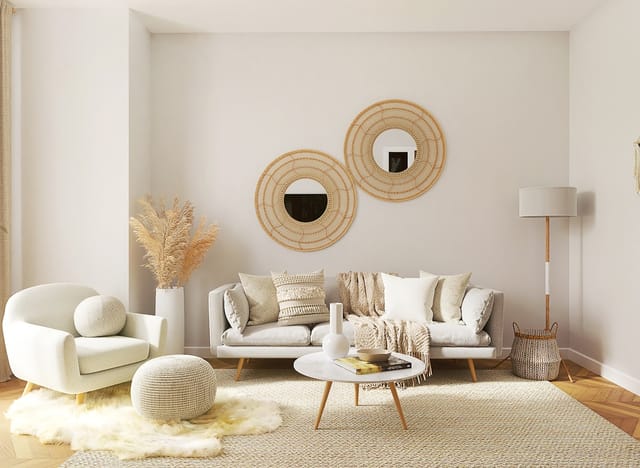
Where to Place an Air Purifier for Best Results
Learn exactly where to place your air purifier for the best results. Room-by-room placement tips, height guidelines, and common mistakes to avoid.

Table of Contents
- Why Placement Matters More Than You Think
- The Four Rules of Air Purifier Placement
- 1. Keep It Away from Walls (At Least 6 Inches)
- 2. Elevate It When Possible (2-5 Feet Off the Ground)
- 3. Avoid Corners and Tight Spaces
- 4. Point It Toward the Problem (or Toward You)
- Room-by-Room Placement Guide
- Bedroom: Your Highest Priority
- Living Room: Central Placement Wins
- Kitchen: Close to the Source
- Home Office: Protect Your Breathing Zone
- Baby's Room or Nursery: Safety First
- Common Placement Mistakes (and How to Fix Them)
- Mistake 1: Putting It Behind Furniture
- Mistake 2: Running It Next to an Open Window
- Mistake 3: Placing It on Thick Carpet
- Mistake 4: Hiding It in a Closet or Cabinet
- Mistake 5: One Unit for Multiple Rooms
- How Placement Affects Different Pollutants
- Does Placement Matter More Than Purifier Size?
- Quick Placement Checklist
TL;DR
Place your air purifier in the room where you spend the most time, at least 6 inches from walls, elevated 2-5 feet off the ground when possible. Keep it away from corners, behind furniture, and near open windows. Bedroom placement near your bed (3-5 feet away) gives the biggest health payoff since you spend 7-9 hours there each night.
You bought an air purifier. You plugged it in, tucked it in a corner, and assumed it would do its thing. Here is the problem: where you put that machine matters just as much as which one you bought. Testing shows that bad placement can cut airflow by over 90%, turning your $200 investment into an expensive white noise machine.
The good news is that getting placement right takes about five minutes and zero extra dollars. Here is exactly where to put your air purifier in every room of your home.
Why Placement Matters More Than You Think
Air purifiers work by pulling room air through their filters and pushing clean air back out. That cycle only works if the purifier has unobstructed access to room air on all sides.
When you shove a purifier against a wall or wedge it behind furniture, you are choking off its air intake. AHAM (the Association of Home Appliance Manufacturers) tests CADR ratings under ideal airflow conditions. In your home, poor placement can reduce real-world performance by 40-50% compared to those lab results.
Think of it this way: a purifier with a CADR of 200 placed in a corner might only deliver the equivalent of a CADR of 100-120. You paid for performance you are not getting.
If you are not familiar with CADR ratings and what they mean for your room size, our guide to understanding CADR breaks it all down.
The Four Rules of Air Purifier Placement
Before we get into room-by-room advice, these four principles apply everywhere:
1. Keep It Away from Walls (At Least 6 Inches)
This is the single most important rule. Research from Smart Air found that placing a purifier flat against a wall reduced airflow to roughly 5% of its capacity. Moving it just a few centimeters away restored airflow to 94%.
For practical purposes, maintain at least 6 inches (15 cm) of clearance between the purifier's air intake and any wall or large piece of furniture. If you can manage 1-2 feet of clearance on all sides, even better.
2. Elevate It When Possible (2-5 Feet Off the Ground)
Most airborne pollutants, including dust, pollen, pet dander, and smoke particles, concentrate in the zone where people breathe. That is roughly 2-5 feet off the ground when you are sitting or lying down.
Placing your purifier on a sturdy table, dresser, or shelf puts it right in this breathing zone, letting it intercept particles before they reach your lungs. Floor placement is not terrible (heavier particles like dust settle low), but elevated placement generally wins for allergens and fine particulate matter like PM2.5.
3. Avoid Corners and Tight Spaces
Corners restrict airflow from multiple directions simultaneously. Studies indicate corner placement can reduce a purifier's overall effectiveness by up to 50%. The middle of a wall or a more central position in the room gives the unit access to air circulating throughout the entire space.
Similarly, avoid placing purifiers inside cabinets, behind TVs, under heavy drapes, or in any spot where furniture blocks the intake or exhaust vents.
4. Point It Toward the Problem (or Toward You)
If you have an identifiable pollution source, like a kitchen, a smoker's area, or a pet bed, position the purifier's intake side facing that source. The clean-air exhaust should point toward the area where you spend time.
If there is no specific source, position the purifier so its clean-air output blows toward your seating or sleeping area.
Room-by-Room Placement Guide
Bedroom: Your Highest Priority
You spend 7-9 hours in your bedroom every night, making it the single most important room for air purification. Breathing cleaner air while you sleep has the biggest cumulative impact on your health.
Where to place it:
- On a nightstand or dresser, 3-5 feet from your bed
- Angled so the clean-air output flows toward your pillow area
- At mattress height or slightly above (2-3 feet off the ground)
What to avoid:
- Directly on the floor under the bed (restricted airflow, collects dust bunnies)
- On the far side of the room from where you sleep
- Next to an open window (you are filtering outdoor air as it enters, wasting the purifier's capacity)
If you are shopping for a bedroom purifier, noise matters more here than anywhere else. Our best air purifiers for bedrooms guide covers the quietest options that won't disrupt sleep.
Living Room: Central Placement Wins
Living rooms tend to be larger and more open, which makes placement trickier. The goal is to position the purifier where it can access the most room air without obstructions.
Where to place it:
- Near the center of the room, or along a wall midway between two ends
- On a side table or console if the unit is compact enough
- Between your main seating area and any pollution sources (kitchen doorway, pet area, entryway)
What to avoid:
- Behind the couch or TV stand (blocked intake on multiple sides)
- In a far corner away from where people sit
- Next to a heating or cooling vent (competing airflow disrupts the purifier's circulation pattern)
Kitchen: Close to the Source
Cooking generates a surprising amount of fine particulate matter, VOCs, and odors. Gas stoves are particularly heavy emitters. A purifier in or near the kitchen helps, though it won't replace a range hood for active cooking.
Where to place it:
- On the counter or a nearby surface, 3-5 feet from the stove
- Intake facing the cooking area, exhaust pointed toward the rest of the room
- If counter space is limited, a floor-standing unit nearby works
What to avoid:
- Directly next to the stove (heat and grease shorten filter life)
- On top of the refrigerator (vibration and restricted airflow)
For kitchen-specific recommendations, see our roundup of best air purifiers for cooking odors.
Home Office: Protect Your Breathing Zone
You likely spend 6-10 hours a day in your office. Off-gassing from electronics, furniture, and carpet can concentrate in a closed room.
Where to place it:
- On your desk or a nearby shelf, within 3-5 feet of where you sit
- Below desk level works too since many offices have limited surface space
- Position the clean-air output toward your face
What to avoid:
- Behind your monitor where airflow is trapped
- On the floor under your desk where chair movement blocks the intake
Baby's Room or Nursery: Safety First
Babies breathe faster than adults and spend most of their time in one room, making air quality in the nursery especially important.
Where to place it:
- On a dresser or shelf, 3-5 feet from the crib
- At crib-rail height (about 2-3 feet off the ground) to match baby's breathing zone
- Make sure the unit is stable and the cord is out of reach
What to avoid:
- Directly next to the crib (noise and direct airflow can disturb sleep)
- On the floor where a crawling baby could reach it
- Units with ionizers or ozone-producing features in any nursery
For nursery-specific picks, we cover safe options in our best air purifiers for baby rooms guide.
Common Placement Mistakes (and How to Fix Them)
Mistake 1: Putting It Behind Furniture
This is the most common error. That gap between the bookshelf and the wall seems like a tidy spot, but it chokes airflow from at least two directions. Move the purifier to an open area where all sides have clearance.
Mistake 2: Running It Next to an Open Window
An open window floods the room with unfiltered outdoor air. Your purifier works overtime trying to filter a constantly refreshing supply of outdoor pollution, pollen, and dust. Close windows and doors when running your purifier for best results.
Mistake 3: Placing It on Thick Carpet
Thick carpet or rugs can block the bottom intake vents on many purifier models. If your purifier pulls air from the bottom, place it on a hard, flat surface or elevate it on a small platform.
Mistake 4: Hiding It in a Closet or Cabinet
Aesthetics matter, but enclosing a purifier defeats the purpose entirely. The unit needs open access to room air. If you want a less visible option, look for slim tower models that blend into room decor rather than hiding a standard unit.
Mistake 5: One Unit for Multiple Rooms
Leaving doors open between rooms and hoping one purifier covers everything does not work. Air does not circulate efficiently through doorways. Each room needs its own appropriately sized unit, or you need to close the door and treat one room at a time.
How Placement Affects Different Pollutants
Not all pollutants behave the same way in a room, and that can influence where you place your purifier:
Dust and large particles tend to settle downward. Floor-level or low placement works well for dust-heavy environments. If dust is your main concern, our guide to choosing the right air purifier can help you match your needs.
Allergens (pollen, pet dander, mold spores) stay airborne longer and distribute throughout the breathing zone. Elevated placement (2-5 feet) is most effective. Running the purifier continuously matters more than exact positioning for allergens.
Smoke and fine particles (PM2.5) are extremely light and spread evenly through a room. Position the purifier between the smoke source and your breathing area. For smoke-specific advice, see our best air purifiers for wildfire smoke guide.
VOCs and odors are gases, not particles. Only activated carbon filters capture them. Placement near the source (new furniture, cleaning supplies, cooking area) improves results since concentration is highest close to the emission point.
Does Placement Matter More Than Purifier Size?
Here is the reassuring takeaway from the research: as long as your purifier has enough CADR for your room size, placement variations within the room matter less than you might expect. A properly sized purifier in a good (not perfect) spot will still clean the air effectively.
Where placement really bites you is in the extremes: shoving the unit against a wall, burying it in a corner, or running it with windows open. Avoid those mistakes, follow the basic rules, and your purifier will do its job.
The AHAM recommends choosing a purifier with a CADR equal to at least two-thirds of your room's square footage. A 200 sq ft bedroom needs a CADR of at least 133. Size the purifier correctly, place it with reasonable clearance, and you will breathe noticeably cleaner air.
Quick Placement Checklist
Use this before you plug in your air purifier:
- At least 6 inches from the nearest wall
- 2-5 feet off the ground when possible
- Not in a corner or behind furniture
- Windows and doors closed during operation
- Intake facing the pollution source (if identifiable)
- Clean-air output directed toward where you sit or sleep
- Stable surface with the cord safely routed
- Not next to HVAC vents or radiators
Frequently Asked Questions
Should I put my air purifier on the floor or a table?
How far should an air purifier be from the wall?
Can I put an air purifier in a corner?
Should I close the door when running an air purifier?
Does it matter which room I put my air purifier in?
Can one air purifier clean my whole house?
Should I move my air purifier between rooms during the day?
You Might Also Like
How Long Do Air Purifiers Last? Lifespan by Brand and Type
Air purifiers last 5 to 10 years depending on brand, build quality, and maintenance. See lifespan data by brand plus signs it is time to replace yours.

Do Air Purifiers Help with Pet Dander?
Do air purifiers help with pet dander? The research on how HEPA filters reduce airborne allergens, what they can't fix, and tips for best results.
Air Purifier vs Dehumidifier: Which Do You Need?
Air purifiers remove particles and gases. Dehumidifiers remove moisture. Here is when you need one, the other, or both for healthier indoor air.

Dyson Zone Review: Headphones + Air Purifier
An honest Dyson Zone review covering air filtration performance, noise canceling, battery life, comfort, and whether the $700+ price is worth it.