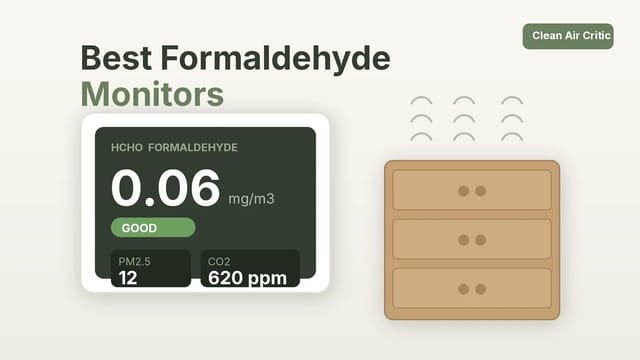
Best Formaldehyde Monitor for Home (2026)
The best formaldehyde monitors of 2026 for new furniture and renovations. We explain HCHO sensors vs. tVOC, and rank monitors by accuracy and value.

Table of Contents
- HCHO vs. tVOC: What You Are Actually Buying
- Our Top Picks at a Glance
- Detailed Reviews
- 1. Temtop M2000: Best Overall Formaldehyde Monitor
- 2. Airthings View Plus: Best for Long-Term Off-Gassing Tracking
- 3. Qingping Air Monitor Gen 2: Best VOC Monitor with a Display
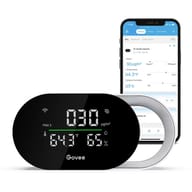
- 4. GoveeLife Smart Air Quality Monitor: Best Budget WiFi VOC Monitor
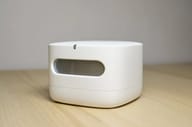
- 5. Amazon Smart Air Quality Monitor: Best for Alexa Smart Home
- How to Choose a Formaldehyde Monitor
- Match the sensor to your question
- Radon vs. CO2 vs. formaldehyde: do not confuse the three
- Read the trend, not the single number
- The Bottom Line
TL;DR
At Clean Air Critic, the best formaldehyde monitor is the Temtop M2000, the only sub-$100 device on this list with a dedicated electrochemical HCHO sensor that reports formaldehyde as a specific number rather than folding it into a tVOC index. For long-term off-gassing tracking with a cloud dashboard, the Airthings View Plus is the better all-rounder at $300. Buyers on a budget who mainly want WiFi alerts should look at the GoveeLife Smart Air Quality Monitor at $80.
Full Comparison
| # | Product | Best For | Rating | Price | |
|---|---|---|---|---|---|
| 1 | Temtop M2000 Top Pick Temtop | Best Overall Formaldehyde Monitor | 4.5 | $ | Check Price |
| 2 | Airthings View Plus Airthings | Best for Long-Term Off-Gassing Tracking | 4.7 | $$$ | Check Price |
| 3 | Qingping Air Monitor Gen 2 Qingping | Best VOC Monitor with a Display | 4.5 | $$ | Check Price |
| 4 | GoveeLife Smart Air Quality Monitor GoveeLife | Best Budget WiFi VOC Monitor | 4.1 | $ | Check Price |
| 5 | Amazon Smart Air Quality Monitor Amazon | Best for Alexa Smart Home | 4.2 | $ | Check Price |
Affiliate Disclosure: CleanAirCritic earns commissions from qualifying purchases through affiliate links on this page. This does not influence our rankings or reviews. All opinions are our own. Learn more
You just assembled a new particleboard dresser, laid down laminate flooring, or unboxed a foam mattress, and now the room has that sharp, slightly sweet chemical smell. That smell is often formaldehyde, off-gassing from the urea-formaldehyde resins used to bind pressed wood. It is invisible, it is classified as a known human carcinogen, and it can linger for months.
A formaldehyde monitor puts a number on it. But there is a catch that most product listings hide: the majority of "air quality monitors" sold as formaldehyde detectors do not actually measure formaldehyde. They measure total VOCs and report a single combined index. Understanding that difference is the whole game, so we will start there before the picks.
We evaluated monitors on sensor type (dedicated HCHO vs. tVOC), reading accuracy, display and connectivity, and value. Here are the best options for anyone dealing with new furniture, a recent renovation, or new construction.
HCHO vs. tVOC: What You Are Actually Buying
There are two very different kinds of sensor sold under the "formaldehyde monitor" banner.
Dedicated electrochemical HCHO sensors report formaldehyde as its own specific reading, typically in mg/m3 or ppm. They are the only type that answers the question "what is my formaldehyde level?" directly. The Temtop devices on this list use them. Electrochemical sensors also resist the cross-sensitivity problem that plagues cheap meters, where a spritz of perfume or hand sanitizer sends the number soaring.
Total VOC (tVOC) sensors, usually metal-oxide (MOX) type, report every volatile compound in the air as one combined index. Formaldehyde is inside that number, but so is the alcohol from your cleaning spray, the limonene from your citrus candle, and the solvents from a marker. A rising tVOC reading tells you "something chemical is in the air," not "your formaldehyde is at X." The Airthings, Qingping, GoveeLife, and Amazon monitors are all tVOC devices.
Neither is wrong, they answer different questions. If you specifically want to track formaldehyde from new furniture, buy an electrochemical HCHO monitor. If you want broad awareness of chemical air quality plus other parameters like CO2 and PM2.5, a good tVOC monitor is the more useful all-rounder. Several people end up wanting both, which is why our top two picks split along exactly this line.
Our Top Picks at a Glance
| Monitor | Best For | Formaldehyde Sensor | Other Parameters | Price |
|---|---|---|---|---|
| Temtop M2000 | Best Overall | Dedicated electrochemical HCHO | PM2.5, PM10, CO2 | $60 |
| Airthings View Plus | Long-Term Tracking | tVOC (composite) | Radon, CO2, PM2.5, humidity | $300 |
| Qingping Air Monitor Gen 2 | Best Display | tVOC (composite) | CO2, PM2.5, PM10, humidity | $120 |
| GoveeLife Smart AQ Monitor | Budget WiFi | tVOC (composite) | CO2*, PM2.5, humidity | $80 |
| Amazon Smart AQ Monitor | Alexa Homes | VOC (composite) | PM2.5, CO, humidity | $70 |
*GoveeLife uses an estimated CO2 algorithm, not a true NDIR sensor.
Detailed Reviews
1. Temtop M2000: Best Overall Formaldehyde Monitor
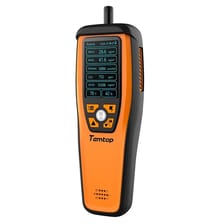
The Temtop M2000 is the pick for most people because it is the cheapest device here that actually measures formaldehyde. It pairs a pre-calibrated electrochemical HCHO sensor with a laser particle sensor for PM2.5 and PM10 and adds a CO2 reading, all on a color LCD with a built-in rechargeable battery. At around $60, it does the one job the article title promises, which the pricier tVOC monitors below cannot.
Why it wins: The electrochemical formaldehyde sensor reports HCHO as a discrete number you can watch. Set the dresser next to it, note the reading, ventilate, and check again in a week. That trend is exactly what you want after a furniture purchase or a renovation. The battery makes it easy to carry room to room, so you can compare the new-furniture bedroom against the rest of the house.
Real-world use: We would treat the absolute number as directional rather than lab-exact, but the M2000 is consistent enough to show whether off-gassing is rising or falling. That is the practical question. It also flags PM2.5 spikes from cooking and sawdust, which is a bonus during a remodel.
Downsides: The CO2 sensor is not a true NDIR unit, so treat CO2 as a rough guide only. There is no WiFi, app, or data logging, so you read it in person. The formaldehyde sensor, like all electrochemical cells, will slowly drift over a few years and eventually needs replacement.
If you want a step up in the same family, Temtop's LKC-1000S+ (2nd gen) adds data export, a larger TFT display, tVOC alongside HCHO, and a longer battery for around $145 direct from temtopus.com. It is the better choice for a contractor or anyone who needs to log readings, but it is overkill for a single new-furniture worry.
2. Airthings View Plus: Best for Long-Term Off-Gassing Tracking
The Airthings View Plus does not have a dedicated formaldehyde sensor, so why is it here? Because off-gassing is a months-long process, and the View Plus is the best device for watching a chemical trend decline over that timeframe. It measures tVOC alongside radon, CO2, PM2.5, temperature, humidity, and pressure, then logs everything to a cloud dashboard with history going back months.
Why it works for off-gassing: New furniture and flooring release VOCs (formaldehyde among them) that taper off over weeks. The View Plus shows that curve. You can see the tVOC level fall as the room airs out, which is more useful for the "is it getting better?" question than a single spot reading. The seven-parameter coverage also means this is the last air quality monitor most homes need to buy.
Smart integration: SmartThings, IFTTT, and the Airthings API let you trigger a VOC-capable air purifier automatically when tVOC climbs. Pair it with aggressive ventilation for the fastest cleanup after a renovation.
Downsides: At $300 it is the most expensive option here, and its VOC reading is a composite, not a true formaldehyde number. Radon readings take 30 or more days to stabilize. If your only concern is formaldehyde from one new piece of furniture, this is more monitor than you need. For a full breakdown of everything it does, see our best indoor air quality monitors guide.
Use discount code clean-air-critic-10OFF for 10% off at airthings.com.
3. Qingping Air Monitor Gen 2: Best VOC Monitor with a Display
If you want a tVOC monitor you can read at a glance without opening an app, the Qingping Air Monitor Gen 2 is the one. For $120 it shows tVOC, an NDIR CO2 reading, PM2.5, PM10, temperature, and humidity on a bright 3.1-inch IPS touchscreen, with native Apple HomeKit support for automations.
Why it works: The touchscreen is the best on this list. All parameters show on one screen, and you can swipe through historical graphs by hour, day, or week without a phone. The NDIR CO2 sensor is genuine rather than estimated, which matters if you also care about ventilation. For an Apple household that wants chemical awareness plus solid CO2, this is the natural pick.
On formaldehyde: The tVOC index will react to off-gassing, so it works as a broad early-warning tool. It just will not give you a formaldehyde-specific number the way the Temtop does. Think of it as a chemical smoke alarm rather than a formaldehyde meter.
Downsides: USB-C powered only, with no battery, so it stays put. HomeKit setup can be finicky on a 2.4 GHz network. No radon. The tVOC reading is a composite index.
4. GoveeLife Smart Air Quality Monitor: Best Budget WiFi VOC Monitor
At around $80, the GoveeLife Smart Air Quality Monitor is the cheapest way to get WiFi alerts when chemical air quality worsens. It measures tVOC, PM2.5, an estimated CO2, temperature, and humidity, and pushes notifications through the Govee Home app so you get pinged even when you are in another room.
Why it works: Set a tVOC threshold and the app notifies you when off-gassing or cooking pushes it up. It can also trigger other Govee devices, so a smart fan or plug can respond automatically. For a nursery or a newly furnished bedroom where you want a heads-up rather than a precise reading, it is enough monitor for the money.
On formaldehyde: Same caveat as the other tVOC units, it senses the broad category, not formaldehyde specifically. Good for awareness, not for certifying a level.
Downsides: The CO2 figure is an estimated algorithm, not NDIR, so ignore it for anything serious. Accuracy is adequate but not reference-grade, and third-party smart home support beyond Govee is limited.
5. Amazon Smart Air Quality Monitor: Best for Alexa Smart Home
For $70, the Amazon Smart Air Quality Monitor is the simplest way to fold chemical awareness into an Alexa home. It measures VOCs, PM2.5, carbon monoxide, temperature, and humidity, and reports through the Alexa app and Echo devices rather than a screen of its own.
Why it works: Alexa reads your air quality aloud and can run routines: when VOCs rise, an Echo can turn on a smart air purifier or announce the change. It is compact, cheap, and effortless if you already live in the Alexa ecosystem. The included carbon monoxide sensor is a genuine safety extra the other monitors here lack.
On formaldehyde: It reports a VOC index, not a formaldehyde number, and it has no CO2 sensor. Treat it as a whole-home awareness gadget, not a renovation tool.
Downsides: No standalone display, so you depend on the Alexa app or an Echo. No CO2. Accuracy is adequate, not lab-grade, and you are locked into Amazon's ecosystem.
How to Choose a Formaldehyde Monitor
Match the sensor to your question
- "What is my formaldehyde level after this new furniture?" Buy a dedicated electrochemical HCHO monitor. The Temtop M2000 is the value pick; the LKC-1000S+ is the loggable step-up.
- "Is my chemical air quality improving over months?" A tVOC monitor with history is ideal. The Airthings View Plus is the best of these.
- "I just want an alert when something is off." A budget WiFi tVOC monitor like the GoveeLife or Amazon unit does the job.
Radon vs. CO2 vs. formaldehyde: do not confuse the three
These three often get lumped together as "the invisible ones," but they are unrelated and need different sensors:
- Formaldehyde (HCHO) is a VOC that off-gasses from pressed wood and fabrics. Measured by an electrochemical HCHO sensor or approximated inside tVOC.
- CO2 indicates ventilation and stuffiness, not toxicity at normal indoor levels. Measured by an NDIR sensor. See our CO2 monitor guide.
- Radon is a radioactive gas from soil, unrelated to furniture. Measured only by a dedicated radon sensor like the one in the Airthings View Plus or our best radon detectors.
No single sub-$100 device measures all three well. If you buy a "9-in-1" cheap meter claiming to, be skeptical of the radon and CO2 numbers in particular.
Read the trend, not the single number
Consumer formaldehyde and VOC sensors are best at showing change over time. One reading on day one means little. The same reading tracked across two weeks of ventilation tells you whether the off-gassing is fading. For the full background on what these compounds are and why they matter, read our explainer on VOCs and our guide to new furniture off-gassing.
The Bottom Line
If you want a device that genuinely measures formaldehyde without spending a fortune, the Temtop M2000 is our top pick. It is the only affordable monitor here with a dedicated electrochemical HCHO sensor, and it answers the actual question new-furniture buyers are asking.
If you would rather track chemical air quality (formaldehyde included) as a long-term trend alongside radon, CO2, and PM2.5, the Airthings View Plus is the better all-rounder. And if you just want cheap WiFi alerts, the GoveeLife monitor covers the basics for $80. Whichever you choose, remember the golden rule: watch the trend as you ventilate, and pair the monitor with a carbon air purifier for VOCs to speed up the cleanup.
Frequently Asked Questions
What is the difference between a formaldehyde monitor and a VOC monitor?
How accurate are consumer formaldehyde monitors?
What is a safe formaldehyde level indoors?
Where does indoor formaldehyde come from?
How long does formaldehyde off-gassing last?
Can an air purifier remove formaldehyde?
You Might Also Like
Best VOC Monitor for Home (2026)
The best VOC monitors of 2026 for home air quality tracking. We rank monitors by tVOC sensor quality, parameters covered, smart home integration, and value.
How to Use an Air Quality Monitor with Your HEPA Purifier
Pair your air quality monitor with a HEPA purifier for smarter, data-driven air cleaning. Optimal placement, setup steps, and how to read the numbers.
Air Quality Monitor vs Air Purifier: What You Actually Need
Air quality monitors and air purifiers solve different problems. We explain which you need first, when you need both, and how to use them together effectively.
Best Radon Detectors for Home (2026)
The best radon detectors for home use in 2026. Continuous monitors with accurate, real-time readings so you can act before radon becomes a health risk.