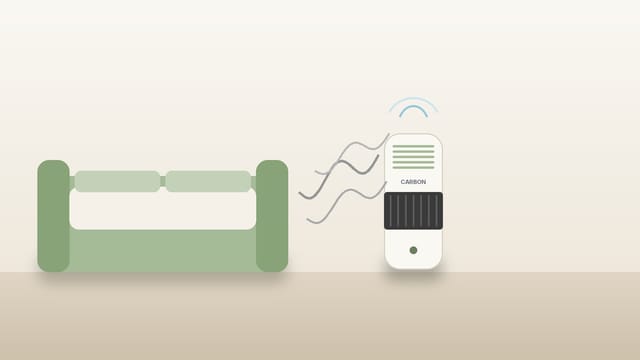
Best Air Purifier for Smoke Smell Removal (2026)
The best air purifiers for smoke smell removal in 2026, ranked by activated carbon weight. Picks that clear odor, not just particles, from $150 to $1,200.

Table of Contents
- Our Top Picks at a Glance
- Why Carbon Weight Is the Number That Matters
- Detailed Reviews
- 1. IQAir HealthPro Plus XE: Best Overall for Smoke Smell
- 2. Levoit Core 600S: Best Smart Mid-Range
- 3. Coway Airmega 400: Best for Large Rooms
- 4. Medify MA-40: Best Pelletized Carbon Value
- 5. Winix 5510: Best Budget Odor Pick
- How to Get the Most Odor Removal From Any Purifier
- The Bottom Line
TL;DR
At Clean Air Critic, the best air purifier for smoke smell removal is the IQAir HealthPro Plus XE, whose 5 lbs of activated carbon and potassium permanganate outlasts every consumer carbon filter for neutralizing odor. For a smart mid-priced pick, the Levoit Core 600S pairs decent carbon with a PM2.5 sensor for around $260. Budget buyers should grab the Winix 5510 (~$180). The key metric for smell is carbon weight, not CADR.
Full Comparison
| # | Product | Best For | Rating | Price | |
|---|---|---|---|---|---|
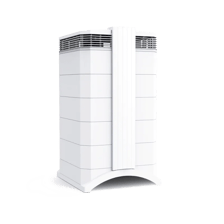
| 1 | IQAir HealthPro Plus XE Top Pick IQAir | Best Overall for Smoke Smell | 4.8 | $$$$ | Check Price |
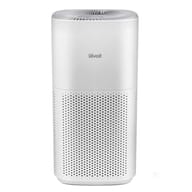
| 2 | Levoit Core 600S Levoit | Best Smart Mid-Range | 4.7 | $$ | Check Price |
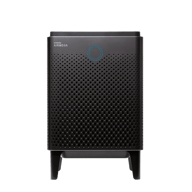
| 3 | Coway Airmega 400 Coway | Best for Large Rooms | 4.6 | $$$ | Check Price |
| 4 | Medify MA-40 Medify | Best Pelletized Carbon Value | 4.5 | $$ | Check Price |
| 5 | Winix 5510 Winix | Best Budget Odor Pick | 4.5 | $ | Check Price |
Affiliate Disclosure: CleanAirCritic earns commissions from qualifying purchases through affiliate links on this page. This does not influence our rankings or reviews. All opinions are our own. Learn more
Removing smoke smell is a different problem from removing smoke particles, and most air purifier guides blur the two. The particle problem, the visible haze and the PM2.5 that damages your lungs, is solved by a True HEPA filter. The smell problem is not. Odor is gas, and gas slips straight through HEPA media as if it were not there.
That is why a powerful, high-CADR purifier can clear the haze in your living room while the acrid smoke smell lingers for days. To remove the smell, you need activated carbon, and you need enough of it. This guide ranks purifiers specifically by their ability to neutralize smoke odor, which means we weighted activated carbon capacity far more heavily than headline CADR numbers.
If you are dealing with active wildfire smoke and want the broader particle-focused picks, see our best air purifiers for wildfire smoke roundup. For general smoke coverage across all sources, our best air purifier for smoke guide is the place to start. This article is about one thing: getting rid of the smell.
Our Top Picks at a Glance
| Purifier | Best For | Activated Carbon | Room Coverage | Price |
|---|---|---|---|---|
| IQAir HealthPro Plus XE | Best Overall for Smell | 5 lbs | 1,125 sq ft | ~$1,199 |
| Levoit Core 600S | Smart Mid-Range | ~1 lb | 635 sq ft | ~$260 |
| Coway Airmega 400 | Large Rooms | Coated mesh | 1,560 sq ft | ~$350 |
| Medify MA-40 | Pelletized Value | Pelletized | 840 sq ft | ~$250 |
| Winix 5510 | Budget Odor Pick | Filter Q (carbon) | 372 sq ft | ~$180 |
Why Carbon Weight Is the Number That Matters
Smoke odor comes from volatile organic compounds and other gas-phase molecules. Activated carbon removes them through adsorption: the gas molecules stick to the carbon's enormous internal surface area. A single gram of activated carbon can have the surface area of a tennis court. But that capacity is finite. Once the surface is saturated, the carbon stops working and can even release captured molecules back into the air.
This leads to two practical rules. First, more carbon means more capacity and longer-lasting odor removal. Second, the form of the carbon matters: dense pelletized or granular carbon holds far more than the thin carbon-coated mesh found in most budget purifiers. A unit advertising a "carbon filter" that weighs a few ounces will stop fighting odor within weeks of heavy use.
For the underlying science of why particle filters and gas filters do different jobs, see our explainer on carbon filter vs. HEPA.
Detailed Reviews
1. IQAir HealthPro Plus XE: Best Overall for Smoke Smell
If smell is your priority, the IQAir HealthPro Plus XE is the clear winner. Its V5-Cell gas and odor filter holds 5 lbs of activated carbon impregnated with potassium permanganate, which is a genuine chemical filtration stage rather than a token pre-filter. No consumer purifier on this list comes close to that carbon capacity.
Why it dominates odor removal: That 5 lb carbon bed keeps adsorbing smoke gases long after lighter filters have saturated. In homes with persistent smoke odor, from former smokers' apartments to lingering wildfire smell, the HealthPro Plus XE is the unit that actually clears the air rather than masking it. The sealed Swiss housing means every molecule passes through the filtration stages with zero bypass.
Coverage and particles: It covers up to 1,125 sq ft, and its HyperHEPA media captures particles down to 0.003 microns, so it handles the particle side just as seriously as the gas side.
The catch: It is expensive at around $1,199, though the XE is WiFi-enabled with real-time air quality monitoring through the AirVisual app. Replacement filters range from $70 to $200 per stage, though the carbon filter lasts up to two years and the HEPA up to four, which softens the long-term cost.
2. Levoit Core 600S: Best Smart Mid-Range
The Levoit Core 600S is the practical pick for most homes fighting moderate smoke smell. At around $260 it pairs a True HEPA filter with an activated carbon layer and adds a built-in PM2.5 sensor and app control, so you can watch the particle side respond in real time.
Odor performance: Its carbon layer is lighter than the IQAir's, closer to a pound, which handles everyday cooking smoke, occasional cigarette odor, and moderate wildfire smell well. For severe, persistent odor it will saturate faster, but for the majority of households it strikes the best balance of price and performance.
Why the smarts help: During a smoke event, conditions change hour to hour. The Core 600S ramps fan speed automatically when its sensor detects a spike, and the VeSync app lets you check and control it from your phone. Pair it with a standalone PM2.5 monitor for a second data point.
The catch: Plan on replacing the filter two to three times a year under heavy smoke, at $40 to $50 each. The carbon is good, not class-leading.
3. Coway Airmega 400: Best for Large Rooms
The Coway Airmega 400 covers up to 1,560 sq ft and is the pick when you need to clear smoke smell from a large, open space rather than a single room. Dual filters with integrated activated carbon process air from both sides at once, and a pollution sensor with a color-coded ring adjusts fan speed automatically.
Odor performance: The carbon here is a coated mesh rather than a dense pelletized bed, so it handles light to moderate smoke odor across a big footprint but is not the deep-odor specialist the IQAir is. For a large living room with intermittent cooking or fireplace smoke, it does the job and looks good doing it.
The catch: In a space with strong, persistent smoke smell, the coated-mesh carbon will need replacing more often to keep odor down. Treat its coverage claim as optimistic for heavy odor; think of it as a 700 to 900 sq ft odor purifier in tough conditions.
4. Medify MA-40: Best Pelletized Carbon Value
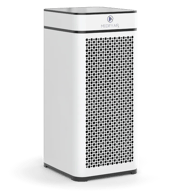
The Medify MA-40 is the value pick for odor because it uses granular, pelletized activated carbon rather than a thin coated sheet, giving it more real adsorption capacity than its roughly $250 price suggests. It covers up to 840 sq ft with H13 medical-grade HEPA on the particle side.
Odor performance: The pelletized carbon pellets offer more surface area than mesh, so the MA-40 punches above its weight on smell. It is a strong middle option between the budget Winix and the premium IQAir, especially if you want better odor handling without the IQAir's price.
The catch: No Wi-Fi or air quality monitoring, and the 8-hour timer cap is annoying if you want continuous operation. Pair it with a separate air quality monitor if you want to track results. Replacement filters run $35 to $45.
5. Winix 5510: Best Budget Odor Pick
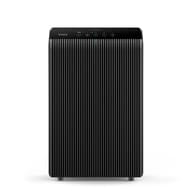
At around $180, the Winix 5510 is the most affordable smart way to start removing smoke smell from a bedroom-sized space up to 372 sq ft. The successor to the discontinued 5500-2, it combines True HEPA, an activated carbon stage inside the replaceable Filter Q, and PlasmaWave technology that helps break down some odor-causing VOCs. WiFi and the Winix Smart App let you monitor air quality from your phone.
Odor performance: The carbon layer is thin, so it will not match a pelletized or 5 lb bed for heavy odor, but it meaningfully reduces light to moderate smoke smell. The PlasmaWave stage supplements gas removal without producing harmful ozone, and it is CARB certified.
The catch: This is a smart-value pick, not the cheapest unit to run. The carbon sits in the replaceable Filter Q rather than a washable layer, so it saturates quickly under heavy smoke and needs replacing (budget roughly $80 per year). It runs loud at full speed (~67 dB max, ~35 dB in sleep mode) and has no physical remote. It is best for light, recurring odor rather than a severe, persistent smell. For the full breakdown, see our Winix 5500-2 review.
How to Get the Most Odor Removal From Any Purifier
A purifier only cleans the air, not your surfaces. Smoke smell absorbs into walls, carpet, upholstery, and fabric, and those surfaces keep off-gassing odor for weeks. To make a carbon purifier effective, help it out:
- Run it continuously while odor is present. Carbon removes airborne molecules only while air is moving through it.
- Wash soft surfaces. Launder curtains, bedding, and washable fabrics. Vacuum upholstery and carpet.
- Replace carbon on time. Spent carbon stops working and can re-release captured gases. If the smell returns with a fresh-looking filter, the carbon is saturated.
- Address the source. A purifier manages lingering odor; it cannot keep up with an active smoke source in the room.
The Bottom Line
For smoke smell, carbon is king. If you want the most thorough, longest-lasting odor removal and can spend for it, the IQAir HealthPro Plus XE and its 5 lb carbon bed is the top choice. For most homes, the Levoit Core 600S delivers strong odor control plus smart monitoring at a fraction of the price. On a budget, the Winix 5510 makes a real dent in light to moderate smell.
Whatever you choose, judge it by carbon capacity, not headline CADR. The particle number tells you how fast it clears haze; the carbon weight tells you whether it will actually remove the smell. For particle-focused fire season picks, head to our best air purifiers for wildfire smoke guide, and to track your results, see our best PM2.5 monitors for wildfire smoke.
Last updated: June 2026. We re-verified pricing and availability across all five picks. Prices and availability are subject to change.
Frequently Asked Questions
What kind of air purifier removes smoke smell?
Why does my HEPA air purifier not remove the smoke smell?
How much activated carbon do I need to remove smoke smell?
Does activated carbon wear out?
Will an air purifier remove cigarette or wildfire smoke smell permanently?
Do ozone generators remove smoke smell better than carbon?
Can the same purifier handle smoke smell and smoke particles?
You Might Also Like

Best Air Purifier for COPD (2026): 7 Ozone-Free Picks
The 7 best air purifiers for COPD in 2026, screened for zero ozone and costed for 24/7 use. Ozone-free HEPA picks from $56 to $290 a year to run.

Best Air Purifier for a Gas Stove (2026): 7 Carbon Picks
The 7 best air purifiers for gas stove pollution in 2026, ranked by carbon capacity. What they fix, what they cannot fix, and honest NO2 reduction numbers.
Best Air Purifier & Humidifier Combo (2026)
The best air purifier and humidifier combos in 2026. We rate the top HEPA+humidifier units and explain when a pairing of two separate devices beats any all-in-one.
Best Air Purifiers for Nail Salons (2026)
The best air purifiers for nail salons in 2026. We compare heavy-carbon units and source-capture options to clear acrylic fumes, MMA monomer, and VOCs at the nail table.