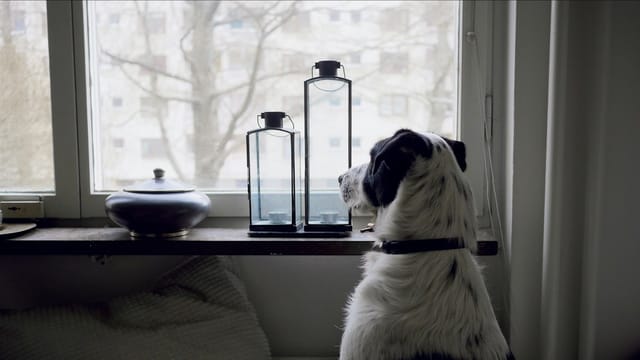
Wildfire Smoke and Pets: How to Protect Your Dogs and Cats
Learn how wildfire smoke affects pets, recognize warning signs in dogs and cats, and take practical steps to protect your animals during fire season.

Table of Contents
- Why Pets Are Especially Vulnerable to Wildfire Smoke
- Signs of Smoke Exposure in Dogs
- Mild to Moderate Signs
- Serious Signs (Vet Visit Required)
- Signs of Smoke Exposure in Cats
- Mild to Moderate Signs
- Emergency Signs (Immediate Vet Visit)
- How to Protect Your Pets During Wildfire Smoke
- Keep Pets Indoors
- Create a Clean Air Room for Your Pet
- Run an Air Purifier
- Keep Fresh Water Available
- Wipe Down Paws and Fur After Outdoor Trips
- Choosing an Air Purifier for a Home with Pets
- When to Call Your Vet
- Other Animals: Birds, Small Mammals, and Reptiles
- Birds (Highest Risk)
- Small Mammals (Rabbits, Guinea Pigs, Hamsters, Ferrets)
- Reptiles
- The Bottom Line
TL;DR
Wildfire smoke is dangerous for pets, especially brachycephalic breeds and cats, who cannot tell you when they are struggling to breathe. At Clean Air Critic, we recommend keeping pets indoors when AQI exceeds 100, running a HEPA air purifier in their primary room, and watching for coughing, lethargy, or open-mouth breathing in cats (an emergency sign).
Full Comparison
| # | Product | Best For | Rating | Price | |
|---|---|---|---|---|---|
| 1 | Levoit Core 300 Top Pick Levoit | Best Budget Pick for Pet Owners | 4.7 | $ | Check Price |
| 2 | Levoit Core 400S Levoit | Best Smart Pick with Air Quality Sensor | 4.5 | $$ | Check Price |
| 3 | Levoit Core 600S Levoit | Best for Large Rooms with Pets | 4.6 | $$ | Check Price |
Clean Air Critic earns commissions from qualifying purchases. This does not influence our recommendations. Learn more.
Your dog cannot tell you that the air burns when she breathes. Your cat will not complain about stinging eyes or a scratchy throat. During wildfire smoke events, pets suffer the same respiratory damage as humans, but they depend entirely on you to recognize the danger and act.
Wildfire smoke contains fine particulate matter (PM2.5), carbon monoxide, and volatile organic compounds. Your pets are breathing the same air you are, but they are closer to the ground where particles settle, they cannot wear masks, and they cannot decide to stay inside. This guide covers why pets are vulnerable, what symptoms to watch for, and the steps to keep your animals safe when smoke rolls in.
Why Pets Are Especially Vulnerable to Wildfire Smoke
Animals face several biological disadvantages during smoke events.
Smaller lungs, higher concentration. A 30-pound dog breathes 15 to 30 times per minute at rest, cycling proportionally more air through a smaller respiratory system than a human. The particulate load per unit of lung tissue is higher in the same room.
Ground-level exposure. PM2.5 and larger smoke particles settle toward the floor. Your dog's nose is 6 to 18 inches off the ground. Your cat sleeps on the floor. Both breathe air with higher settled particulate concentrations than the air at your head height.
Dogs pant, increasing intake. Panting bypasses nasal filtration entirely. A panting dog draws large volumes of unfiltered air directly into the lungs. Anxious dogs pant more, creating a feedback loop where smoke-induced stress increases smoke intake.
Brachycephalic breeds face compounded risk. Flat-faced breeds (Bulldogs, Pugs, French Bulldogs, Boston Terriers, Shih Tzus, Boxers) already have compromised airways. Adding wildfire smoke can push them from mild discomfort to respiratory distress within hours. Persian and Himalayan cats face the same compounded risk.
Signs of Smoke Exposure in Dogs
Catch these symptoms early and you can prevent escalation.
Mild to Moderate Signs
- Coughing or gagging, especially after returning from outdoors
- Red or watery eyes that the dog paws at or rubs against furniture
- Nasal discharge, clear or slightly discolored
- Excessive drooling beyond what is normal for the breed
- Reduced appetite or reluctance to eat dry food (throat irritation makes swallowing uncomfortable)
- Lethargy or unusual sleepiness, even in normally active dogs
Serious Signs (Vet Visit Required)
- Persistent coughing lasting more than 24 hours despite being in clean indoor air
- Labored breathing at rest, with visible rib movement or abdominal effort
- Wheezing or crackling sounds when breathing
- Blue or pale gums (check by lifting the lip), which indicate oxygen deprivation
- Collapse or extreme weakness
- Refusal to eat or drink for more than 12 hours
If your dog shows any of the serious signs, call your veterinarian. Do not wait to see if symptoms improve on their own.
Signs of Smoke Exposure in Cats
Cats are harder to monitor because they instinctively hide illness. By the time a cat shows obvious symptoms, the problem may be advanced.
Mild to Moderate Signs
- Hiding more than usual or retreating to enclosed spaces
- Watery or squinting eyes
- Reduced activity and reluctance to play
- Decreased appetite
- Excessive grooming, particularly of the face and paws (attempting to clean off soot)
- Sneezing in clusters
Emergency Signs (Immediate Vet Visit)
- Open-mouth breathing or panting. Cats are obligate nasal breathers. A cat breathing through its mouth is in respiratory distress. This is always an emergency.
- Rapid breathing at rest (more than 40 breaths per minute while sleeping)
- Blue or pale gums
- Drooling (uncommon in cats and typically signals distress)
Open-mouth breathing in a cat is the single most critical sign on this list. Do not wait. Call your emergency vet or drive to an animal ER.
How to Protect Your Pets During Wildfire Smoke
These steps apply when outdoor AQI exceeds 100. The higher the AQI, the more strictly you should follow them.
Keep Pets Indoors
- AQI 100-150: Limit outdoor time to brief bathroom breaks (5-10 minutes). No runs, no dog park, no extended walks.
- AQI 150-200: Bathroom breaks only, 5 minutes maximum. Leash walk to the nearest grass and back.
- AQI 200+: Use indoor alternatives. Pee pads, indoor grass patches, or a covered garage with cleaner air.
Replace outdoor exercise with mental stimulation: puzzle feeders, training sessions, or indoor fetch. A bored dog is better than a dog with smoke-damaged lungs.
Create a Clean Air Room for Your Pet
Designate one room as your pet's safe zone. Close and seal windows, use draft stoppers under doors, place your pet's bed, water, food, and litter box (for cats) in this room, and run a HEPA air purifier continuously. See our clean air room setup guide for the full process.
Run an Air Purifier
A HEPA air purifier is your primary defense against indoor smoke particulates. Place it in your pet's clean air room and run it on medium or high during smoke events.
Choose a purifier with a pre-filter that catches pet hair before it reaches the HEPA. The Levoit Core 300 handles rooms up to 219 square feet, while the Levoit Core 600S covers up to 635 square feet. Noise matters for anxious pets: the Levoit Core 400S runs at 24 dB on its lowest setting, quiet enough that most pets ignore it entirely.
Keep Fresh Water Available
Pets drink more during smoke events. Refresh water bowls frequently, as ash and particulates settle on the water surface.
Wipe Down Paws and Fur After Outdoor Trips
When your dog comes inside, wipe paws, muzzle, and underbelly with a damp cloth. Smoke particulates settle on fur and are ingested during grooming. This is especially important for cats, who will groom every particle off their coat and swallow it.
Choosing an Air Purifier for a Home with Pets
Here is what matters for pet households specifically.
HEPA + activated carbon. You need both. HEPA captures PM2.5 particles that cause respiratory damage. Activated carbon adsorbs the gaseous compounds and acrid smell. A HEPA-only purifier removes visible haze but leaves toxic gases.
Size it for the room. During heavy smoke (AQI above 150), you want a smoke CADR of at least 1.5 times the room's square footage. A 200-square-foot bedroom needs at least 300 CFM smoke CADR.
Quiet operation. Pets cannot leave the room if the noise bothers them. Prioritize units with sleep modes under 30 dB.
Pre-filter for pet hair. A washable pre-filter catches hair and dander before it clogs the HEPA, extending filter life significantly in shedding households.
For full product comparisons, see our best air purifiers for pets roundup and best air purifiers for wildfire smoke guide. A PM2.5 monitor in the same room confirms whether your purifier is keeping up.
When to Call Your Vet
Not every cough requires a vet visit, but smoke exposure can escalate quickly.
Call your vet (same day) if:
- Coughing persists more than 24 hours after moving indoors to clean air
- Your pet refuses food for more than 12 hours (dogs) or 24 hours (cats)
- You notice wheezing or abnormal breathing sounds
Go to emergency vet immediately if:
- Your cat is breathing with its mouth open
- Your dog has labored breathing at rest, with visible rib or abdominal effort
- Gums are blue, gray, or very pale (lift the lip and check)
- Your pet collapses or cannot stand
Tell the vet the AQI levels and duration of exposure. Treatment may include oxygen supplementation, bronchodilators, or anti-inflammatory medications.
Other Animals: Birds, Small Mammals, and Reptiles
Dogs and cats are not the only pets at risk.
Birds (Highest Risk)
Birds have the most efficient respiratory systems of any pet, which makes them the most vulnerable. Their air sac system absorbs smoke toxins far more effectively than mammalian lungs. The "canary in a coal mine" concept exists for a reason. Move the cage to your cleanest room with a purifier running, cover it partially to reduce stress, and watch for puffed feathers, tail bobbing, or loss of vocalization. Any respiratory distress in a bird is an emergency. Locate an avian vet before fire season.
Small Mammals (Rabbits, Guinea Pigs, Hamsters, Ferrets)
Small mammals have high respiratory rates and tiny lung volumes. Move enclosures to your clean air room, provide extra hay and water, and watch for nasal discharge, sneezing, or sudden lethargy. Ferrets are particularly susceptible to respiratory illness; any coughing or wheezing warrants a vet call.
Reptiles
Reptiles are less immediately affected by particles but sensitive to temperature disruptions from closing windows. Keep enclosures in the purified room, monitor temps closely, and watch for gaping (open-mouth breathing) or bubbling around the nostrils.
The Bottom Line
Your pets cannot check the AQI, close windows, or decide to stay inside. That responsibility falls on you.
Keep pets indoors when AQI exceeds 100, set up a clean air room with a properly sized HEPA purifier, watch for the warning signs above, and know when a vet visit is warranted. Flat-faced breeds, senior pets, and birds need the most vigilance.
For purifier recommendations, see our best air purifiers for pets roundup. For the complete wildfire smoke prep playbook, read our wildfire smoke air purifier guide. For understanding what AQI numbers mean for your household, see wildfire smoke health effects.
Prepare now. Your pets are counting on you.
Frequently Asked Questions
At what AQI level should I keep my pets indoors?
Are certain dog breeds more vulnerable to wildfire smoke?
Is wildfire smoke more dangerous for cats than dogs?
Can I walk my dog during wildfire smoke events?
Do air purifiers help protect pets from wildfire smoke?
What should I do if my pet is coughing from wildfire smoke?
Are birds more sensitive to wildfire smoke than dogs and cats?
You Might Also Like

IQAir HealthPro Plus Review: Is It Worth $1,199?
IQAir HealthPro Plus XE review: does the $1,199 Swiss HyperHEPA purifier justify its price? We break down 0.003-micron filtration, coverage, and value.

Winix 5510 Review: The 5500-2 Successor, Tested
Our Winix 5510 review covers 252 CADR, WiFi and the Smart App, PlasmaWave, noise levels, Filter Q costs, and how it compares to the 5500-2 it replaces.
Best Air Quality Apps for Wildfire Season (2026)
The best air quality apps for wildfire smoke monitoring. Compare AirNow, PurpleAir, IQAir, and built-in weather AQI to build your smoke alert setup.
DIY Box Fan Air Filter for Wildfire Smoke: Does the Corsi-Rosenthal Box Work?
Learn how to build a DIY box fan air filter for wildfire smoke using MERV-13 filters. Honest look at Corsi-Rosenthal box performance vs HEPA purifiers.